
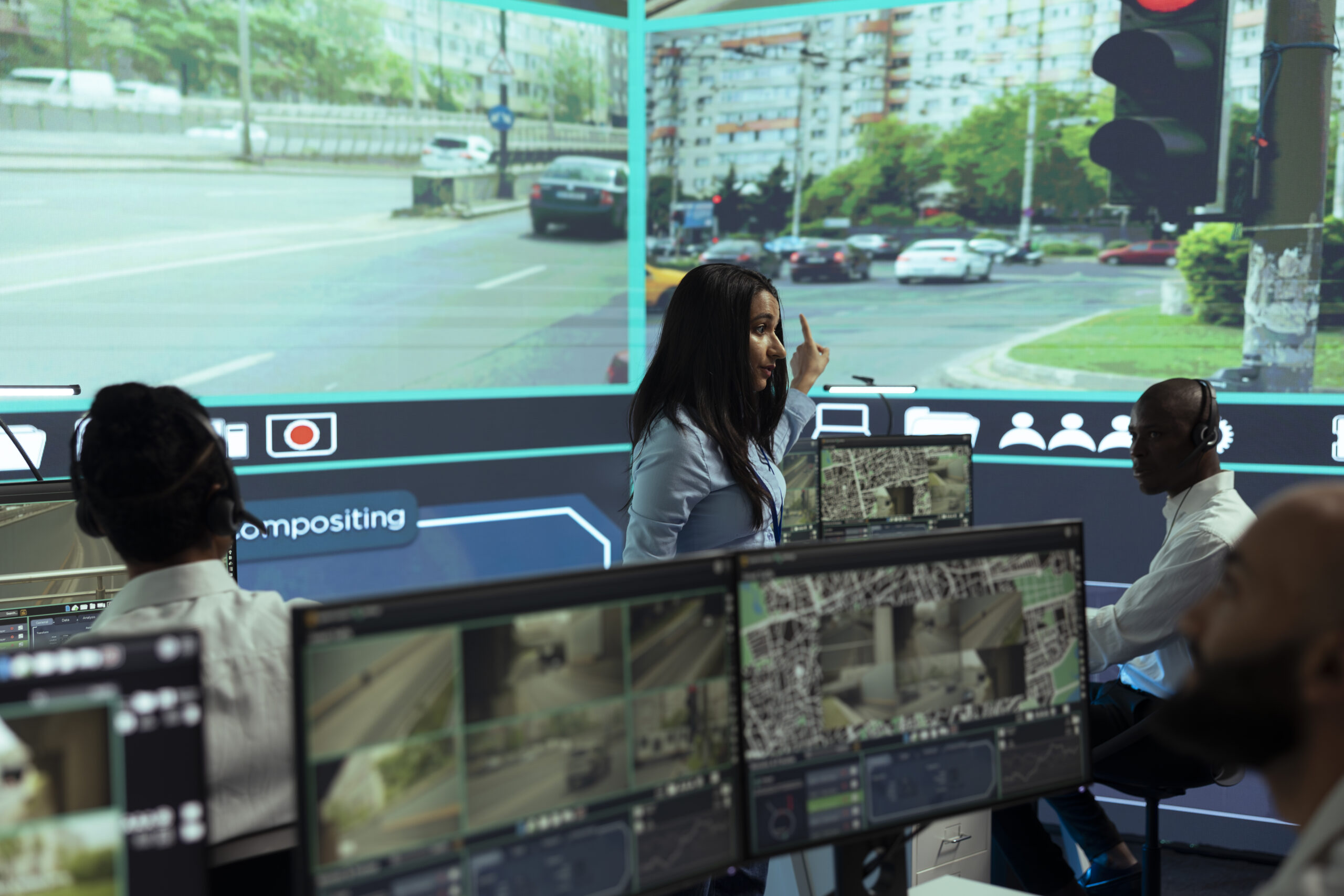
The term CCTV, short for closed-circuit television, describes a technology that has changed almost beyond recognition since it first appeared in commercial security. What began as a closed loop of cameras feeding a bank of monitors and videotape recorders has become a distributed, searchable intelligence system. Tracing that evolution helps explain why the industry increasingly talks about “video intelligence” rather than simply surveillance.
The Analog Era: Recording Without Searching
Early CCTV systems recorded continuously to videotape, which had to be physically swapped, stored and, when needed, reviewed in real time by fast-forwarding through hours of footage. There was no way to search for a specific event other than knowing roughly when it occurred and manually scrubbing through the tape. Coverage was also limited by cost and cabling; each camera required a dedicated coaxial run back to a central recorder.
Digital Video Recording and IP Cameras
Digital video recorders (DVRs) replaced tape with hard drives, letting operators jump to a timestamp instantly rather than fast-forwarding physical media. The shift to IP cameras that transmit over standard computer networks further loosened the physical constraints of analog systems, allowing cameras to be added, moved or networked across sites without dedicated coaxial cabling, and enabling remote viewing over the internet for the first time.
Video Management Systems Bring Structure
As camera counts grew, video management system (VMS) software became necessary to organize feeds, manage storage, control user access and provide a single interface for monitoring and playback across potentially hundreds of cameras. VMS platforms introduced features like camera health monitoring, role-based access for operators, and integration with access control and alarm systems, turning a collection of individual cameras into a managed security infrastructure.
Analytics Turn Video Into Searchable Data
The more recent shift toward video intelligence comes from AI-based video analytics that extract structured information from footage: object classification, license plate recognition, people counting, and behavioral patterns such as loitering or wrong-way movement. Instead of reviewing footage sequentially, an investigator can now search by object type, color, direction of travel or, increasingly, natural-language description, retrieving relevant clips in seconds rather than hours. This is the functional definition of video intelligence: video that has been indexed and made queryable, rather than simply archived.
From Reactive Review to Proactive Alerting
Video intelligence has also shifted surveillance from a largely reactive tool, used mainly to investigate incidents after the fact, toward a proactive one that can generate real-time alerts for defined conditions, such as a person entering a restricted zone after hours or a vehicle stopped in a fire lane. That shift depends on the analytics running continuously against live video rather than only against recorded footage, which is part of why edge AI processing on cameras themselves has become an important complement to server-based video intelligence platforms.
FAQ
Is CCTV an outdated term? The term persists in everyday use, but modern systems typically use IP-based digital cameras, networked recording and AI-based analytics rather than the closed coaxial-cable loops the term originally described.
What is the difference between a VMS and video analytics? A VMS manages recording, storage, access and playback across cameras. Video analytics is software, often running within or alongside a VMS, that interprets the content of the video to detect and classify objects and events.
Does video intelligence require replacing existing cameras? Not always. Many video intelligence features can run as software layered on top of existing IP cameras and VMS platforms, though the accuracy and range of available analytics generally improve with cameras that include onboard processing.
Leave a Reply