Category: Airports

  • Airport Security Technology: Layered Perimeter, Screening and Access Control

    Airport Security Technology: Layered Perimeter, Screening and Access Control

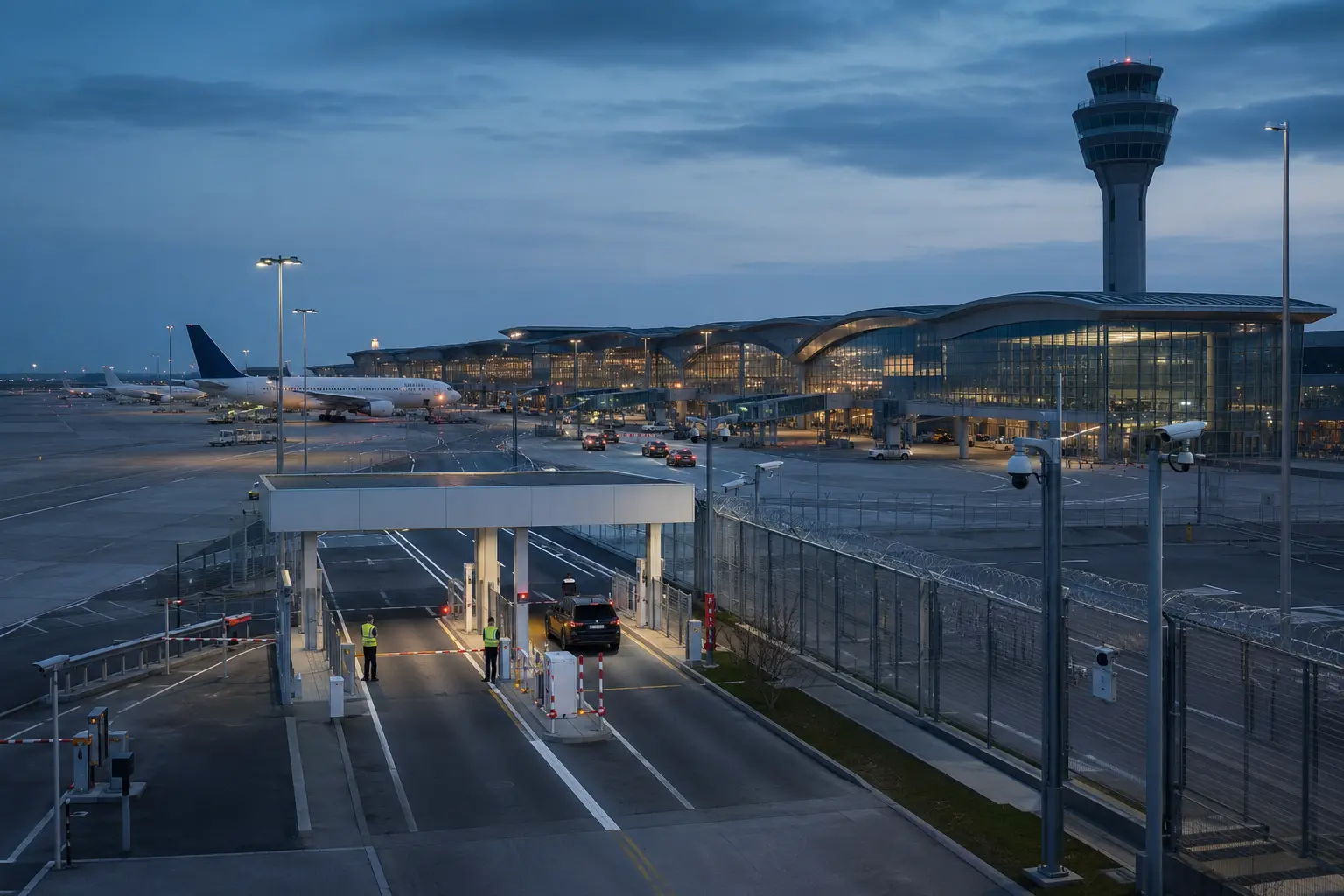
    Airports operate one of the most complex physical security environments of any facility type, combining a large outdoor perimeter, high-throughput passenger screening, tightly restricted airside access, and constant coordination with law enforcement and aviation authorities, all while keeping flights moving on schedule.

    Protecting the Airfield Perimeter

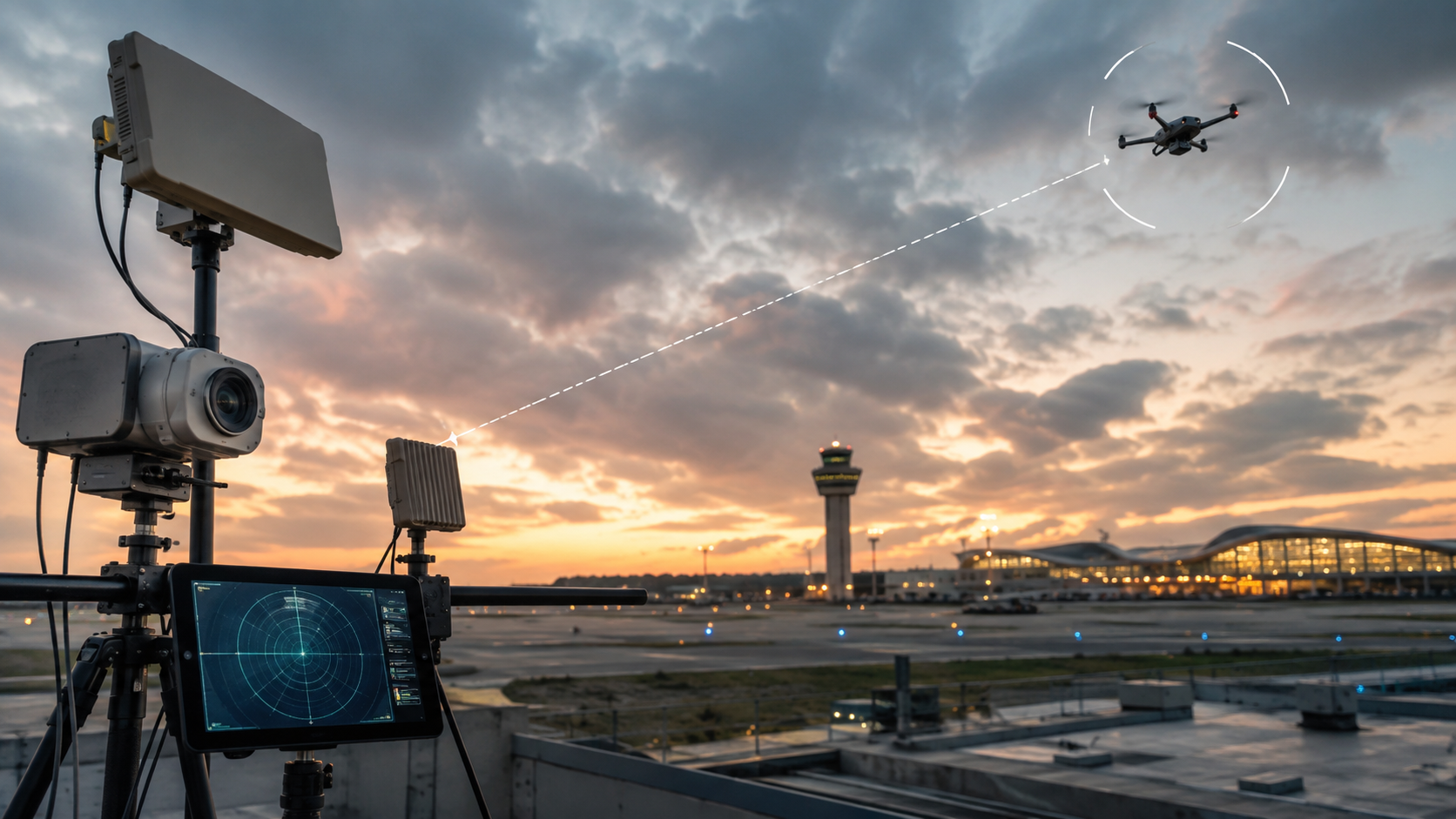
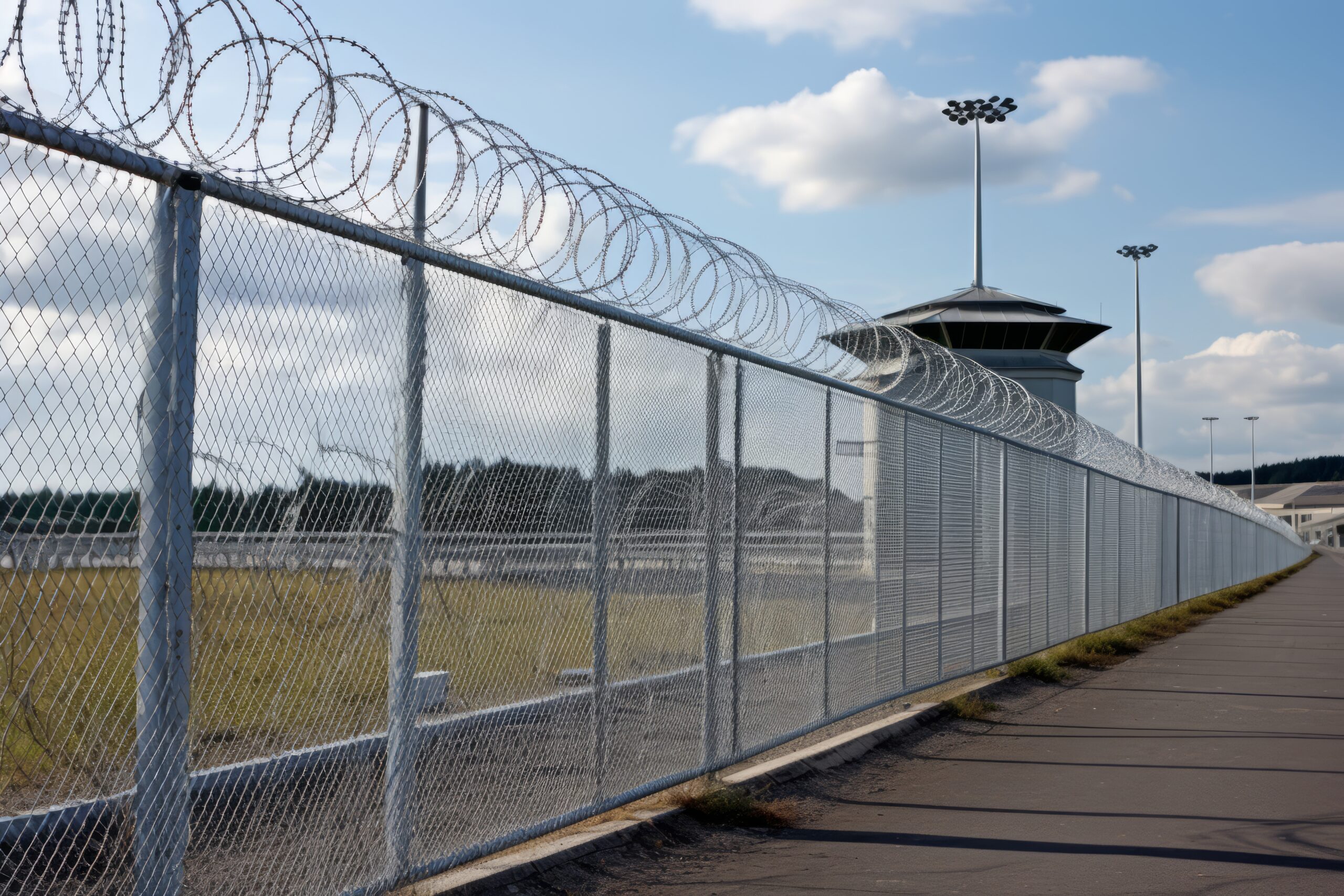
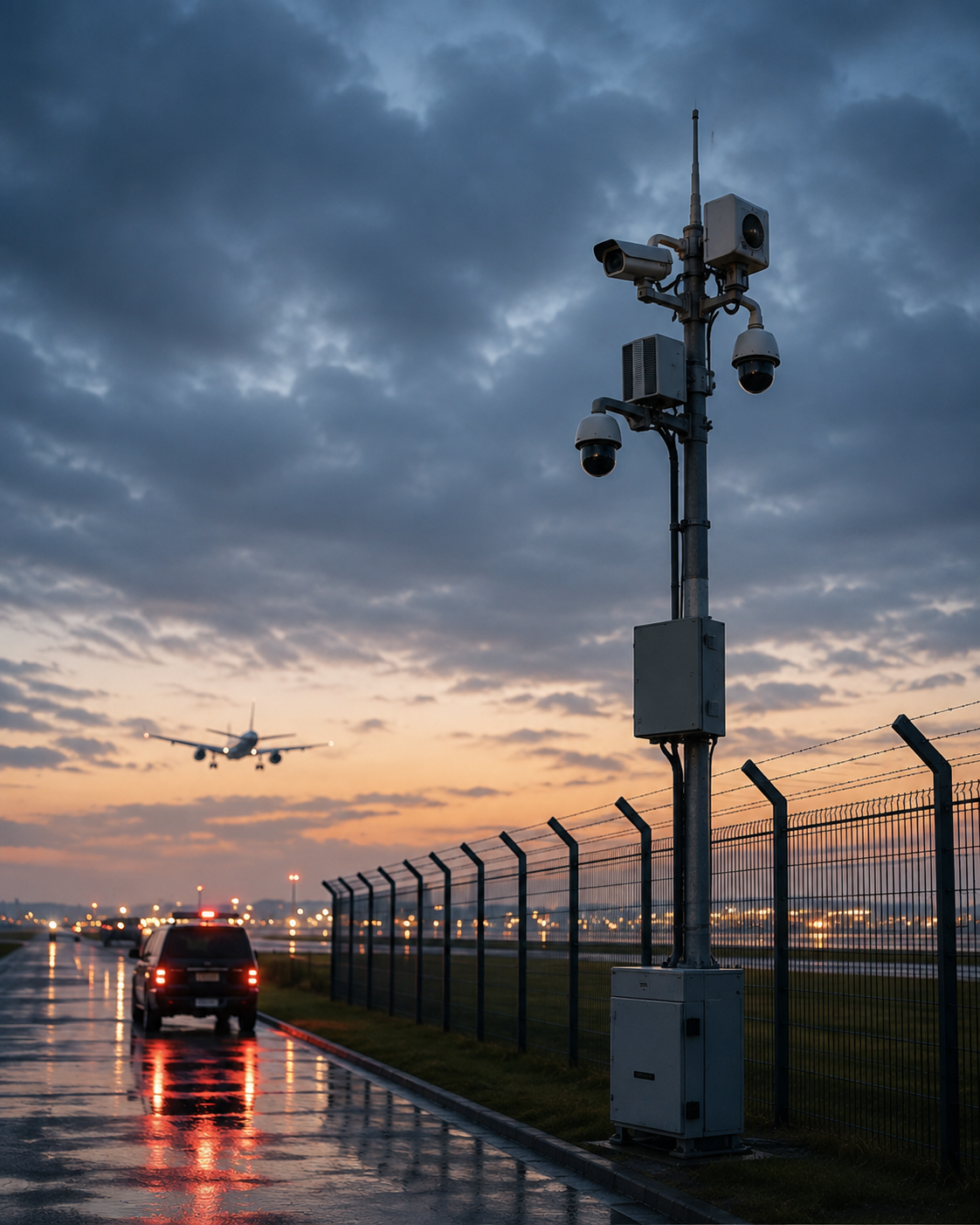
    The airfield perimeter, often several miles of fence line separating public areas from runways, taxiways and aircraft, is typically monitored with a combination of fencing, ground radar, thermal cameras and buried or fence-mounted intrusion sensors, since a single unauthorized incursion onto an active runway can halt operations across the entire airport. Larger airports increasingly integrate airfield perimeter sensors with counter-drone detection systems, addressing the growing risk that unauthorized drone activity near runways poses to aircraft during takeoff and landing.

    Passenger and Baggage Screening

    Checkpoint screening combines walk-through metal detectors or millimeter-wave body scanners for passengers with X-ray and, increasingly, computed tomography (CT) scanning for carry-on baggage, giving screeners a rotatable 3D image rather than the flat 2D image older X-ray systems produce. Checked baggage passes through separate, higher-throughput explosive detection systems behind the scenes, and biometric identity verification, typically facial recognition matched against a passport or boarding pass, is increasingly used to speed passengers through checkpoints and boarding gates without manual document checks at every step.

    Controlling Access to Restricted Airside Areas

    Access to the airfield, ramp areas and other restricted zones is controlled through badge-based access control systems layered with biometric verification, since a badge alone does not confirm that the person carrying it is its rightful holder. Airports also enforce strict escorting and challenge procedures for anyone in a restricted area without airport-issued credentials, backed by video surveillance covering gates, ramps and cargo areas to create an audit trail of who accessed which zone and when.

    FAQ

    Why do airports need counter-drone systems? Unauthorized drones near runways and approach paths pose a collision risk to aircraft during takeoff and landing, which has led many larger airports to add drone detection alongside their existing airfield perimeter sensors.

    What is the difference between X-ray and CT baggage screening? Traditional X-ray produces a flat 2D image of a bag’s contents, while CT scanning produces a rotatable 3D image, giving screeners a clearer view of items that might otherwise be obscured or ambiguous in a 2D scan.

    How is facial recognition used at airports? Facial recognition is typically used to match a live photo of a passenger against their passport or boarding pass photo at checkpoints or boarding gates, allowing faster verification than a manual document check.
  • UK Aviation Cyber Assessment Finds Suppliers Are the Sector’s Weakest Link

    UK Aviation Cyber Assessment Finds Suppliers Are the Sector’s Weakest Link

    A new assessment of UK aviation’s external cyber exposure has found that third-party suppliers, not airport operators, account for the overwhelming majority of the sector’s cyber security weaknesses, according to research firm MyDomainRisk and coverage published by International Airport Review on September 3, 2026.

    Scanning 43 Operators and 51 Suppliers From the Outside

    MyDomainRisk said it examined the public web estate of 43 UK airport operators, covering 54 airports, alongside 51 organizations those airports depend on, using only externally visible, unauthenticated scanning. The firm emphasized that no airport operational technology, air-traffic, airline, baggage-handling or screening system was accessed or tested as part of the work; the scope was limited to what is visible to anyone on the public internet.

    Exposure Is Concentrated in the Supply Chain

    Of 1,152 exposed employee credential records identified across both groups, only 10 belonged to airport operators, according to MyDomainRisk; the remainder sat with suppliers, which also accounted for three leak-site mentions. Ground-operations providers were flagged as the weakest supplier class, with the firm reporting that 92 percent of staff-credential exposure across the study sits within three airside supplier categories. Gabriel Higgins, writing for International Airport Review, said suppliers’ average security posture score badly trailed that of the operators they serve.

    The One Place Airports Underperform

    The assessment identified a single measure where airport operators scored worse than their suppliers: email authentication. Seventeen of the 43 airport operators studied, or 40 percent, cannot instruct receiving mail systems to reject an email forged in their name, according to the research. Higgins quoted the study’s author describing this as both one of the sector’s simplest fixes and one of its most consequential, since an airport’s own domain is a far more attractive identity for attackers to spoof than that of a lesser-known supplier.

  • TSA Unveils Horizon 25 Strategy to Modernize Checkpoints and Expand Counter-Drone Capabilities

    TSA Unveils Horizon 25 Strategy to Modernize Checkpoints and Expand Counter-Drone Capabilities

    The Transportation Security Administration launched a new strategic plan called Horizon 25 on August 24, 2026, timed to the agency’s 25th anniversary, outlining three priorities: modernizing checkpoint technology, improving the traveler experience, and hardening security across multiple transportation modes, according to TSA’s own press release and reporting from International Airport Review and Federal News Network.

    TSA Administrator David P. Cummins said the plan is intended to streamline how the agency acquires new screening technology, including next-generation scanners and biometric identity-verification systems, as well as expand TSA’s capability to detect and respond to unmanned aircraft near airports and other transportation facilities. The agency has been steadily rolling out Credential Authentication Technology 2 units, which pair document scanning with live facial comparison, as part of a broader $781 million technology-modernization program already underway.

    Gold+ Program to Be Replaced

    As part of Horizon 25, TSA said it will retire its existing Gold+ program and replace it with an evolved Screening Partnership Program, expanding the role private security contractors play in airport checkpoint operations under federal oversight. The agency framed the changes as part of a longer-term effort to reduce checkpoint friction for low-risk travelers while concentrating resources on higher-risk threats, including the small-drone threat vector that has drawn increasing federal attention this year.

    TSA said further implementation details will be worked out with field and headquarters staff in September, with the counter-UAS and technology-acquisition components expected to roll out in phases rather than all at once.

  • Cyberattack on Manchester Airports Group Exposes Data of 8.7 Million Customers

    Cyberattack on Manchester Airports Group Exposes Data of 8.7 Million Customers

    Manchester Airports Group, which operates Manchester, London Stansted and East Midlands airports in England, said on August 27, 2026 that it was hit by a cyberattack exposing data belonging to roughly 8.7 million customers, according to the company’s public notice and reporting by The Record and the Yorkshire Post. An unauthorized third party accessed customer data tied to car park, lounge and Fast Track bookings, as well as in-airport Wi-Fi sign-ups.

    The compromised information includes email addresses, phone numbers, vehicle registrations and postcodes; the company said neither it nor the affected system stores payment card or banking details, and that no financial data was exposed. MAG said it was alerted to the incident on a Tuesday and believes attackers first accessed the data a few days before discovery. The company has restricted access to the affected systems, engaged outside cybersecurity specialists, notified relevant authorities and temporarily suspended its online Manage My Booking service as a precaution.

    MAG said passenger safety and aviation security systems were not affected and that flights, airport operations and parking continue to operate normally; the three airports handled more than 65 million passengers last year. The incident illustrates a distinction increasingly emphasized by airport operators: a breach of customer-facing IT and booking systems does not necessarily indicate any compromise of the physical security, screening or airside operational systems that are typically segmented onto separate networks.

  • Denver International Airport Logged Six Perimeter Fence Breaches in Three Years, Records Show

    Denver International Airport Logged Six Perimeter Fence Breaches in Three Years, Records Show

    A Pattern of Breaches Preceding a Fatal Incident

    Denver police have responded to six cases of people breaching the perimeter fence at Denver International Airport since January 2023, according to police records reported by The Denver Post on August 17, 2026. The most serious was a fatal incident on May 8, 2026, when 41-year-old Michael Mott scaled the airport’s eight-foot, barbed-wire-topped security fence and walked onto a runway shortly before 11:20 p.m. He was struck and killed by a Frontier Airlines aircraft that was accelerating for takeoff. Denver’s chief medical examiner, Dr. Sterling McLaren, ruled Mott’s death a suicide, according to the Post.

    Of the other five recorded breaches, one involved a man who crashed through a perimeter fence gate and drove onto the airfield, causing more than $2,000 in damage; another involved a man who jumped the fence after crashing his car nearby and was later found sitting on an active taxiway around 6:40 a.m.; and a third involved a man who told police he was trying to walk to Texas. Two additional trespassing cases involved people jumping the boundary fence into the airport’s warehouse area. At least two of the eight individuals involved in these incidents had active arrest warrants at the time of their breach, the Post reported, citing probable-cause statements.

    How the Numbers Compare Nationally

    There is no national database that tracks airport perimeter breaches specifically, and airports report trespassing incidents inconsistently, according to Annmarie Heth, an assistant professor of aviation and aerospace sciences at Metropolitan State University of Denver who was interviewed by the Post. The Federal Aviation Administration does separately track runway incursions — a broader category covering air traffic control errors, pilot violations, and unauthorized pedestrians or vehicles on runways and taxiways — at airports with control towers, including DIA. The FAA’s database recorded roughly 5,890 runway incursions nationwide between January 2023 and June 2026, of which 1,022 involved unauthorized pedestrians or vehicles. Only two of the six DIA police-documented perimeter breaches during that period appear in the FAA’s database, which lists a total of 37 incidents involving unauthorized vehicles and pedestrians at DIA dating back to April 2006, per Post reporting.

    Officials Say the Uptick May Reflect Better Detection, Not Worse Security

    Heth told the Post that fatal breaches like the one that killed Mott are extremely rare and that advanced perimeter technology usually allows security personnel to intercept trespassers before an incident escalates. “Fences are there to keep honest people out,” she said. “If somebody is really intent on getting through a fence, they’re going to get through.” She added that improved sensors, cameras, analytics and staff training may explain why more incidents are being detected and reported today compared with when she worked as an airport operations manager in Florida between 2009 and 2015, when even wind gusts could trigger perimeter alarms and prompt an investigation.

    A Denver Police Department spokesman, Doug Schepman, said the department’s dedicated Airport Police Bureau at DIA works closely with airport operations staff, monitors data on breach trends, and adjusts resources accordingly. DIA officials declined to comment on the individual trespassing incidents when contacted by the Post. The FAA and the National Transportation Safety Board also declined to comment specifically on DIA’s perimeter breaches.

    Sources

  • Third Drone and Suspected Explosives Found in Widening Leipzig Airport Sabotage Probe

    Third Drone and Suspected Explosives Found in Widening Leipzig Airport Sabotage Probe

    German investigators have found a third drone and a substance suspected to be military-grade explosive near Leipzig/Halle Airport, widening the investigation into an attempted attack earlier this month, German broadcasters NDR and WDR and the newspaper Sueddeutsche Zeitung reported on August 25, 2026.

    What was found

    According to the reports, the drone was recovered on August 14, ten days after the original incident, in an area west of the airport. Investigators also found roughly 50 grams (1.8 ounces) of a substance they suspect is hexogen, a military explosive, along with drone-control equipment reportedly taped to a tree in Kursdorf near the airport and a suspected blast site nearby.

    The original incident

    The case began on August 4, 2026, when an airport employee found a drone carrying an explosive device with a faulty detonator near a Ukrainian Antonov cargo aircraft in the airport’s secure cargo operations area. The discovery forced a temporary shutdown of the airport’s southern runway. German Interior Minister Alexander Dobrindt described the incident as representing a “new quality of danger” and a hybrid-style attack.

    Why it matters for aviation security

    Leipzig/Halle is a major European cargo hub used by Ukrainian Antonov aircraft, NATO and German military logistics, and DHL. The fact that an armed drone reached a secure airside cargo area — and that investigators are still recovering additional devices and evidence weeks later — underscores the difficulty of defending sensitive perimeter and airside zones against small, low-cost unmanned aircraft. Chancellor Friedrich Merz has said the government intends to formally attribute the attack; German security sources have pointed to possible Russian intelligence involvement, which Moscow denies.

    Sources

    More coverage like this is available on Technology News.

  • Airport Security Architecture: From Perimeter to Terminal

    Airport Security Architecture: From Perimeter to Terminal

    Airports combine public spaces, restricted operational zones, aircraft movement areas, baggage systems, cargo facilities and critical communications infrastructure. Effective airport security therefore depends on layered architecture rather than a single technology.

    The Outer Perimeter

    The first layer protects the airfield boundary. Typical technologies include intelligent fencing, fiber-optic intrusion detection, radar, thermal cameras, fixed video surveillance and controlled vehicle gates. The objective is early detection and rapid verification, not simply creating a physical barrier.

    Airside Access

    Access points between landside and airside areas require strong identity controls. Staff credentials, biometric verification, vehicle authorization and anti-passback rules can reduce unauthorized movement. Temporary contractors and service vehicles deserve particular attention because their access requirements change frequently.

    Terminal Security

    Inside terminals, video surveillance, analytics, access control, screening systems and public-address platforms operate together. The challenge is scale: thousands of cameras and alarms can overwhelm operators unless information is prioritized through a unified command-and-control platform.

    Baggage and Cargo

    Baggage handling and cargo areas have different risk profiles from passenger spaces. Screening equipment, restricted access, chain-of-custody controls and video evidence must be integrated with operational workflows.

    Airspace Awareness

    Small unmanned aircraft have added another security layer. Airports increasingly evaluate radar, RF, optical and acoustic technologies for drone detection. Detection architecture must minimize interference with aviation systems and comply with national regulations.

    Cyber-Physical Integration

    Modern airport security is deeply networked. Cameras, access controllers, screening devices and building systems must therefore be treated as cyber-physical assets. Network segmentation, device hardening, credential management and monitoring are part of physical-security design.

    Conclusion

    A secure airport is not built by purchasing isolated systems. The strongest architecture connects perimeter detection, identity, screening, video, airspace awareness and command-and-control into a layered operational model. The design goal is to detect early, verify quickly and give operators enough context to respond appropriately.

  • Airport Drone Detection Systems

    Airport Drone Detection Systems

    Airports face one of the most demanding drone-detection environments. A small unmanned aircraft can create operational disruption around runways, approach paths and terminal areas even when there is no malicious intent. The challenge is not simply to detect an object in the sky, but to determine whether it represents a credible risk quickly enough for airport operators to act.

    Modern airport systems normally combine short- and medium-range radar, radio-frequency monitoring, electro-optical cameras and thermal imaging. Radar provides persistent coverage and track information. RF sensors can identify known command links or protocols. Cameras then provide visual confirmation and evidence. Because airports already contain extensive radar, radio and navigation infrastructure, careful frequency planning and site engineering are essential.

    Coverage design matters as much as sensor selection. A system should consider runway approaches, terminal airspace, parking aprons, perimeter zones and nearby public areas. Terrain, hangars, control towers and other structures can create blind spots. Multiple sensors positioned around the airport are often required to achieve useful low-altitude coverage.

    False alarms are another major concern. Birds, ground vehicles, construction equipment and conventional aircraft can all produce confusing signatures. Good systems use track behavior, micro-Doppler analysis and sensor fusion to improve classification. The objective is not to eliminate every false positive, but to reduce them to a level at which operators continue to trust the system.

    Drone detection must also integrate with airport operations. A verified track may need to be shared with the airport operations center, air traffic stakeholders, police or other authorized responders. Automated camera cueing and geofenced alert zones can help prioritize drones that are moving toward a runway or other sensitive area.

    Detection should be separated from mitigation. Active countermeasures may be restricted by aviation and communications law, and authority varies by country. For many airports, the most important capabilities are early detection, reliable tracking, evidence preservation and a clear operational response plan.

    The best airport drone-detection architecture is therefore layered, site-specific and tightly integrated with existing safety and security procedures. The goal is not simply to see drones. It is to create a dependable low-altitude airspace picture that supports fast, proportionate decisions.