Category: Counter-UAS & Airspace Security

Detection and mitigation technologies for unauthorized drones and other low-altitude airspace threats — a fast-growing area of security technology.

  • Counter-UAS Netting and Physical Barriers: Stopping Drones Without Jamming or Kinetic Force

    Counter-UAS Netting and Physical Barriers: Stopping Drones Without Jamming or Kinetic Force

    Most public discussion of counter-UAS technology focuses on detection — radar, radio-frequency sensing, acoustic arrays — and on active countermeasures like RF jamming or interceptor drones. A quieter category of counter-drone technology works through purely physical means: netting and barrier systems designed to entangle or block small unmanned aircraft without emitting any signal at all.

    Net-Capture Systems

    Net-capture counter-UAS systems deploy a net, either fired from a ground-based or drone-mounted launcher, to physically entangle a target drone’s rotors, typically causing it to lose lift and fall, often with a tethered or parachute recovery mechanism to control where it lands. Because these systems rely on physical contact rather than radio-frequency emissions, they can be used in electromagnetically sensitive environments — near airports, hospitals, or facilities where RF jamming would create unacceptable interference risk.

    Fixed Netting and Overhead Barriers

    A more passive approach uses fixed netting or mesh barriers installed over vulnerable areas — exercise yards at correctional facilities, stadium seating bowls, or sensitive outdoor equipment at critical infrastructure sites — to physically prevent a drone from entering the protected airspace or delivering a payload, regardless of whether the drone has even been detected. This approach trades flexibility for reliability: a fixed net does not require detection, classification, or an operator decision to act, but it also only protects the specific area it physically covers.

    Where Physical Countermeasures Fit

    Physical counter-UAS methods are generally positioned as a complement to, not a replacement for, detection and RF-based systems. Detection remains necessary to know a threat exists and to cue a response; net-capture systems typically still require a human decision to fire on a specific, confirmed target rather than acting autonomously. Fixed netting, by contrast, requires no real-time decision but only protects a defined footprint.

    Legal and Regulatory Considerations

    Any counter-drone response, physical or electronic, operates in a legal environment that varies significantly by jurisdiction. In many countries, authority to bring down or interfere with an aircraft — including a small UAS — is restricted to specific government agencies, and private operators of net-capture systems may face legal exposure without proper authorization. Site operators evaluating counter-UAS technology should treat the regulatory and authorization question as a prerequisite, not an afterthought, alongside the technical deployment.

    Conclusion

    As small drones become a more routine security concern for stadiums, correctional facilities, airports and critical infrastructure, physical countermeasures like net-capture systems and fixed netting offer a non-electronic option that avoids the interference risks of RF jamming. Their real-world value depends heavily on pairing them with reliable detection and on navigating the legal authority questions that govern any active counter-drone response.
  • ACLU Settlement Forces Sonoma County to Rein In Code-Enforcement Drone Surveillance

    ACLU Settlement Forces Sonoma County to Rein In Code-Enforcement Drone Surveillance

    Sonoma County, California, has agreed to sharply restrict how its code enforcement division uses drones to investigate private property, settling a privacy lawsuit brought by the ACLU Foundation of Northern California on behalf of three county residents.

    From Cannabis Enforcement to Broad Property Surveillance

    Sonoma County began flying camera-equipped drones in 2019 to investigate illegal cannabis cultivation. According to the lawsuit and prior reporting by the Los Angeles Times, the program later expanded without adequate public disclosure to cover a much wider range of code enforcement matters, including unpermitted construction, junkyard conditions and zoning violations. By June 2025, county officials had used drones more than 700 times to investigate suspected violations on private property without first obtaining warrants, and nearly half of the county’s 2024 drone flights involved matters unrelated to cannabis. The lawsuit alleged the resulting surveillance helped generate more than $3 million in fines between October 2020 and 2024.

    What the Settlement Requires

    Under the agreement, Permit Sonoma’s Code Enforcement division must generally obtain either an inspection warrant or consent from a property owner, tenant or resident before using a drone to fly over, monitor or record a private home or its curtilage — the area immediately surrounding a residence. The county may still conduct warrantless surveillance in emergency circumstances and may continue monitoring open fields without a warrant, though any images of a home incidentally captured during open-field monitoring must be blurred before public release. The settlement also limits how drone-gathered evidence can be used in enforcement: officials must obtain a probable-cause warrant before pursuing criminal charges based on drone evidence, and misdemeanor or infraction cases cannot be referred to prosecutors based solely on unwarranted drone surveillance.

    The Sonoma County Board of Supervisors approved the settlement, which includes $50,000 payments to each of the three plaintiffs; the county denied the lawsuit’s allegations and admitted no liability. “Today’s settlement agreement will protect everyone’s right to privacy in and around their homes,” said Nick Hidalgo, senior attorney with the ACLU of Northern California, adding that the county had “concealed these unlawful searches from the people they spied on.”

    A Growing Legal Pattern for Government Drone Use

    The case adds to a broader body of litigation and policy debate over warrantless government drone surveillance of private property, an issue increasingly relevant to security and code-enforcement agencies nationwide as drone programs expand beyond their original stated purpose. Agencies operating or considering similar programs may look to the Sonoma County settlement as a template for warrant, consent, retention and data-redaction requirements that could pre-empt future litigation.

  • L3Harris and ARX Robotics Mount Counter-Drone Sensors on Uncrewed Ground Vehicle

    L3Harris and ARX Robotics Mount Counter-Drone Sensors on Uncrewed Ground Vehicle

    L3Harris Technologies and ARX Robotics UK demonstrated a mobile counter-drone capability during the U.S. Army’s Project Convergence-Capstone 6 experimentation campaign, mounting L3Harris’ CORVUS-RAVEN counter-small uncrewed aircraft system onto ARX’s remotely controlled Gereon unmanned ground vehicle, according to a joint announcement published on L3Harris’ newsroom on August 27, 2026.

    Moving Sensors Closer to the Threat

    CORVUS-RAVEN is a lightweight, portable system that provides passive detection of drone threats out to four kilometers, along with bearing information fed into command-and-control and battle management applications, according to L3Harris’ product materials. By mounting the sensor on the Gereon UGV, the companies said the demonstration showed how robotic mobility can extend passive drone-detection coverage into forward or hazardous areas without placing personnel directly in those zones.

    An Open-Architecture Partnership

    “Project Convergence has allowed us to demonstrate how uncrewed ground systems can extend the reach of specialist capabilities without extending the risk to personnel,” said David Roberts, CEO of ARX Robotics UK, in the companies’ announcement. L3Harris said the collaboration reflects modular, open-architecture integration between an established defense contractor and an emerging robotics provider, and that lessons from the exercise at Fort Irwin, California will inform further development of combined counter-drone and uncrewed ground system capabilities.

    Context

    The demonstration is part of a broader push by defense and physical security organizations to pair ground robotics with counter-UAS sensing as drone threats to installations, personnel and critical infrastructure continue to grow. L3Harris said Project Convergence-Capstone 6 will help identify further opportunities to integrate counter-drone technology with robotic platforms across additional missions.

  • Public Comment Period Closes Today on Federal Rule Expanding Counter-Drone Authority for Local Police

    Public Comment Period Closes Today on Federal Rule Expanding Counter-Drone Authority for Local Police

    A federal rule that would give trained state, local, tribal and territorial (SLTT) law enforcement and correctional agencies formal authority to detect, track, disable or seize threatening drones closes for public comment on September 6, 2026, according to DRONELIFE. The Interim Final Rule, published by the Department of Homeland Security (DHS) and Department of Justice (DOJ), is the first detailed implementing regulation for counter-unmanned aircraft system (C-UAS) powers created under the SAFER SKIES Act, part of the FY2026 National Defense Authorization Act.

    Certification, Training and Two Approved-Systems Lists

    The rule sets out training and certification requirements, reporting procedures and operational safeguards for agencies seeking to conduct counter-drone operations against credible threats to public safety, critical infrastructure, correctional facilities or major public events. It also establishes an Authorized Technologies List and a more specific Authorized Systems List, both to be maintained through the FBI’s Law Enforcement Enterprise Portal, identifying which categories and specific counter-UAS products agencies may lawfully deploy.

    FCC Actions Address Spectrum and Legal Liability

    Alongside the DHS/DOJ rule, the Federal Communications Commission issued four coordinated actions intended to remove practical barriers to deployment. These include a 180-day blanket Special Temporary Authority letting eligible agencies operate approved counter-UAS systems while longer-term licensing is developed, an equipment-authorization waiver allowing manufacturers to sell approved radio-frequency systems to qualified agencies sooner, and declaratory rulings clarifying that SLTT personnel acting under the Act’s oversight can receive derivative immunity from Section 333 of the Communications Act, which otherwise prohibits interference with licensed radio communications.

    Guardrails Remain in Place

    The frameworks do not authorize unrestricted counter-drone activity. Agencies must still meet federal certification requirements, use only systems on the Authorized Systems List, follow operational restrictions written into the SAFER SKIES Act, and report qualifying mitigation actions to federal authorities. With the comment period closing today, stakeholders across the public safety, drone and counter-UAS industries have had a final opportunity to weigh in before the rule is finalized.

  • NextNav and Tiami Networks Partner to Test 5G-Powered Counter-Drone Sensing

    NextNav and Tiami Networks Partner to Test 5G-Powered Counter-Drone Sensing

    Positioning company NextNav has named Tiami Networks as a sensing ecosystem partner to jointly develop and evaluate counter-UAS detection capabilities built on 5G infrastructure, the companies announced on August 25, 2026, according to NextNav’s own release and independent reporting from UASweekly and Unmanned Airspace.

    The Technology

    The partnership will use NextNav’s existing 5G Positioning, Navigation and Timing (PNT) network, deployed on the licensed lower 900 MHz band, as a testbed in Santa Clara County, California. Tiami is contributing its radio-frequency sensing technology to the effort, with the two companies evaluating whether the same 5G infrastructure that provides positioning services can simultaneously support wide-area sensing for drone detection without adding load to the network. The approach falls under what the companies describe as integrated sensing and communications, or ISAC.

    Why Range Matters

    “The need for longer range situational awareness has never been more urgent as drones continue to threaten large-scale events, critical infrastructure, and government and military facilities including airports,” said David Gell, NextNav’s vice president of business development, in the companies’ announcement. That framing echoes a wider push across the counter-UAS sector this year toward detection systems that can spot drones farther out and earlier, giving operators more time to assess and respond before an unmanned aircraft reaches a protected site.

    Early-Stage Evaluation

    NextNav and Tiami characterized the work as an evaluation of performance and applicability rather than a finished product, with the companies planning to assess whether the low-band 5G approach can support counter-UAS, critical-infrastructure and national-security use cases alongside its existing positioning role.

  • O.W.L. Launches Extended-Range GA7360LR 3D Radar for Perimeter and Counter-Drone Surveillance

    O.W.L. Launches Extended-Range GA7360LR 3D Radar for Perimeter and Counter-Drone Surveillance

    Observation Without Limits (O.W.L.) has launched the GA7360LR, a 3D, 360-degree radar system built for ground surveillance and low-altitude airspace monitoring, extending the detection range and classification accuracy of the company’s original GA7360 model first introduced in 2024.

    What the New Radar Adds

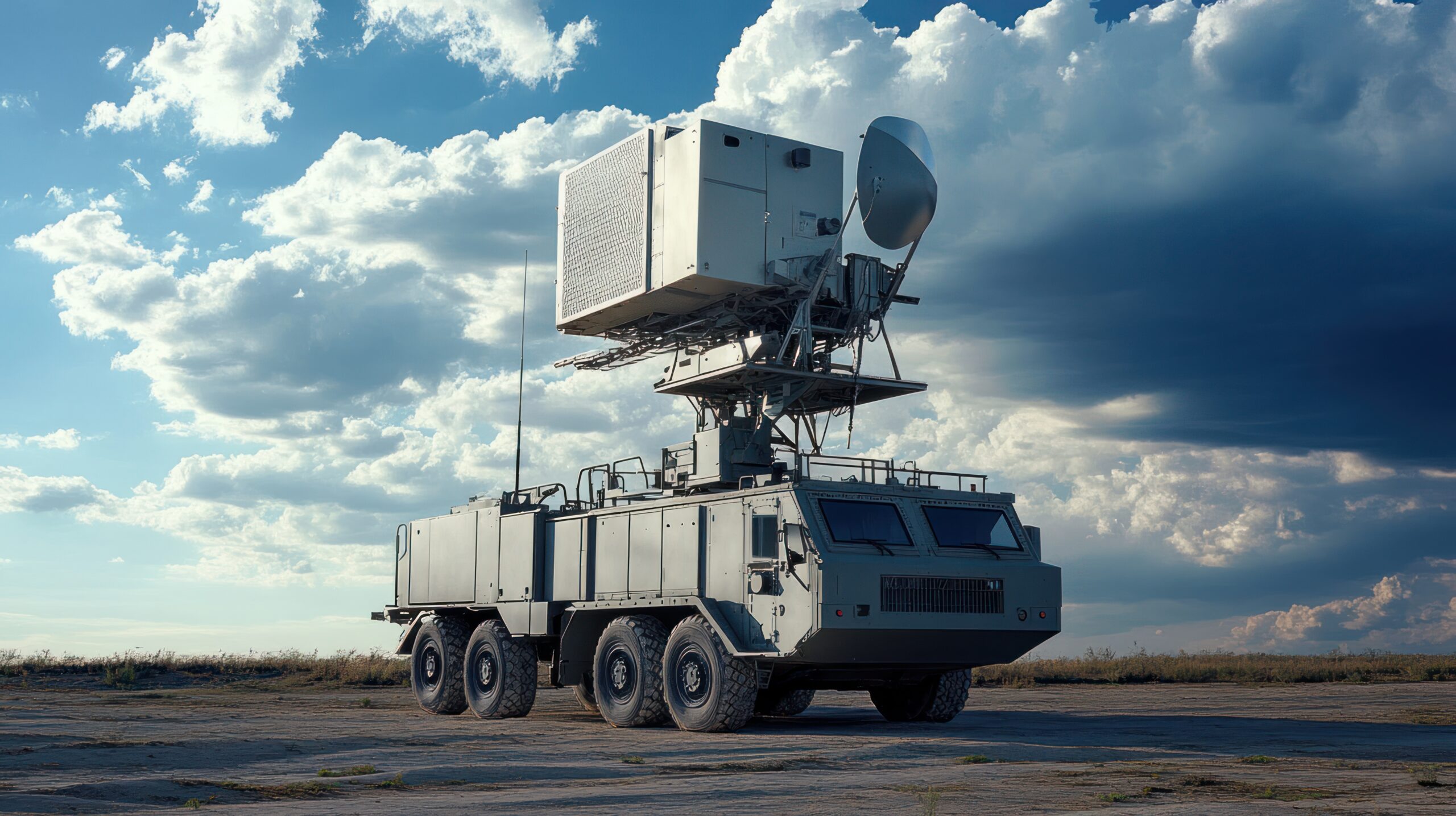
    According to O.W.L., the GA7360LR is a solid-state system with no moving parts, backed by a full warranty, and operates using pulsed Doppler processing in the S frequency band between 3.0 and 3.3 GHz. The company lists detection ranges of 7.5 kilometers for aircraft the size of a Cessna 172 and for vehicles, 4 kilometers for a walking person, and 3 kilometers for a small consumer drone such as a DJI Phantom IV. The unit is rated to operate across a wide temperature range, from -20°C to 60°C, making it suitable for outdoor perimeter deployments in varied climates.

    “Building on the success of the original GA7360 radar model introduced in 2024, the GA7360LR extends detection ranges, improves accuracy and consistency of target tracking and enhances the accuracy and reliability of target classification in a single 360-degree radar,” O.W.L. CEO Adam Robinett said in the company’s announcement.

    Applications Span Perimeter Defense and Counter-UAS

    O.W.L. positions the GA7360LR for a broad set of ground and airspace situational-awareness use cases, including counter-UAS systems both with and without electronic or kinetic countermeasures, drone-as-first-responder programs, bird-detection systems for airports and wind farms, and beyond-visual-line-of-sight operations. The single-radar design that covers both ground-level intrusion detection and low-altitude drone tracking reflects a broader trend in the perimeter security market, where facility operators are increasingly looking to consolidate what used to be separate ground radar and counter-drone radar systems into one sensor.

    The GA7360LR is now available, according to the company, and can be integrated into existing command-and-control and video management platforms as an additional detection layer alongside cameras and other perimeter sensors.

  • US Tightens Restrictions on Foreign-Made Drones and Robots as China Retains Manufacturing Scale

    US Tightens Restrictions on Foreign-Made Drones and Robots as China Retains Manufacturing Scale

    Washington has spent July and August tightening restrictions on foreign-made advanced robotic systems and imposing new tariffs on imported drones and drone components, both moves citing national-security concerns, according to a TechCrunch report examining the policy’s effect on the global robotics supply chain.

    What Changed, and When

    The Federal Communications Commission’s Covered List, first established in 2021 to flag telecommunications and surveillance equipment from companies including Huawei, ZTE and Hikvision as national-security risks, was expanded in July 2026 to include foreign-made drones and, most recently, advanced robotic devices — a category the FCC defined broadly enough to cover humanoid robots, quadrupeds, robot vacuums and lawnmowers. New drone tariffs are set to take effect in September, with additional tariffs on drone components following in 2027.

    China’s Scale Advantage Persists

    Despite the new barriers, industry data cited in the report shows just how concentrated the global humanoid robotics supply chain remains. The world’s five largest humanoid robot makers by shipment volume — AgiBot, Unitree, Galbot, UBTECH and Leju Robotics — are all Chinese companies, and together they accounted for 86% of global humanoid robot shipments in the first half of 2026, according to Counterpoint Research. Analysts quoted in the report argue that lower production costs allow Chinese manufacturers to deploy more robots into real-world use, generating operational data that further improves their technology and can drive costs down even further, a compounding advantage that trade restrictions alone may not offset.

    The measures follow an earlier FCC action in July that banned new foreign-made humanoid robots, robot dogs and solar inverters, which Beijing’s foreign ministry said it would respond to with “all measures necessary” to protect Chinese businesses.

    Why It Matters for Security Buyers

    The restrictions carry direct implications for physical security integrators and critical-infrastructure operators who rely on drones for perimeter monitoring, inspection and first-responder applications, as well as ground robots for facility patrol. Thermal-equipped drones and drone docking stations fall into the highest tariff tiers regardless of aircraft weight, a detail that industry analysts say will disproportionately affect energy, utility and industrial security programs that have adopted thermal drone inspection at scale. Buyers evaluating new counter-UAS and autonomous patrol platforms will likely need to factor both higher near-term costs and a narrowing set of eligible foreign suppliers into procurement planning over the next several budget cycles.

  • Army Laser Weapon Downs Cartel-Linked Drones on Texas Border in System’s First Confirmed Use

    Army Laser Weapon Downs Cartel-Linked Drones on Texas Border in System’s First Confirmed Use

    The US Army’s Multipurpose High Energy Laser destroyed three cartel-linked drones along the Texas border over two nights, August 25 and 26, 2026, in what officials describe as the system’s first confirmed operational engagement, according to reporting from DroneXL, Unmanned Airspace, and NORTHCOM’s own statement, corroborated by AeroVironment, which confirmed one of its AMP-HEL units was involved.

    The engagements took place in airspace over or near the Rio Grande Valley in southern Texas and were carried out by Joint Task Force-Southern Border, a roughly 8,000-strong US Northern Command unit. The drones were assessed as hostile because they were operating in direct support of activity posing a physical threat to US military personnel and Customs and Border Protection partners working the area.

    Vehicle-Mounted System Produces 20 Kilowatts of Laser Power

    AMP-HEL is a vehicle-mounted directed-energy weapon capable of producing 20 kilowatts of laser power, designed for precision engagement of small unmanned aerial threats at a fraction of the cost of a traditional interceptor missile. The military did not specify the exact model variant used in the border engagements.

    The successful engagement marks a turnaround for the program, which drew criticism in February after an AMP-HEL unit mistakenly targeted the wrong drone and briefly froze operations at a commercial airport. Border-area counter-drone activity has intensified this year as cartel organizations increasingly use small unmanned aircraft for smuggling and surveillance, prompting expanded federal investment in counter-UAS testing and detection infrastructure.

  • Virginia Tech Opens Counter-UAS Testing and Research Center Backed by $5 Million Army Futures Command Award

    Virginia Tech Opens Counter-UAS Testing and Research Center Backed by $5 Million Army Futures Command Award

    Virginia Tech held a ribbon-cutting ceremony on August 28, 2026, for a new Counter-UAS Testing and Research Center at its Kentland Farms property in Blacksburg, Virginia, a facility the university’s National Security Institute says will support development of drone-defense technology for both the US Army and civilian critical-infrastructure operators, according to Virginia Tech News and local coverage from WSLS.

    The outdoor site is backed by a $5 million award from the US Army Futures Command’s Combat Capabilities Development Command C5ISR Center and gives researchers a real-world, open-air environment to test detection, tracking, and identification systems against unmanned aircraft — complementing indoor and virtual test environments the university already operates. University President Tim Sands, US Senator Mark Warner, and 9th District Congressman Morgan Griffith attended the opening.

    Officials Cite a Capability Gap

    “This is an area where we have to catch up, where America is behind,” Warner said at the ceremony. Austin Phoenix, director of mission systems at the Virginia Tech National Security Institute, said unmanned aircraft present a distinct detection challenge “because they’re just much smaller” than the aerial threats legacy air-defense systems were designed around.

    The center is intended to provide independent verification and validation testing for both government and private-industry counter-UAS systems, adding to a small number of dedicated outdoor test ranges nationally as drone incursions over military installations, airports, and other sensitive sites continue to draw federal attention. Virginia was one of seven states granted early federal UAS test-site designation roughly twelve years ago, giving the university a long-running base of aviation-research infrastructure to build on. The opening follows a string of counter-drone contract awards this year, including DHS’s department-wide counter-drone contracts.

  • Denmark Selects Terma to Build Nationwide Counter-Drone Defense System

    Denmark Selects Terma to Build Nationwide Counter-Drone Defense System

    A Shared National Drone Picture

    Denmark’s Ministry of Defence Acquisition and Logistics Organisation (DALO) announced on August 19, 2026 that it has selected Danish defense contractor Terma to deliver an integrated, nationwide command-and-control system for counter-drone defense. The system will connect existing and future sensors operated by the Danish Armed Forces, civilian authorities and critical infrastructure operators into a single shared drone situational picture, according to Terma.

    “To defend ourselves, we need to be able to eliminate enemy drones in our airspace,” Danish Defense Minister Jeppe Bruus said of the contract. Terma said the platform will support the management of drone incidents at military installations, airports, ports, energy facilities, government buildings and other critical infrastructure sites, and that its architecture is designed to allow additional sensors, sites and countermeasures to be integrated over time.

    Built on Terma’s Helion Data Backbone

    The system is based on Terma Helion, the company’s multi-domain data backbone, and will integrate command-and-control and data-fusion software from OSL Technology, which Terma acquired in 2025. The combined platform uses artificial intelligence to process, classify and prioritize sensor data, fusing input from radar, other surveillance systems and third-party sensors to support tactical decision-making at both local and central command levels.

    “This new agreement with Terma is an important cornerstone in the ongoing effort to build a strong counter-drone capability, both within the Danish Armed Forces and Danish industry,” said Lieutenant General Per Pugholm Olsen, chief of DALO. The contract comes as European states have grown increasingly concerned about unauthorized drone activity near military sites, airports and other critical infrastructure. Terma and DALO did not disclose the contract value.

    Sources