Category: Intrusion & Perimeter Security

Sensors, alarms, fencing, radar, thermal imaging and fiber optic systems used to detect and prevent unauthorized entry into secured areas.

  • Security Fencing and Anti-Climb Design: The Physical Layer Most Systems Depend On

    Security Fencing and Anti-Climb Design: The Physical Layer Most Systems Depend On

    Every layer of electronic perimeter security — cameras, intrusion sensors, radar, access control — implicitly assumes there is a defined boundary an intruder must cross. Fencing is what makes that assumption physically true. It is often the least discussed layer of a security system and, at many sites, the one that actually deters the largest share of casual intrusion attempts before any sensor is triggered.

    Fence Types and What They’re Actually For

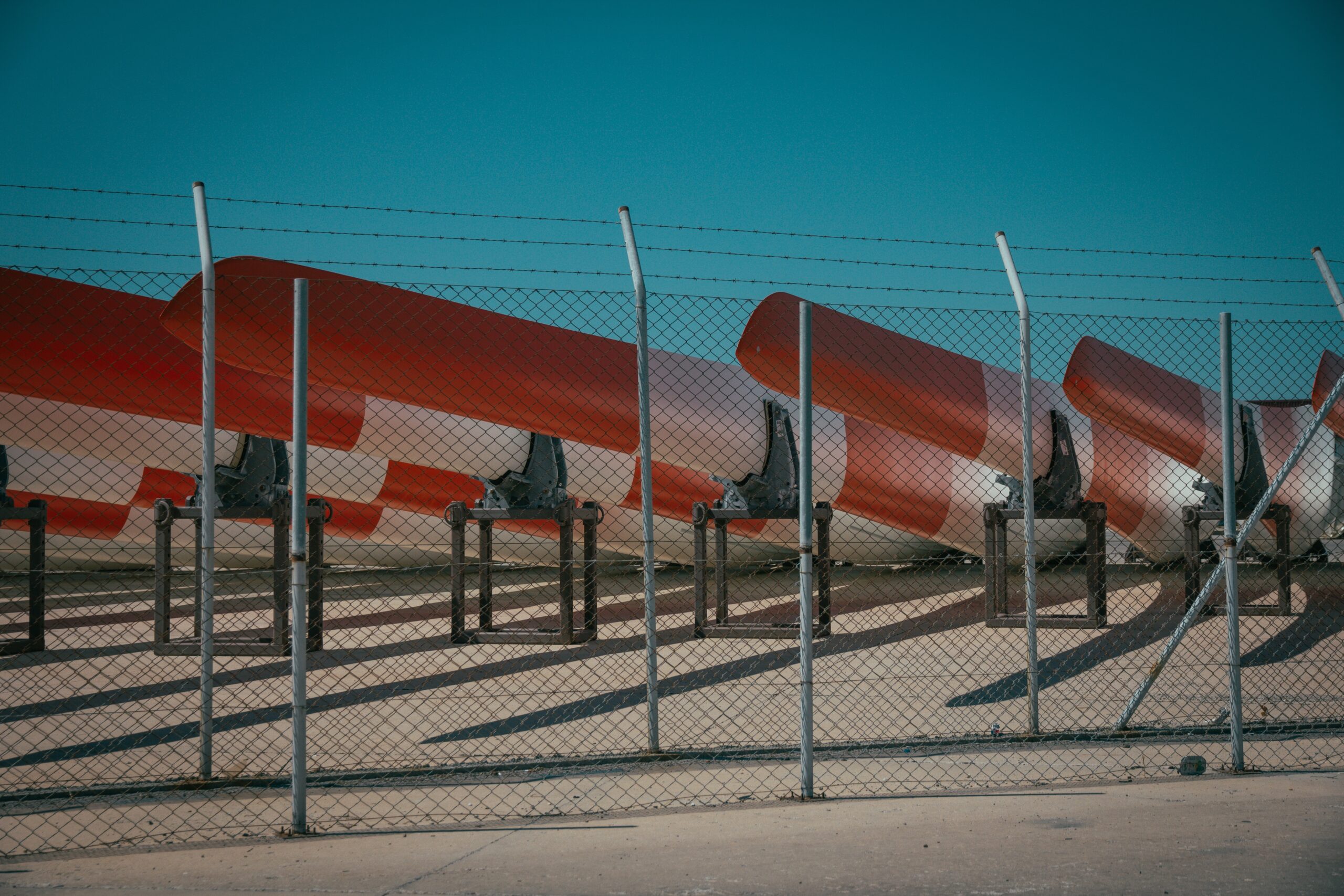
    Chain-link fencing remains common because it is inexpensive and allows clear sightlines for cameras and patrol staff, but it offers minimal delay against a determined climber and provides hand and foot holds unless modified. Welded mesh and palisade fencing increase climb resistance through smaller mesh apertures or pointed pales, at higher cost. Anti-climb mesh — small-aperture rigid mesh panels — is specifically designed to deny the toe-holds that make chain-link climbable, and is increasingly specified for critical-infrastructure and high-security commercial sites.

    Height, Overhang and Toppings

    Fence height alone is a weak predictor of effectiveness without considering toppings and overhangs. An outward-angled overhang at the top of a fence, combined with barbed wire, razor wire (concertina) or anti-climb spikes, is far more effective at deterring a climb attempt than simply adding height to a vertical fence, since a climber can often scale a taller fence more easily than negotiate an overhang. Site designers weigh these choices against local regulations, which frequently restrict razor wire and certain topping types in commercial or residential-adjacent settings.

    Fence-Mounted Detection

    Fencing increasingly does double duty as a sensor platform. Fence-mounted vibration and strain sensors detect climbing, cutting, or lifting attempts by analyzing the mechanical disturbance signature along the fence line, while fiber-optic sensing cable run along or woven into the fence fabric can provide continuous, zone-located detection across long perimeters without discrete point sensors. These systems are only as good as the fence they’re mounted on: a poorly tensioned or structurally weak fence generates noisy signals and more false alarms.

    Buffer Zones and Clear Zones

    Effective perimeter design pairs the fence itself with a clear zone on both sides — vegetation and obstruction-free space that improves camera and sensor performance, removes objects that could be used to breach or climb the fence, and gives responding personnel a clear line of approach. A well-specified fence undermined by overgrown vegetation or nearby objects that provide a climbing aid loses much of its designed effectiveness.

    Conclusion

    Fencing rarely gets the attention that cameras and access control systems do in security planning discussions, but it remains the physical layer that every other perimeter technology depends on. A camera cannot delay an intruder, and a sensor only detects what is already happening; a well-specified fence, topping and clear zone combination is what actually buys the time those other systems are designed to use.
  • Radar’s Rise in Commercial Perimeter Security

    Radar’s Rise in Commercial Perimeter Security

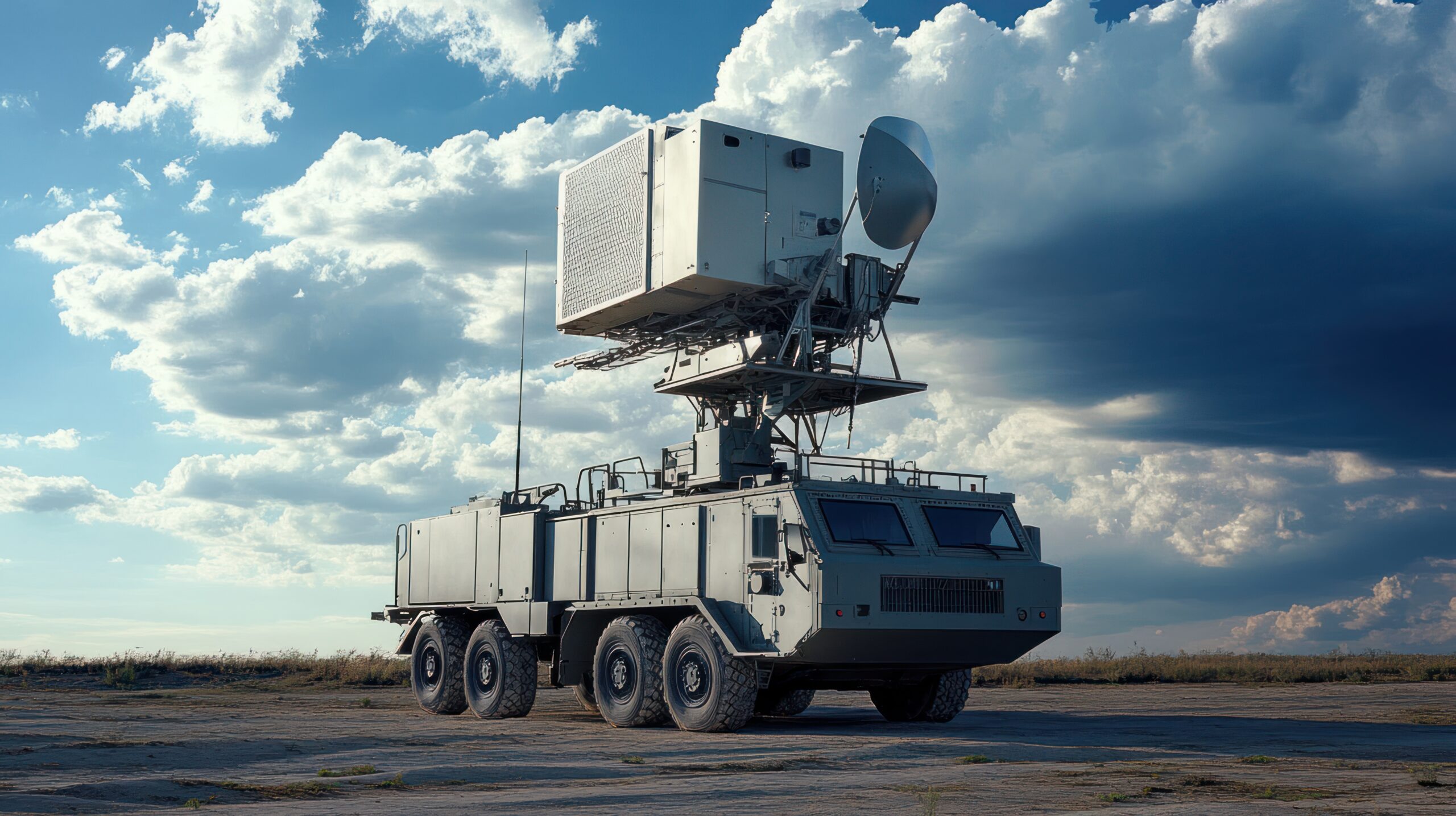
    Radar has quietly become one of the more important sensor types in commercial perimeter security, moving well beyond its traditional home in aviation and military applications. For sites that need reliable detection across large open areas and in poor visibility, radar increasingly sits alongside cameras and fence-line sensors rather than as a niche add-on.

    Why Radar Fits Perimeter Detection

    Radar works by emitting radio waves and measuring how they reflect off objects, calculating range, speed and direction of movement independent of light or weather conditions. That makes it fundamentally different from video-based detection, which depends on adequate lighting and a clear line of sight, and from fence-mounted or buried sensors, which only detect activity at the point of intrusion rather than approach. A radar unit can detect a person or vehicle approaching a perimeter well before they reach it, in complete darkness, heavy rain, fog or blowing dust that would defeat most cameras.

    From Military-Grade to Commercially Practical

    Early security radar systems were adapted from military and airport surveillance technology, which made them expensive and often overly sensitive for typical commercial use. The current generation of ground surveillance radar is purpose-built for perimeter security, with solid-state designs, lower price points, and detection logic tuned to classify people and vehicles rather than simply flagging any movement, which has driven down the false-alarm rates that limited earlier radar deployments.

    Where Radar Is Being Deployed

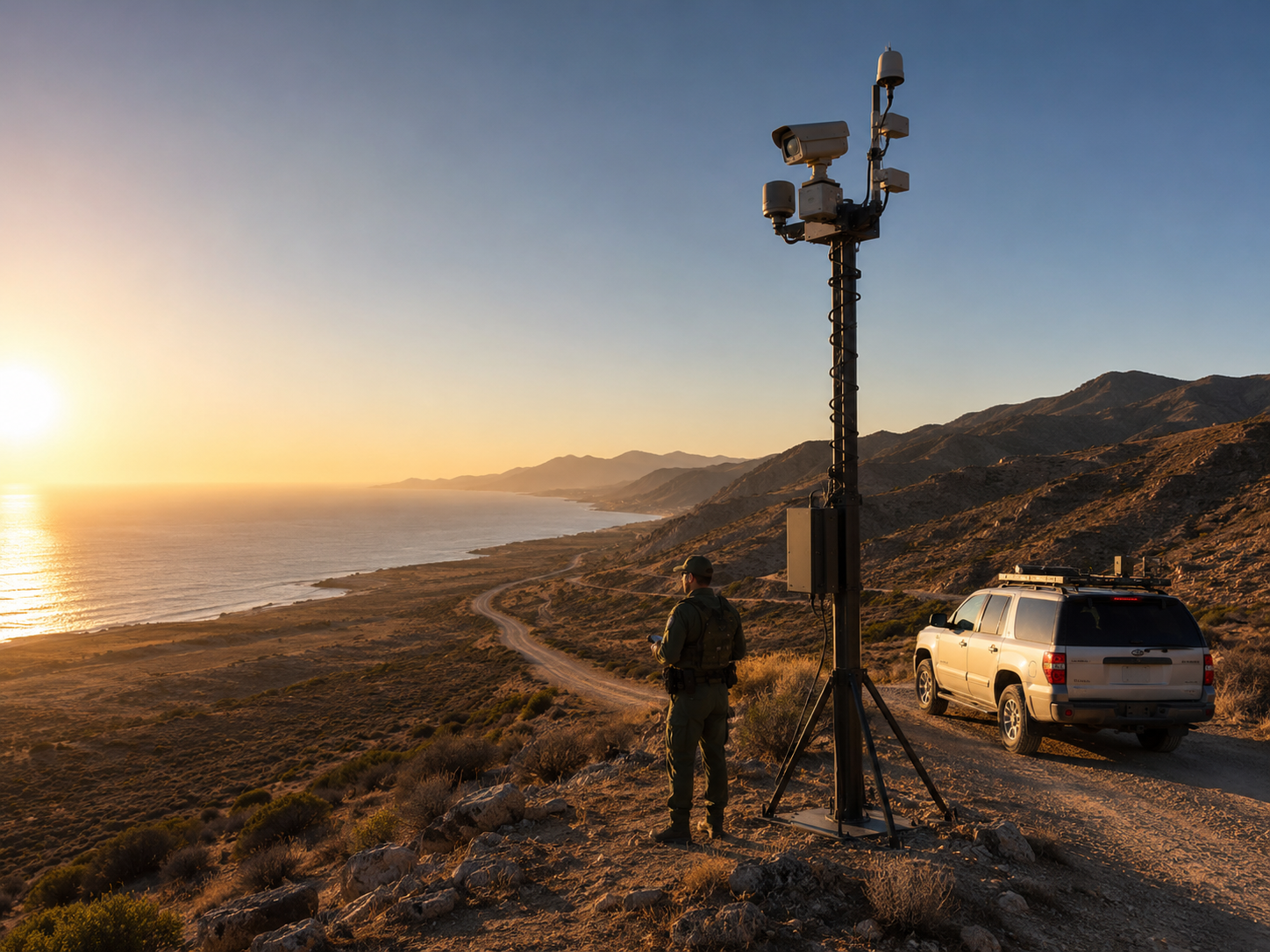
    Radar has found a particular niche protecting large, open sites where fence-line sensors or camera coverage alone would be impractical or prohibitively expensive: solar farms, substations, ports, logistics yards, construction sites and data center campuses. In these environments, a small number of radar units can cover distances that would require dozens of cameras, and the radar’s output can then cue nearby pan-tilt-zoom cameras to automatically point at and record a detected target, combining radar’s long-range detection with video’s ability to visually confirm and identify a threat.

    Radar as Part of a Layered System

    Security professionals generally treat radar as one layer in a broader detection strategy rather than a standalone solution. Radar excels at early, long-range detection across open ground but provides limited ability to identify what it has detected, which is why it is typically paired with video analytics for classification and verification, and sometimes with thermal cameras for confirmation in total darkness. This sensor-fusion approach, combining radar’s reach with the identification strengths of video and thermal imaging, has become a common design pattern for protecting critical infrastructure and other large perimeters.

    FAQ

    Does radar replace cameras in perimeter security? No. Radar is generally used to detect and track objects across an open area, then hand off to cameras for visual verification and identification, rather than replacing video entirely.

    Can radar work in bad weather? Yes, this is one of radar’s core advantages. Because it uses radio waves rather than visible light, radar performance is largely unaffected by darkness, fog, rain, dust and similar conditions that degrade camera performance.

    Is security radar expensive to deploy? Costs have fallen significantly compared with early military-derived systems, and because a single radar unit can cover a large area, overall system cost per square foot of coverage is often lower than achieving equivalent coverage with cameras alone.

  • Rapid Response Monitoring Expands Henderson, Nevada Facility, Plans 75 New Jobs

    Rapid Response Monitoring Expands Henderson, Nevada Facility, Plans 75 New Jobs

    Rapid Response Monitoring Services is expanding its central-station operations in Henderson, Nevada, adding roughly 12,000 square feet of leased space and planning to create 75 full-time jobs at the facility over the next two years.

    Investment in Local Operations

    The expansion includes tenant improvements and a $600,000 capital investment in equipment and facility upgrades. The new hiring is expected to grow the Henderson site’s headcount to approximately 240 employees supporting the company’s nationwide Response Management Platform.

    Founded in 1992 and headquartered in Syracuse, New York, Rapid Response protects more than 4 million subscriber accounts across the United States and Canada, combining monitoring technology, artificial intelligence and trained response specialists to process alarm signals and coordinate emergency response.

    “Nevada represents an important part of Rapid’s long-term growth strategy,” said David Pida, chief financial officer at Rapid Response Monitoring. “As the company expands its operational footprint in the state, Rapid is committed to creating high-quality careers, investing in advanced technology, and building lasting partnerships that contribute to the economic vitality of the communities it serves.”

    A Welcome Addition for the City

    Henderson Mayor Michelle Romero welcomed the continued investment, saying it reinforces the city’s position as a destination for business growth. “Their continued growth strengthens our local economy, creates valuable job opportunities, and reinforces Henderson as a premier destination for business,” Romero said.

  • NAPCO Releases Prima v8 App With New Security Controls

    NAPCO Releases Prima v8 App With New Security Controls

    September 4, 2026 — NAPCO Security Technologies has released Prima v8, a redesigned mobile app for its Prima self-contained smart security systems. The update adds revised security controls, biometric authentication, expanded notification settings and an Apple Watch companion app.

    What Changed in Prima v8

    The new version reorganizes navigation and rebuilds core workflows for arming, device control and account management. Security screens provide clearer entry and exit countdowns, alarm details and sensor status information. Users can also manage connected lights, locks, garage doors, water valves and thermostats from the app.

    NAPCO says existing users can install the update without creating a new account or re-pairing their system devices. Credentials, configurations and device pairings are intended to carry over. The Apple Watch companion app supports arming and disarming from the watch, while revised settings give users more control over push, email and SMS notifications.

    Why It Matters

    Residential and small-commercial security platforms increasingly combine alarm status, connected-device control and account administration in one mobile interface. A clearer workflow can reduce routine friction for users and installers, but app convenience does not replace professional system design, reliable communications or an appropriate alarm-response plan.

    The release follows the wider shift toward software-led management of intrusion and connected-building systems. For background on the underlying sensors and control architecture, see SectechMedia’s guide to intrusion detection and alarm systems.

    Sources

  • Keenfinity Splits Intrusion and Access Control Units Into Radionix and MiCOS

    Keenfinity Splits Intrusion and Access Control Units Into Radionix and MiCOS

    Keenfinity Group is separating its former Intrusion & Access portfolio into two dedicated subsidiaries effective September 1, 2026, with Radionix taking over intrusion alarm systems and MiCOS concentrating exclusively on access control, the company confirmed to Security Info Watch on August 31, 2026.

    New Leadership Structure

    Phil Dutoy, who joined Keenfinity in 2025 and previously worked on the company’s transformation strategy following its carve-out from Bosch, becomes CEO of Radionix. Gregor Schlechtriem, who had led the combined Intrusion & Access business through the Radionix brand launch, moves to lead MiCOS exclusively. Both companies remain wholly owned Keenfinity subsidiaries pursuing separate go-to-market strategies, and Keenfinity said the change will not alter existing product lines: Radionix continues to build on Bosch intrusion technology, while Bosch-branded access control products continue under the same development and support teams.

    Two Legacy Brands, Two Focused Businesses

    Radionix, formally launched at GSX 2025, builds on nearly six decades of intrusion-system heritage and includes the G Series platform that integrates intrusion detection, access control and fire alarm functions. MiCOS revives a brand with more than four decades of access control history and will operate out of Eindhoven, Netherlands, with a development center in Aachen, Germany. Keenfinity became an independent company on July 1, 2025, after Triton completed its acquisition of Bosch’s security and communications technology business.

    Why It Matters

    The split gives each business room to compete more directly in increasingly specialized markets, following a broader industry pattern of vendors separating access control strategy from intrusion detection as buyers demand deeper feature depth in each category rather than a single generalist product line.

  • O.W.L. Launches Extended-Range GA7360LR 3D Radar for Perimeter and Counter-Drone Surveillance

    O.W.L. Launches Extended-Range GA7360LR 3D Radar for Perimeter and Counter-Drone Surveillance

    Observation Without Limits (O.W.L.) has launched the GA7360LR, a 3D, 360-degree radar system built for ground surveillance and low-altitude airspace monitoring, extending the detection range and classification accuracy of the company’s original GA7360 model first introduced in 2024.

    What the New Radar Adds

    According to O.W.L., the GA7360LR is a solid-state system with no moving parts, backed by a full warranty, and operates using pulsed Doppler processing in the S frequency band between 3.0 and 3.3 GHz. The company lists detection ranges of 7.5 kilometers for aircraft the size of a Cessna 172 and for vehicles, 4 kilometers for a walking person, and 3 kilometers for a small consumer drone such as a DJI Phantom IV. The unit is rated to operate across a wide temperature range, from -20°C to 60°C, making it suitable for outdoor perimeter deployments in varied climates.

    “Building on the success of the original GA7360 radar model introduced in 2024, the GA7360LR extends detection ranges, improves accuracy and consistency of target tracking and enhances the accuracy and reliability of target classification in a single 360-degree radar,” O.W.L. CEO Adam Robinett said in the company’s announcement.

    Applications Span Perimeter Defense and Counter-UAS

    O.W.L. positions the GA7360LR for a broad set of ground and airspace situational-awareness use cases, including counter-UAS systems both with and without electronic or kinetic countermeasures, drone-as-first-responder programs, bird-detection systems for airports and wind farms, and beyond-visual-line-of-sight operations. The single-radar design that covers both ground-level intrusion detection and low-altitude drone tracking reflects a broader trend in the perimeter security market, where facility operators are increasingly looking to consolidate what used to be separate ground radar and counter-drone radar systems into one sensor.

    The GA7360LR is now available, according to the company, and can be integrated into existing command-and-control and video management platforms as an additional detection layer alongside cameras and other perimeter sensors.

  • Denver International Airport Logged Six Perimeter Fence Breaches in Three Years, Records Show

    Denver International Airport Logged Six Perimeter Fence Breaches in Three Years, Records Show

    A Pattern of Breaches Preceding a Fatal Incident

    Denver police have responded to six cases of people breaching the perimeter fence at Denver International Airport since January 2023, according to police records reported by The Denver Post on August 17, 2026. The most serious was a fatal incident on May 8, 2026, when 41-year-old Michael Mott scaled the airport’s eight-foot, barbed-wire-topped security fence and walked onto a runway shortly before 11:20 p.m. He was struck and killed by a Frontier Airlines aircraft that was accelerating for takeoff. Denver’s chief medical examiner, Dr. Sterling McLaren, ruled Mott’s death a suicide, according to the Post.

    Of the other five recorded breaches, one involved a man who crashed through a perimeter fence gate and drove onto the airfield, causing more than $2,000 in damage; another involved a man who jumped the fence after crashing his car nearby and was later found sitting on an active taxiway around 6:40 a.m.; and a third involved a man who told police he was trying to walk to Texas. Two additional trespassing cases involved people jumping the boundary fence into the airport’s warehouse area. At least two of the eight individuals involved in these incidents had active arrest warrants at the time of their breach, the Post reported, citing probable-cause statements.

    How the Numbers Compare Nationally

    There is no national database that tracks airport perimeter breaches specifically, and airports report trespassing incidents inconsistently, according to Annmarie Heth, an assistant professor of aviation and aerospace sciences at Metropolitan State University of Denver who was interviewed by the Post. The Federal Aviation Administration does separately track runway incursions — a broader category covering air traffic control errors, pilot violations, and unauthorized pedestrians or vehicles on runways and taxiways — at airports with control towers, including DIA. The FAA’s database recorded roughly 5,890 runway incursions nationwide between January 2023 and June 2026, of which 1,022 involved unauthorized pedestrians or vehicles. Only two of the six DIA police-documented perimeter breaches during that period appear in the FAA’s database, which lists a total of 37 incidents involving unauthorized vehicles and pedestrians at DIA dating back to April 2006, per Post reporting.

    Officials Say the Uptick May Reflect Better Detection, Not Worse Security

    Heth told the Post that fatal breaches like the one that killed Mott are extremely rare and that advanced perimeter technology usually allows security personnel to intercept trespassers before an incident escalates. “Fences are there to keep honest people out,” she said. “If somebody is really intent on getting through a fence, they’re going to get through.” She added that improved sensors, cameras, analytics and staff training may explain why more incidents are being detected and reported today compared with when she worked as an airport operations manager in Florida between 2009 and 2015, when even wind gusts could trigger perimeter alarms and prompt an investigation.

    A Denver Police Department spokesman, Doug Schepman, said the department’s dedicated Airport Police Bureau at DIA works closely with airport operations staff, monitors data on breach trends, and adjusts resources accordingly. DIA officials declined to comment on the individual trespassing incidents when contacted by the Post. The FAA and the National Transportation Safety Board also declined to comment specifically on DIA’s perimeter breaches.

    Sources

  • Solar Farm Security: Protecting Large Renewable-Energy Sites

    Solar Farm Security: Protecting Large Renewable-Energy Sites

    Utility-scale solar farms combine expensive distributed assets with very large perimeters, remote locations and limited staff presence. Their security architecture must therefore emphasize early detection, reliable communications and low false-alarm rates.

    The perimeter problem

    A solar site may stretch across hundreds of hectares. Traditional guard-intensive protection becomes expensive, so operators increasingly rely on layered detection using fence sensors, radar, thermal imaging and video analytics.

    Remote verification

    Every alarm should be quickly verifiable. Thermal cameras are useful at night and in low-light conditions, while visible cameras provide identification detail. Radar can cue PTZ cameras toward moving targets and reduce dependence on fixed camera coverage.

    Asset and cable protection

    Inverters, transformers, copper cabling, battery systems and communications cabinets require local protection. Access control, cabinet monitoring and tamper alarms create a second layer inside the perimeter.

    Operations and maintenance

    Environmental conditions such as heat, dust, vegetation and wildlife can create nuisance alarms. Analytics and regular tuning are essential. Solar-powered field devices can be useful, but maintenance planning and communications redundancy remain critical.

    Integrated renewable-site security

    The strongest model connects perimeter detection, video, access control, fire monitoring and operational telemetry in one command workflow. For long boundaries, fiber-optic sensing can add continuous linear awareness without thousands of powered field sensors.

    Conclusion

    Solar Farm and Renewable-Energy Site Security should be evaluated as part of a broader operational architecture. The strongest deployments combine suitable sensing technology, resilient communications, clear procedures and measurable performance rather than relying on a single device or headline specification.

  • Fiber Optic Perimeter Intrusion Detection: How It Works

    Fiber Optic Perimeter Intrusion Detection: How It Works

    Perimeter protection traditionally relies on cameras, microwave barriers, buried sensors and fence-mounted detectors. Fiber-optic sensing adds a different capability: a single passive cable can monitor long boundaries continuously and locate disturbances along the route.

    How It Works

    A sensing unit launches optical signals into fiber installed on a fence, buried near a boundary or integrated into other infrastructure. Vibrations created by climbing, cutting, digging, walking or vehicle movement alter the backscattered optical signal. Software analyzes these changes and estimates the event location.

    The fiber itself requires no electrical power along the protected route, which is valuable for remote sites, substations, pipelines, solar farms, airports and critical infrastructure. Long distances can be monitored from a protected interrogation point.

    Detection Is Only Half the Problem

    The central engineering challenge is classification. Wind, rain, animals, maintenance work and nearby traffic can create vibration. Modern systems therefore use signal processing and machine-learning models to distinguish meaningful events from environmental noise.

    Good performance depends heavily on installation. Fence type, cable attachment method, soil conditions, route geometry, calibration and zone configuration all influence detection quality. A high-end interrogator cannot compensate for a poorly designed sensing route.

    Integration with Cameras and Radar

    Fiber sensing is strongest when used as part of a layered system. A detected event can automatically cue a PTZ camera, thermal imager or radar track. The fiber provides the alarm and location; imaging systems provide visual verification.

    For very large sites, this approach can reduce the need for continuously staffed camera monitoring. Operators focus attention on locations where another sensor has already detected activity.

    Where It Fits Best

    Fiber-optic perimeter detection is especially attractive for long linear boundaries, remote facilities and locations where field power is difficult. It can also share infrastructure with communications fiber in some architectures, although dedicated sensing fiber often provides more predictable performance.

    Its limitations should be understood. Classification accuracy varies by environment, and commissioning requires realistic site testing. A system should be evaluated against the actual fence, soil, weather and threat profile rather than laboratory specifications alone.

    Conclusion

    Fiber-optic perimeter sensing transforms a passive cable into a distributed detection line. Its real advantage is not simply long range; it is the ability to combine location, continuous coverage and low field-power requirements. When integrated with cameras, thermal imaging and command-and-control software, it becomes a powerful component of modern perimeter security.

  • The Future of Perimeter Security: Sensor Fusion and AI

    The Future of Perimeter Security: Sensor Fusion and AI

    Perimeter security is moving away from single-sensor thinking. Traditional designs often depended on one primary detection technology, such as fence vibration sensors or video motion detection. Modern systems increasingly combine radar, thermal cameras, visible cameras, fiber-optic sensing, access data and AI analytics to create a richer picture of what is happening around a site.

    Sensor fusion is the key change. A fence vibration may indicate an event, but radar can reveal movement beyond the fence, thermal imaging can detect a person at night and a PTZ camera can provide visual confirmation. When these inputs are correlated automatically, the operator receives a higher-confidence incident instead of several unrelated alarms.

    AI is improving classification rather than simply adding more alarms. Models can distinguish people, vehicles and animals, analyze direction and speed, and prioritize activity that violates site rules. The practical benefit is lower operator workload and fewer nuisance events.

    Fiber-optic sensing is also becoming more important, especially across long pipelines, rail corridors, borders and large industrial perimeters. Distributed sensing can turn kilometers of fiber into continuous detection zones and complement point sensors or cameras.

    Edge computing will further change architecture. More classification can occur near the sensor, reducing bandwidth and enabling faster local decisions. Cloud platforms will remain valuable for fleet management, analytics updates and multi-site visibility.

    The future perimeter will therefore behave less like a collection of independent devices and more like a coordinated detection network. The goal is not maximum sensor count. It is confidence: detect early, classify accurately, verify quickly and present operators with the context required to act.