Category: Intrusion & Perimeter Security

Sensors, alarms, fencing, radar, thermal imaging and fiber optic systems used to detect and prevent unauthorized entry into secured areas.

  • Sensor Fusion: Why Cameras Alone Are No Longer Enough

    Sensor Fusion: Why Cameras Alone Are No Longer Enough

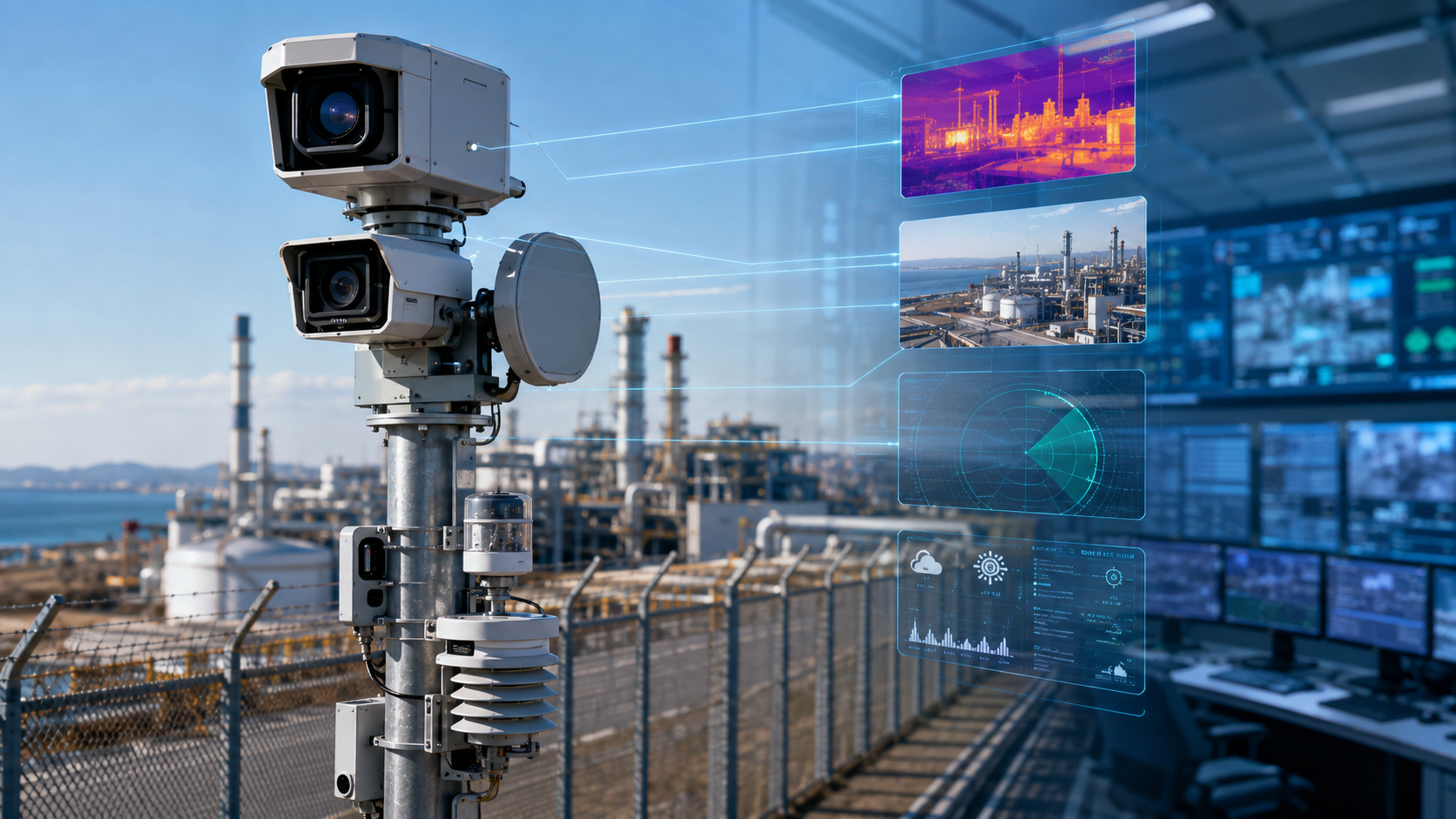
    No single sensor sees everything. Cameras provide rich visual information, radar tracks movement, thermal cameras detect heat and fiber-optic sensing covers long distances. Sensor fusion combines these complementary strengths.

    Detection, tracking and verification

    A useful layered model separates three functions. One sensor detects an event, another tracks the target, and a third verifies what it is. Access-control data can add authorization context.

    Reducing nuisance alarms

    Requiring agreement between independent sensors can improve confidence. A fence vibration event, for example, can be checked against thermal or video analytics before escalation.

    Data correlation

    Fusion is more than displaying systems on one screen. A platform must correlate time, location and identity so operators receive a coherent incident rather than unrelated alarms.

    Perimeter and critical infrastructure

    Radar, thermal, visible cameras and fiber sensors can provide overlapping coverage. Pipelines, railways and power networks may also combine sensing with weather, drone or operational data.

    Engineering challenges

    Different clocks, coordinate systems and event formats complicate integration. Time synchronization, data normalization and complementary failure modes are essential.

    Conclusion

    Security is moving from device-centric systems toward context-centric operations. Sensor fusion is the architecture that enables that transition.

  • Radar in Commercial Security: Where It Works Better Than Cameras

    Radar in Commercial Security: Where It Works Better Than Cameras

    Compact radar has become increasingly practical for commercial security. Modern sensors can detect, locate and track people or vehicles across wide outdoor areas, often in conditions where cameras struggle.

    How security radar works

    Radar transmits radio-frequency energy and analyzes reflections from objects. By measuring distance, angle and Doppler movement, a system can estimate a target’s position, speed and direction.

    Where radar outperforms cameras

    Radar does not depend on visible light and can operate in darkness. It can detect movement over wide open areas without requiring a detailed visual image, making it useful for large yards, airports, solar farms, ports, logistics areas and critical infrastructure.

    Tracking, verification and camera cueing

    Radar excels at tracking but does not provide identity. A visible or thermal PTZ camera can be cued automatically to verify a target and provide richer visual context.

    Coverage and nuisance alarms

    Vegetation, water, machinery, terrain, buildings and metal structures can affect performance or create shadow zones and reflections. Placement requires a site survey and realistic acceptance testing.

    Privacy, cybersecurity and integration

    Radar can support detection where continuous video raises privacy concerns, with video activated for verification. Networked radar also requires secure configuration, firmware management, segmentation and reliable VMS integration.

    Conclusion

    Radar is not a camera replacement. It is a complementary sensor that is often better at answering where a moving target is, how fast it is moving and where it is going.

  • Perimeter Security Technologies: Fences, Sensors, Radar, Thermal and Fiber

    Perimeter Security Technologies: Fences, Sensors, Radar, Thermal and Fiber

    A complete introduction to perimeter security, from fencing and vehicle barriers to radar, thermal cameras, buried sensors and fiber-optic intrusion detection.

    Physical perimeter measures

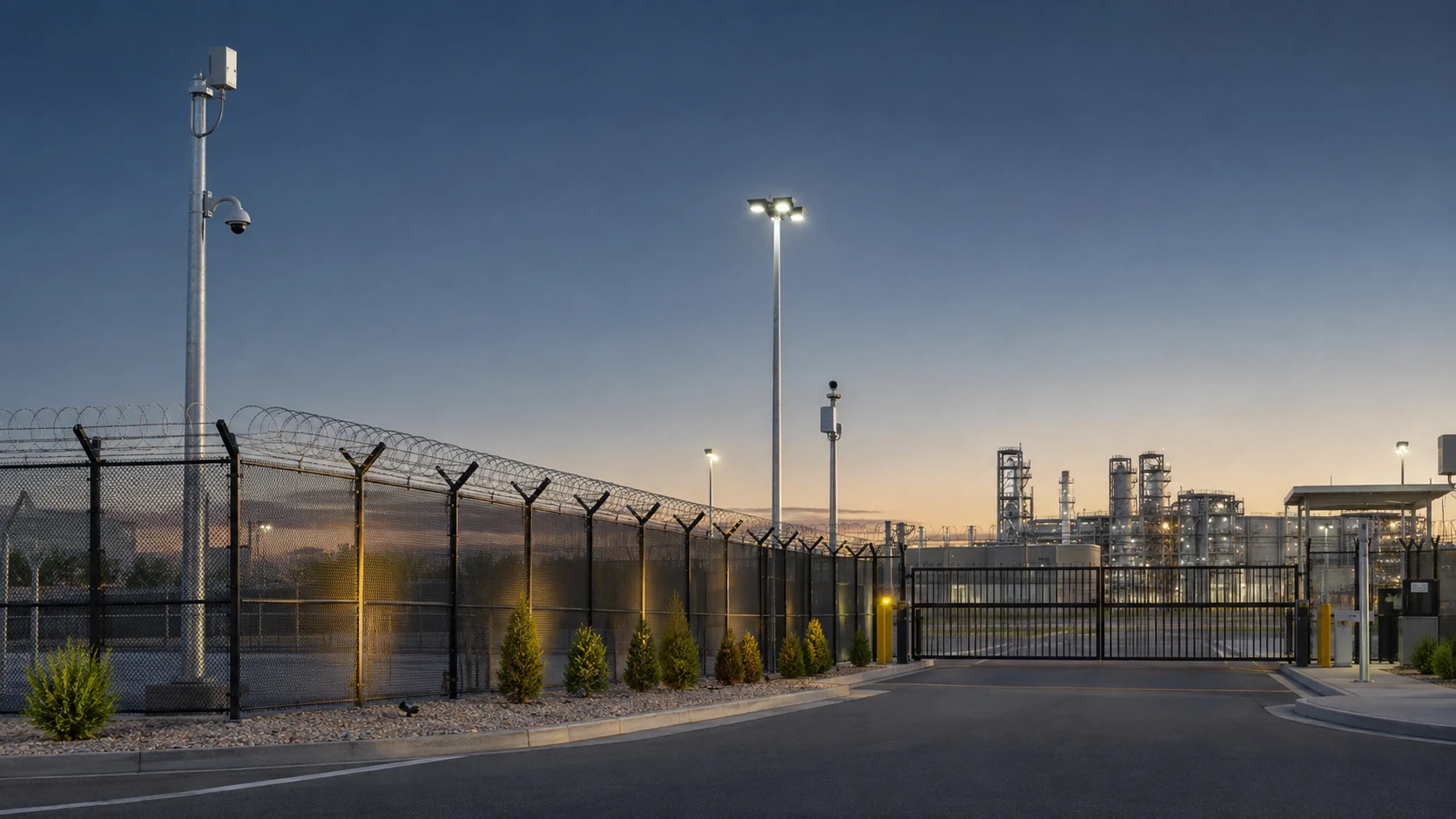
    Fences, walls, gates, security doors and anti-climb features create a visible boundary and add delay. Their value depends on height, construction, terrain, foundations, gate design and what an adversary is expected to attempt. Vehicle threats require separate analysis: bollards, road blockers and other hostile-vehicle-mitigation measures are designed around vehicle mass, speed, approach geometry and stand-off distance. CISA’s Vehicle Incident Prevention and Mitigation Security Guide recommends a Plan–Prevent–Protect framework.

    Perimeter intrusion detection systems (PIDS)

    PIDS is a broad term covering technologies that detect activity at or near a boundary. Fence-mounted sensors measure vibration or movement caused by climbing, cutting or impact. Buried systems can detect footsteps or vehicles. Microwave barriers create an invisible detection field between transmitters and receivers, and infrared beams detect interruption of a defined path. Each technology has environmental trade-offs, and good design starts with the site, not the brochure.

    Radar

    Ground-surveillance radar detects and tracks moving targets across an area, covering open terrain beyond the fence and cueing PTZ or thermal cameras toward a detected target. Radar performance varies with terrain, clutter, target size, speed, mounting and frequency—a maximum-range figure alone says little about reliable detection of the target class that matters to the project.

    Thermal and video analytics

    Thermal cameras are valuable for detection in darkness because they respond to thermal contrast rather than visible illumination. Video analytics can classify people and vehicles or apply rules such as line crossing and loitering. In many perimeter systems the camera’s most important role is assessment: giving the operator visual evidence immediately after another sensor alarms.

    Fiber-optic PIDS and DAS

    Fiber-optic sensing can monitor long boundaries with passive sensing cable in the field, attached to a fence, buried or installed along a linear asset. Distributed Acoustic Sensing uses changes in Rayleigh backscatter to detect strain and vibration along the fiber. The attraction is continuous sensing over long distances with minimal active electronics along the protected line; the engineering challenge is classification—distinguishing digging, climbing or vehicle movement from weather and other background vibration.

    Sensor fusion and response

    The strongest perimeter systems increasingly combine complementary sensors: radar may detect and track a person, a thermal camera verifies the target, a fence sensor confirms interaction with the boundary, and a VMS or PSIM presents the event to the operator. Detection range is meaningless without a response concept—perimeter engineering should combine threat assessment, delay analysis, detection probability, nuisance alarms, camera coverage, lighting and procedures.

    FAQ

    Is a fence enough for perimeter security? A fence is an important physical layer but does not necessarily provide timely detection or assessment.

    Radar or thermal camera: which is better? They do different jobs. Radar is strong for wide-area detection and tracking; thermal imaging is strong for visual assessment and detection based on heat contrast. They are often used together.

    Where does fiber sensing fit? It is particularly relevant to long perimeters and linear assets where continuous distributed detection is valuable.

    Verification note: Never compare perimeter technologies using a single nominal range figure. Target class, terrain and nuisance-alarm performance must be considered.

  • Intrusion Detection and Alarm Systems Explained: Sensors, Panels and Verification

    Intrusion Detection and Alarm Systems Explained: Sensors, Panels and Verification

    Learn how intrusion detection systems use PIR, microwave, magnetic contacts, seismic sensors, alarm panels and video verification to identify security events.

    Perimeter and opening sensors

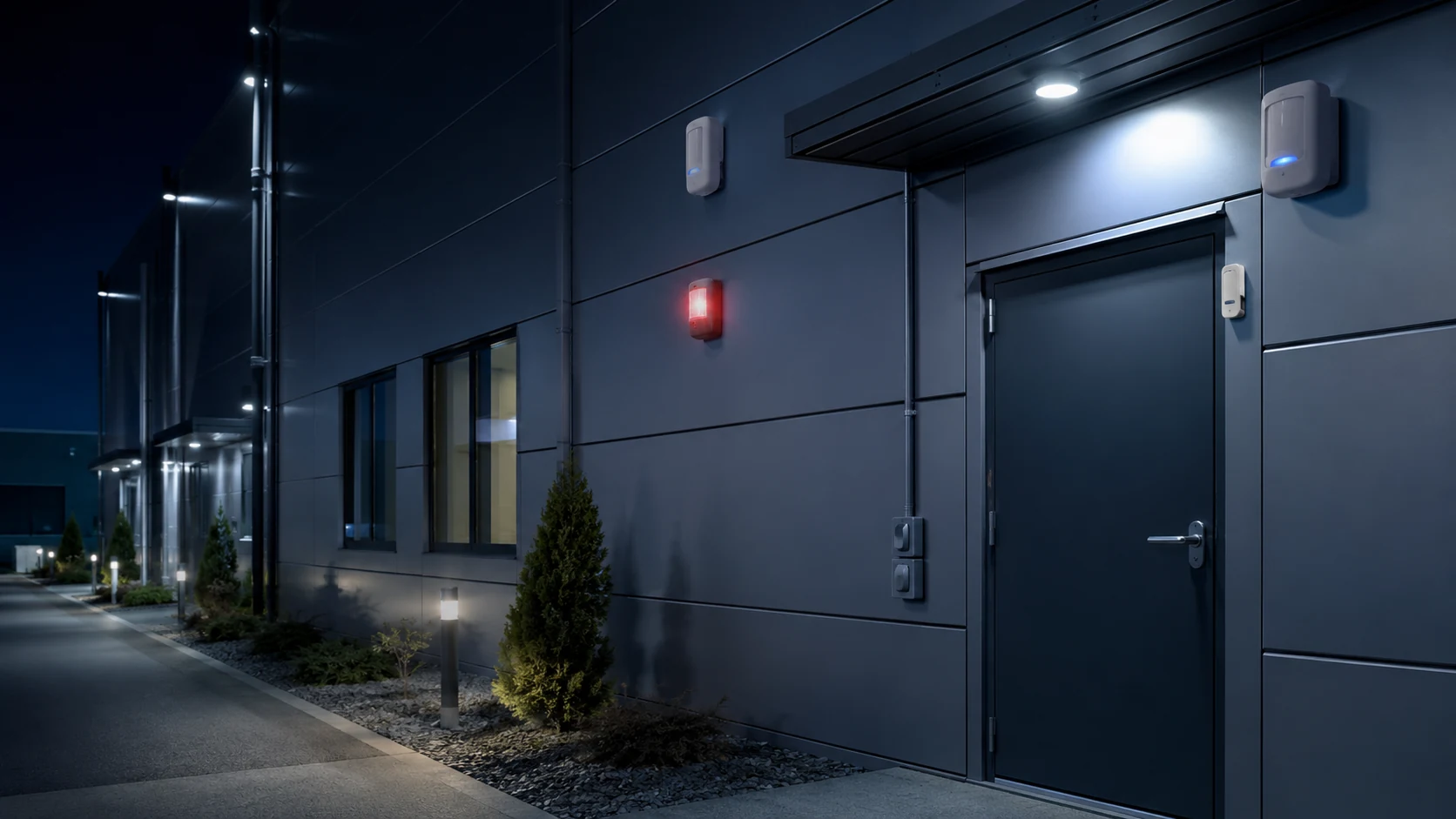
    Magnetic contacts are widely used on doors and windows, indicating a change in the protected opening rather than identifying who caused it. For higher-security applications, balanced magnetic switches and supervised circuits may be used. Glass-break detectors listen for acoustic signatures or sense physical shock associated with breaking glass, while seismic detectors can identify vibration patterns from attacks on walls or safes.

    Volumetric detection

    Passive infrared (PIR) detectors sense changes in infrared energy across zones in their field of view; they do not emit a beam and do not “see” a person like a camera. Microwave motion detectors emit radio-frequency energy and analyze changes in the reflected signal. Dual-technology detectors combine sensing principles—commonly PIR and microwave—to improve confidence and reduce nuisance alarms.

    Outdoor intrusion detection

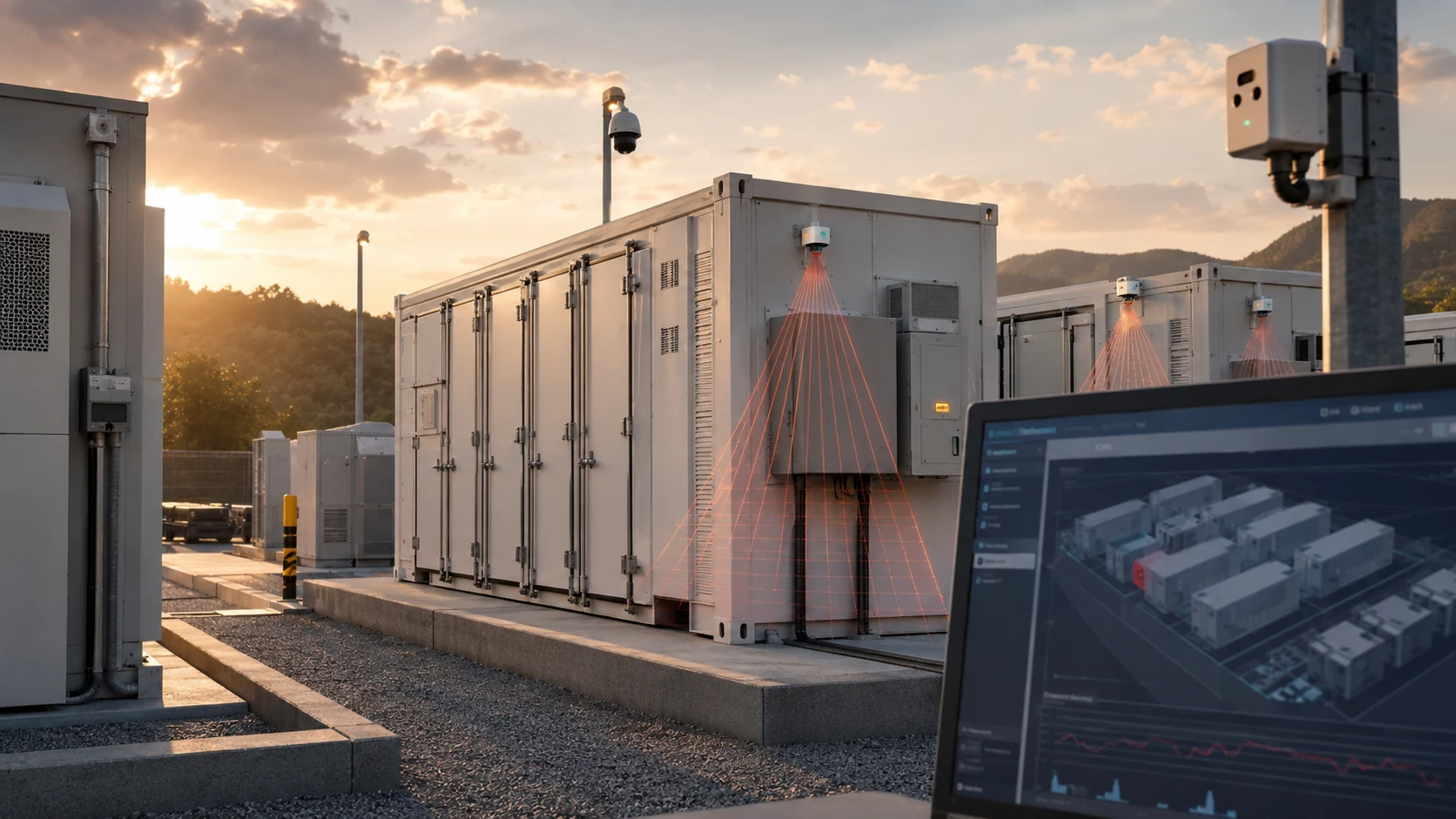
    Outdoor environments are harder: wind, rain, moving vegetation, animals and temperature swings create nuisance sources. Outdoor PIR, microwave barriers, fence sensors, buried sensors, radar, thermal analytics and fiber-optic systems each address different parts of the problem. The right question is what event must be detected, over what distance, in what terrain, with what acceptable nuisance-alarm rate.

    Alarm control panels and supervision

    The panel receives sensor states, applies logic and communicates alarms or faults. A professional system should also supervise critical wiring, power, communication paths and device health. Modern platforms may combine intrusion events with access control and video, so a door-contact alarm can automatically display the nearest camera.

    Verification changes the value of an alarm

    An alarm tells the operator that a rule has been triggered; it does not automatically explain what happened. Video verification, sequential confirmation from multiple sensors or operator call procedures can help distinguish a genuine intrusion from a nuisance event, avoiding the alarm fatigue that undermines system effectiveness.

    Layered security

    CISA physical-security guidance repeatedly emphasizes layered approaches to protection. Intrusion detection works best as one layer alongside physical delay, lighting, surveillance, access control, procedures and response.

    FAQ

    What is the difference between detection and verification? Detection identifies a condition that meets alarm logic. Verification adds evidence—often video or a second sensor—to help determine whether the alarm represents a real threat.

    Can one sensor type protect an entire facility? Usually not. Different spaces and threats require different sensing methods.

    Why do false alarms happen? Common causes include poor placement, environmental conditions, incorrect sensitivity, movement outside the intended area, maintenance issues and weak commissioning.

    Verification note: Detection ranges and immunity claims should be taken from specific product test data, not generalized across a technology class.