
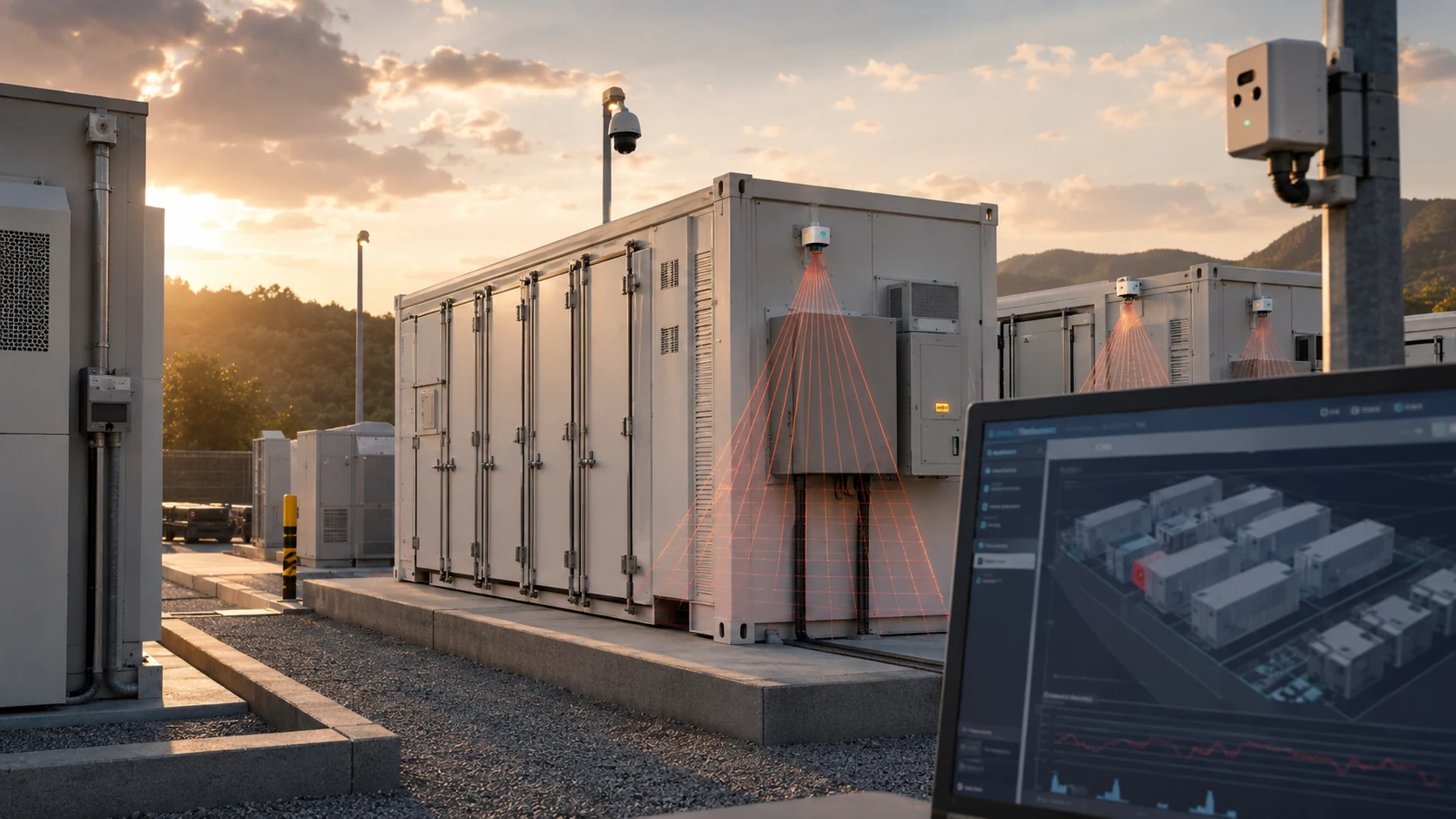
No single sensor sees everything. Cameras provide rich visual information, radar tracks movement, thermal cameras detect heat and fiber-optic sensing covers long distances. Sensor fusion combines these complementary strengths.
Detection, tracking and verification
A useful layered model separates three functions. One sensor detects an event, another tracks the target, and a third verifies what it is. Access-control data can add authorization context.
Reducing nuisance alarms
Requiring agreement between independent sensors can improve confidence. A fence vibration event, for example, can be checked against thermal or video analytics before escalation.
Data correlation
Fusion is more than displaying systems on one screen. A platform must correlate time, location and identity so operators receive a coherent incident rather than unrelated alarms.
Perimeter and critical infrastructure
Radar, thermal, visible cameras and fiber sensors can provide overlapping coverage. Pipelines, railways and power networks may also combine sensing with weather, drone or operational data.
Engineering challenges
Different clocks, coordinate systems and event formats complicate integration. Time synchronization, data normalization and complementary failure modes are essential.
Conclusion
Security is moving from device-centric systems toward context-centric operations. Sensor fusion is the architecture that enables that transition.
Leave a Reply