Tag: Thermal Imaging

  • Electrical Substation Security and Condition Monitoring

    Electrical Substation Security and Condition Monitoring

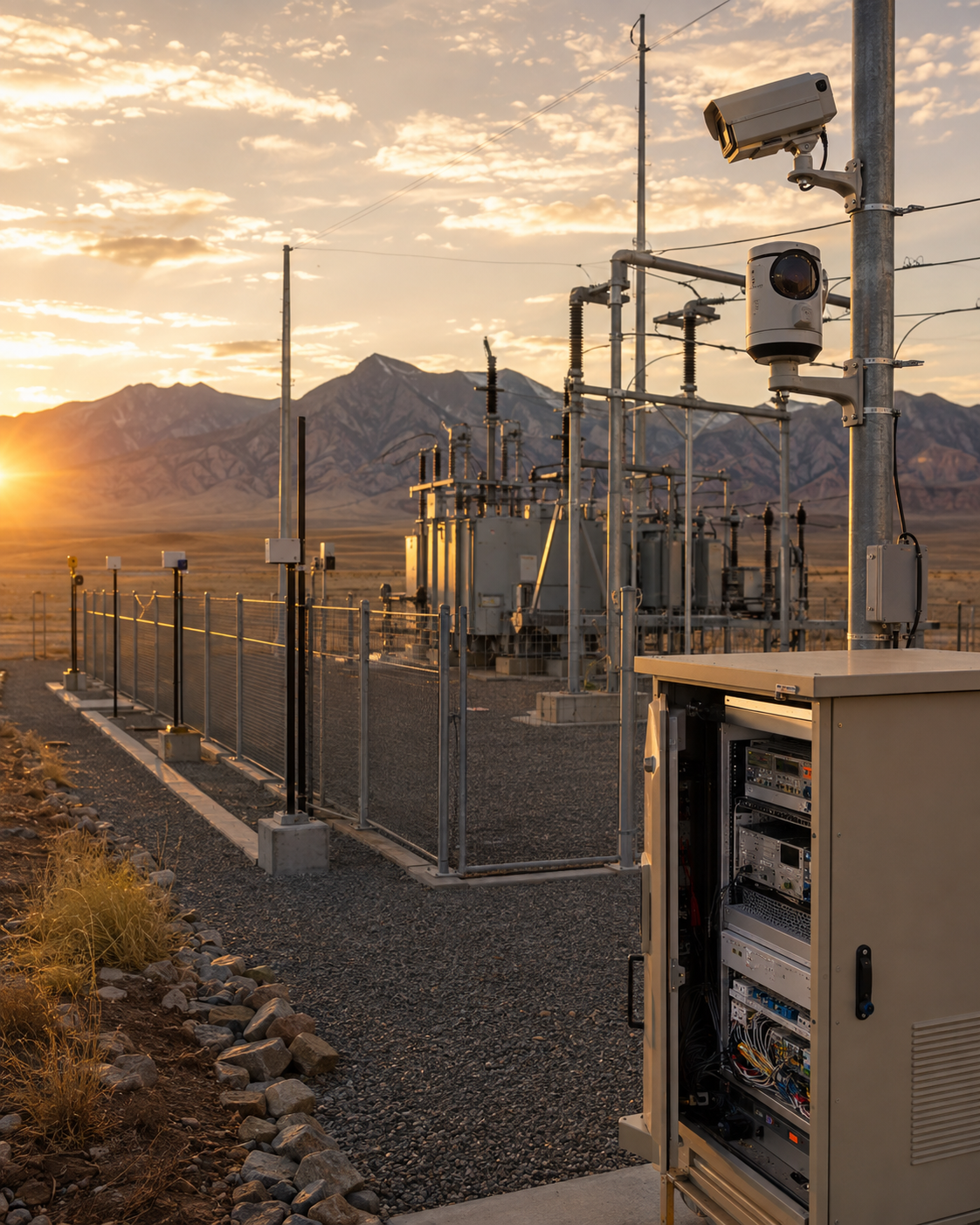
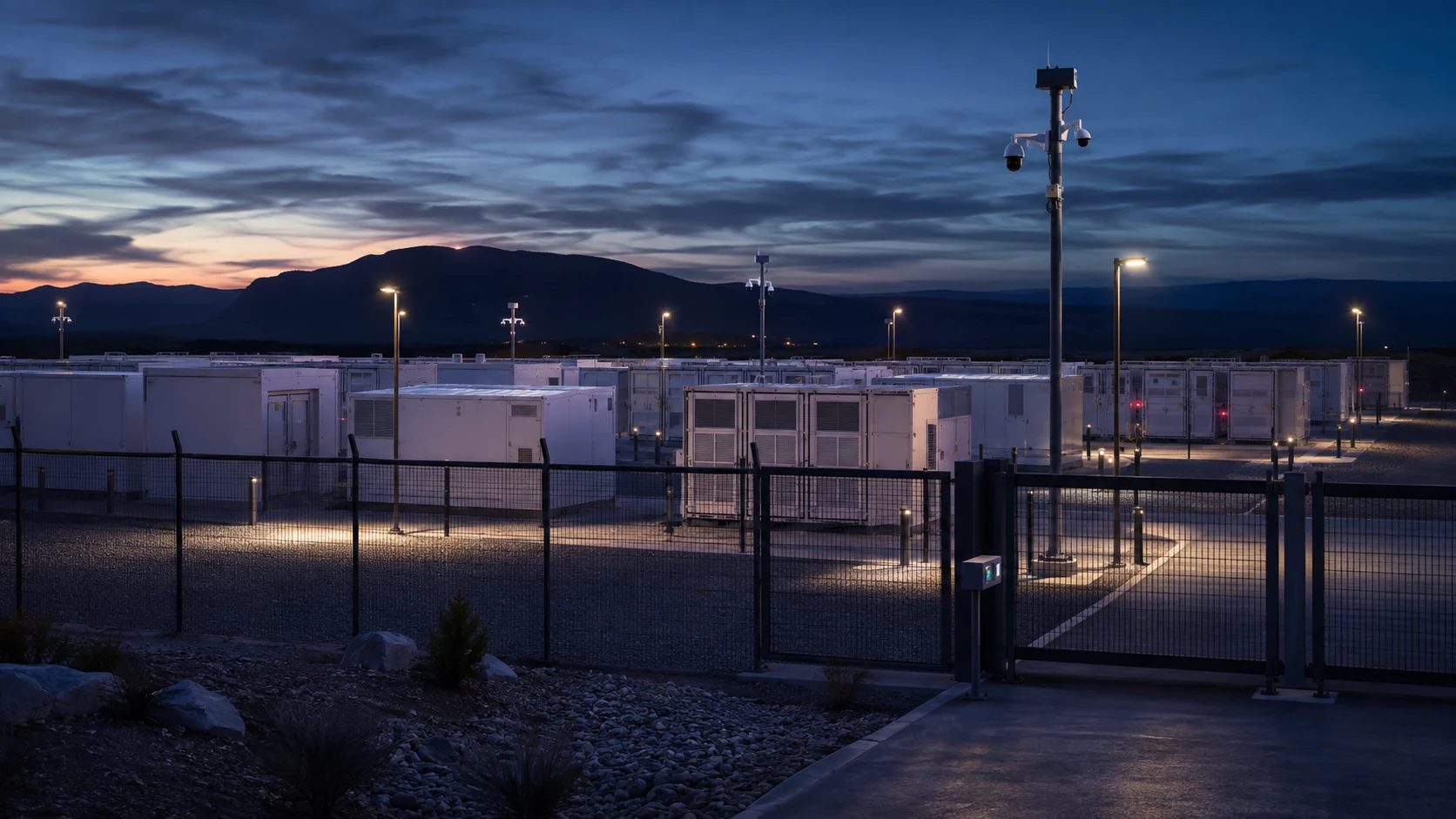
    Substations are compact but high-consequence sites. Physical intrusion, equipment failure, overheating and fire can all disrupt the grid, so security and condition monitoring increasingly converge.

    Layered physical protection

    Fences, gates, access control and intrusion detection form the basic security perimeter. Radar, thermal and video analytics can provide earlier awareness around remote or unmanned substations.

    Thermal condition monitoring

    Transformers, connectors, switchgear and cable terminations can develop abnormal heat before failure. Fixed thermal cameras and temperature-sensing systems help operations teams identify trends before they become outages.

    Fiber sensing opportunities

    DTS can monitor power cables and long routes for thermal anomalies, while DAS can detect vibration, digging or physical disturbance near critical lines. Together they create a continuous sensing layer beyond the fence.

    Cyber-physical integration

    Modern substations contain networked protection and control equipment. Physical security events should therefore be correlated with network and operational alarms rather than handled in a separate silo.

    Resilience as the design goal

    The purpose of substation security is not simply to detect trespass. It is to protect continuity of service. Redundant communications, backup power, secure remote access and tested response procedures are therefore core design requirements.

    Conclusion

    Electrical Substation Security and Condition Monitoring should be evaluated as part of a broader operational architecture. The strongest deployments combine suitable sensing technology, resilient communications, clear procedures and measurable performance rather than relying on a single device or headline specification.
  • Solar Farm Security: Protecting Large Renewable-Energy Sites

    Solar Farm Security: Protecting Large Renewable-Energy Sites

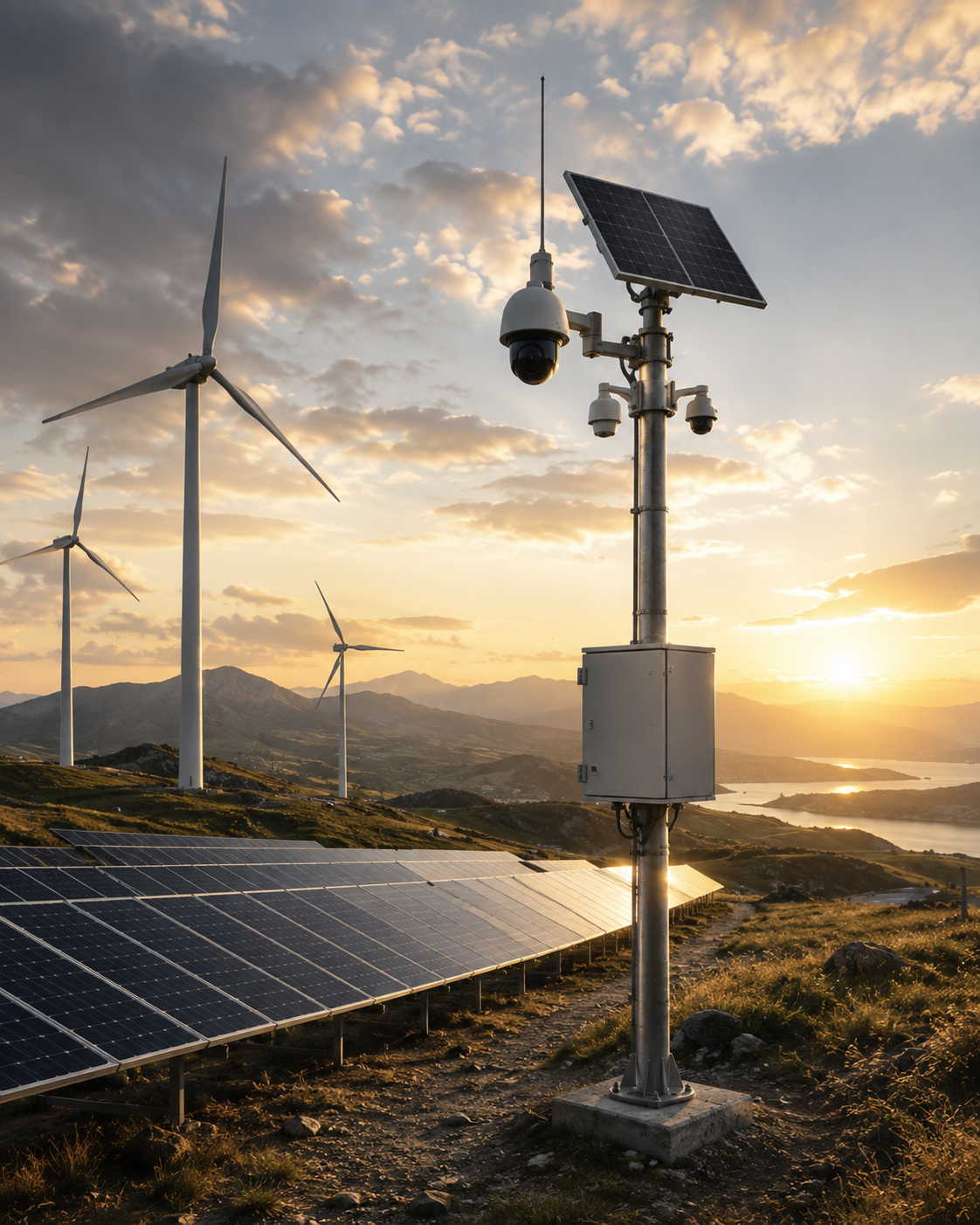
    Utility-scale solar farms combine expensive distributed assets with very large perimeters, remote locations and limited staff presence. Their security architecture must therefore emphasize early detection, reliable communications and low false-alarm rates.

    The perimeter problem

    A solar site may stretch across hundreds of hectares. Traditional guard-intensive protection becomes expensive, so operators increasingly rely on layered detection using fence sensors, radar, thermal imaging and video analytics.

    Remote verification

    Every alarm should be quickly verifiable. Thermal cameras are useful at night and in low-light conditions, while visible cameras provide identification detail. Radar can cue PTZ cameras toward moving targets and reduce dependence on fixed camera coverage.

    Asset and cable protection

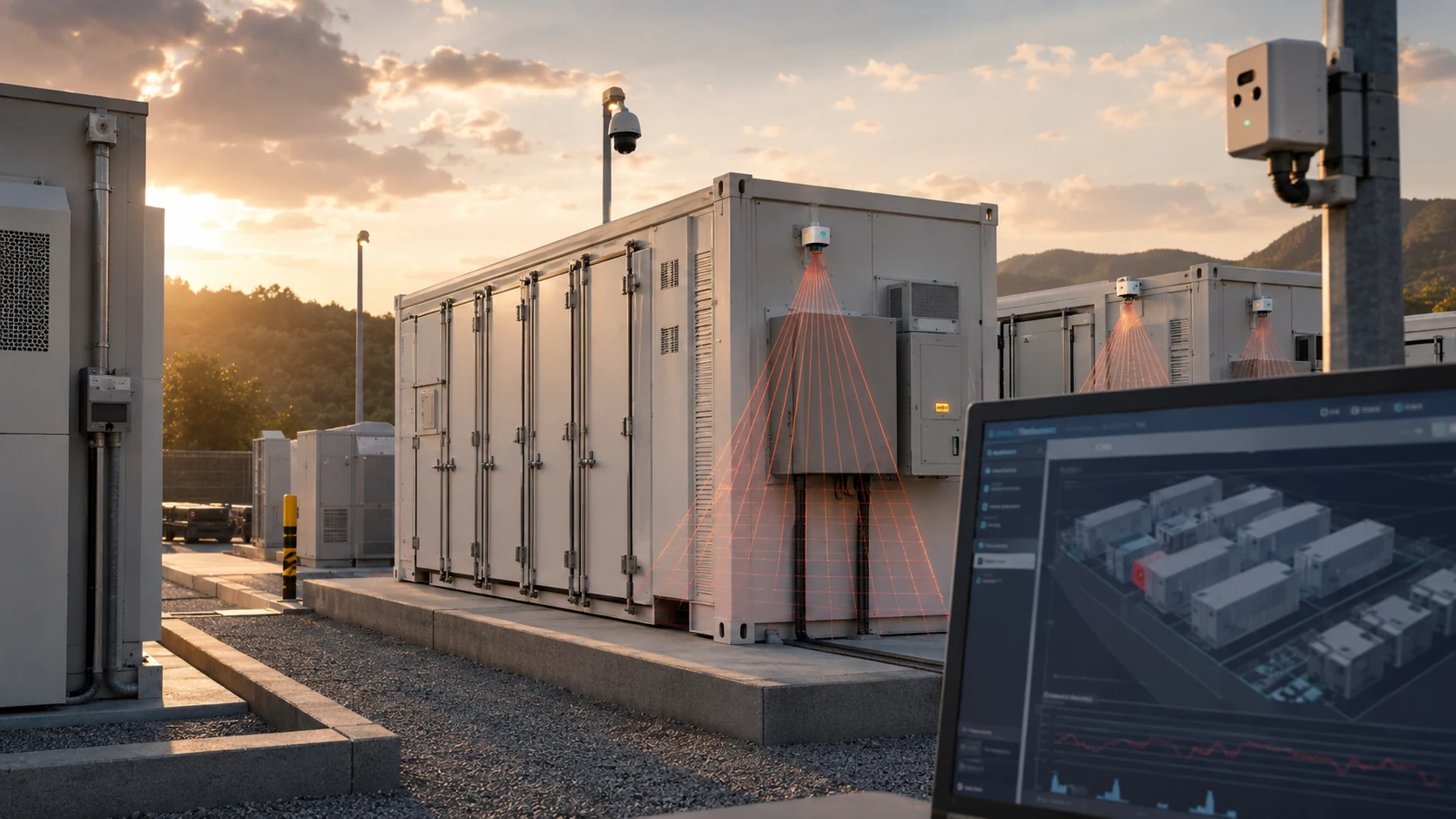
    Inverters, transformers, copper cabling, battery systems and communications cabinets require local protection. Access control, cabinet monitoring and tamper alarms create a second layer inside the perimeter.

    Operations and maintenance

    Environmental conditions such as heat, dust, vegetation and wildlife can create nuisance alarms. Analytics and regular tuning are essential. Solar-powered field devices can be useful, but maintenance planning and communications redundancy remain critical.

    Integrated renewable-site security

    The strongest model connects perimeter detection, video, access control, fire monitoring and operational telemetry in one command workflow. For long boundaries, fiber-optic sensing can add continuous linear awareness without thousands of powered field sensors.

    Conclusion

    Solar Farm and Renewable-Energy Site Security should be evaluated as part of a broader operational architecture. The strongest deployments combine suitable sensing technology, resilient communications, clear procedures and measurable performance rather than relying on a single device or headline specification.
  • The Future of Perimeter Security: Sensor Fusion and AI

    The Future of Perimeter Security: Sensor Fusion and AI

    Perimeter security is moving away from single-sensor thinking. Traditional designs often depended on one primary detection technology, such as fence vibration sensors or video motion detection. Modern systems increasingly combine radar, thermal cameras, visible cameras, fiber-optic sensing, access data and AI analytics to create a richer picture of what is happening around a site.

    Sensor fusion is the key change. A fence vibration may indicate an event, but radar can reveal movement beyond the fence, thermal imaging can detect a person at night and a PTZ camera can provide visual confirmation. When these inputs are correlated automatically, the operator receives a higher-confidence incident instead of several unrelated alarms.

    AI is improving classification rather than simply adding more alarms. Models can distinguish people, vehicles and animals, analyze direction and speed, and prioritize activity that violates site rules. The practical benefit is lower operator workload and fewer nuisance events.

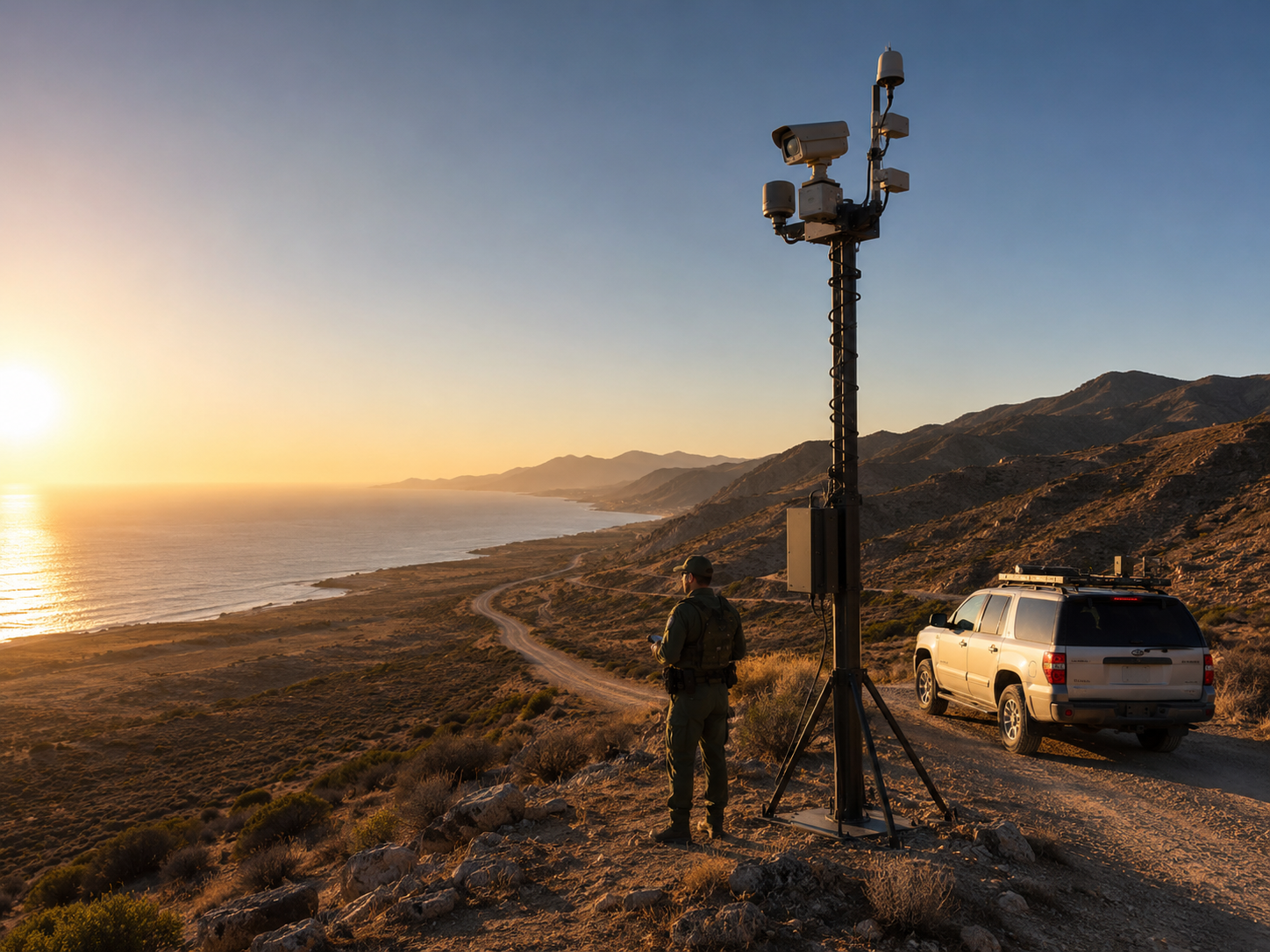
    Fiber-optic sensing is also becoming more important, especially across long pipelines, rail corridors, borders and large industrial perimeters. Distributed sensing can turn kilometers of fiber into continuous detection zones and complement point sensors or cameras.

    Edge computing will further change architecture. More classification can occur near the sensor, reducing bandwidth and enabling faster local decisions. Cloud platforms will remain valuable for fleet management, analytics updates and multi-site visibility.

    The future perimeter will therefore behave less like a collection of independent devices and more like a coordinated detection network. The goal is not maximum sensor count. It is confidence: detect early, classify accurately, verify quickly and present operators with the context required to act.

  • Security Robots: Where Autonomous Patrol Actually Makes Sense

    Security Robots: Where Autonomous Patrol Actually Makes Sense

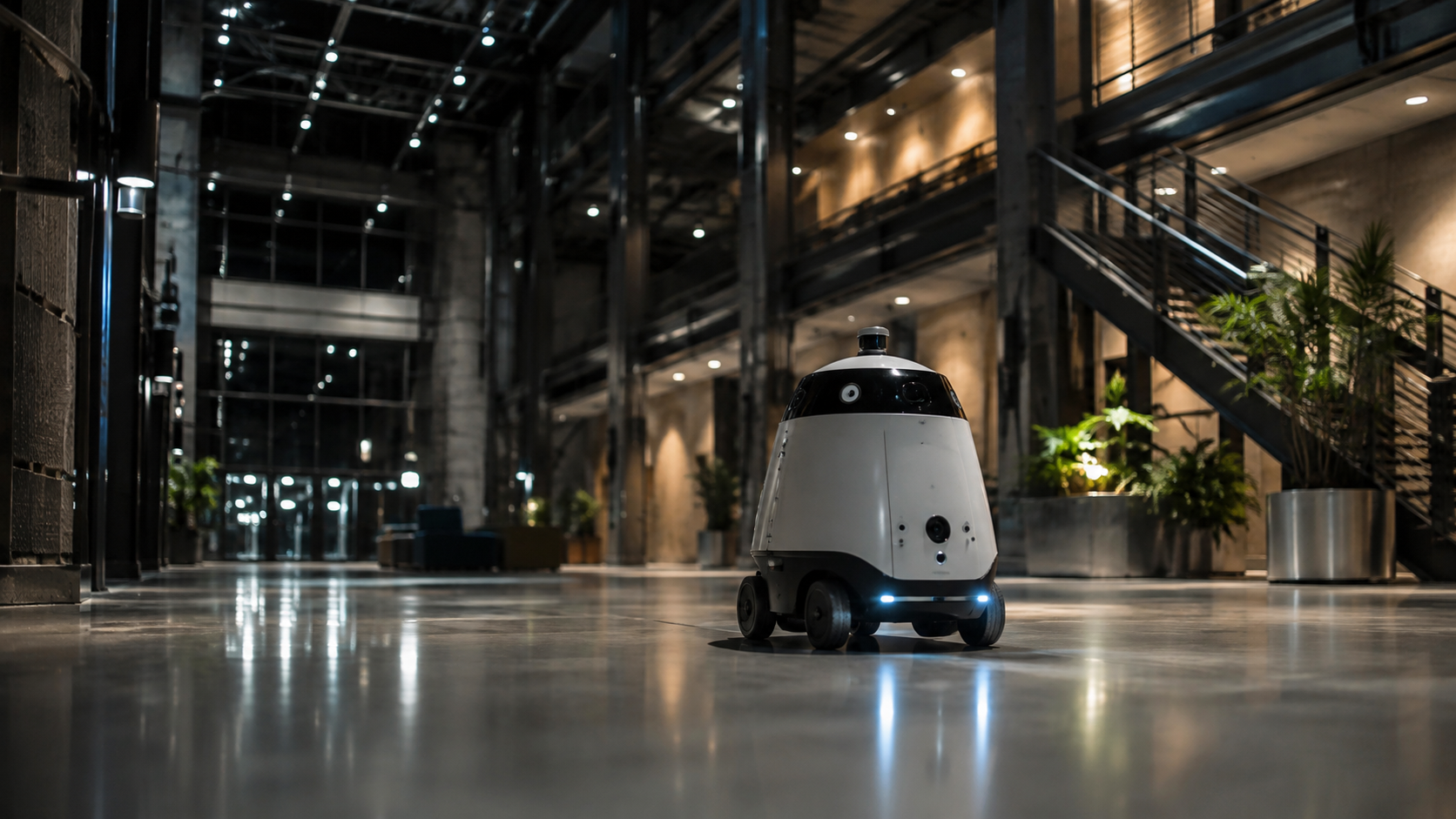
    Autonomous security robots attract attention because they make physical security visible, but their real value depends on operational fit. A robot is not automatically useful simply because it can patrol. The strongest deployments are those in which mobility solves a specific coverage, inspection or staffing problem.

    Robots can carry visible-light cameras, thermal imaging, microphones, environmental sensors, LiDAR and two-way communications. They can follow scheduled patrol routes, stop at checkpoints, record evidence and alert operators when analytics detect an anomaly.

    Large warehouses, data-center campuses, parking facilities, industrial plants and logistics yards are among the environments where robotic patrol can make sense. These sites often have long repetitive routes, predictable surfaces and many assets that benefit from frequent inspection.

    The technology is less convincing in cluttered public environments, complex stairways, heavy pedestrian traffic or areas with constantly changing obstacles. Weather, ramps, curbs, doors and elevators can also limit mobility.

    Robots should not be evaluated primarily by appearance. Buyers should examine uptime, docking reliability, navigation accuracy, battery endurance, sensor quality, cyber security, remote takeover, API integration and how frequently a human must intervene.

    The best architecture connects robotic patrol with existing security systems. A robot can be dispatched to a door alarm, thermal anomaly or perimeter event, then stream video into the command center. This turns the robot into a mobile verification platform rather than a standalone novelty.

    Autonomous robots are unlikely to replace security personnel broadly. They can, however, take over repetitive observation tasks, extend sensor coverage and give operators a mobile viewpoint when deployed in environments that match their capabilities.

  • Radar and Thermal Camera Integration for Perimeter Security

    Radar and Thermal Camera Integration for Perimeter Security

    Radar and thermal cameras are complementary technologies. Radar is strong at detecting and tracking movement over large areas, while thermal cameras provide visual confirmation in darkness and difficult lighting. When integrated correctly, the combination can reduce blind spots and help operators understand alarms faster.

    What radar contributes

    Security radar measures the position and movement of targets. Unlike a visible-light camera, it does not depend on scene illumination and can continue tracking in darkness, glare or low-contrast conditions. A radar can also monitor a wide area and maintain multiple tracks at the same time.

    What thermal imaging contributes

    Thermal cameras detect differences in emitted heat. They can reveal people and vehicles at night and often provide better target contrast than visible cameras in low-light scenes. Thermal imagery also gives the operator a visual object to assess, which radar alone cannot provide.

    Automatic camera cueing

    One of the most valuable integrations is automatic PTZ cueing. When radar detects a moving target, the system calculates its coordinates and points a thermal or dual-sensor camera toward it. This can reduce the time an operator spends searching manually.

    Classification and analytics

    Radar may classify a track based on movement characteristics, while video analytics can add visual classification. Combining these sources increases confidence. A system might require agreement between radar movement and camera classification before escalating an alarm.

    Site-design challenges

    Radar requires a clear understanding of terrain, buildings, vegetation and reflective structures. Thermal cameras need appropriate lens selection and mounting height. Poor calibration between the radar coordinate system and camera field of view can undermine the entire integration.

    Where the combination works well

    Airports, power plants, ports, data centers, borders, solar farms, substations and large industrial sites can benefit from radar-thermal integration, particularly where long-range nighttime detection is important.

    Conclusion

    Radar provides wide-area awareness and precise tracking; thermal imaging provides visual confirmation. Together they create a stronger perimeter layer than either technology can usually deliver alone, especially when the system is calibrated, integrated with analytics and connected to a clear operator workflow.

  • Perimeter Intrusion Detection Systems: Complete Technology Comparison

    Perimeter Intrusion Detection Systems: Complete Technology Comparison

    Perimeter intrusion detection systems are designed to identify activity before an intruder reaches a protected building or critical asset. The technology landscape includes fence-mounted sensors, buried sensors, radar, thermal cameras, video analytics, fiber-optic sensing and combinations of several sensor types.

    Fence-mounted sensors

    Accelerometer, vibration and fiber-based fence sensors detect cutting, climbing or disturbance. They can protect long fence lines at relatively low cost per meter, but performance depends on fence quality, installation and environmental tuning.

    Buried sensors

    Seismic, pressure and magnetic technologies can create an invisible detection zone. They are useful where visible infrastructure is undesirable, but soil conditions, drainage, nearby traffic and maintenance access can affect performance.

    Radar

    Security radar continuously measures movement over open ground. It can detect and track people or vehicles in darkness, fog or poor contrast and can direct cameras toward targets. Radar is particularly effective for large open sites, but terrain and obstructions must be considered.

    Thermal and visible video analytics

    Thermal cameras can detect heat contrast at night and in difficult lighting, while visible cameras provide richer identification detail. Analytics can classify people and vehicles, but image quality, weather and scene design influence accuracy.

    Fiber-optic sensing

    Distributed or zone-based fiber sensing can monitor long boundaries without powered electronics along the entire protected line. It is attractive for critical infrastructure, pipelines, borders and large industrial sites. Event classification and installation design are essential for controlling nuisance alarms.

    Layered systems perform best

    No sensor is perfect in every environment. A strong perimeter design may use one technology for early detection, another for classification and a camera for visual verification. Sensor fusion can combine confidence levels and reduce unnecessary operator workload.

    How to choose

    Selection should consider terrain, fence condition, climate, detection distance, target type, acceptable false-alarm rate, maintenance resources, communications and integration with the command center.

    Conclusion

    Perimeter security is not a competition to find one universal sensor. The best system is the one whose detection physics match the site. Layered designs combining complementary technologies usually provide the strongest balance of coverage, verification and resilience.

  • Multispectral Cameras for Security Applications

    Multispectral Cameras for Security Applications

    Visible-light cameras are excellent when there is enough illumination and contrast, but security environments are rarely ideal. Multispectral systems combine information from different parts of the electromagnetic spectrum to improve detection, classification and situational awareness.

    How the Technology Works

    The most common security combination is visible and thermal imaging. A visible sensor provides detail, color and identification information, while a thermal sensor detects heat differences that remain useful in darkness and many low-contrast conditions. When the two views are calibrated, operators can switch between them or display fused imagery.

    Near-infrared imaging is another tool. Many conventional surveillance cameras already use near-IR sensitivity for night mode. More specialized systems may combine visible, near-IR and short-wave infrared to reveal materials or conditions that are difficult to distinguish with ordinary color video.

    Operational Considerations

    Thermal imaging is particularly valuable for perimeter security because it does not depend on reflected visible light. A person can often be detected against a background at night without floodlights. Thermal cameras can also support temperature-based monitoring in industrial environments when radiometric measurement is available.

    No spectrum is perfect. Thermal cameras can lose contrast when the target and background reach similar temperatures. Heavy rain, certain atmospheric conditions and glass can affect performance. Visible cameras can provide details that thermal sensors cannot, such as clothing color or readable signage.

    Sensor fusion addresses these weaknesses. Radar can provide range and speed, thermal can provide robust detection, and visible video can provide verification. Multispectral cameras fit naturally into this layered architecture.

    Deployment and Risk

    Optics and alignment are important. Different wavelengths require different lens materials and focus characteristics. A dual-sensor device must be designed so that both views correspond accurately enough for operators and analytics.

    Multispectral systems are increasingly relevant in airports, energy facilities, borders, ports, data centers, industrial plants and remote infrastructure. They are especially useful where lighting cannot be guaranteed or where detection must continue through day-night transitions.

    Conclusion

    The right question is not whether multispectral is “better” than visible imaging. It is whether the additional spectrum solves a specific weakness in the target environment. When it does, multispectral sensing can dramatically improve resilience and reduce dependence on perfect lighting.

  • Sensor Fusion: Why Cameras Alone Are No Longer Enough

    Sensor Fusion: Why Cameras Alone Are No Longer Enough

    No single sensor sees everything. Cameras provide rich visual information, radar tracks movement, thermal cameras detect heat and fiber-optic sensing covers long distances. Sensor fusion combines these complementary strengths.

    Detection, tracking and verification

    A useful layered model separates three functions. One sensor detects an event, another tracks the target, and a third verifies what it is. Access-control data can add authorization context.

    Reducing nuisance alarms

    Requiring agreement between independent sensors can improve confidence. A fence vibration event, for example, can be checked against thermal or video analytics before escalation.

    Data correlation

    Fusion is more than displaying systems on one screen. A platform must correlate time, location and identity so operators receive a coherent incident rather than unrelated alarms.

    Perimeter and critical infrastructure

    Radar, thermal, visible cameras and fiber sensors can provide overlapping coverage. Pipelines, railways and power networks may also combine sensing with weather, drone or operational data.

    Engineering challenges

    Different clocks, coordinate systems and event formats complicate integration. Time synchronization, data normalization and complementary failure modes are essential.

    Conclusion

    Security is moving from device-centric systems toward context-centric operations. Sensor fusion is the architecture that enables that transition.