
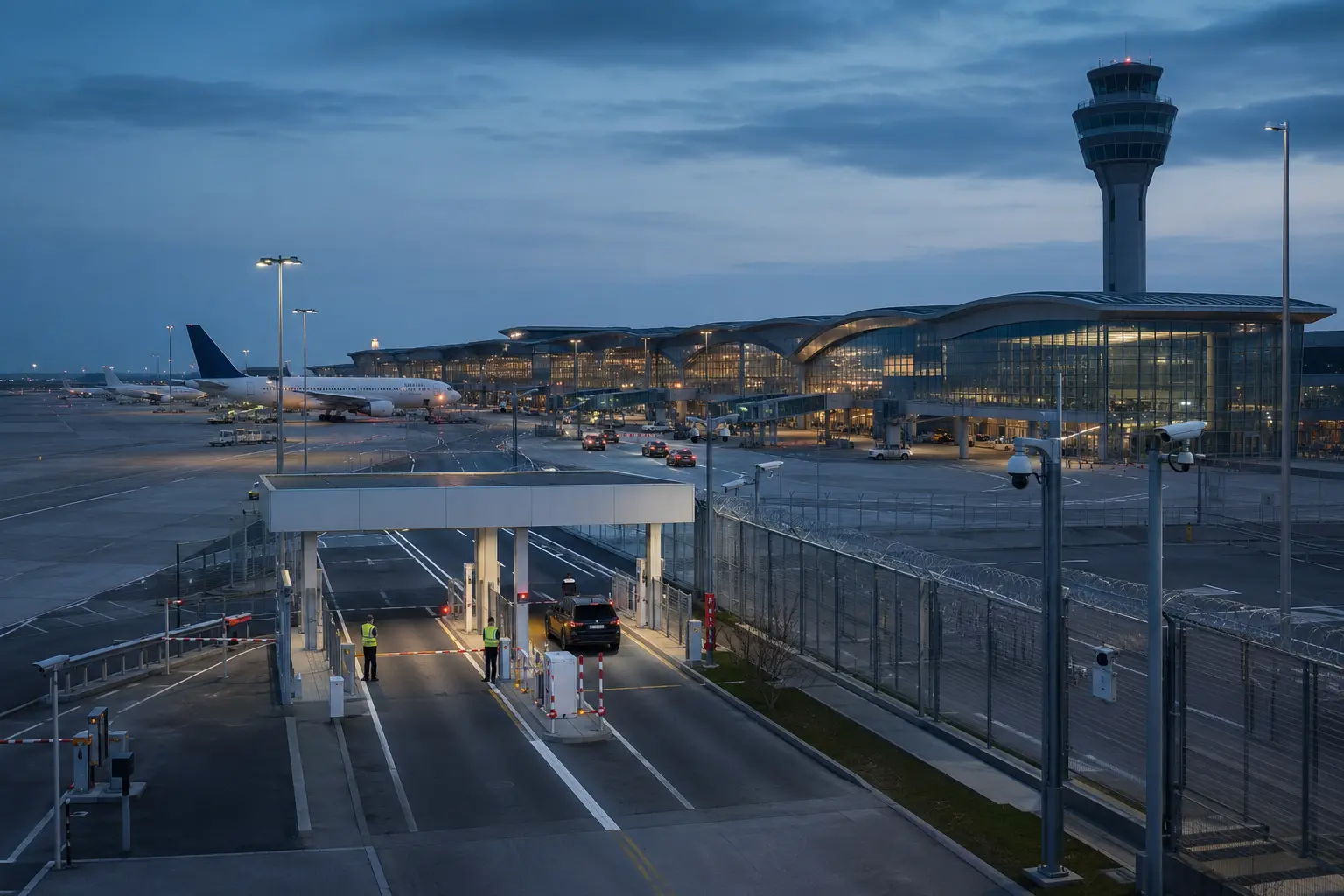
Thermal cameras can reveal people, vehicles and heat patterns when visible-light imagery is limited, but acceptance cannot be based on a daytime image alone. Performance changes with distance, weather, background temperature, mounting stability and the analytics configured around the sensor. A useful acceptance test establishes a repeatable baseline for the actual scene and mission.
Start with the required detection task
Define whether the camera must support detection, recognition of a target class, alarm verification or temperature-related observation. These are different tasks and require different test evidence. Record the target size, route, speed and parts of the scene where an alarm is required. Avoid translating a general product range into a site guarantee without field validation.
Confirm mounting height, angle, horizon, focus, field of view and obstructions. Check that the intended target occupies enough pixels across the relevant path and that the image remains usable at the edges. Vegetation, fencing, reflective surfaces and warm machinery can create scene-specific limitations.
Capture environmental baselines
Thermal contrast can decline when a target and background approach the same apparent temperature. Test at more than one time of day where practical, especially near sunrise or sunset and during expected seasonal conditions. Record air temperature, precipitation, wind, surface conditions and any active heaters or exhausts.
A baseline should include representative images and alarm results, not just configuration screenshots. If the camera supports automatic gain or scene-based processing, record the settings and observe how rapid scene changes affect the image. The purpose is to create a reference that maintenance teams can compare with later performance.
Validate analytics and handoff behavior
Walk or drive controlled targets through required zones, boundaries and approach angles. Include expected speeds and partial occlusion. Measure whether alarms occur in the intended location, whether the event is delivered to the video platform and whether operators receive useful pre-event and post-event footage.
False-alarm testing should use realistic non-target activity such as moving vegetation, animals, hot equipment, reflections and weather. A short quiet test is not enough for scenes that vary across a day. Record nuisance events by cause so thresholds can be adjusted without hiding genuine targets.
Close acceptance with maintainable evidence
Document firmware, time synchronization, network settings, analytics versions, zone coordinates and user permissions. Verify recording, export and event timestamps across the complete path. If another camera is cued for visual confirmation, test the handoff under the same scenarios.
Define triggers for retesting: camera movement, vegetation growth, construction, firmware changes or repeated nuisance alarms. Thermal acceptance is part of ongoing Video Surveillance & Imaging assurance. A signed baseline makes performance drift visible and prevents later troubleshooting from relying on memory.
Assign a responsible owner for the baseline and store it with approved drawings and maintenance records. Operators should know how to report suspected coverage loss and which evidence must be captured before settings are changed.
Leave a Reply