Category: Physical Security

  • Backup Power for Security Systems: What Keeps Cameras and Access Control Online During an Outage

    Backup Power for Security Systems: What Keeps Cameras and Access Control Online During an Outage

    A security system is only as reliable as the power feeding it. Cameras stop recording, access-controlled doors can fail open or fail locked depending on configuration, and alarm panels go silent the moment utility power is lost — unless the system was designed with backup power as a core requirement, not an afterthought.

    Where Power Loss Actually Hurts

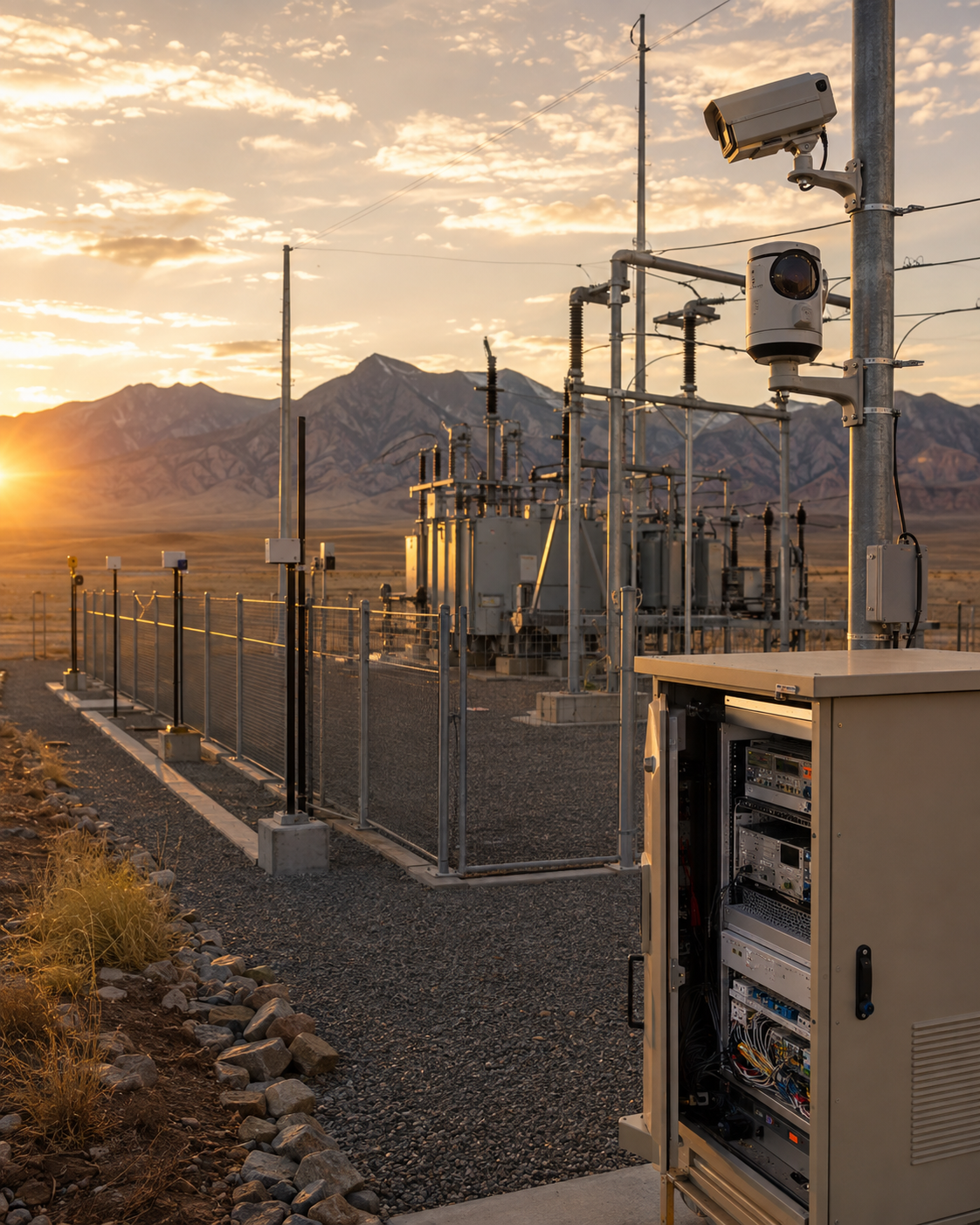
    The most exposed components are usually the ones furthest from the main equipment room: PoE cameras and door controllers at the edge of the network, which depend on switches and injectors that themselves need backup power. A building’s main server room might sit on a robust UPS, while a camera on a remote loading dock loses power the moment a single upstream switch goes dark.

    Access control is particularly sensitive to power design choices. Fail-safe locks unlock when power is lost, which is often required for life-safety egress but means a power outage can leave doors unsecured. Fail-secure locks stay locked, which protects against intrusion but can trap people inside in an emergency unless a mechanical override or backup power source is available. Getting this choice wrong at a given door is a life-safety and security decision, not just an electrical one.

    UPS Sizing and Runtime

    Uninterruptible power supplies for security infrastructure are typically sized around two figures: the load they must carry (measured in VA or watts) and the runtime required before either utility power returns or a generator takes over. A common design pattern uses UPS units to bridge the gap between a power loss and generator start-up — often 30 seconds to a few minutes — rather than to power a site for hours, which is left to the generator.

    PoE budgeting matters as much as UPS capacity. A switch’s power budget does not automatically scale down gracefully when running on battery; if the connected UPS cannot sustain the switch’s full PoE load, some ports may shut down or brown out before the runtime estimate suggests they should.

    Generators and Transfer Switches

    For sites where extended outages are a real risk — critical infrastructure, hospitals, data centers, and increasingly large commercial campuses — a generator with an automatic transfer switch is standard. The transfer switch detects a utility outage, starts the generator, and switches the load over, typically restoring full power within 10 to 30 seconds. Security equipment should be on a circuit designated for generator backup, not left on the same circuit as non-essential building loads that may be intentionally shed during an extended outage.

    Testing Is the Part Most Often Skipped

    Backup power systems fail most often not because they were poorly designed, but because they were never tested under realistic conditions. UPS batteries degrade over years of standby use and can fail silently until called upon during an actual outage. Runtime testing under real load, not just a self-test indicator light, along with a documented replacement schedule for UPS batteries, is what separates backup power that works from backup power that only looks like it works on paper.

    Conclusion

    Backup power is not a single product decision but a system-level design question that touches UPS sizing, PoE budgeting, lock fail-mode selection, and generator transfer logic together. Security teams that treat power resilience as part of the initial system design — rather than an add-on after installation — are the ones whose cameras and doors are still working when the lights go out.


  • Security Lighting and CPTED: How Illumination Deters Crime

    Security Lighting and CPTED: How Illumination Deters Crime

    Lighting is one of the oldest security measures in existence, and it remains one of the most cost-effective: well-designed illumination increases the chance that a person committing a crime will be seen, which is often enough to discourage the attempt in the first place. Crime Prevention Through Environmental Design (CPTED), a framework used by security planners and architects, treats lighting as a deliberate design decision rather than simply a matter of installing as many fixtures as budget allows.

    Uniformity Matters More Than Brightness Alone

    A common misconception in security lighting is that brighter is always better, but security professionals generally focus on uniformity, the consistency of light levels across a space, rather than peak brightness at any single point. A parking lot with a few extremely bright fixtures and large dark gaps between them can actually be more dangerous than one with moderate, evenly distributed light, because the dark gaps create pockets where an offender can wait unseen, and the contrast between bright and dark areas can make it harder for the human eye and for cameras to adjust.

    CPTED’s Core Lighting Principles

    CPTED lighting guidance generally emphasizes illuminating pathways, entrances and natural surveillance zones, areas where legitimate users of a space would naturally look or pass through, rather than simply lighting every square foot of a property equally. It also stresses eliminating shadows and blind spots created by landscaping, structures or the fixtures themselves, since overgrown vegetation or poorly placed light poles can inadvertently create the dark pockets that undermine a lighting plan’s purpose. Motion-activated lighting is often used strategically in lower-traffic areas, both to draw attention to unexpected activity and to reduce energy costs compared with continuous full illumination.

    Lighting as a Camera Enabler, Not Just a Deterrent

    As video surveillance has become central to physical security, lighting design increasingly has to account for camera performance alongside human visibility, since even a high-quality camera struggles to produce a usable image in inconsistent or insufficient light. Security planners increasingly coordinate lighting layout with camera placement early in a project, rather than treating lighting and video as separate systems designed independently, since a camera aimed at a poorly lit area may capture footage too dark or too high-contrast to be useful after an incident.

    FAQ

    What does CPTED stand for? Crime Prevention Through Environmental Design, a framework that uses the physical design of a space, including lighting, landscaping and sightlines, to reduce opportunities for crime.

    Is more lighting always better for security? No. Security professionals generally prioritize uniform, well-distributed lighting over maximum brightness, since uneven lighting with dark gaps can create hiding spots and glare that undermine both human visibility and camera performance.

    Does security lighting help camera footage quality? Yes, consistent, adequate lighting is important for producing usable video footage, and lighting layout is increasingly planned alongside camera placement rather than as a separate consideration.

  • Estonian Startup Unveils Self-Balancing Monowheel Robot for Autonomous Security Patrols

    Estonian Startup Unveils Self-Balancing Monowheel Robot for Autonomous Security Patrols

    Estonian startup Rollo Robotics has unveiled 1Rollo, a self-balancing, one-wheeled autonomous robot designed to patrol warehouses, factories, campuses and other large properties, offering what the company positions as a lower-cost alternative to traditional guard patrols and security vehicles.

    A Narrow Footprint Built for Estonian Winters

    Currently in functional prototype form, 1Rollo uses gyroscopic stabilization to balance and move on a single wheel, a design the company says gives it a narrower footprint than wheeled or tracked patrol robots. Rollo Robotics, based in Viljandi, Estonia, says the platform was developed and tested through the country’s harsh winters, addressing traction, battery performance and sensor reliability in snow and sub-zero temperatures. The robot is intended to operate around the clock without the breaks, shift changes or attention lapses associated with human patrols.

    Subscription Model, Open Cybersecurity Questions

    Rather than selling the hardware outright, Rollo Robotics plans to offer 1Rollo through a Robotics-as-a-Service subscription that would bundle current hardware, software updates and support, according to CEO and co-founder Sander Sebastian Agur. The company says the model removes a large upfront equipment cost and simplifies future upgrades and repairs for customers.

    As with other connected patrol robots, 1Rollo depends on wireless connectivity and a cloud platform, which raises questions buyers will need to ask about video encryption, footage retention, operator-account protection and how the robot behaves if it loses its connection. The launch also comes as US lawmakers consider legislation that would restrict government use of some foreign-made robots over national-security concerns, a debate that is likely to shape how autonomous patrol platforms built outside the United States are received by security buyers.

  • Guard Tour Systems Explained: From Paper Logs to Real-Time Verification

    Guard Tour Systems Explained: From Paper Logs to Real-Time Verification

    Verifying that a security guard actually walked an assigned patrol route, and did so on schedule, used to depend entirely on paper logs and clock-in sheets that were easy to falsify and difficult to audit. Guard tour systems were built to solve that problem, and the technology behind them has evolved considerably from its original mechanical form.

    The Original Problem: Verifying an Unwitnessed Patrol

    A security guard’s patrol route often covers areas with no cameras and no supervision, which historically made it nearly impossible to confirm that checkpoints were actually visited rather than simply logged after the fact. Early guard tour systems addressed this with mechanical clock stations mounted at fixed checkpoints, where a guard inserted a key to record a timestamp on a paper tape carried on their person, creating a physical record that could later be checked against the expected schedule.

    From Mechanical Clocks to Electronic Checkpoints

    Electronic guard tour systems replaced mechanical clock stations with small, fixed data-collection points, originally barcode tags or magnetic buttons, that a guard would scan or touch with a handheld wand or reader while on patrol. Each scan recorded the checkpoint identifier and a timestamp on the handheld device, which was later downloaded to a central system for review. This eliminated the physical paper tape and made it far easier to generate reports, but the data was still typically reviewed after the fact rather than monitored live.

    Real-Time, Networked Verification

    Current-generation guard tour systems generally run on smartphones or dedicated handheld devices connected over cellular or Wi-Fi networks, using near-field communication (NFC) tags, QR codes, GPS location, or a combination of these methods to verify a checkpoint visit. Because these devices are connected in real time rather than downloaded after a shift, a missed checkpoint, a late arrival, or a patrol that stops moving unexpectedly can trigger an immediate alert to a supervisor or monitoring center, turning guard tour data from a historical audit tool into an active safety and accountability system.

    Beyond Simple Checkpoint Logging

    Many current systems layer additional functionality onto the basic checkpoint model: incident reporting with photos and notes logged directly at the point of observation, duress or panic alerts a guard can trigger if they encounter a threat, two-way messaging with a control room, and integration with video management systems so that footage from the time and location of a checkpoint scan can be pulled up automatically during an investigation. This integration reflects a broader trend of guard tour data becoming one more input feed into a unified security operations platform, rather than a standalone record-keeping tool.

    FAQ

    Do modern guard tour systems require special hardware? Many current systems run on standard smartphones using an app paired with inexpensive NFC tags or QR code stickers at checkpoints, though dedicated ruggedized handheld devices remain common in industrial or outdoor environments.

    Can guard tour systems work without cellular or Wi-Fi coverage? Most systems can log checkpoint scans offline and sync the data once connectivity is restored, though real-time alerting for missed checkpoints depends on having an active network connection at the time of the scan.

    Are guard tour records used as legal evidence? Time-stamped, GPS- or NFC-verified checkpoint logs are often used to demonstrate compliance with contractual patrol requirements or to support investigations, though their evidentiary weight depends on the specific system’s audit trail and how the records are maintained.

  • German Police Arrest Suspect in Rocket-and-Wire Power-Grid Sabotage Campaign

    German Police Arrest Suspect in Rocket-and-Wire Power-Grid Sabotage Campaign

    German police arrested a 48-year-old suspect near a power plant in North Rhine-Westphalia in connection with a string of attacks on high-voltage substations across Brandenburg, North Rhine-Westphalia and Saxony, DW and the Associated Press reported.

    Investigators say the attacks used homemade rockets to fire conductive wire across transmission lines, deliberately causing short circuits. One incident briefly took roughly 4,200 MW of lignite power-plant capacity offline. Authorities say the suspect appears to have been motivated by opposition to fossil-fuel power generation, and he was found carrying explosives at the time of arrest.

    Why it matters: The attack method — using low-cost, improvised rockets to physically disrupt high-voltage infrastructure from a distance — illustrates a category of physical threat to power grids that is difficult to fully defend against with conventional perimeter security alone, and underscores why grid operators increasingly pair physical substation hardening with wide-area monitoring for this kind of attack signature.

    Source: DW (Deutsche Welle), corroborated by AP News, September 8, 2026.

  • ProdataKey and Aiphone Launch Integrated Cloud-Based Access Control and Video Intercom Solution

    ProdataKey and Aiphone Launch Integrated Cloud-Based Access Control and Video Intercom Solution

    ProdataKey (PDK) and Aiphone announced on August 26, 2026, a new cloud-based integration designed to unify access control and video intercom management for commercial and multi-tenant properties. The integration connects AiphoneCloud, Aiphone’s cloud-managed intercom platform, with PDK.io, ProdataKey’s mobile-first access control management software.

    “The future of physical security is built on connected, intuitive technologies,” said Dallan Labrum, Executive Vice President of Sales at ProdataKey. “Our integration with Aiphone gives dealers, integrators, and end users a smarter way to manage access control and video intercoms from a unified ecosystem. Together, we’re helping customers improve operational efficiency while delivering a better experience for everyone who enters and manages their buildings.”

    Automatic Tenant Sync Eliminates Duplicate Record-Keeping

    According to the companies, when tenant information is added, updated, or removed in PDK.io, those changes automatically sync to connected Aiphone IXG intercoms, eliminating the need for dealers and property managers to maintain duplicate records or manually coordinate directory updates between two separate systems. Security administrators and property managers can manage both access control and video intercom operations through a single streamlined workflow, which the companies say reduces administrative overhead and helps close security gaps caused by human error in manual record-keeping.

    The launch follows ProdataKey’s earlier preview of the integration at ISC West 2026, where the company showcased new locksets, readers, burglar-panel integrations, and video intercom offerings alongside the incoming Aiphone connection. For multi-tenant and commercial property operators, the combined platform reflects a broader industry shift toward converging previously siloed access control and visitor-verification systems into single-pane-of-glass management, reducing the operational friction that has historically accompanied maintaining separate vendor ecosystems for door access and intercom hardware.

  • Finnish Appeals Court Revives Case Against Eagle S Officers Over Baltic Sea Cable Breaks

    Finnish Appeals Court Revives Case Against Eagle S Officers Over Baltic Sea Cable Breaks

    Finland’s Helsinki Court of Appeal ruled on August 27, 2026 that Finnish courts have jurisdiction to try three senior officers of the Eagle S, the Russia-linked oil tanker that severed multiple subsea telecommunications and power cables in the Baltic Sea on Christmas Day 2024, according to the court’s ruling and reporting by The Record. The decision overturns a district court judgment that had thrown out the prosecution last October, and sends the case back to the Helsinki District Court to be heard on its merits.

    The appeals court found that the alleged crimes were committed in Finland because the resulting damage to the country’s power and telecommunications supply occurred there, rejecting defense arguments that the case could only be heard in the ship’s flag state, the Cook Islands, or the crew members’ home countries. According to the court’s account of the incident, Finnish authorities contacted the vessel shortly after the first cable break and were told, falsely, that both anchors were secured; the ship then continued dragging its port anchor for roughly 90 kilometers over several hours, severing four additional cables before it was boarded and seized by Finnish authorities.

    Maritime law experts had warned that the original ruling, if left standing, could leave vessels flying flags of convenience free to damage undersea infrastructure in international waters without legal consequence. For operators of subsea cables, pipelines and other undersea infrastructure, the case is a closely watched test of whether coastal states can hold ship crews criminally accountable for cable-severing incidents that are increasingly treated as a critical infrastructure security concern rather than solely a maritime accident.

  • Executive and Dignitary Protection Technology: GPS, Panic Alerts and Travel Risk Intelligence

    Executive and Dignitary Protection Technology: GPS, Panic Alerts and Travel Risk Intelligence

    Executive protection has historically relied on trained personnel: close protection officers, advance teams and drivers who assess a principal’s environment in real time. Technology has not replaced that human judgment, but it has meaningfully extended what a protection team can see and how quickly it can respond, particularly for organizations that need to protect executives, board members or high-profile individuals across frequent, often international, travel.

    Location awareness is the foundational layer. Modern executive protection programs typically issue principals a discreet tracking device, or rely on a mobile application with background location services, that reports position to a monitoring center on a continuous or interval basis. The technical trade-off is between battery life and update frequency: continuous high-frequency GPS reporting drains battery quickly and can be detected by device-scanning tools, while longer reporting intervals conserve power but reduce situational awareness during a fast-moving incident. Many programs address this by combining a low-frequency background trace with an on-demand “check-in” or panic function that triggers high-frequency reporting the moment it is activated.

    Panic and duress alerting has moved well beyond a single button. Contemporary systems support silent activation methods, including a specific sequence of button presses on a smartphone, a wearable device with a discreet trigger, or voice-activated duress phrases that can be spoken into a phone call without alerting a nearby threat actor that an alert has been raised. When triggered, these systems typically push the principal’s live location, a pre-recorded audio or video stream if available, and relevant medical and emergency contact information simultaneously to a monitoring center, local protection team members, and in some deployments directly to a pre-coordinated local emergency response contact.

    Travel risk intelligence is the layer that operates before a trip begins rather than during an incident. Dedicated travel risk management platforms aggregate data from government travel advisories, regional threat intelligence feeds, health and disease surveillance sources, and civil unrest monitoring services, then map that data against a principal’s planned itinerary to flag elevated-risk destinations, routes or dates. Advance teams use this intelligence to adjust routing, lodging selection and local security staffing, and increasingly to pre-position emergency evacuation plans and medical assistance contracts specific to the destination.

    Communication redundancy is a design principle that runs through all of these systems. A protection program that depends entirely on a principal’s personal smartphone and cellular connectivity has a single point of failure in exactly the scenarios, such as civil unrest or infrastructure disruption, where reliable communication matters most. Mature programs layer satellite communication devices, encrypted messaging applications that can operate over degraded connectivity, and pre-briefed rally points and communication windows that do not depend on any single technology working correctly.

    Integration with corporate security operations centers is increasingly common for organizations with dedicated executive protection functions, allowing a principal’s location and duress status to appear alongside broader corporate security monitoring rather than in an isolated protection-team-only system. This integration raises the same governance questions found in other converged security programs: who has visibility into an executive’s real-time location, how long location history is retained, and what separation exists between legitimate protective monitoring and inappropriate surveillance of a senior executive’s personal movements.

  • Banking and Financial Institution Security Technology

    Banking and Financial Institution Security Technology

    Financial institutions protect a mix of physical assets, sensitive data and public-facing customer environments, which means bank security spans branch design, vault protection, ATM networks and increasingly the cybersecurity of connected physical-security devices themselves.

    Branch video surveillance

    Branch camera systems cover teller lines, entrances, vaults and parking areas, supporting both robbery response and everyday operational and liability needs. Many institutions pair cameras with silent alarm capability at teller stations so staff can signal a robbery without alerting the person committing it.

    Vault and safe-deposit protection

    Vaults and safe-deposit areas typically combine reinforced construction with time-delay locks, dual-custody procedures and dedicated alarm and access-control zones. These measures are designed to resist both external attack and unauthorized access by an individual employee acting alone, reflecting the dual-custody principle common in financial-security design.

    ATM and self-service security

    ATMs and self-service kiosks operate outside normal branch hours and in some cases outside the branch itself, which creates distinct risks including physical attacks on the machine, card-skimming devices and network-based fraud. Financial institutions typically combine physical hardening, camera coverage, skimmer-detection technology and transaction monitoring to address these different attack types.

    Access control for staff and cash-handling areas

    Access control governs movement between public branch space and restricted areas such as cash rooms, IT closets and back-office operations. Role-based permissions and detailed audit trails support both security and the compliance requirements that apply to financial institutions in most jurisdictions.

    Cyber-physical convergence

    Modern branch security systems, including cameras, access controllers and alarm panels, are networked devices connected to the same infrastructure as core banking systems. That makes cybersecurity hygiene, including network segmentation, credential management and patching, a core part of physical-security design rather than a separate concern, particularly given how attractive financial institutions are as targets.

    Risk varies by institution type and location

    A large urban branch, a rural branch and a data center or operations facility carry different risk profiles, and security programs at most institutions are tailored accordingly rather than using a single standard branch design everywhere.

    Conclusion

    Banking and financial-institution security depends on a combination of branch video and alarm systems, vault and ATM-specific protections, disciplined access control, and cybersecurity practices applied to the physical-security network itself, reflecting the dual role of financial institutions as both cash-handling and data-handling environments.

  • Prison and Correctional Facility Security Technology

    Prison and Correctional Facility Security Technology

    Correctional facilities operate under security requirements that differ from almost any other building type: the population inside is confined rather than free to leave, staff safety and inmate safety must both be protected, and a security failure can have immediate, serious consequences.

    Perimeter detection

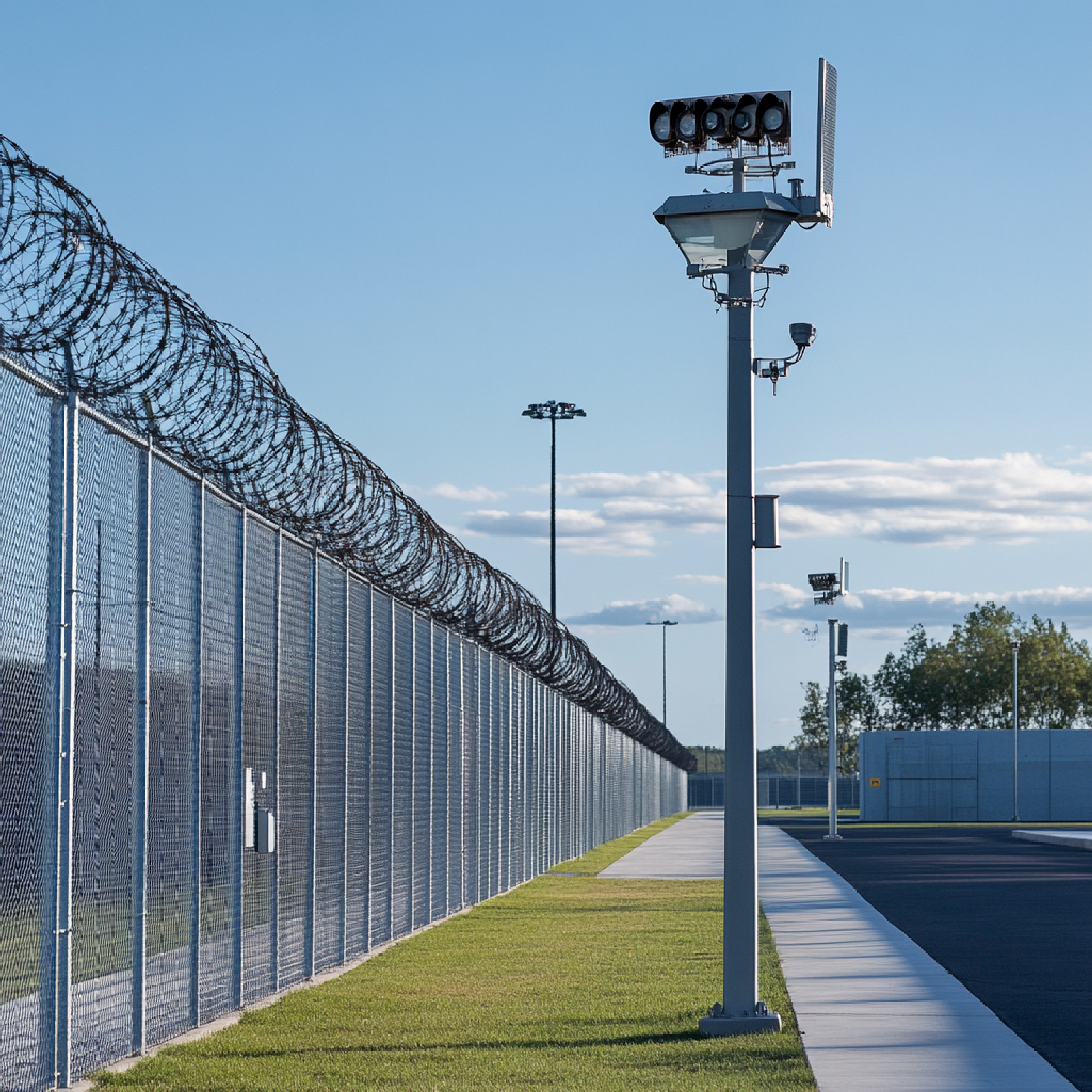
    Correctional perimeters typically combine physical barriers such as double fencing, razor wire and clear zones with electronic detection, including fence-mounted sensors, buried cable systems, microwave or radar detection, and camera coverage. Layered detection is intended to give staff advance warning of an escape attempt or unauthorized approach before a physical breach occurs.

    Video surveillance across a closed environment

    Comprehensive camera coverage of housing units, corridors, yards, visitation areas and perimeter zones supports both incident investigation and day-to-day supervision. Because correctional facilities operate continuously, video systems are typically designed for extended retention and rapid search, since incidents may not be reported or discovered until well after they occur.

    Access control and movement management

    Correctional access control governs not just entry to the facility but internal movement between housing units, program areas and secure zones. Interlocking door systems, sally ports and centrally controlled locking are common design features intended to prevent an inmate or unauthorized individual from moving freely between security zones.

    Contraband and weapons detection

    Screening technology at entry points, including walkthrough and handheld metal detectors, body scanners and mail-screening systems, is used to reduce the introduction of weapons, drugs and unauthorized devices such as cell phones. Contraband detection is an ongoing operational challenge for correctional agencies, and facilities generally combine technology with staff search procedures rather than relying on any single method.

    Duress alarms and staff safety

    Personal duress alarms that allow staff to summon help discreetly, combined with fixed panic buttons in high-risk areas, are a standard feature of correctional security design. Rapid, reliable location information is particularly important in a correctional setting given the potential for an incident to escalate quickly.

    Command and control integration

    Correctional security operations centers typically integrate video, access control, intercom and alarm systems into a single monitoring environment, allowing control-room staff to observe and respond across the facility rather than managing separate systems independently.

    Conclusion

    Correctional facility security depends on layered perimeter detection, comprehensive video coverage, tightly controlled internal movement, contraband screening and reliable staff duress capability, integrated through a command-and-control environment built for continuous, high-consequence operation.