
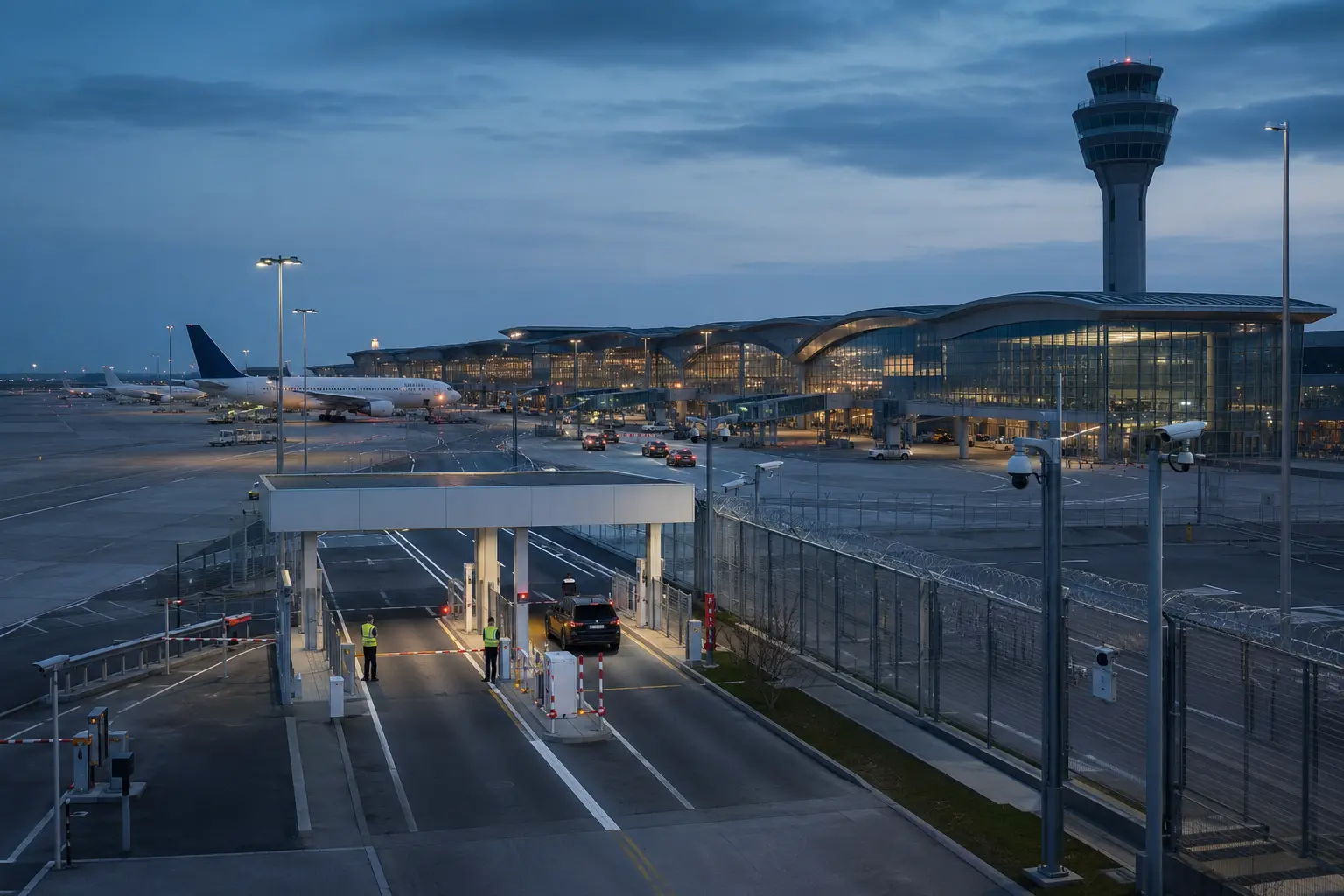
Airports operate one of the most complex physical security environments of any facility type, combining a large outdoor perimeter, high-throughput passenger screening, tightly restricted airside access, and constant coordination with law enforcement and aviation authorities, all while keeping flights moving on schedule.
Protecting the Airfield Perimeter
The airfield perimeter, often several miles of fence line separating public areas from runways, taxiways and aircraft, is typically monitored with a combination of fencing, ground radar, thermal cameras and buried or fence-mounted intrusion sensors, since a single unauthorized incursion onto an active runway can halt operations across the entire airport. Larger airports increasingly integrate airfield perimeter sensors with counter-drone detection systems, addressing the growing risk that unauthorized drone activity near runways poses to aircraft during takeoff and landing.
Passenger and Baggage Screening
Checkpoint screening combines walk-through metal detectors or millimeter-wave body scanners for passengers with X-ray and, increasingly, computed tomography (CT) scanning for carry-on baggage, giving screeners a rotatable 3D image rather than the flat 2D image older X-ray systems produce. Checked baggage passes through separate, higher-throughput explosive detection systems behind the scenes, and biometric identity verification, typically facial recognition matched against a passport or boarding pass, is increasingly used to speed passengers through checkpoints and boarding gates without manual document checks at every step.
Controlling Access to Restricted Airside Areas
Access to the airfield, ramp areas and other restricted zones is controlled through badge-based access control systems layered with biometric verification, since a badge alone does not confirm that the person carrying it is its rightful holder. Airports also enforce strict escorting and challenge procedures for anyone in a restricted area without airport-issued credentials, backed by video surveillance covering gates, ramps and cargo areas to create an audit trail of who accessed which zone and when.
FAQ
Why do airports need counter-drone systems? Unauthorized drones near runways and approach paths pose a collision risk to aircraft during takeoff and landing, which has led many larger airports to add drone detection alongside their existing airfield perimeter sensors.
What is the difference between X-ray and CT baggage screening? Traditional X-ray produces a flat 2D image of a bag’s contents, while CT scanning produces a rotatable 3D image, giving screeners a clearer view of items that might otherwise be obscured or ambiguous in a 2D scan.
How is facial recognition used at airports? Facial recognition is typically used to match a live photo of a passenger against their passport or boarding pass photo at checkpoints or boarding gates, allowing faster verification than a manual document check.
Leave a Reply