
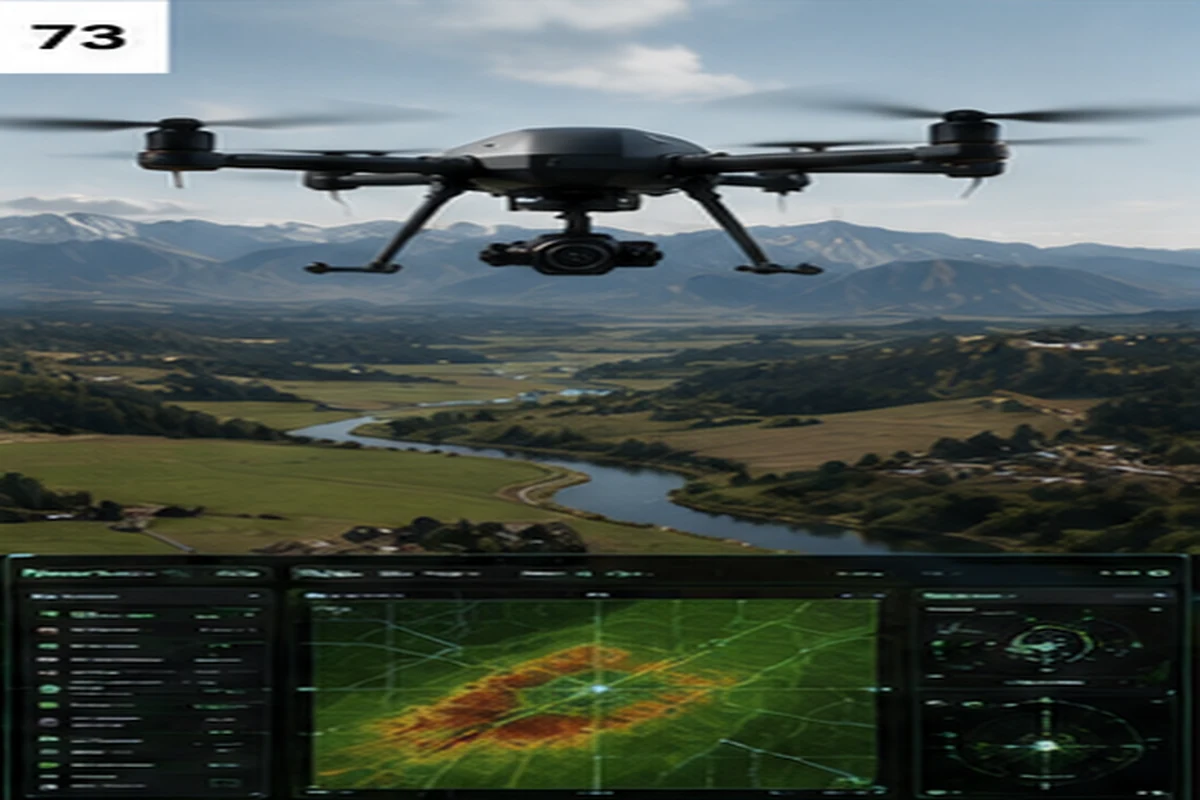
Positioning company NextNav has named Tiami Networks as a sensing ecosystem partner to jointly develop and evaluate counter-UAS detection capabilities built on 5G infrastructure, the companies announced on August 25, 2026, according to NextNav’s own release and independent reporting from UASweekly and Unmanned Airspace.
The Technology
The partnership will use NextNav’s existing 5G Positioning, Navigation and Timing (PNT) network, deployed on the licensed lower 900 MHz band, as a testbed in Santa Clara County, California. Tiami is contributing its radio-frequency sensing technology to the effort, with the two companies evaluating whether the same 5G infrastructure that provides positioning services can simultaneously support wide-area sensing for drone detection without adding load to the network. The approach falls under what the companies describe as integrated sensing and communications, or ISAC.
Why Range Matters
“The need for longer range situational awareness has never been more urgent as drones continue to threaten large-scale events, critical infrastructure, and government and military facilities including airports,” said David Gell, NextNav’s vice president of business development, in the companies’ announcement. That framing echoes a wider push across the counter-UAS sector this year toward detection systems that can spot drones farther out and earlier, giving operators more time to assess and respond before an unmanned aircraft reaches a protected site.
Early-Stage Evaluation
NextNav and Tiami characterized the work as an evaluation of performance and applicability rather than a finished product, with the companies planning to assess whether the low-band 5G approach can support counter-UAS, critical-infrastructure and national-security use cases alongside its existing positioning role.
Leave a Reply