Category: Articles & Analysis

Long-form guides, explainers, comparisons, analysis and sector assessments.

  • Drone Detection Technologies: Radar, RF, Optical & Acoustic Explained

    Drone Detection Technologies: Radar, RF, Optical & Acoustic Explained

    Small unmanned aircraft have changed the way organizations think about perimeter security. A fence can define a property boundary, but it does not protect the airspace above it. Airports, power plants, ports, data centers, prisons, logistics hubs and other sensitive sites increasingly need systems that can discover, classify and track low-flying drones before an operator can make a decision.

    There is no single universal drone detector. Modern counter-UAS awareness systems normally combine several sensing methods because each technology sees a different part of the problem.

    Radar

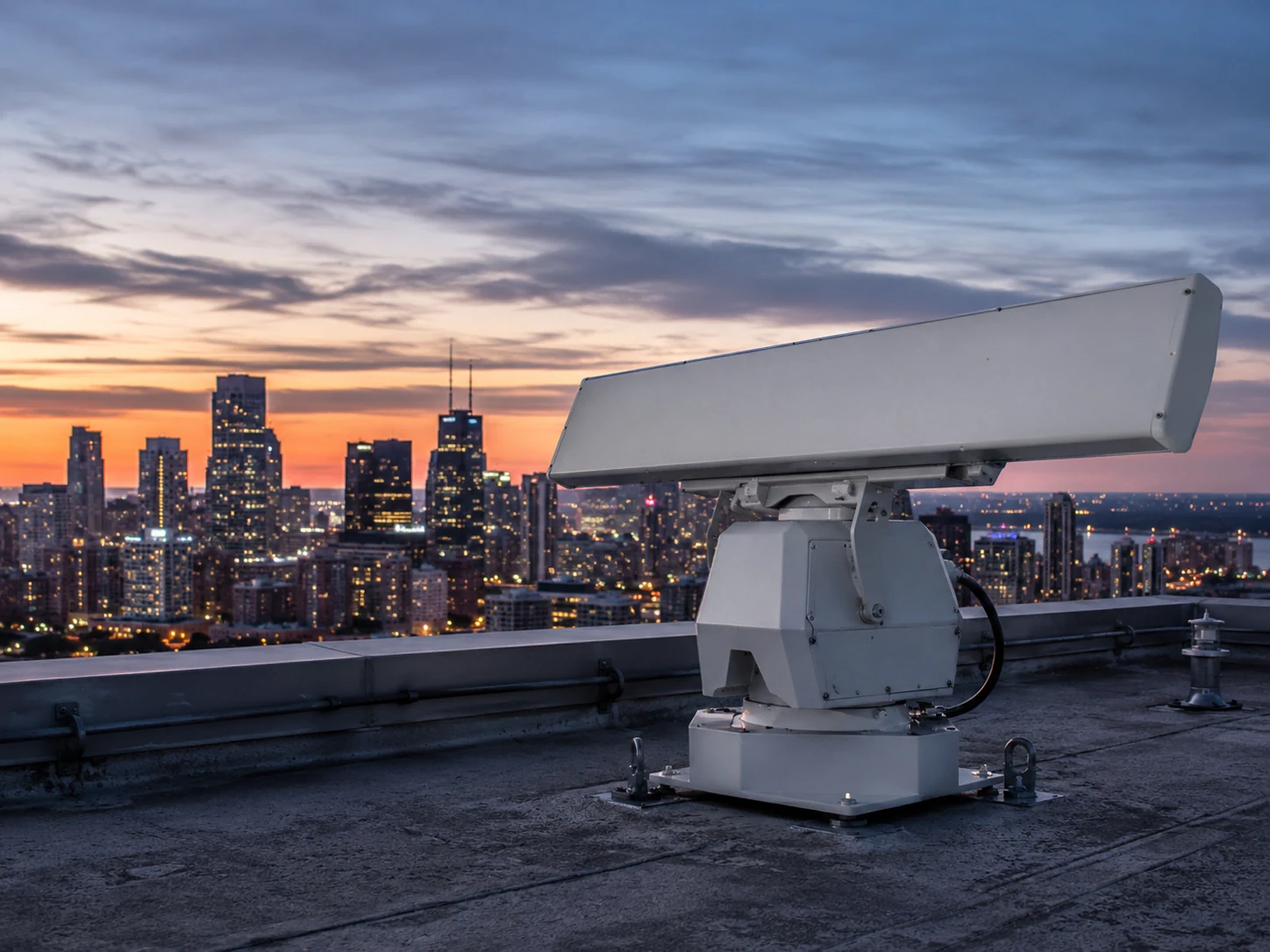
    Radar is one of the most important tools for persistent airspace surveillance. It transmits radio energy and analyzes reflections from objects in the monitored area. Security radars designed for small targets can detect and track drones at distances where conventional cameras may not yet provide useful imagery.

    Radar works day and night and does not depend on visible light. It can also provide range, direction, speed and track history. Its weakness is classification. Birds, clutter and moving machinery can create difficult signatures, so modern systems use micro-Doppler processing and machine-learning models to improve discrimination.

    RF Detection

    Radio-frequency detection looks for communication signals between a drone and its controller or for telemetry emitted by the aircraft. When a known protocol is detected, an RF system may identify the drone family, approximate its direction and sometimes locate both aircraft and controller.

    RF sensing can be highly effective because it may recognize a drone before the aircraft enters visual range. However, autonomous drones, unusual frequencies, encrypted links or pre-programmed flights may reduce detection opportunities. RF monitoring is therefore strongest when used as one layer rather than the only sensor.

    Optical and Thermal Cameras

    Visible-light and thermal cameras provide something radar and RF sensors cannot: visual confirmation. A tracking camera can automatically point toward a radar or RF cue and give the operator an image of the object.

    Day cameras can provide detailed evidence in good conditions. Thermal cameras remain useful at night and in many low-contrast situations because they detect heat rather than reflected visible light. Long-range optical systems often use motorized pan-tilt units and high-magnification lenses to maintain the target after detection.

    Their limitations are familiar: fog, heavy rain, obstacles, glare and extreme distance can reduce usable detail. A camera is usually most effective after another sensor has already told it where to look.

    Acoustic Detection

    Acoustic arrays listen for characteristic propeller and motor signatures. They are passive and do not emit radio energy, which can be useful in sensitive environments. Acoustic sensors can also help detect drones that do not transmit recognizable RF signals.

    The challenge is environmental noise. Wind, vehicles, machinery, aircraft and urban activity can mask or imitate signatures. Detection range is generally shorter than radar, so acoustic sensing is usually a supplementary layer.

    Why Sensor Fusion Matters

    The strongest architecture combines these technologies. Radar may discover an unknown target. RF analytics may identify the protocol. A camera may provide visual verification. Acoustic sensing may add confidence when the RF link is absent. The command platform then correlates the tracks into one operational picture.

    This approach reduces false alarms because the system is not asking a single sensor to make every decision. It also improves resilience: if one technology performs poorly because of weather, terrain or interference, another layer may still provide useful information.

    What Buyers Should Evaluate

    Detection range alone should never determine a procurement decision. Organizations should examine minimum target size, altitude coverage, update rate, clutter performance, false-alarm behavior, weather tolerance, cyber security, integration with VMS and command platforms, data retention, operator workload and legal constraints.

    The site survey is equally important. A sensor that performs well on a flat test field may behave differently beside buildings, cranes, hills, transmission lines or heavy RF activity.

    The Direction of the Market

    Drone detection is moving from isolated specialty equipment toward integrated airspace-awareness platforms. AI classification, edge processing, automated sensor cueing and unified command software are making it possible to treat the low-altitude air domain as another layer of physical security.

    For most critical sites, the practical lesson is simple: reliable drone awareness comes from layered sensing, not from a single detector. Radar, RF, optical, thermal and acoustic technologies are most powerful when they complement one another and present operators with one clear, verified track.

  • Fiber Optic Perimeter Detection vs Traditional Fence Sensors

    Fiber Optic Perimeter Detection vs Traditional Fence Sensors

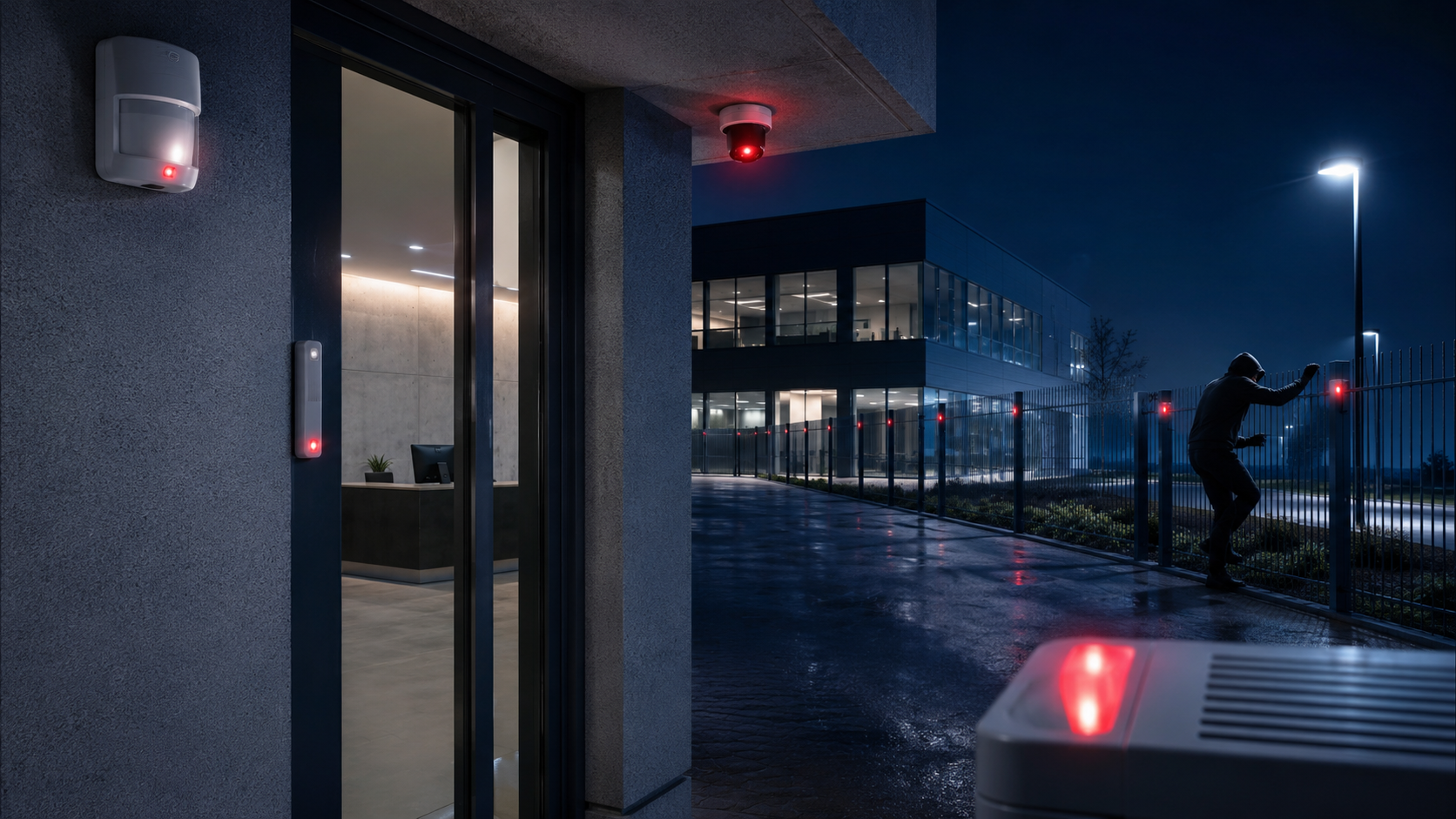
    Fiber-optic sensing is increasingly used to protect long fences, pipelines, borders and critical infrastructure. Traditional fence sensors remain effective in many environments, but fiber introduces a different architecture: the sensing cable itself becomes part of the detection system.

    Traditional fence sensors

    Conventional systems may use accelerometers, vibration detectors, microphonic cable or point sensors mounted at intervals. They can identify climbing, cutting and strong mechanical disturbance. Their strengths include mature technology, straightforward zoning and relatively simple maintenance on short or medium perimeters.

    Fiber-optic detection

    Fiber systems monitor changes in light traveling through an optical cable. Depending on the design, the system may use discrete zones or distributed sensing that analyzes activity continuously along many kilometers of fiber. The field cable is passive, which means powered electronics can remain in protected equipment locations.

    Advantages of fiber

    Fiber is immune to electromagnetic interference, does not conduct electricity and can cover long distances. Distributed sensing can provide detailed location information and, with suitable signal processing, classify patterns associated with climbing, cutting, digging, footsteps or vehicle activity.

    Where traditional sensors still make sense

    For a small compound with a few hundred meters of good-quality fence, a conventional sensor system may be simpler and more economical. Existing infrastructure, technician familiarity and integration requirements can make traditional systems the practical choice.

    Where fiber becomes attractive

    Large industrial sites, solar farms, railways, pipelines, borders, airports and remote critical infrastructure benefit from long sensing distance and reduced field electronics. Fiber can also support architectures in which one cable protects multiple zones or extends beyond the physical fence.

    False alarms and classification

    Neither technology is automatically immune to nuisance alarms. Wind, vegetation, loose fence material and maintenance activity can affect any vibration-based system. Fiber platforms increasingly use advanced signal processing and machine learning to distinguish event patterns, but commissioning and site-specific tuning remain essential.

    Lifecycle considerations

    Designers should compare not only equipment price but also power distribution, communications, spare parts, repair procedures, expansion capability and maintenance over the life of the system. A higher initial cost may be justified when a technology reduces remote electronics or simplifies very long-distance coverage.

    Conclusion

    Fiber-optic perimeter detection is not universally better than traditional fence sensing, but it changes the economics and capabilities of large perimeters. Conventional sensors remain strong for many compact sites; fiber becomes especially compelling when distance, electromagnetic immunity, passive field infrastructure and precise event localization are priorities.

  • AI-Based Perimeter Analytics: How to Reduce False Alarms

    AI-Based Perimeter Analytics: How to Reduce False Alarms

    Perimeter systems are often judged by detection range, but alarm quality is just as important. A sensor that detects everything can overwhelm operators with animals, vegetation, weather effects and routine activity. AI-based analytics are increasingly used to separate relevant events from background noise.

    Why false alarms happen

    Outdoor environments change constantly. Shadows move, rain crosses the scene, trees sway, insects pass near cameras and wildlife enters protected zones. Traditional motion detection can interpret many of these changes as security events.

    Object classification

    Modern analytics can distinguish people, vehicles and other object classes. Instead of alarming whenever pixels change, the system can apply rules only when a relevant object enters a defined zone, crosses a virtual line or remains in an area for a specified time.

    Context matters

    Classification alone is not enough. A person walking on a public path may be normal while the same person inside a restricted substation is significant. Good perimeter analytics combine object type with location, direction, speed, dwell time and schedule.

    Sensor fusion

    AI becomes more useful when it receives data from several sensors. Radar may establish that a target is moving toward the perimeter, a thermal camera may detect a warm object and video analytics may classify it as a person. Combining these signals can increase confidence and reduce single-sensor nuisance alarms.

    Training and tuning

    Analytics should be commissioned for the actual site. Camera angle, target size, vegetation, weather and seasonal changes affect performance. Thresholds that work during installation may need refinement after weeks of real operation.

    Human verification remains important

    AI should prioritize and enrich alarms rather than automatically treating every classification as fact. Operators need access to live and recorded video, sensor history and clear alarm context.

    Conclusion

    The goal of AI perimeter analytics is not to eliminate every false alarm. It is to improve the signal-to-noise ratio so that operators can focus on events that deserve attention. Strong results come from good sensor placement, site-specific tuning, multiple sources of evidence and disciplined alarm workflows.

  • Radar and Thermal Camera Integration for Perimeter Security

    Radar and Thermal Camera Integration for Perimeter Security

    Radar and thermal cameras are complementary technologies. Radar is strong at detecting and tracking movement over large areas, while thermal cameras provide visual confirmation in darkness and difficult lighting. When integrated correctly, the combination can reduce blind spots and help operators understand alarms faster.

    What radar contributes

    Security radar measures the position and movement of targets. Unlike a visible-light camera, it does not depend on scene illumination and can continue tracking in darkness, glare or low-contrast conditions. A radar can also monitor a wide area and maintain multiple tracks at the same time.

    What thermal imaging contributes

    Thermal cameras detect differences in emitted heat. They can reveal people and vehicles at night and often provide better target contrast than visible cameras in low-light scenes. Thermal imagery also gives the operator a visual object to assess, which radar alone cannot provide.

    Automatic camera cueing

    One of the most valuable integrations is automatic PTZ cueing. When radar detects a moving target, the system calculates its coordinates and points a thermal or dual-sensor camera toward it. This can reduce the time an operator spends searching manually.

    Classification and analytics

    Radar may classify a track based on movement characteristics, while video analytics can add visual classification. Combining these sources increases confidence. A system might require agreement between radar movement and camera classification before escalating an alarm.

    Site-design challenges

    Radar requires a clear understanding of terrain, buildings, vegetation and reflective structures. Thermal cameras need appropriate lens selection and mounting height. Poor calibration between the radar coordinate system and camera field of view can undermine the entire integration.

    Where the combination works well

    Airports, power plants, ports, data centers, borders, solar farms, substations and large industrial sites can benefit from radar-thermal integration, particularly where long-range nighttime detection is important.

    Conclusion

    Radar provides wide-area awareness and precise tracking; thermal imaging provides visual confirmation. Together they create a stronger perimeter layer than either technology can usually deliver alone, especially when the system is calibrated, integrated with analytics and connected to a clear operator workflow.

  • Fence-Mounted vs Buried Perimeter Sensors: Which Is Better?

    Fence-Mounted vs Buried Perimeter Sensors: Which Is Better?

    Fence-mounted and buried sensors solve the same basic problem in different ways: detecting unauthorized movement before a person reaches a protected asset. The right choice depends on site geometry, terrain, aesthetics, maintenance and the type of intrusion that must be detected.

    Fence-mounted sensors

    Fence systems detect vibration, movement or strain caused by climbing, cutting or lifting. Technologies include accelerometers, microphonic cable and fiber-optic sensing. They can provide precise zone information along long boundaries and are relatively easy to inspect because the detection medium follows the visible fence line.

    Their performance, however, is closely tied to fence condition. Loose mesh, vegetation, wind-driven objects or poorly tensioned panels can create nuisance alarms. Good mechanical installation and site-specific tuning are essential.

    Buried sensors

    Buried systems create an invisible detection zone using seismic, pressure, electromagnetic or other sensing methods. They are useful around executive facilities, heritage sites, landscaped areas or locations where a visible sensor system would be undesirable.

    Because the sensing medium is underground, soil type, moisture, drainage, frost, nearby roads and heavy machinery can influence performance. Installation can also be more disruptive, and later maintenance may require excavation.

    Detection behavior

    Fence sensors are naturally associated with a physical barrier and are well suited to detecting climbing or cutting. Buried sensors may detect a person before they reach the fence, providing earlier warning. On the other hand, they can be more sensitive to environmental vibration or non-threatening movement depending on the technology.

    Lifecycle cost

    The cheapest installation is not always the lowest-cost system over ten years. Fence repairs, vegetation management, battery replacement, excavation and calibration should all be considered in lifecycle planning.

    When to combine them

    High-security sites sometimes use buried sensors outside the fence for early detection and fence-mounted sensors as a second layer. Cameras, radar or thermal imaging can then verify the alarm.

    Conclusion

    Fence-mounted sensors are often simpler where a strong fence already exists. Buried sensors are valuable when covert or pre-fence detection is required. The decision should be based on the physical site and operating environment rather than on technology preference alone.

  • Perimeter Intrusion Detection Systems: Complete Technology Comparison

    Perimeter Intrusion Detection Systems: Complete Technology Comparison

    Perimeter intrusion detection systems are designed to identify activity before an intruder reaches a protected building or critical asset. The technology landscape includes fence-mounted sensors, buried sensors, radar, thermal cameras, video analytics, fiber-optic sensing and combinations of several sensor types.

    Fence-mounted sensors

    Accelerometer, vibration and fiber-based fence sensors detect cutting, climbing or disturbance. They can protect long fence lines at relatively low cost per meter, but performance depends on fence quality, installation and environmental tuning.

    Buried sensors

    Seismic, pressure and magnetic technologies can create an invisible detection zone. They are useful where visible infrastructure is undesirable, but soil conditions, drainage, nearby traffic and maintenance access can affect performance.

    Radar

    Security radar continuously measures movement over open ground. It can detect and track people or vehicles in darkness, fog or poor contrast and can direct cameras toward targets. Radar is particularly effective for large open sites, but terrain and obstructions must be considered.

    Thermal and visible video analytics

    Thermal cameras can detect heat contrast at night and in difficult lighting, while visible cameras provide richer identification detail. Analytics can classify people and vehicles, but image quality, weather and scene design influence accuracy.

    Fiber-optic sensing

    Distributed or zone-based fiber sensing can monitor long boundaries without powered electronics along the entire protected line. It is attractive for critical infrastructure, pipelines, borders and large industrial sites. Event classification and installation design are essential for controlling nuisance alarms.

    Layered systems perform best

    No sensor is perfect in every environment. A strong perimeter design may use one technology for early detection, another for classification and a camera for visual verification. Sensor fusion can combine confidence levels and reduce unnecessary operator workload.

    How to choose

    Selection should consider terrain, fence condition, climate, detection distance, target type, acceptable false-alarm rate, maintenance resources, communications and integration with the command center.

    Conclusion

    Perimeter security is not a competition to find one universal sensor. The best system is the one whose detection physics match the site. Layered designs combining complementary technologies usually provide the strongest balance of coverage, verification and resilience.

  • Zero Trust Meets Physical Access Control

    Zero Trust Meets Physical Access Control

    Contextual access

    Decisions can consider identity, role, employment status, time, location and area sensitivity rather than badge possession alone.

    Continuous lifecycle

    Authoritative identity data should update physical permissions quickly when employment or responsibilities change.

    Least privilege

    Users should receive only the buildings, floors and rooms required for current work.

    Stronger zones

    Higher-risk areas can require biometrics, PINs or dual authorization.

    Monitoring and convergence

    Unusual access patterns can prioritize investigation while cyber and physical identity systems share lifecycle controls.

    Conclusion

    Zero Trust modernizes access governance without requiring every reader to be replaced.

  • Wireless Smart Locks vs Wired Access Control

    Wireless Smart Locks vs Wired Access Control

    Wired access control

    Wired doors provide continuous power, predictable communication and real-time monitoring for critical openings.

    Wireless smart locks

    Battery-powered locks can reduce cabling and extend electronic access to existing buildings and interior doors.

    Operational trade-offs

    Wireless deployments require battery, radio coverage and firmware processes; wired systems require more installation work.

    Security considerations

    Encryption, credential protection, secure firmware and physical resistance matter in both architectures.

    Hybrid designs

    Many sites use wired systems at perimeters and critical rooms while applying wireless locks to lower-risk spaces.

    Conclusion

    The correct design matches each opening’s risk, environment and maintenance capability.

  • Contractor Access: The Hidden Weakness in Corporate Security

    Contractor Access: The Hidden Weakness in Corporate Security

    Why contractors create risk

    Contractors often sit outside normal HR lifecycle controls, so manually issued permissions can remain active after assignments end.

    Time-limited permissions

    Credentials should expire automatically and be restricted to necessary locations and working hours.

    Sponsorship and accountability

    Every contractor needs an accountable sponsor and individual credential; shared badges undermine investigations.

    Work-order integration

    Linking access to maintenance tickets or project schedules can suspend permissions automatically when work closes.

    Monitoring

    Dormant credentials, unusual hours and denied attempts deserve review.

    Conclusion

    Strong contractor identity governance closes a common gap in employee-focused access control.

  • Visitor Management Systems for Enterprise Security

    Visitor Management Systems for Enterprise Security

    Why visitor management matters

    Visitors sit outside the employee identity lifecycle, creating a temporary trust problem that requires a sponsor, purpose and expiration.

    Pre-registration and check-in

    Hosts can invite guests in advance and support proportionate identity verification on arrival.

    Temporary access credentials

    Integration with access control can issue time- and area-limited permissions instead of generic badges.

    Emergency accountability

    Accurate visitor presence records can support evacuation and incident response.

    Privacy and retention

    Visitor data needs defined retention, restricted access and transparent collection practices.

    Conclusion

    Effective visitor management connects reception, identity governance, access control and emergency procedures.