Category: News

Current, event-driven reporting, announcements and industry developments.

  • DHS Opens $440.7 Million Governmentwide Competition for Biometric Capture Devices

    DHS Opens $440.7 Million Governmentwide Competition for Biometric Capture Devices

    The Department of Homeland Security has opened bidding on a five-year, $440.7 million multiple-award IDIQ contract (solicitation 70RDA126R00000001) to standardize procurement of biometric capture devices — fingerprint, facial, iris, palmprint and multimodal systems — across DHS components and other federal agencies including the Departments of State and Justice, Washington Technology reported.

    The contract vehicle is intended to replace fragmented, one-off purchasing historically used by DHS’s Office of Biometric Identity Management. Proposals are due September 18, 2026.

    Why it matters: A single large, standardized federal contract vehicle for biometric hardware procurement gives vendors a much larger and more predictable addressable market than the agency-by-agency purchasing it replaces, and is likely to influence which biometric hardware standards and interoperability requirements become de facto norms across other government biometric deployments.

    Source: Washington Technology, September 11, 2026, corroborated by FedScoop and ID Tech Wire.

  • Microsoft Plans to More Than Triple Data Center Capacity to 38GW by 2032

    Microsoft Plans to More Than Triple Data Center Capacity to 38GW by 2032

    Microsoft plans to grow its global data center capacity from roughly 12GW today to more than 38GW by 2032, Bloomberg reported, a figure that would exceed peak electricity demand in New York state. The company said compute shortages had forced it to turn away AI and cloud business in recent months.

    Why it matters: The planned expansion underscores how AI compute demand is now a first-order driver of data center and power-grid planning among hyperscalers. Editorial note: the source article is behind Bloomberg’s paywall; this summary reflects only the publicly accessible headline and lede, and should be treated as preliminary pending fuller reporting.

    Source: Bloomberg, September 10, 2026.

  • Lawsuit Tests Whether AI Gun-Detection Vendors Can Be Held Liable When Systems Miss a Threat

    Lawsuit Tests Whether AI Gun-Detection Vendors Can Be Held Liable When Systems Miss a Threat

    A legal analysis published by SecurityInfoWatch examines a lawsuit, filed May 1, 2026, by a survivor of the January 2025 shooting at Antioch High School in Nashville against AI weapons-detection vendor Omnilert and installer System Integrations. The suit alleges the AI gun-detection system deployed at the school failed to flag the shooter’s weapon.

    The SIW analysis frames the case as an early test of whether weapons-detection vendors can be held legally liable when a system’s marketed detection capabilities do not perform as claimed in a real-world incident — a question the physical security industry has largely not had to confront in court until now.

    Why it matters: As AI-based weapons detection is adopted more widely in schools and other public facilities, this case and others like it will likely shape how vendors market detection-accuracy claims, how procurement contracts allocate liability, and how buyers evaluate performance guarantees — regardless of the case’s eventual outcome.

    Source: SecurityInfoWatch.com, September 10, 2026.

  • CISA Updates Advisory on Critical Flaws in ST Engineering iDirect Satellite Terminals

    CISA Updates Advisory on Critical Flaws in ST Engineering iDirect Satellite Terminals

    CISA issued Update A to advisory ICSA-26-183-01, covering four vulnerabilities in ST Engineering iDirect iQ-series satellite (VSAT) terminals, with CVSS scores up to 8.8 and one flaw rated 9.4 on the CVSS 4.0 scale. The advisory was originally released July 2, 2026.

    The flaws include missing authentication on REST API endpoints that expose device identity and cryptographic material, a cross-site request forgery vulnerability that can trigger a remote reboot or denial of service, a local privilege-escalation path via a factory-default low-privilege account, and exposure of password hashes. CISA lists Communications, Defense Industrial Base, Energy, Government and Transportation as affected sectors.

    Why it matters: VSAT terminals from vendors like ST Engineering iDirect provide connectivity for maritime vessels, remote energy sites, and defense operations where terrestrial networks are unavailable. Authentication bypasses on internet-facing satellite terminal management interfaces are a persistent, underappreciated risk category for organizations with remote or offshore infrastructure.

    Source: CISA ICS Advisory ICSA-26-183-01 (Update A), September 10, 2026.

  • Oracle Reports Record Cloud Infrastructure Growth, Remaining Performance Obligations Hit $664 Billion

    Oracle Reports Record Cloud Infrastructure Growth, Remaining Performance Obligations Hit $664 Billion

    Oracle reported first-quarter fiscal 2027 total revenue of $19.3 billion, up 30% year-over-year, according to the company’s official earnings release. Cloud Infrastructure (IaaS) revenue rose 121% to $7.4 billion.

    The company said it delivered 850MW of additional data center capacity and more than 300,000 GPUs to AI cloud customers since the previous quarter, and booked over $30 billion in new AI cloud contracts, pushing Remaining Performance Obligations to $664 billion, up $209 billion year-over-year.

    Why it matters: The scale of Oracle’s new AI cloud contract bookings and physical data center capacity additions in a single quarter underscores how rapidly cloud infrastructure providers are scaling to meet AI compute demand — growth that directly drives the data center physical security, power and cooling buildout this publication tracks.

    Source: Oracle official earnings release, September 10, 2026.

  • Fresh Drone Alert Issued Around Amritsar International Airport Days After Flight Diversions

    Fresh Drone Alert Issued Around Amritsar International Airport Days After Flight Diversions

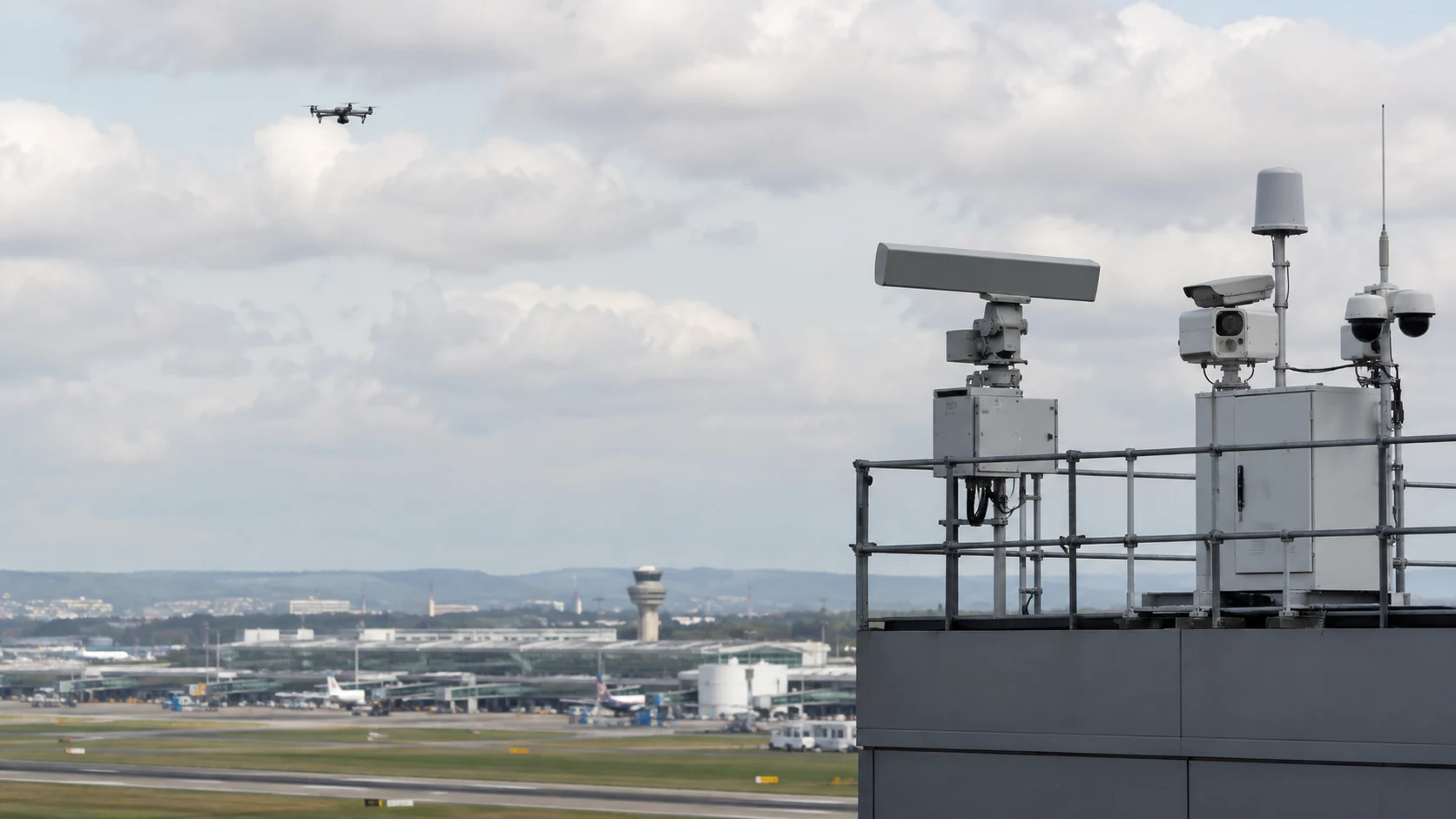
    Amritsar Police issued a fresh drone-activity alert covering a 3-kilometer “Red Zone” and 5-kilometer “Yellow Zone” around Sri Guru Ram Dass Jee International Airport, NDTV reported. The alert follows a September 7 incident in which suspected drone activity forced the diversion of seven flights, reported separately by Hindustan Times and Indian Express.

    Authorities are now requiring advance notice for any local drone operation near the airport as part of the response.

    Why it matters: The measures reflect a broader pattern of airports responding to unauthorized drone activity with administrative restricted-zone declarations ahead of, or alongside, physical counter-UAS detection investment — a lower-cost interim step that depends heavily on operator compliance and enforcement to be effective.

    Source: NDTV, September 10-11, 2026, corroborated by Hindustan Times and Indian Express on the underlying September 7 diversion event.

  • CISA Advisory: Hard-Coded Cryptographic Key Found in AVEVA Pipeline Integrity Monitor

    CISA Advisory: Hard-Coded Cryptographic Key Found in AVEVA Pipeline Integrity Monitor

    CISA published advisory ICSA-26-253-01 describing four vulnerabilities in AVEVA Pipeline Integrity Monitor, with CVSS scores up to 8.4 (CVE-2026-81821 through CVE-2026-81824). The flaws include a hard-coded cryptographic key, use of a broken or risky cryptographic algorithm, missing authorization checks, and a stored cross-site scripting vulnerability.

    According to CISA, successful exploitation could allow an attacker to disclose sensitive project data, brute-force password hashes, or execute arbitrary code in a victim’s browser session. The advisory identifies the Critical Manufacturing sector as affected. AVEVA has released a fix in the 2025 SP1 P2 release.

    Why it matters: Pipeline integrity monitoring software is used to track the structural and operational health of oil, gas and other pipeline infrastructure. Vulnerabilities that expose project data or credential material in this class of software are a direct concern for critical-infrastructure operators, even where exploitation requires network access rather than being remotely trivial.

    Source: CISA ICS Advisory ICSA-26-253-01, September 10, 2026.

  • TSMC Posts Record August Revenue, Up 53% Year-Over-Year on AI Chip Demand

    TSMC Posts Record August Revenue, Up 53% Year-Over-Year on AI Chip Demand

    TSMC reported August 2026 revenue of NT$514.8 billion ($16.35 billion), up 53.3% year-over-year and 10.1% month-over-month, according to the company’s investor relations release, corroborated by CNBC. It marked TSMC’s fourth consecutive month of revenue growth, driven by AI server chip demand.

    January-through-August 2026 revenue totaled NT$3.39 trillion, up 39.3% year-over-year.

    Why it matters: As the dominant manufacturer of advanced chips for AI accelerators, TSMC’s monthly revenue figures function as a leading indicator for the broader pace of AI infrastructure buildout — directly relevant to security and infrastructure planners tracking how fast data center and compute capacity is scaling globally.

    Source: TSMC investor relations release, corroborated by CNBC, September 10, 2026.

  • Russian-Speaking Actor Used Hundreds of AI Agents to Exploit PaperCut in 395+ Organizations

    Russian-Speaking Actor Used Hundreds of AI Agents to Exploit PaperCut in 395+ Organizations

    Security research firm GreyNoise reported that a Russian-speaking threat actor used hundreds of AI agents, built on an AI coding harness paired with a large language model, to weaponize CVE-2026-81578 and CVE-2026-82078 in PaperCut NG/MF print-management software, BleepingComputer and SecurityWeek reported.

    The AI-orchestrated campaign compromised at least 395 organizations across 48 countries since August 31, 2026, with roughly half of victims in the education sector, according to GreyNoise’s research.

    Why it matters: The scale and speed of an AI-agent-orchestrated exploitation campaign against a known, patchable vulnerability illustrates how AI coding tools are lowering the operational cost of mass exploitation for attackers, independent of whether the underlying vulnerability itself is novel — a trend security teams increasingly need to plan around rather than treat as a future risk.

    Source: GreyNoise research, corroborated by BleepingComputer and SecurityWeek, September 10, 2026.

  • Resorts World Las Vegas Runs Milestone VMS Across 5,800 Cameras

    Resorts World Las Vegas Runs Milestone VMS Across 5,800 Cameras

    Resorts World Las Vegas, an 88-acre, $4.3 billion property, is operating Milestone Systems’ XProtect video management software across approximately 5,800 cameras from Axis, Bosch and Hanwha, SecurityInfoWatch reported. The deployment is integrated with BriefCam forensic video analytics, Oosto facial recognition, and Aeyesky card-counting and cheat-detection tools.

    Named Milestone and Resorts World executives said the integrated platform supports gaming compliance monitoring, fraud investigation, and day-to-day security operations across the resort’s gaming floor and public areas.

    Why it matters: The scale of the deployment — nearly 5,800 cameras on a single VMS with multiple layered analytics engines — illustrates how far integrated-platform video surveillance has moved beyond simple recording, toward real-time compliance and fraud-detection infrastructure at large commercial venues.

    Source: SecurityInfoWatch.com, September 10, 2026.