Tag: critical infrastructure

  • Security Contract Awards: How to Read Major Project Wins

    Security Contract Awards: How to Read Major Project Wins

    Major security contracts reveal where governments, airports, utilities, transport operators and enterprises are investing. The value is not only the contract amount but the architecture and operational priorities behind the award.

    What a contract award tells us

    A project can reveal demand for cloud migration, command-center modernization, perimeter sensing, biometrics, fire safety or integrated critical-infrastructure monitoring.

    Beyond the headline value

    Large announcements often combine hardware, software, maintenance and professional services. Readers should separate these elements before comparing one contract with another.

    Technology signals

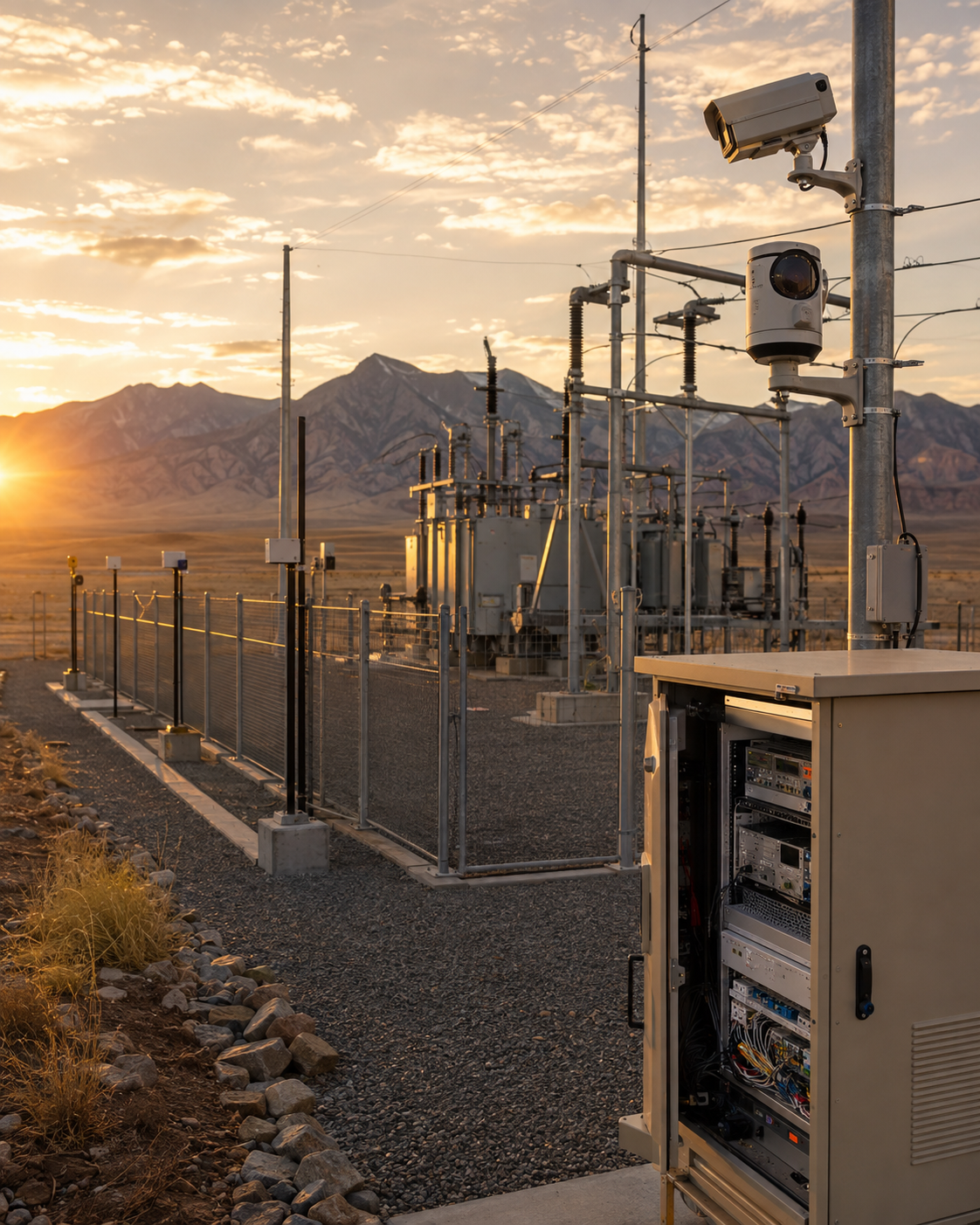
    A contract that combines radar, thermal imaging and video analytics indicates a move toward sensor fusion. A project pairing DAS with cameras and GIS suggests infrastructure-scale monitoring rather than traditional point security.

    Questions to ask

    Who is the end user? What problem is being solved? Is the contract greenfield or an upgrade? Which systems must integrate? What is the service period? These questions make an award useful to the market.

    Editorial standard

    SectechMedia should treat contract awards as analysis, not copied press releases. The article should explain why the project matters and what it says about wider procurement trends.

    Conclusion

    Security Contract Awards: Who Won What? should be evaluated as part of a broader operational architecture. The strongest deployments combine suitable sensing technology, resilient communications, clear procedures and measurable performance rather than relying on a single device or headline specification.
  • Tethered Drones for Industrial Site Monitoring

    Tethered Drones for Industrial Site Monitoring

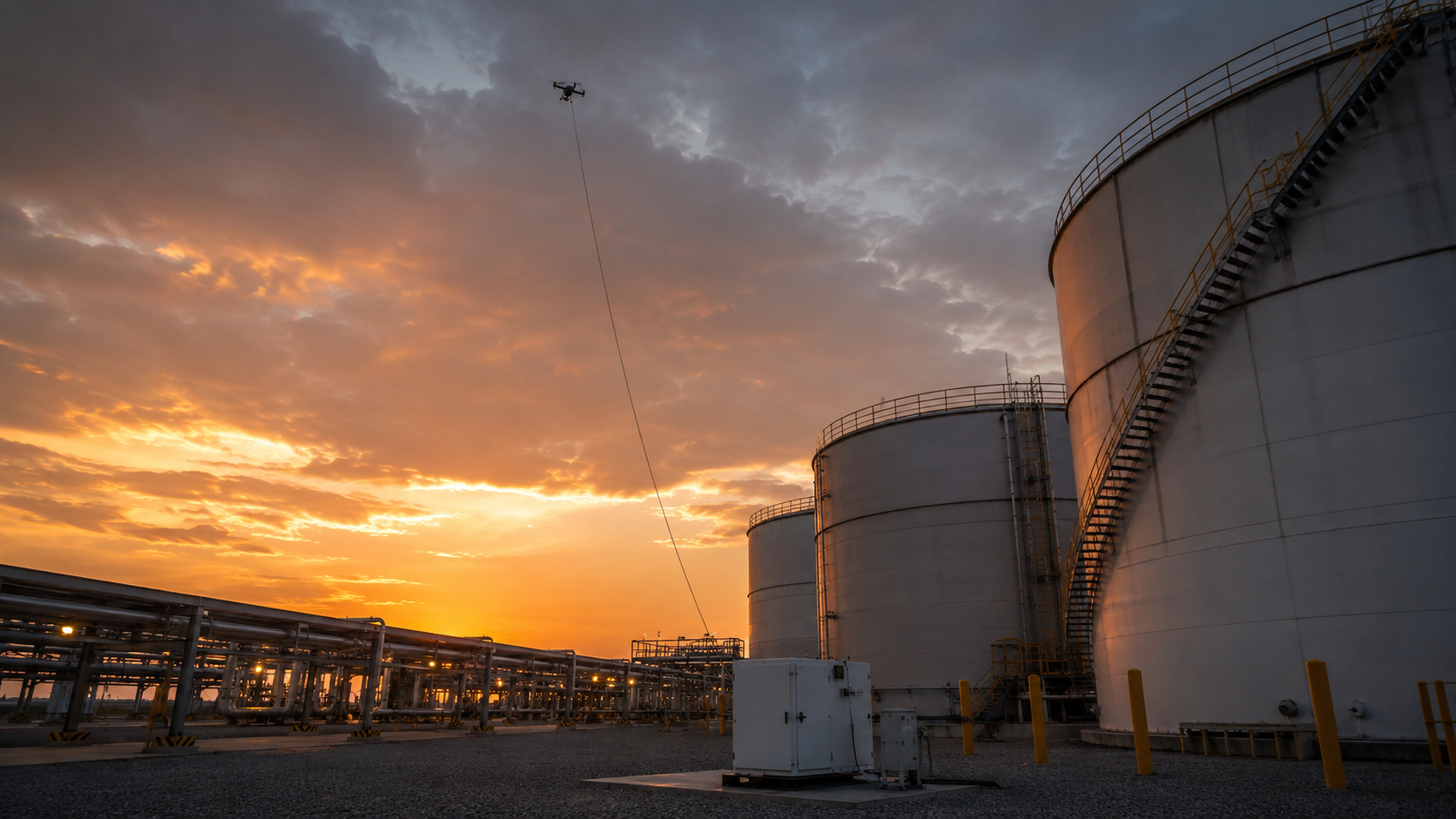
    Tethered drones occupy an unusual position between fixed surveillance towers and free-flying unmanned aircraft. Connected to the ground by a cable that can provide power and communications, a tethered drone can remain airborne for extended periods while carrying cameras, thermal sensors, communications equipment or other payloads.

    For industrial security, the main advantage is persistent elevated observation. A drone positioned tens of meters above a refinery, port, mine, pipeline construction zone or temporary event can see over fences, buildings and terrain that would block ground cameras. Because power is supplied from the ground, endurance can be measured in hours or days rather than the battery life of a conventional drone.

    The tether can also provide a secure high-bandwidth data path, reducing dependence on wireless links. This is useful where video quality, cyber security or RF congestion is a concern.

    Tethered systems still have operational limits. Wind, lightning, aviation restrictions, tether management and safe operating areas must be considered. They are not suitable everywhere, and the aircraft remains a visible physical asset that requires maintenance and procedures.

    Their strongest use case is usually temporary or semi-permanent overwatch: construction projects, incident response, large industrial shutdowns, border posts, temporary perimeter expansion or remote facilities where installing a tower would take longer.

    Tethered drones should be integrated with the wider security system rather than treated as standalone cameras in the sky. Video can feed the VMS, analytics can monitor defined zones and command-center operators can correlate aerial views with ground sensors.

    As industrial sites seek flexible surveillance coverage, tethered drones provide a middle ground between permanent infrastructure and mobile airborne patrol.

  • Critical Infrastructure Airspace Monitoring

    Critical Infrastructure Airspace Monitoring

    Critical infrastructure security traditionally focused on fences, gates, cameras and ground-based intrusion detection. Drones have added a new dimension: the low-altitude airspace above a facility can now be used for observation, inspection, accidental overflight or unauthorized activity. Power plants, refineries, substations, ports, data centers and water facilities increasingly treat airspace awareness as part of physical security.

    A typical architecture combines radar, RF sensing, optical or thermal cameras and a command platform. Radar supplies range, direction and track history. RF monitoring can provide protocol-level clues when a drone is actively communicating. Cameras verify the target and create evidence. Sensor fusion then combines these data points into a single operational track.

    Risk is highly site-specific. A drone above a large solar farm presents a different concern from one approaching a high-voltage substation, LNG terminal or nuclear facility. Security teams should therefore define protected zones, alert thresholds and escalation rules around critical assets rather than using one uniform alarm policy.

    Integration with existing systems is essential. When an airspace event is detected, nearby perimeter cameras can be cued automatically, incident-management software can create a case and operators can correlate the drone’s route with ground activity. This is especially valuable when the airspace event is part of a broader security incident.

    Environmental design is also important. Industrial facilities contain steel structures, pipes, cranes, electromagnetic noise and moving machinery. These conditions affect radar, RF and camera performance. Site surveys and real-world testing should therefore be part of procurement.

    The most useful outcome is not a separate drone console, but a unified picture that shows what is happening on the ground and in the air. As critical infrastructure becomes more instrumented, low-altitude airspace monitoring is likely to become another standard layer of integrated physical security.

  • Small UK Power Generator Taken Offline After Iran-Linked Cyberattack

    Small UK Power Generator Taken Offline After Iran-Linked Cyberattack

    A small power generation site in the United Kingdom was shut down for four days in July 2026 following a cyberattack that has been linked to hackers associated with Iran, The Telegraph reported on August 23, citing sources familiar with the incident. UK outlets including the Independent, Metro and The Register subsequently confirmed elements of the report with government sources.

    What happened

    The affected facility has not been publicly named. UK officials describe it only as a “small-scale energy generator” — the kind of site that, according to reporting, often runs intermittently to top up the grid rather than providing baseload power. A UK government spokesperson confirmed the incident to multiple outlets, including The Register and CNBC, stating that the attack did not create a risk to the wider energy system.

    Official response

    “This story refers to an incident impacting a small-scale energy generator, and at no point was there a risk to the wider energy system,” a UK government spokesperson said in a statement provided to several outlets. “The UK has a highly resilient energy system. We work closely with the energy sector to protect infrastructure and ensure the highest security standards.” The National Cyber Security Centre, part of GCHQ, said it does not routinely comment on individual incidents.

    Why it matters

    Reports describe this as the first time hackers linked to Iran have successfully disrupted a UK energy facility, and note that it occurred around the same time as a wave of cyberattacks attributed to Iran-linked actors against water utilities in the United States. Even when an individual facility is small relative to national grid capacity, incidents like this are a reminder that distributed and smaller energy assets — not just flagship power stations — are part of the critical infrastructure attack surface, and that operational technology segmentation and incident response planning need to extend across the full fleet of generation sites, not only the largest ones.

    Sources

    More coverage like this is available on Technology News.