
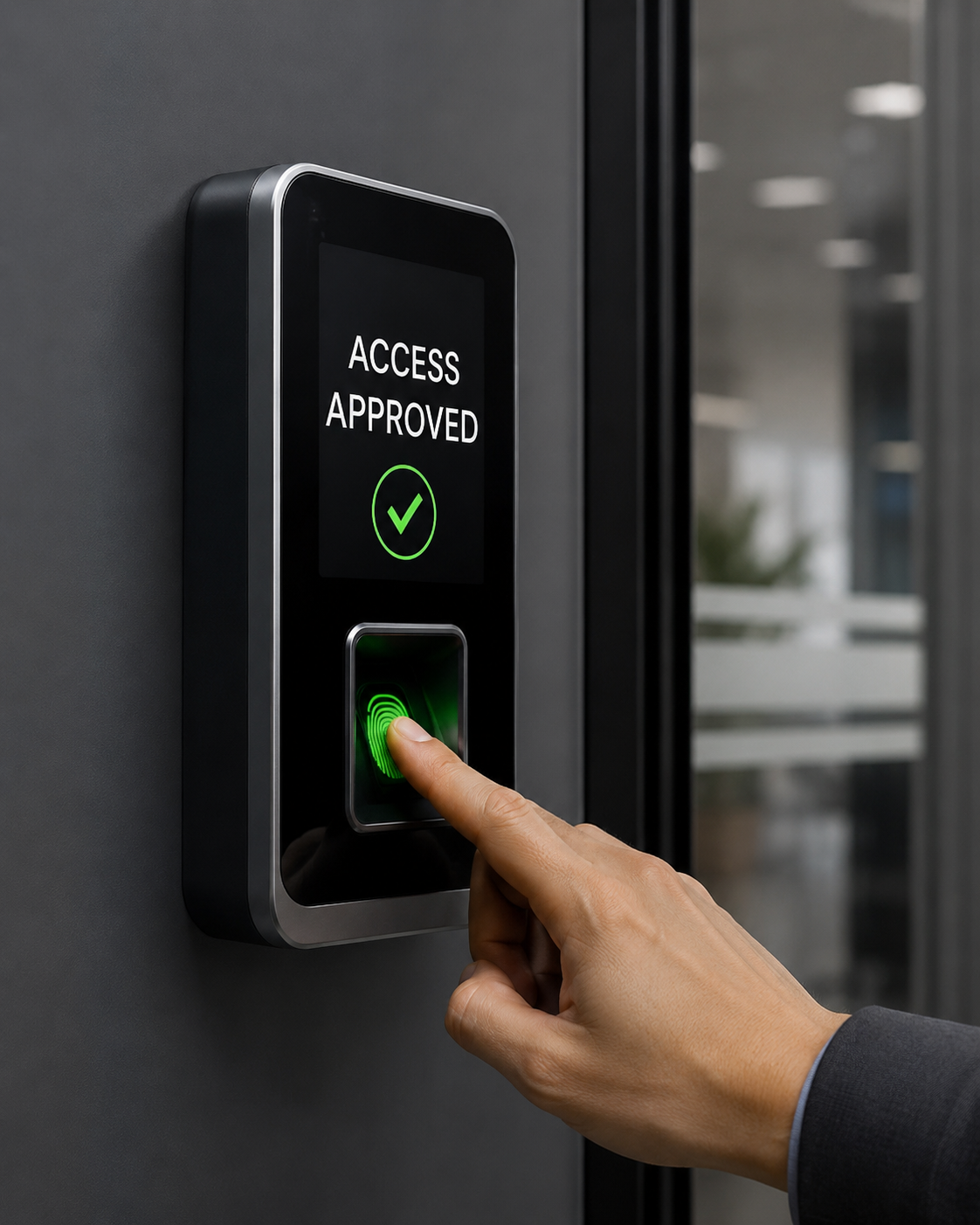
Facial recognition is one of the most capable and controversial technologies in modern security. It can speed identity verification, support controlled access and help investigators search authorized watchlists, but its use carries technical, legal and ethical risks that differ significantly from ordinary video analytics.
How the Technology Works
Most facial-recognition systems perform two related tasks. Verification compares a face against a claimed identity, such as a person presenting a credential at a secure entrance. Identification searches a captured face against a database to find possible matches. Identification is generally more demanding because the system may compare one image with thousands or millions of enrolled templates.
Image quality is critical. Pose, lighting, motion blur, camera angle, occlusion and target size all affect matching performance. A high-performing algorithm cannot compensate for a camera that captures faces at extreme angles or insufficient resolution.
Operational Considerations
Accuracy should be evaluated using false-match and false-non-match rates rather than a single headline percentage. Security teams should also understand threshold settings. A stricter threshold may reduce false matches but increase the number of legitimate users who are rejected.
Demographic performance has received significant scrutiny. Organizations should review independent test results, vendor documentation and applicable regulatory requirements before deployment. High-consequence decisions should not be based solely on an automated match.
The safest operational model treats facial recognition as a decision-support tool. A match can prompt an authorized operator to review the evidence or request another authentication factor. This is very different from allowing an algorithm to make an irreversible decision without human oversight.
Deployment and Risk
Data governance is central. Facial templates are biometric data and require strong protection. Organizations need clear rules for enrollment, consent where required, retention, database access, sharing and deletion. A compromised password can be changed; a biometric characteristic cannot.
Regulation is evolving globally, and requirements vary by jurisdiction and use case. Public-space identification, employee access and voluntary customer authentication may fall under different rules. Security planners should involve privacy and legal teams early rather than treating compliance as an afterthought.
Conclusion
Facial recognition can deliver real operational value when the use case is narrow, lawful and technically well designed. The best deployments combine high-quality capture, conservative thresholds, human verification, strong biometric governance and transparent policies.