
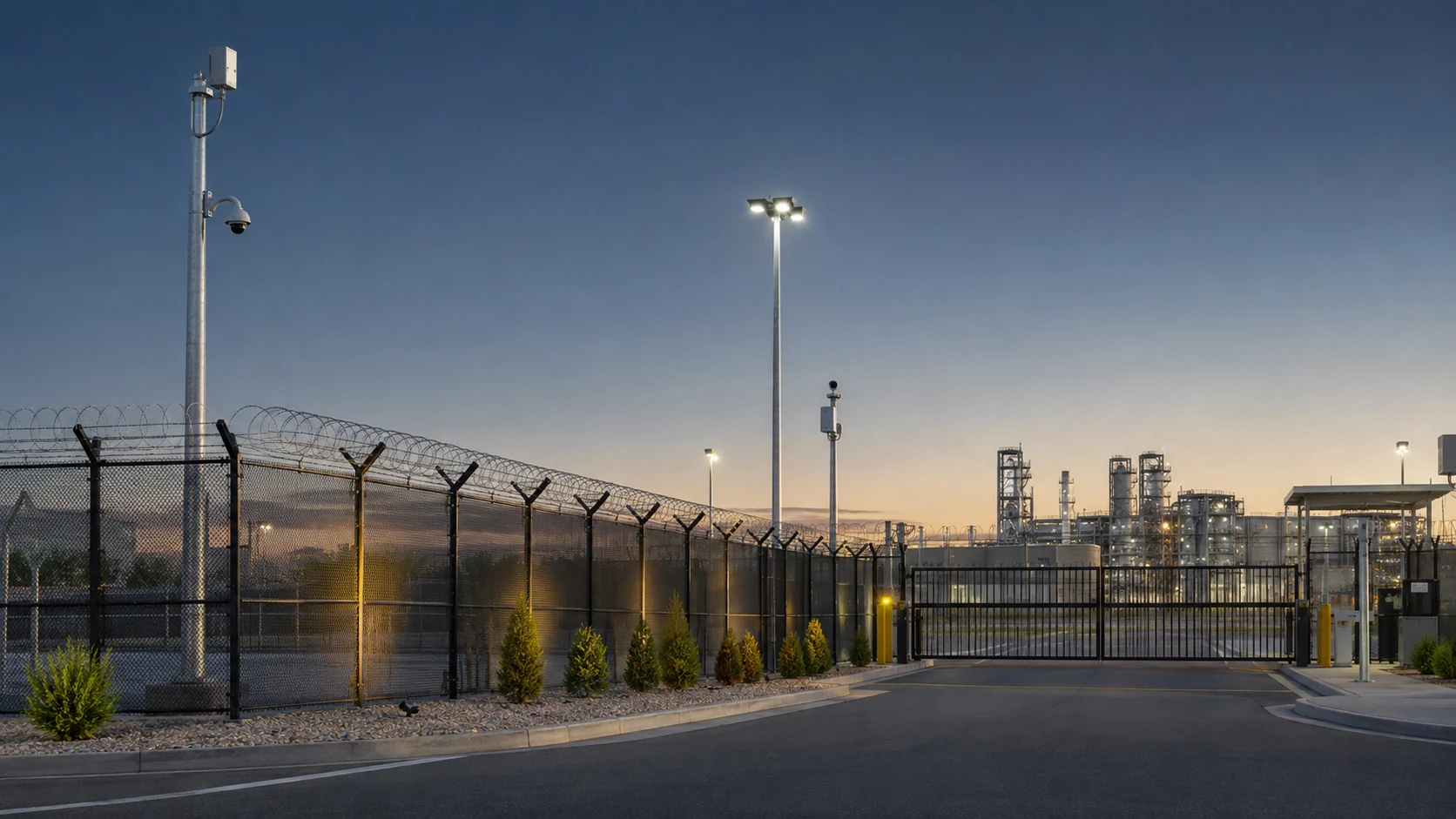
Thermal cameras have long been associated with a single job in physical security: spotting intruders along a dark perimeter where visible-light cameras struggle. That reputation undersells the technology. Because thermal imaging detects heat rather than reflected light, it has found a growing set of applications well beyond perimeter intrusion detection.
Why Thermal Works Where Visible Light Fails
A thermal, or infrared, camera does not capture light in the way a conventional camera does. It measures the infrared radiation every object emits based on its temperature and converts that data into a visible image. Because it does not rely on ambient or artificial light, a thermal camera performs consistently in total darkness, through smoke, light fog and other conditions that degrade visible-light imaging, which is the original basis for its use along fences and open perimeters.
Early Fire and Overheat Detection
Because thermal cameras measure temperature directly, they can identify a developing fire or equipment overheating before flames or smoke are visible to a conventional camera or even to a person on site. This has made thermal imaging a growing complement to traditional smoke and heat detectors in settings like waste and recycling facilities, warehouses storing combustible materials, and outdoor stockpiles at industrial sites, where a slow-building fire in a large pile of material can go undetected by point smoke detectors for hours.
Industrial Condition Monitoring
Fixed thermal cameras are increasingly used for continuous monitoring of industrial equipment such as electrical switchgear, transformers, motors and bearings, where an abnormal temperature rise can be an early indicator of a developing fault. Unlike a handheld thermal camera used for periodic inspection, a fixed unit can watch critical equipment continuously and trigger an alert as soon as a reading crosses a defined threshold, extending thermal imaging from a security tool into a predictive-maintenance and safety tool.
Health and Occupancy Screening
Thermal cameras also saw expanded use for elevated-temperature screening at building entrances, though public health authorities and manufacturers alike have cautioned that a thermal camera at a doorway is a coarse screening tool rather than a diagnostic one, since ambient temperature, camera calibration and where on the face the reading is taken all affect accuracy. More durable applications in this space include monitoring processing areas in food and pharmaceutical facilities, where consistent thermal conditions matter for product safety and equipment performance.
Combining Thermal With Analytics
Modern thermal cameras increasingly pair with the same AI-based analytics used on visible-light cameras, applying object classification and behavioral detection to the thermal image. This combination is particularly useful for outdoor perimeter and critical-infrastructure sites, where a thermal-plus-analytics camera can both detect a person or vehicle in total darkness and classify what it has detected, reducing false alarms compared with older thermal systems that could only flag a change in the scene without saying what caused it.
FAQ
Can thermal cameras replace smoke detectors? No. Thermal cameras are generally deployed as a complement to, not a replacement for, code-required smoke and heat detection systems, particularly useful for large or open areas where point detectors are impractical or too slow.
Do thermal cameras work in daylight? Yes. Thermal imaging is based on heat rather than visible light, so it functions in bright daylight, complete darkness and through smoke or light fog alike, unlike visible-light cameras.
Are thermal cameras accurate for measuring exact temperatures? Radiometric thermal cameras can provide calibrated temperature readings suitable for industrial monitoring, but accuracy depends on calibration, distance and environmental conditions, and screening-grade thermal cameras are generally not precise enough for medical-grade temperature measurement.
Leave a Reply