
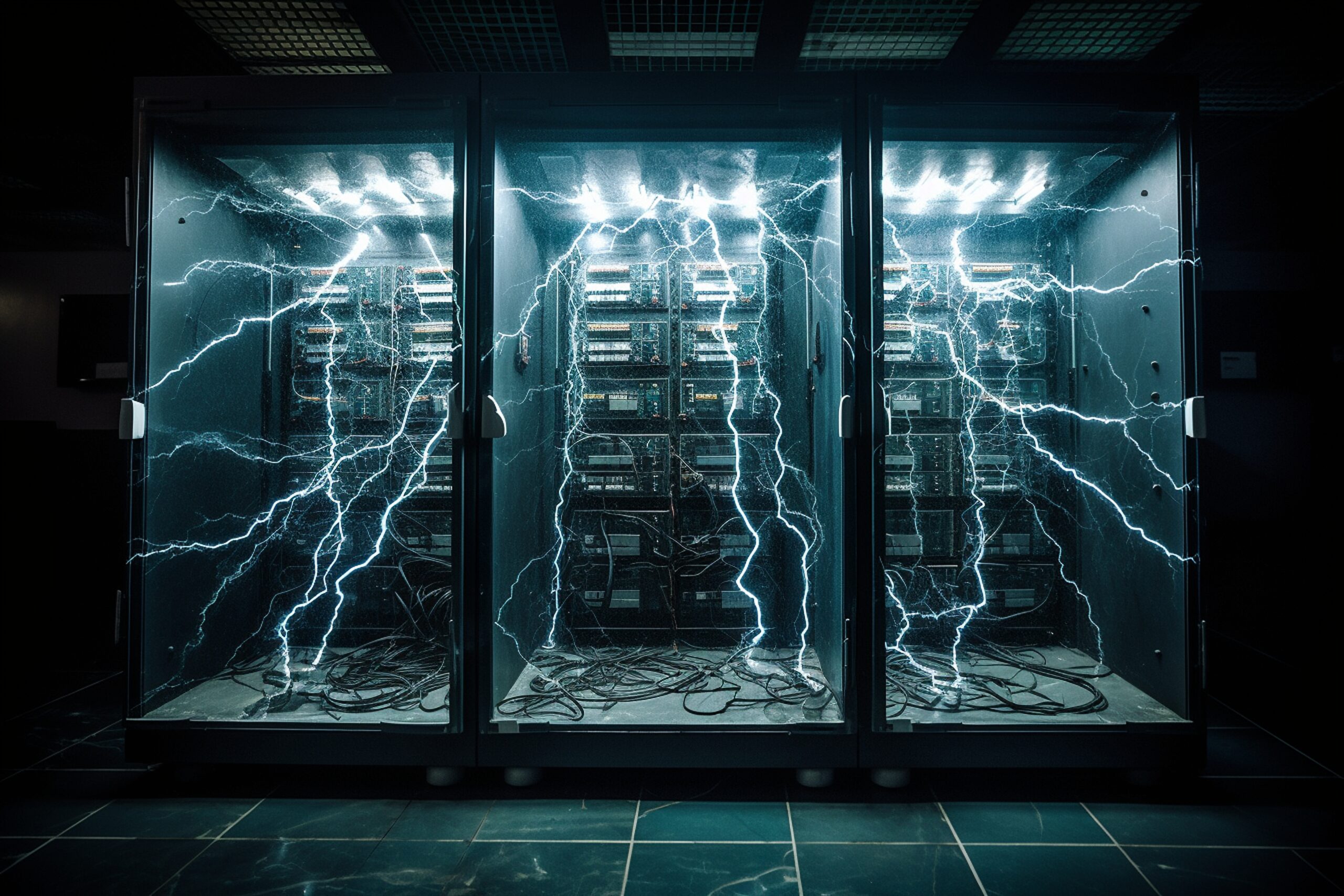
A security system is only as reliable as the power feeding it. Cameras stop recording, access-controlled doors can fail open or fail locked depending on configuration, and alarm panels go silent the moment utility power is lost — unless the system was designed with backup power as a core requirement, not an afterthought.
Where Power Loss Actually Hurts
The most exposed components are usually the ones furthest from the main equipment room: PoE cameras and door controllers at the edge of the network, which depend on switches and injectors that themselves need backup power. A building’s main server room might sit on a robust UPS, while a camera on a remote loading dock loses power the moment a single upstream switch goes dark.
Access control is particularly sensitive to power design choices. Fail-safe locks unlock when power is lost, which is often required for life-safety egress but means a power outage can leave doors unsecured. Fail-secure locks stay locked, which protects against intrusion but can trap people inside in an emergency unless a mechanical override or backup power source is available. Getting this choice wrong at a given door is a life-safety and security decision, not just an electrical one.
UPS Sizing and Runtime
Uninterruptible power supplies for security infrastructure are typically sized around two figures: the load they must carry (measured in VA or watts) and the runtime required before either utility power returns or a generator takes over. A common design pattern uses UPS units to bridge the gap between a power loss and generator start-up — often 30 seconds to a few minutes — rather than to power a site for hours, which is left to the generator.
PoE budgeting matters as much as UPS capacity. A switch’s power budget does not automatically scale down gracefully when running on battery; if the connected UPS cannot sustain the switch’s full PoE load, some ports may shut down or brown out before the runtime estimate suggests they should.
Generators and Transfer Switches
For sites where extended outages are a real risk — critical infrastructure, hospitals, data centers, and increasingly large commercial campuses — a generator with an automatic transfer switch is standard. The transfer switch detects a utility outage, starts the generator, and switches the load over, typically restoring full power within 10 to 30 seconds. Security equipment should be on a circuit designated for generator backup, not left on the same circuit as non-essential building loads that may be intentionally shed during an extended outage.
Testing Is the Part Most Often Skipped
Backup power systems fail most often not because they were poorly designed, but because they were never tested under realistic conditions. UPS batteries degrade over years of standby use and can fail silently until called upon during an actual outage. Runtime testing under real load, not just a self-test indicator light, along with a documented replacement schedule for UPS batteries, is what separates backup power that works from backup power that only looks like it works on paper.
Conclusion
Backup power is not a single product decision but a system-level design question that touches UPS sizing, PoE budgeting, lock fail-mode selection, and generator transfer logic together. Security teams that treat power resilience as part of the initial system design — rather than an add-on after installation — are the ones whose cameras and doors are still working when the lights go out.
Leave a Reply