
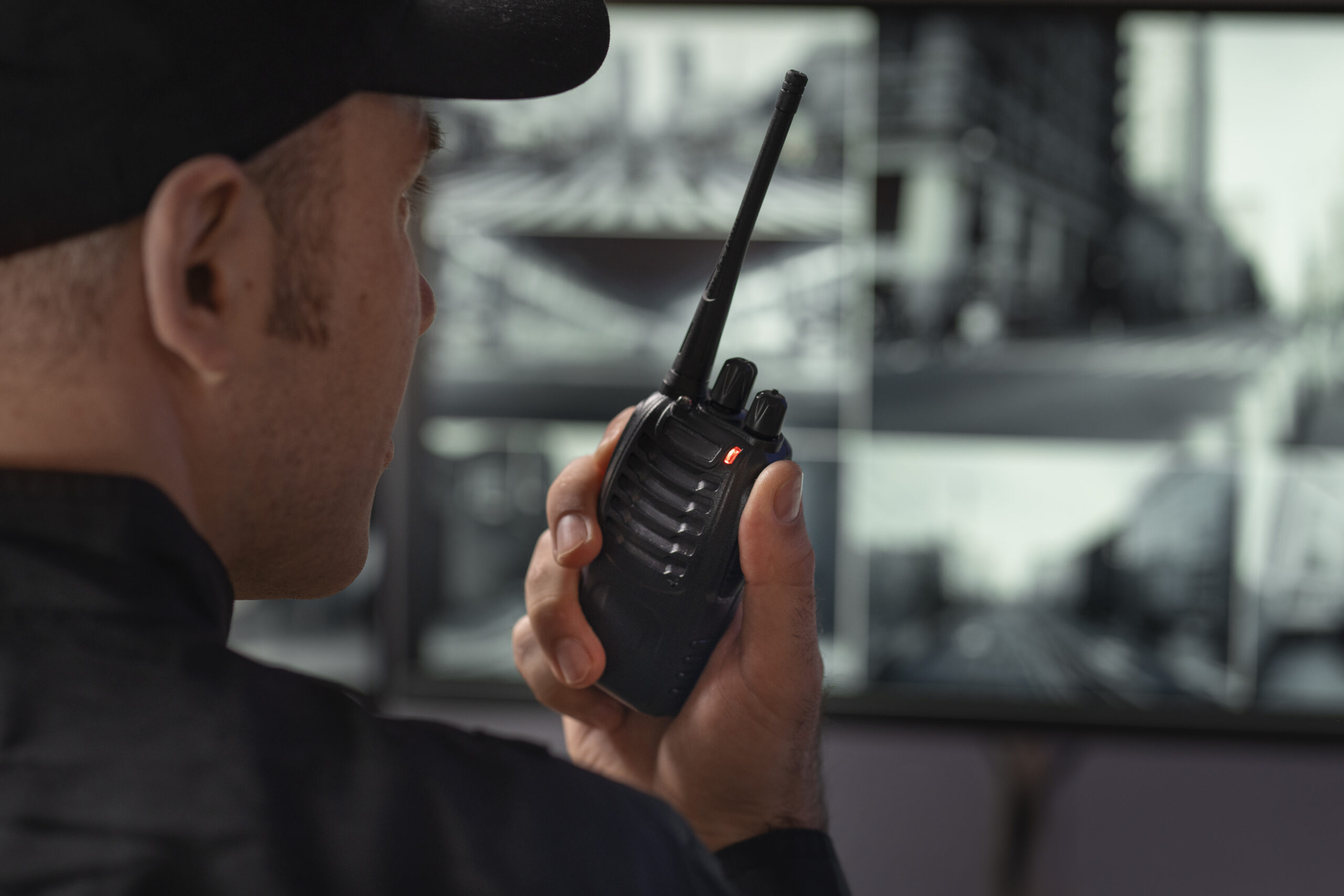
When a security operations center needs to reach every guard on a property at once, or a guard needs to call for help without dialing a number and waiting for someone to answer, two-way radio still outperforms cellular communication — which is why it remains standard equipment for security teams even in facilities otherwise saturated with smartphones and networked devices. The technology has changed substantially from the analog handhelds of a generation ago, but the core advantage, instant one-to-many communication independent of a carrier network, has not.
Analog vs. Digital Radio
Analog radios remain in use for their simplicity and low cost, but digital radio systems, built on standards like P25 (common in North American public safety) or DMR (widely used commercially), offer clearer audio at the edge of range, encryption options, and the ability to carry data alongside voice, such as GPS location or status updates. Digital systems also support trunking, where a pool of radio channels is shared dynamically across many users and talkgroups rather than each group being locked to a single dedicated frequency.
Talkgroups and Channel Discipline
Larger security operations organize radio traffic into talkgroups, separate channels for different teams, shifts, or functions, such as patrol, dispatch, and emergency, so that routine chatter does not bury a genuine emergency call. Effective radio discipline (clear callsigns, brief transmissions, a defined process for emergency traffic to interrupt routine use) matters as much as the hardware, since a radio system is only as useful as the protocol governing how people use it under stress.
Coverage: DAS and Repeaters
Radio range is limited by building materials, terrain, and radio-frequency interference, which is why large or below-grade facilities often deploy a distributed antenna system (DAS) or repeaters to extend coverage into stairwells, parking structures, and basement levels where a direct radio signal would not reach. Many jurisdictions now require in-building radio coverage systems for first-responder communication as a life-safety code requirement, separate from and in addition to whatever radio system a security team uses day to day.
Integration With Duress and Dispatch Systems
Modern radio systems increasingly integrate with software dispatch platforms, letting a control room see which radio units are active, log call history automatically, and trigger a radio-based duress alert that surfaces on a dispatcher’s screen with the reporting unit’s identity and location rather than requiring a verbal report during an active incident. This integration turns the radio network from a simple voice channel into a data source that feeds incident logging and after-action review.
Interoperability With Public Safety
Facilities that regularly coordinate with police or fire, such as stadiums, hospitals, and large campuses, often need their radio systems to interoperate with public-safety agencies during a major incident, which typically means supporting shared frequencies, mutual-aid talkgroups, or gateway devices that bridge a private security radio system with a public-safety network without requiring every private-security radio to be reprogrammed on the spot.
Leave a Reply