
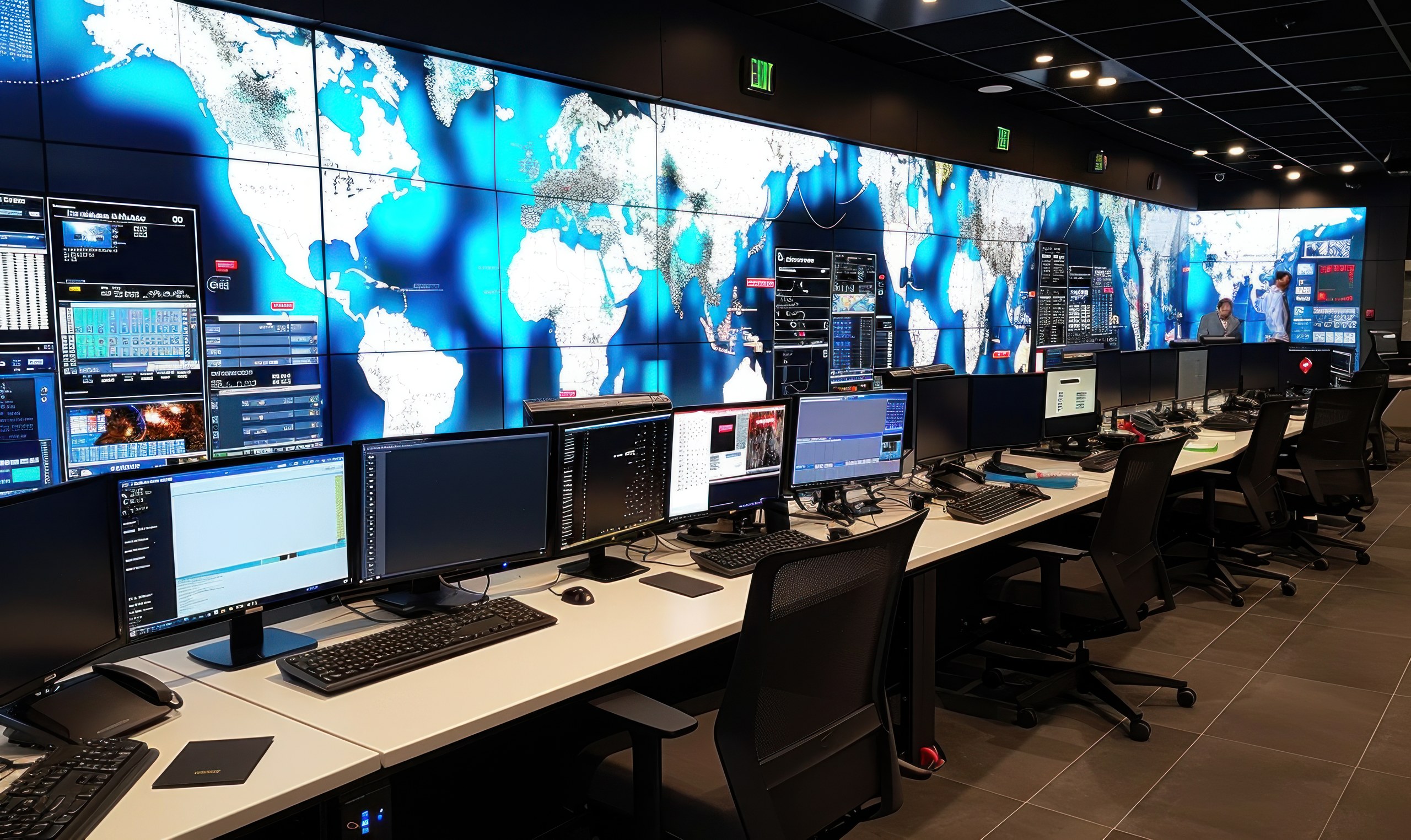
Nearly every commercial intrusion and fire alarm system is designed around an assumption that is easy to take for granted: when a sensor trips, something or someone outside the building finds out and acts on it. That function is performed by a central monitoring station, and the reliability of that chain — from a triggered sensor to a verified, dispatched response — is governed by a set of standards and operational practices that most facility managers never see directly. Understanding how UL-listed monitoring actually works helps security and facility managers ask the right questions when selecting a monitoring provider and interpreting what a “UL Listed” claim is actually certifying.
What “UL Listed” Monitoring Actually Certifies
UL 827, the Standard for Central-Station Alarm Services, defines the construction, staffing, operational, and procedural requirements a monitoring facility must meet to be certified. It covers things like the physical security and redundancy of the monitoring facility itself, operator staffing and training requirements, signal-handling procedures, and record-keeping. A separate standard, UL 1981 (Central-Station Automation Systems), governs the software platforms monitoring centers use to receive and route alarm signals, and UL 2050 (National Industrial Security Systems) applies to monitoring arrangements for government and defense-related facilities with additional security requirements. Related outlines — UL 827A for hosted central station services and UL 827B for managed video monitoring — extend the framework to newer service models. Canada has its own parallel standards (ULC-S301 for burglar alarm signal receiving centers, ULC-S561 for fire).
In practice, a facility that requires UL-listed monitoring — often driven by insurance requirements, local fire code, or a government contract — needs its specific account to be covered under a provider’s current UL certification, not merely contracted with a company that holds a UL listing somewhere in its operations. UL conducts recurring audits of listed stations to confirm ongoing compliance.
How a Signal Actually Gets From the Panel to a Human
The physical path a signal travels matters as much as the standard governing the station that receives it.
- Communication path. Alarm panels historically reported over a dedicated telephone line (POTS). As carriers have scaled back landline infrastructure, most modern installations use cellular communicators, IP/broadband connections, or — for higher-assurance applications — a dual-path setup that reports over two independent paths so that a single network failure does not silently disable reporting.
- Signal format. Most panels report using a structured protocol such as Contact ID, which encodes the account number, the type of event (burglary, fire, trouble, open/close), and the specific zone or point that triggered, allowing the receiving software to immediately classify what happened rather than just knowing that something happened.
- Automation platform. Incoming signals are received by UL 1981-compliant automation software, which displays the event to a human operator along with the account’s on-file response instructions, emergency contacts, and site information.
- Operator action. A trained operator follows the account’s specific response protocol, which may include attempting to call the premises or designated contacts to verify the alarm before dispatching, contacting emergency services directly for fire or panic signals, or notifying a private response (“runner”) service.
Verification: Balancing Speed Against False Dispatch
Because a large share of alarm activations are false — caused by user error, pets, poor sensor placement, or low batteries — many jurisdictions and monitoring providers use some form of enhanced call verification for burglar alarms, typically attempting to reach the premises or a designated contact by phone before requesting police dispatch, rather than dispatching on every signal automatically. This reflects real pressure from law enforcement agencies in many cities to reduce false-alarm dispatch volume. Fire and panic/duress signals are generally treated differently and dispatched immediately given the higher consequence of a delayed response, reflecting a deliberate difference in verification policy based on event type rather than a one-size-fits-all rule.
Redundancy and Resilience
A central station’s own reliability is part of what UL 827 certification is assessing. Certified stations are expected to maintain backup power, redundant signal-receiving equipment, and in many cases a secondary or backup monitoring facility that can take over if the primary station experiences an outage, so that a fire or emergency at the monitoring center itself does not become a single point of failure for every account it monitors.
Where This Fits in a Facility’s Security Program
Central station monitoring is typically the last link in a chain that starts with a sensor and a panel on-site. For that chain to function as intended, the equipment side needs to match the monitoring side: panels and communicators need routine testing, supervised circuits that will report a cut or tampered line, and up-to-date call lists, or the strongest monitoring station in the world will not improve outcomes. Facility managers relying on monitoring for insurance or code compliance purposes should ask their provider directly which UL category applies to their specific account and request current certification documentation rather than assuming it from general marketing claims.
Limitations and Trade-offs
- UL listing certifies the monitoring station’s facility and procedures — it does not certify that a specific installed system on a specific premises is correctly configured or maintained.
- Verification policies that reduce false dispatches also add a small amount of time before a genuine event triggers a response; sites with higher-risk profiles may negotiate different verification protocols for specific signal types.
- Communication path choice involves trade-offs: cellular and IP paths are generally more resilient to landline decline but depend on local network and power availability at the premises, which is why dual-path reporting is specified for higher-assurance applications.
- Not every monitoring company is UL-listed, and a listing can apply to specific service categories rather than a company’s entire operation — confirm scope, not just the badge.
Key Takeaways
- UL 827 certifies the monitoring facility’s construction, staffing, and procedures; UL 1981 certifies the automation software that processes signals.
- Signals typically travel from panel to station over cellular, IP, or dual-path communicators using structured formats like Contact ID.
- Verification practices intentionally differ by signal type — fire and duress alarms are generally dispatched immediately, while burglar alarms are more often verified first to reduce false dispatch.
- Monitoring station redundancy, including backup facilities, is part of what certification is meant to assure.
- Always confirm that your specific account — not just the provider’s name — is covered under current UL certification for the relevant service category.
Leave a Reply