
Stadiums and large public venues concentrate tens of thousands of people, media, vendors and staff into a fixed footprint for a defined window of time. That combination of scale, timing and public exposure makes venue security a distinct discipline from everyday facility protection.
Perimeter screening at scale
Entry screening for a major event has to process large crowds quickly without creating dangerous queuing at the perimeter itself. Many venues now combine walkthrough magnetometers or AI-assisted weapons-detection lanes with bag policies and staffed pat-downs, tuning the mix of technology and staffing to the expected attendance and threat level of a given event.
Video surveillance and crowd-density monitoring
Venue-wide camera networks support both security monitoring and operational needs such as identifying overcrowding at concourses, exits or transit points. Crowd-density analytics can alert operators when a specific area approaches capacity, which supports both security response and general life-safety planning for evacuation.
Access control for restricted areas
Beyond the general admission perimeter, stadiums manage layered access to locker rooms, broadcast areas, VIP suites, loading docks and back-of-house corridors. Credentialing systems for staff, media and vendors typically combine badges with access-control integration so that movement through restricted zones is logged and can be reviewed after an incident.
Counter-drone and airspace awareness
Unauthorized drone activity over stadiums during events has become a more frequent operational concern, and some major venues have added counter-UAS detection capability to identify unauthorized aircraft near the venue during events, coordinating with local aviation and law-enforcement authorities on any mitigation response, since counter-drone mitigation options are tightly regulated in most jurisdictions.
Unified command and multi-agency coordination
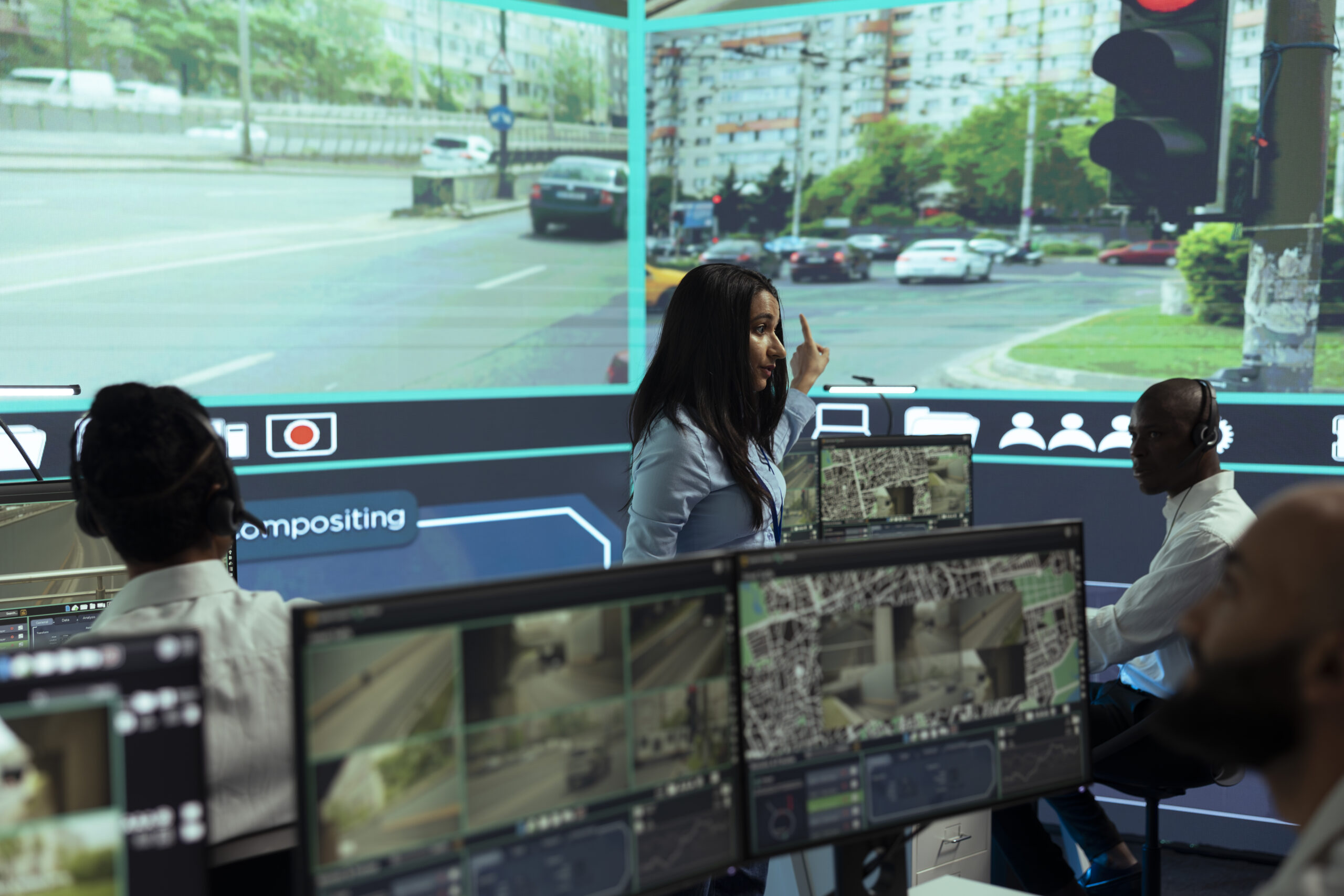
Large events typically involve venue security, local police, fire and emergency medical services operating from a shared or closely coordinated command structure. A unified command center that brings together video feeds, access-control status, radio communications and public-address control lets these agencies share situational awareness in real time rather than working from separate information sources.
Planning around specific event risk
Security planning for a venue is not static: a regular-season game, a championship event and a concert with a different audience profile can carry different risk considerations. Venue operators generally adjust staffing, screening intensity and technology configuration event by event rather than applying a single fixed posture year-round.
Conclusion
Stadium and large-venue security depends on technology that can operate at crowd scale, from rapid screening to crowd-density analytics to counter-drone awareness, integrated through a command structure that allows venue security and public-safety agencies to act on the same information together.
Leave a Reply