
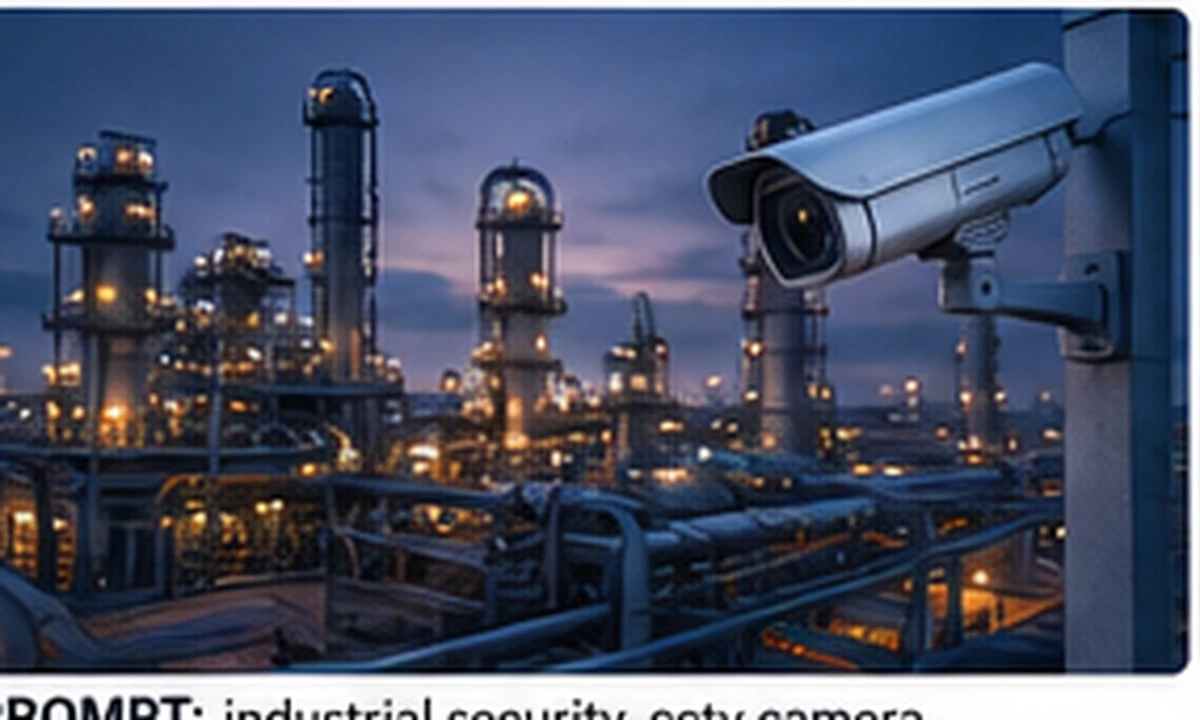
Agricultural and food processing facilities occupy a growing place within critical infrastructure protection frameworks, reflecting the recognition that disruption to food production, processing or distribution can cascade into public health and supply-chain consequences far beyond a single site. Security technology for this sector must account for expansive rural footprints, biosecurity requirements and food-safety regulation alongside conventional theft and sabotage concerns.
Perimeter Security Across Large, Remote Footprints
Farms, feedlots and processing complexes often span hundreds or thousands of acres, making traditional fenced-perimeter models impractical for the outer boundary. Operators increasingly rely on a combination of strategically placed fencing around high-value structures — processing plants, chemical storage, equipment yards — supplemented by long-range video analytics, thermal cameras and, on the largest sites, radar systems capable of detecting vehicle or personnel intrusion across open land where fixed cameras alone cannot provide continuous coverage.
Biosecurity-Driven Access Control
Livestock and processing facilities implement access control designed as much to prevent disease introduction as to prevent theft or sabotage. Controlled entry points, vehicle wash stations, and credentialed access for employees and visitors work alongside traceability systems that log who entered which zone and when, supporting both security investigations and biosecurity incident response if a disease outbreak requires rapid contact tracing.
Video Surveillance for Food Safety and Loss Prevention
Processing plants deploy video surveillance across production lines, loading docks and cold storage areas, serving a dual purpose: deterring and investigating theft or tampering, and providing a documented record that supports food-safety compliance and audit requirements under regulations that increasingly expect traceable oversight of handling and processing conditions.
Supply Chain and Cold Chain Monitoring
Security technology extends into the cold chain itself, with sensor-based monitoring of temperature, humidity and door-open events on refrigerated storage and transport, integrated with alerting systems that flag deviations before spoiled product reaches distribution. GPS tracking on transport vehicles adds a security layer against cargo theft, a persistent risk for high-value agricultural shipments moving through less-monitored rural transit corridors.
Cyber-Physical Risk in Modern Agricultural Operations
As precision agriculture equipment, automated processing lines and remote monitoring systems proliferate, agricultural operators face a growing cyber-physical risk profile similar to other industrial sectors, with internet-connected control systems for irrigation, feed distribution and processing equipment representing a potential attack surface that security planning increasingly has to account for alongside traditional physical threats.
Leave a Reply