Author: Osiris

  • Fiber Optic Sensing Market 2026: Where DAS and DTS Are Expanding

    Fiber Optic Sensing Market 2026: Where DAS and DTS Are Expanding

    Distributed fiber sensing is moving beyond a small group of specialist applications. Infrastructure owners are increasingly evaluating existing fiber as a sensing asset capable of monitoring vibration, temperature and physical events over long distances.

    Pipeline and energy

    Pipelines remain a major DAS application because one fiber can monitor long corridors for digging, intrusion and characteristic acoustic events. DTS adds thermal monitoring in power-cable and industrial environments.

    Rail and transport

    Rail operators are exploring DAS for train tracking, trackside activity and infrastructure condition awareness. The value is strongest where continuous linear monitoring complements conventional signaling and CCTV.

    Telecom infrastructure

    Existing telecom fiber is becoming strategically important because it can sometimes support sensing without installing a separate sensor every few metres. This opens opportunities in urban infrastructure and route protection.

    Subsea and coastal applications

    Subsea cables can act as distributed sensing paths for vessel activity, seismic events and cable-zone awareness when combined with other maritime data sources.

    The market direction

    The key shift is from single-purpose sensing toward multi-application infrastructure intelligence, with AI classification and edge processing becoming increasingly important to control data volume and false alarms.

    Conclusion

    Fiber Optic Sensing Market 2026: Where DAS and DTS Are Expanding should be evaluated as part of a broader operational architecture. The strongest deployments combine suitable sensing technology, resilient communications, clear procedures and measurable performance rather than relying on a single device or headline specification.

    For further technology context, see FOTAS distributed fiber sensing and SAMM.
  • The SecTech 100: A Framework for Ranking Security and Infrastructure Innovation

    The SecTech 100: A Framework for Ranking Security and Infrastructure Innovation

    A credible industry ranking should not be a popularity contest. The SecTech 100 can become an annual editorial benchmark that recognizes technologies and organizations influencing physical security, fire safety and critical-infrastructure intelligence.

    What should be ranked

    The list can include companies, platforms and technology categories across video, access, perimeter, fire, AI, robotics, command centers and distributed fiber sensing.

    Evaluation criteria

    Innovation should be balanced with deployment evidence, interoperability, cybersecurity, measurable operational value, geographic relevance and technical maturity.

    Avoiding pay-to-play rankings

    Commercial relationships must not determine editorial placement. Sponsorship can support the publication, but methodology and selection should remain independent and transparent.

    Category balance

    A strong list should prevent one large segment such as video surveillance from dominating. Dedicated categories can ensure representation of fire, critical infrastructure and DAS/DTS technologies.

    Why it matters

    Over time, a consistent methodology makes the ranking useful for buyers, investors and integrators because movement in the list can show changes in market influence and technical relevance.

    Conclusion

    The SecTech 100: Technologies and Companies Shaping Security and Infrastructure should be evaluated as part of a broader operational architecture. The strongest deployments combine suitable sensing technology, resilient communications, clear procedures and measurable performance rather than relying on a single device or headline specification.

  • Global Security Tender Radar: Major Projects to Watch

    Global Security Tender Radar: Major Projects to Watch

    Tender intelligence is one of the most valuable services a B2B security publication can provide. Large tenders show future demand before contract awards appear and reveal how requirements are changing across regions.

    Where opportunities emerge

    Airports, railways, ports, energy networks, government facilities, data centers and smart-city programs generate recurring security procurement.

    What to classify

    A useful tender database should tag geography, vertical, project stage, estimated value when public, technologies requested, deadline and procurement authority.

    Technology categories

    Video surveillance, access control, fire detection, perimeter security, radar, thermal imaging, command-and-control, cybersecurity and distributed fiber sensing should be searchable as separate but related categories.

    Why specifications matter

    Tender language often reveals trends earlier than marketing material. Requirements for OSDP, mobile credentials, AI analytics, open APIs, DAS, DTS or cloud management can indicate where the market is moving.

    Editorial discipline

    Only public and verifiable tender information should be reported. SectechMedia can add value by summarizing technical scope and identifying patterns across multiple procurements.

    Conclusion

    Global Security Tender Radar: Major Projects to Watch should be evaluated as part of a broader operational architecture. The strongest deployments combine suitable sensing technology, resilient communications, clear procedures and measurable performance rather than relying on a single device or headline specification.

  • Security Contract Awards: How to Read Major Project Wins

    Security Contract Awards: How to Read Major Project Wins

    Major security contracts reveal where governments, airports, utilities, transport operators and enterprises are investing. The value is not only the contract amount but the architecture and operational priorities behind the award.

    What a contract award tells us

    A project can reveal demand for cloud migration, command-center modernization, perimeter sensing, biometrics, fire safety or integrated critical-infrastructure monitoring.

    Beyond the headline value

    Large announcements often combine hardware, software, maintenance and professional services. Readers should separate these elements before comparing one contract with another.

    Technology signals

    A contract that combines radar, thermal imaging and video analytics indicates a move toward sensor fusion. A project pairing DAS with cameras and GIS suggests infrastructure-scale monitoring rather than traditional point security.

    Questions to ask

    Who is the end user? What problem is being solved? Is the contract greenfield or an upgrade? Which systems must integrate? What is the service period? These questions make an award useful to the market.

    Editorial standard

    SectechMedia should treat contract awards as analysis, not copied press releases. The article should explain why the project matters and what it says about wider procurement trends.

    Conclusion

    Security Contract Awards: Who Won What? should be evaluated as part of a broader operational architecture. The strongest deployments combine suitable sensing technology, resilient communications, clear procedures and measurable performance rather than relying on a single device or headline specification.

  • Global Security Technology M&A Tracker: What Consolidation Means for the Market

    Global Security Technology M&A Tracker: What Consolidation Means for the Market

    Security technology is a fragmented market spanning cameras, access control, analytics, fire, perimeter protection and infrastructure sensing. Mergers and acquisitions can reshape product roadmaps, channel relationships and long-term platform choices.

    Why M&A matters to end users

    An acquisition can affect licensing, support, integration priorities and product continuity. Buyers should therefore monitor ownership changes as part of technology risk management.

    Where consolidation is most likely

    Cloud video, access control software, AI analytics, managed services and sensor fusion are natural consolidation areas because scale, recurring revenue and data integration matter.

    What to track

    Useful indicators include buyer strategy, acquired technology, customer overlap, regional footprint, integration plans and whether the target product remains independent or is absorbed into a larger platform.

    Risks and opportunities

    Consolidation can accelerate R&D and global support, but it can also reduce choice. Integrators and end users should avoid architecture that becomes impossible to migrate if one vendor changes direction.

    SectechMedia tracker methodology

    A practical tracker should distinguish strategic acquisitions from financial transactions, summarize the technical rationale and follow what happens six to twelve months after the deal rather than reporting only the announcement.

    Conclusion

    Global Security Technology M&A Tracker should be evaluated as part of a broader operational architecture. The strongest deployments combine suitable sensing technology, resilient communications, clear procedures and measurable performance rather than relying on a single device or headline specification.

  • Security Technology Outlook 2027: Ten Technologies to Watch

    Security Technology Outlook 2027: Ten Technologies to Watch

    The next phase of security technology will be defined less by individual devices and more by software intelligence, sensor fusion and infrastructure-scale sensing. Ten areas deserve particular attention heading into 2027.

    1. AI agents for security operations

    AI is moving from simple detection toward workflow assistance: searching video, correlating alarms, preparing incident summaries and guiding operators through procedures.

    2. Natural-language video investigation

    Operators will increasingly search large video archives using ordinary language, reducing the time required to find relevant footage.

    3. Sensor fusion

    Radar, thermal, visible video, access events, acoustic sensing and environmental data will be combined to improve confidence and reduce false alarms.

    4. Edge AI

    More analytics will run in cameras, gateways and sensing interrogators, reducing latency and bandwidth dependence.

    5. Distributed fiber sensing

    DAS and DTS are expanding from specialized industrial tools into broader infrastructure intelligence platforms.

    6. Mobile and wallet credentials

    Physical access is shifting from plastic cards toward secure mobile identity and wallet-based credentials.

    7. Hybrid cloud security platforms

    Enterprises will combine cloud management with local recording and edge resilience instead of choosing a purely cloud or purely on-premise model.

    8. Autonomous inspection

    Drones and ground robots will increasingly handle repetitive patrol and inspection tasks in controlled environments.

    9. Cyber-physical convergence

    Security, OT and IT teams will share more telemetry and incident workflows as building and infrastructure systems become networked.

    10. Privacy-enhancing analytics

    Masking, selective disclosure, metadata-first search and stronger governance will become competitive requirements rather than optional features.

    Conclusion

    Security Technology Outlook 2027: Ten Technologies to Watch should be evaluated as part of a broader operational architecture. The strongest deployments combine suitable sensing technology, resilient communications, clear procedures and measurable performance rather than relying on a single device or headline specification.

  • Smart City Security: Cameras, Sensors and Public-Safety Platforms

    Smart City Security: Cameras, Sensors and Public-Safety Platforms

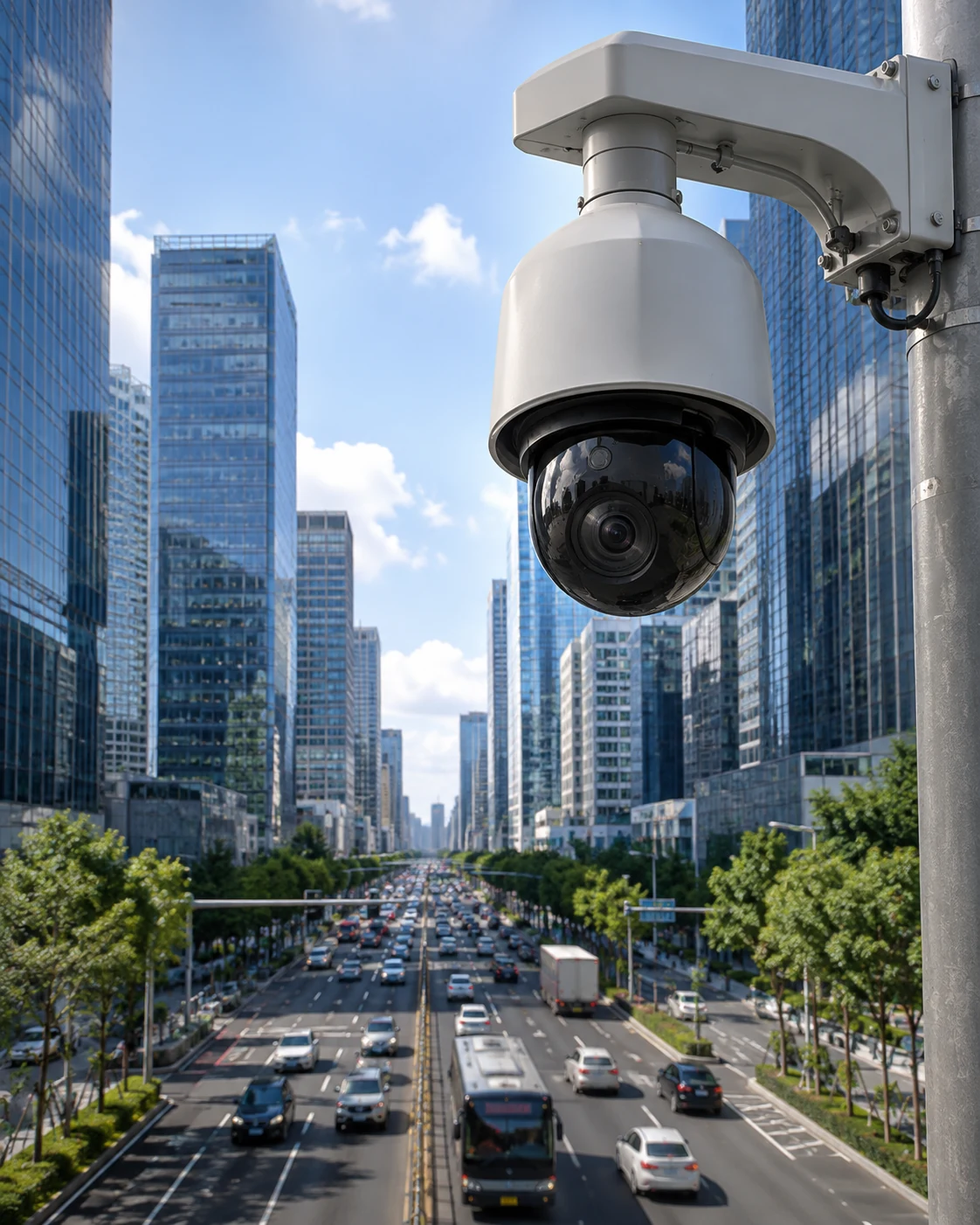
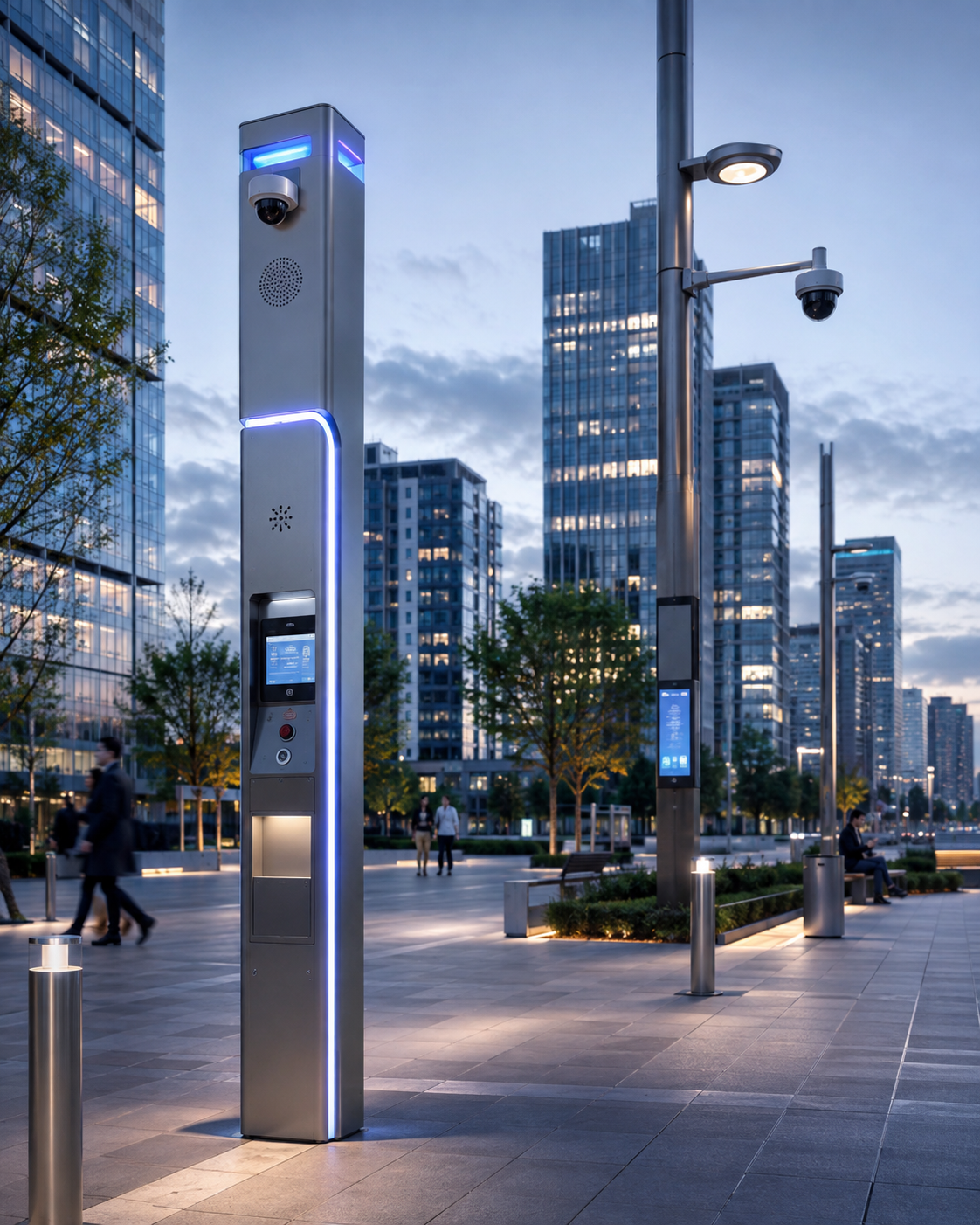
    Smart-city security is moving beyond large camera networks toward integrated situational awareness that combines video, environmental sensors, transport data, emergency communications and analytics.

    From surveillance to situational awareness

    A camera-only model produces large volumes of video but limited context. Modern platforms correlate video with traffic, access, environmental, acoustic and emergency-service information.

    Edge intelligence

    Running analytics at the edge can reduce bandwidth and provide faster alerts. Typical functions include object detection, crowd density, traffic incidents and unusual behavior, but deployment must be guided by clear public policy.

    Privacy and governance

    Smart-city security can affect millions of people. Data minimization, retention limits, auditability, transparency and role-based access are essential for maintaining public trust.

    Resilient communications

    City platforms depend on fiber, wireless and cloud connectivity. Architecture should assume outages and include local recording, redundant paths and graceful degradation.

    A platform, not a single product

    Successful smart-city deployments are built around interoperability. Open interfaces allow agencies to combine sensors from different vendors while preserving cybersecurity and operational control.

    Conclusion

    Smart City Security: Cameras, Sensors and Public-Safety Platforms should be evaluated as part of a broader operational architecture. The strongest deployments combine suitable sensing technology, resilient communications, clear procedures and measurable performance rather than relying on a single device or headline specification.

  • Electrical Substation Security and Condition Monitoring

    Electrical Substation Security and Condition Monitoring

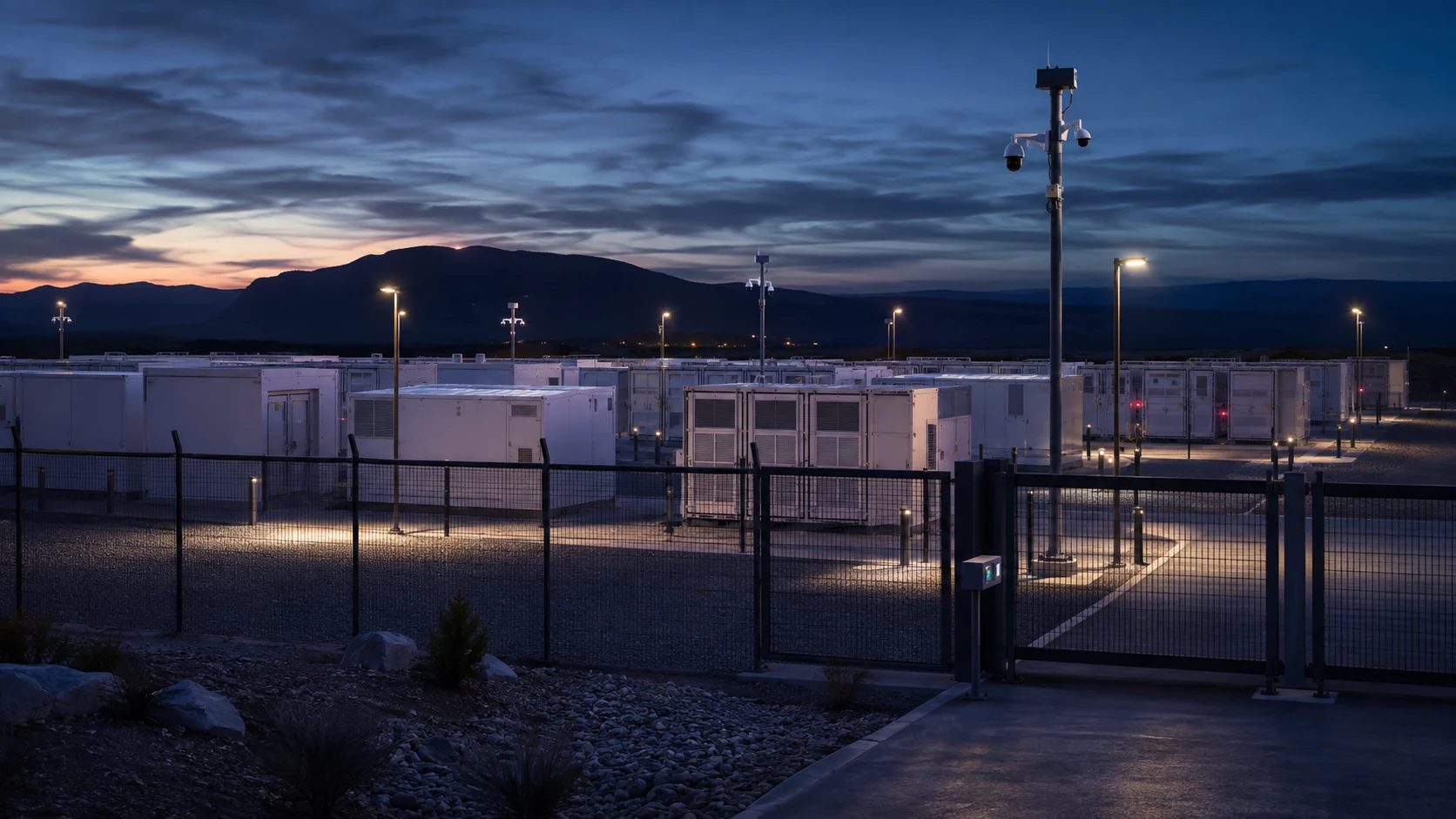
    Substations are compact but high-consequence sites. Physical intrusion, equipment failure, overheating and fire can all disrupt the grid, so security and condition monitoring increasingly converge.

    Layered physical protection

    Fences, gates, access control and intrusion detection form the basic security perimeter. Radar, thermal and video analytics can provide earlier awareness around remote or unmanned substations.

    Thermal condition monitoring

    Transformers, connectors, switchgear and cable terminations can develop abnormal heat before failure. Fixed thermal cameras and temperature-sensing systems help operations teams identify trends before they become outages.

    Fiber sensing opportunities

    DTS can monitor power cables and long routes for thermal anomalies, while DAS can detect vibration, digging or physical disturbance near critical lines. Together they create a continuous sensing layer beyond the fence.

    Cyber-physical integration

    Modern substations contain networked protection and control equipment. Physical security events should therefore be correlated with network and operational alarms rather than handled in a separate silo.

    Resilience as the design goal

    The purpose of substation security is not simply to detect trespass. It is to protect continuity of service. Redundant communications, backup power, secure remote access and tested response procedures are therefore core design requirements.

    Conclusion

    Electrical Substation Security and Condition Monitoring should be evaluated as part of a broader operational architecture. The strongest deployments combine suitable sensing technology, resilient communications, clear procedures and measurable performance rather than relying on a single device or headline specification.

  • Solar Farm Security: Protecting Large Renewable-Energy Sites

    Solar Farm Security: Protecting Large Renewable-Energy Sites

    Utility-scale solar farms combine expensive distributed assets with very large perimeters, remote locations and limited staff presence. Their security architecture must therefore emphasize early detection, reliable communications and low false-alarm rates.

    The perimeter problem

    A solar site may stretch across hundreds of hectares. Traditional guard-intensive protection becomes expensive, so operators increasingly rely on layered detection using fence sensors, radar, thermal imaging and video analytics.

    Remote verification

    Every alarm should be quickly verifiable. Thermal cameras are useful at night and in low-light conditions, while visible cameras provide identification detail. Radar can cue PTZ cameras toward moving targets and reduce dependence on fixed camera coverage.

    Asset and cable protection

    Inverters, transformers, copper cabling, battery systems and communications cabinets require local protection. Access control, cabinet monitoring and tamper alarms create a second layer inside the perimeter.

    Operations and maintenance

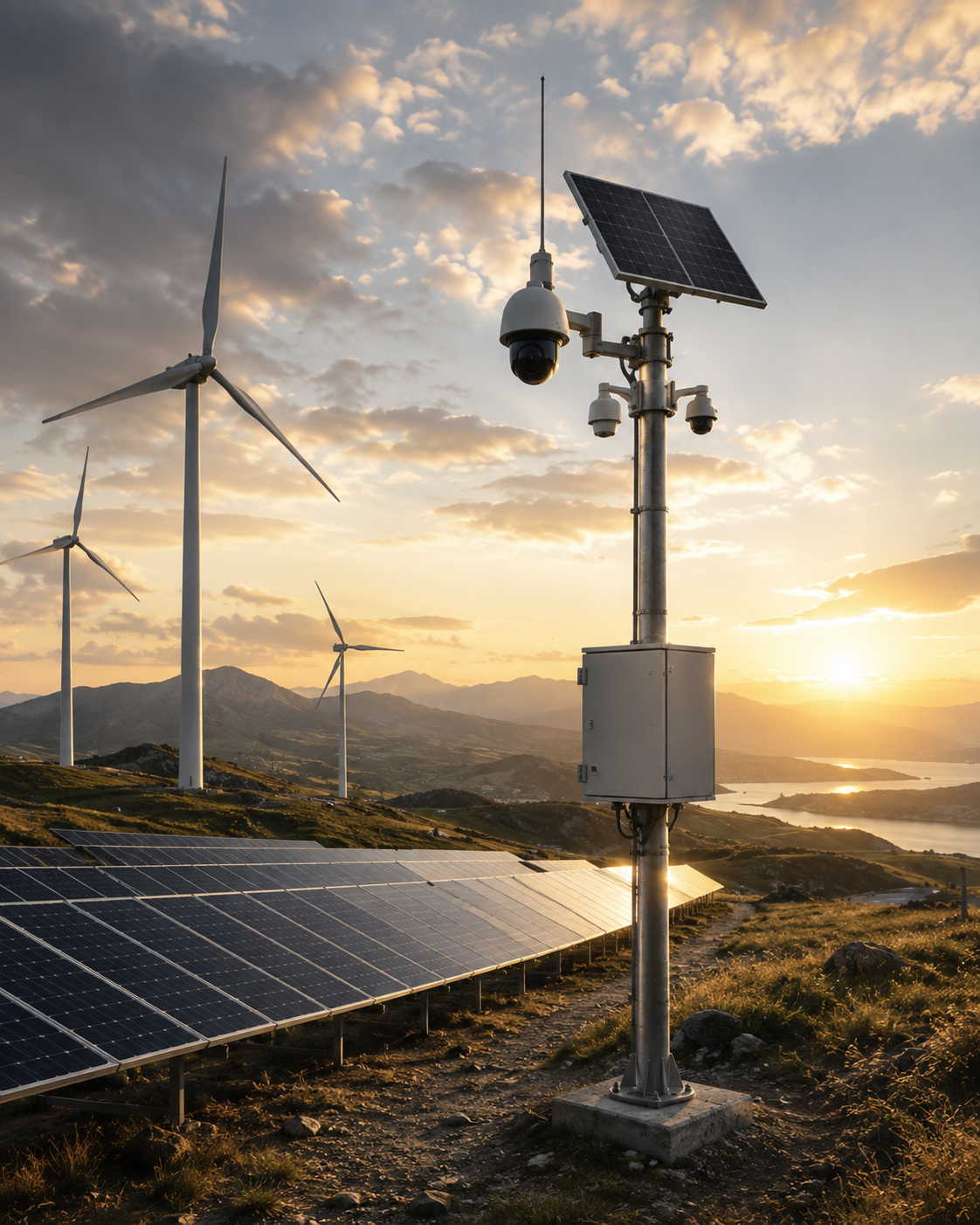
    Environmental conditions such as heat, dust, vegetation and wildlife can create nuisance alarms. Analytics and regular tuning are essential. Solar-powered field devices can be useful, but maintenance planning and communications redundancy remain critical.

    Integrated renewable-site security

    The strongest model connects perimeter detection, video, access control, fire monitoring and operational telemetry in one command workflow. For long boundaries, fiber-optic sensing can add continuous linear awareness without thousands of powered field sensors.

    Conclusion

    Solar Farm and Renewable-Energy Site Security should be evaluated as part of a broader operational architecture. The strongest deployments combine suitable sensing technology, resilient communications, clear procedures and measurable performance rather than relying on a single device or headline specification.

  • Hospital Security Technology: Protecting Patients, Staff and Clinical Operations

    Hospital Security Technology: Protecting Patients, Staff and Clinical Operations

    Hospitals are open environments with a difficult security balance: they must remain accessible to patients and visitors while protecting people, medicine, data, critical equipment and restricted clinical areas.

    A uniquely open security environment

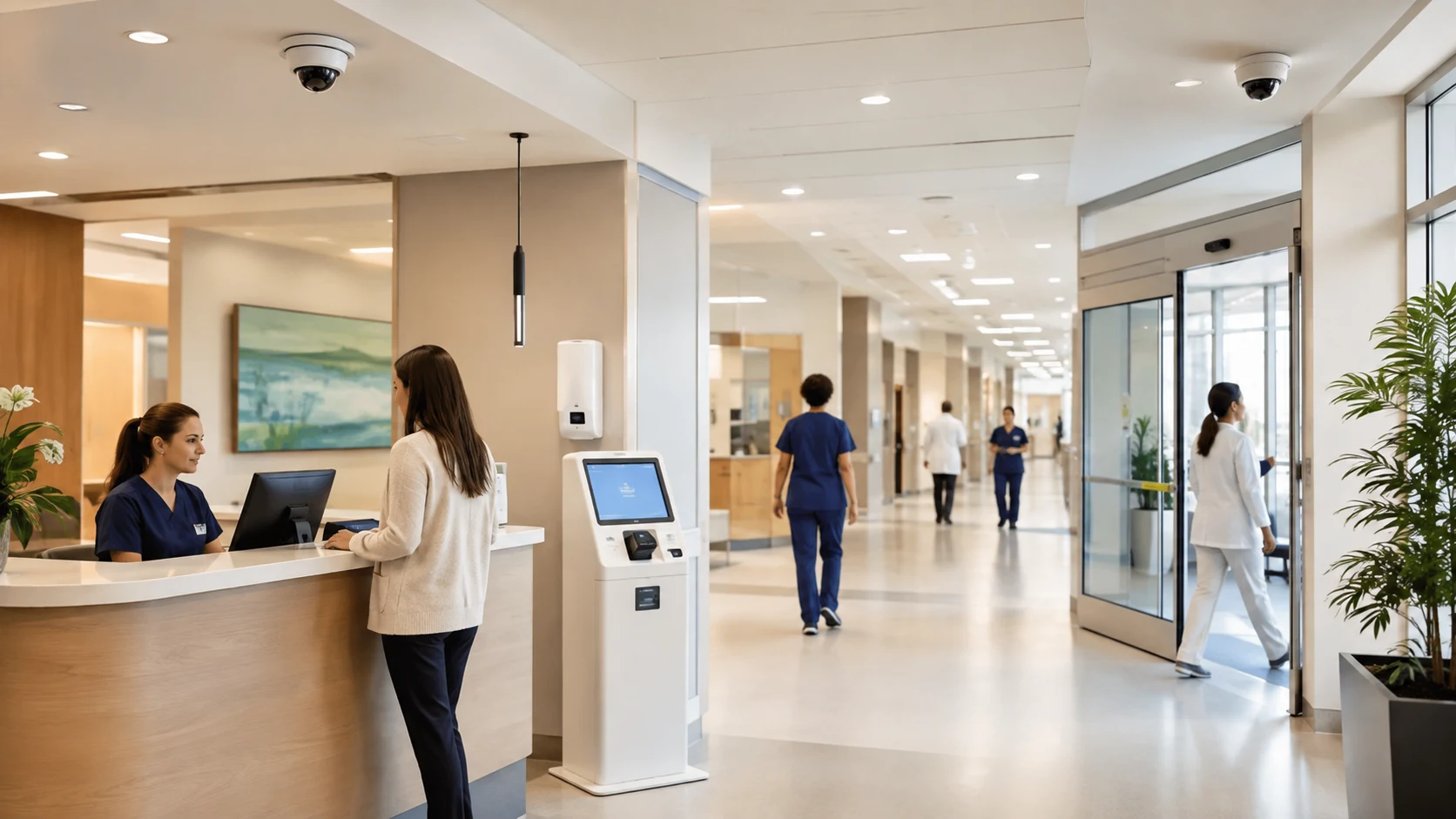
    Unlike many critical facilities, hospitals cannot operate as closed campuses. Emergency departments, outpatient clinics and public entrances create continuous flows of people, making identity, visitor management and staff workflows central to the security design.

    Access and identity

    Modern hospitals commonly combine staff credentials, mobile access, role-based permissions and visitor registration. Sensitive zones such as pharmacies, laboratories, operating rooms, neonatal areas and data rooms require stronger controls and detailed audit trails.

    Video and analytics

    Video systems support investigation, crowd awareness and protection of entrances, parking areas and high-risk corridors. Analytics can help detect unusual movement or congestion, but privacy rules and clinical context require careful policy design.

    Duress and emergency communication

    Staff duress devices, fixed panic buttons and location-aware alerts can shorten response time. Mass notification must reach clinical staff without creating alarm fatigue or interfering with critical care.

    Integration matters

    The most effective hospital security platform connects access events, alarms, video, visitor data and emergency communications. Cybersecurity and privacy governance must be built in because physical-security systems increasingly share the hospital network.

    Conclusion

    Hospital Security Technology should be evaluated as part of a broader operational architecture. The strongest deployments combine suitable sensing technology, resilient communications, clear procedures and measurable performance rather than relying on a single device or headline specification.