Author: Osiris

  • AMD and Anthropic Plan Up to 2 Gigawatts of MI450 GPU Deployment

    AMD and Anthropic Plan Up to 2 Gigawatts of MI450 GPU Deployment

    July 22, 2026 — AMD and Anthropic announced a strategic partnership for up to two gigawatts of MI450-series GPU capacity, with the first gigawatt planned for 2027.

    What happened

    AMD and Anthropic said they plan to deploy up to two gigawatts of AMD Instinct MI450 Series GPUs in Helios rack-scale systems. Their official statement places the beginning of the first gigawatt in the first half of 2027, so the announcement is a forward deployment commitment rather than completed capacity.

    Why it matters

    The agreement signals that frontier AI developers are seeking large-scale alternatives and complementary supply to established accelerator platforms. It also shows that future model capacity is being negotiated in power-scale terms, not only in numbers of chips.

    Security and infrastructure impact

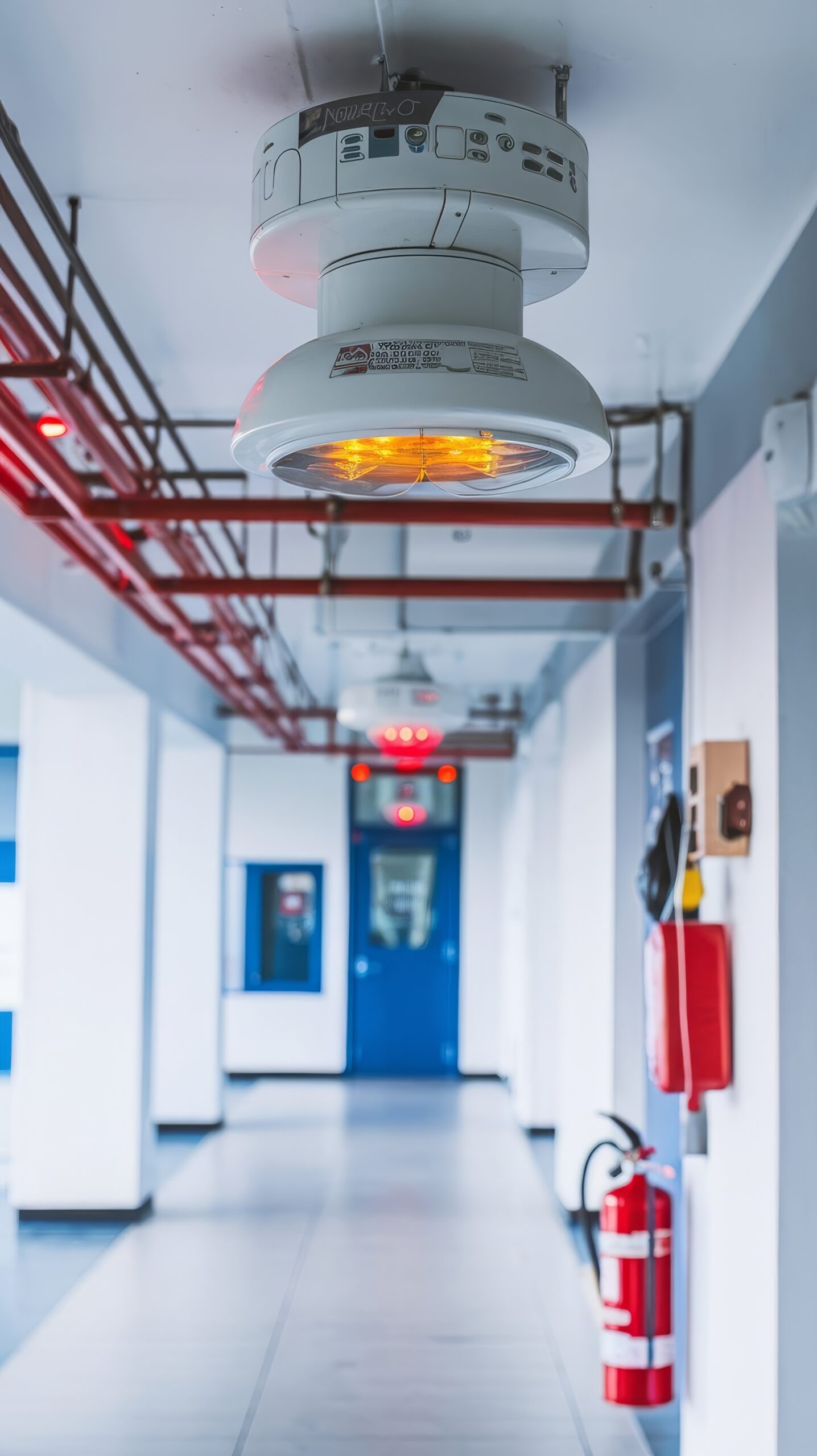
    Multi-gigawatt plans have consequences for grid interconnection, cooling, construction, fire safety and site protection. Procurement teams should separate announced maximum scope from contracted phases and verify delivery milestones before treating capacity as operational.

    Sources

    ← Back to Technology News

  • AI Data Center Growth Expands Power, Safety and Security Risk Planning

    AI Data Center Growth Expands Power, Safety and Security Risk Planning

    2025–2026 — Rapid AI data-center construction is forcing operators to treat power availability, fire safety, physical protection and cyber resilience as one connected risk program.

    What happened

    AI workloads are accelerating demand for high-density computing facilities and the energy systems that support them. The International Energy Agency’s Energy and AI work describes the growing relationship between data centers and electricity systems, while large infrastructure announcements show that the buildout is already moving into physical delivery.

    Why it matters

    The risk is not simply higher electricity consumption. Dense compute changes cooling, backup power, battery, fire-detection and business-continuity requirements. New sites also add construction-stage access, supplier and commissioning risks before normal operations begin.

    Security and infrastructure impact

    A defensible design connects cyber and physical controls: segmented building and OT networks, managed contractor identities, layered perimeter detection, validated fire scenarios and a command process that can correlate facility, security and IT alarms.

    Sources

    ← Back to Technology News

  • Alarm.com Expands Into Commercial Fire With New Fire Communicator

    Alarm.com Expands Into Commercial Fire With New Fire Communicator

    Alarm.com has launched the Fire Communicator (ADC-FC100), extending its commercial security platform into fire alarm monitoring for the first time, the company announced.

    What’s New

    The UL-listed, NFPA 72-compliant communicator lets service providers add fire monitoring alongside the intrusion, access control and video categories already available through Alarm.com for Business, standardizing commercial customers on a single platform across all four major categories of commercial security. “The Fire Communicator has the same Alarm.com benefits that helped us grow in other categories like intrusion and access control,” said Scott Davis of DDA Systems, an Alarm.com dealer. “What makes it so valuable is how simple it is to use.”

    Why It Matters

    Fire alarm monitoring has traditionally required a separate communicator and, often, a separate service relationship from intrusion and access control systems. By folding fire into its existing commercial platform, Alarm.com is betting that dealers who already sell and service its intrusion, access and video products will find it easier to add fire monitoring than to manage a fourth, disconnected system — a consolidation trend also visible in other access-control and video vendors’ recent moves to unify previously separate security categories.

  • Anthropic Launches Claude Sonnet 5 as Its New Default Model

    Anthropic Launches Claude Sonnet 5 as Its New Default Model

    June 30, 2026 — Anthropic released Claude Sonnet 5, positioning it as its most agentic Sonnet-tier model and making it the new default for Claude.ai Free and Pro users.

    What happened

    Claude Sonnet 5 replaced Sonnet 4.6 as the default model for Free and Pro plans, with Max, Team and Enterprise customers able to select it and developers reaching it through the Claude API, Amazon Bedrock, Google Cloud Vertex AI and Microsoft Foundry. Anthropic said the model narrows the performance gap with its higher-priced Opus tier on agentic and coding tasks while keeping Sonnet-level pricing.

    Why it matters

    Pushing near-Opus agentic capability down into a cheaper, faster tier lowers the cost of deploying autonomous, multi-step AI agents — including agents that operate browsers, terminals and internal tools — which is precisely the capability class that security teams need to govern most closely.

    Security and infrastructure impact

    Wider access to cheaper agentic models increases the attack surface for prompt injection and unauthorized tool use in production systems, making agent-specific guardrails, logging and human-in-the-loop review more relevant for organizations adopting Sonnet-class models at scale.

    Sources

    ← Back to Technology News

  • Siemens Showcases ASD+ Aspirating Smoke Detection at NFPA Conference & Expo 2026

    Siemens Showcases ASD+ Aspirating Smoke Detection at NFPA Conference & Expo 2026

    June 22, 2026 — Siemens presented its ASD+ aspirating smoke detection system, alongside its Acend Intelligent, Fire Install Suite and Fire Digital Twin offerings, at the NFPA Conference & Expo 2026 in Las Vegas.

    What happened

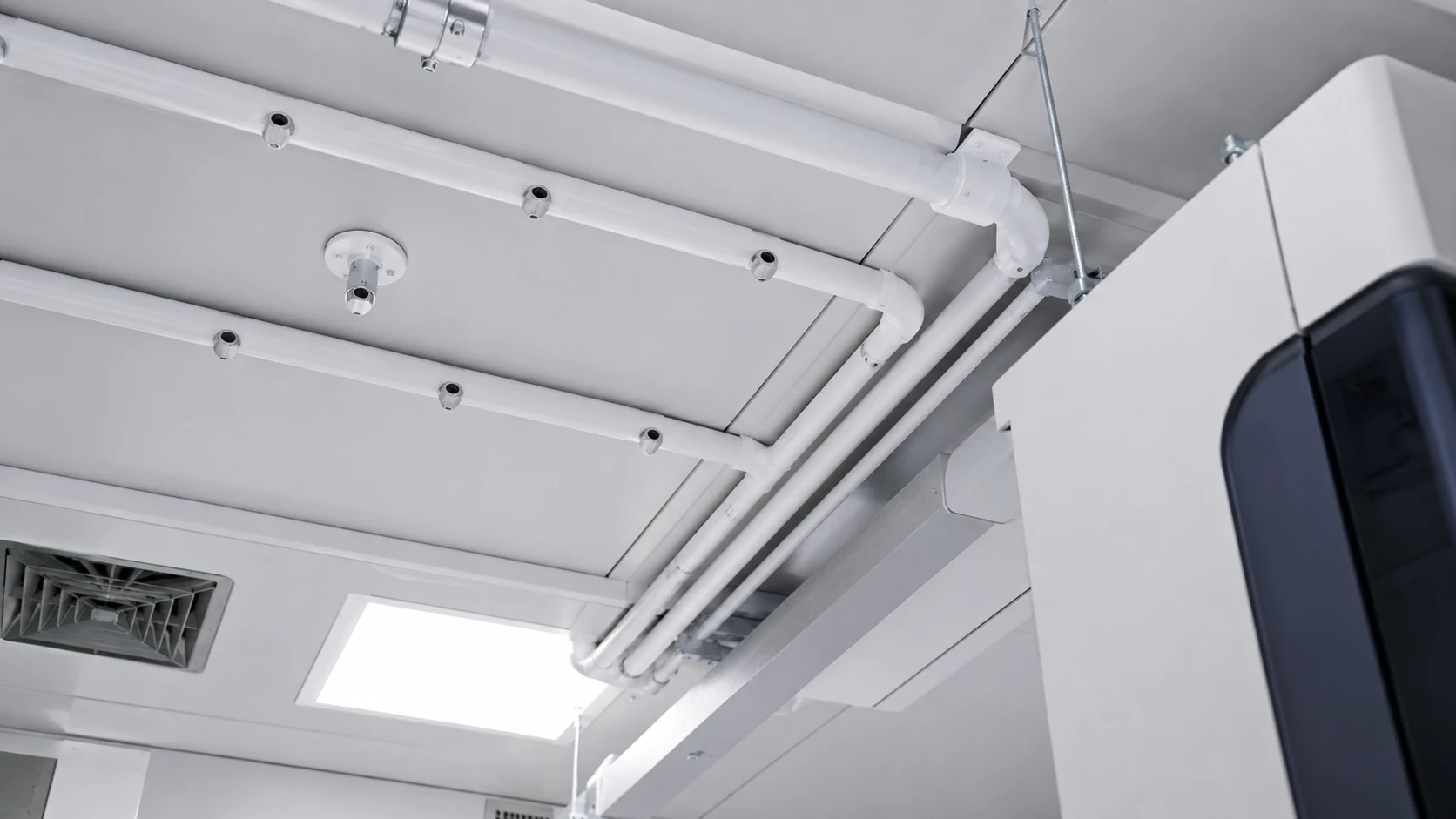
    Aspirating smoke detection actively draws air samples to a detector rather than waiting for smoke to reach a ceiling-mounted sensor, a very-early-warning approach recognized in NFPA 72 for environments with airflow challenges. Siemens positioned ASD+ alongside its broader fire-safety software suite at the industry’s largest annual fire-protection conference.

    Why it matters

    Very-early-warning detection technologies are gaining renewed attention as data centers, industrial facilities and other airflow-challenged environments seek faster fire detection than conventional ceiling-mounted smoke alarms can provide, directly relevant to the fire-safety demands of the current AI data-center construction boom.

    Security and infrastructure impact

    Facility designers specifying fire-detection systems for high-value or airflow-complex environments — including data centers — increasingly need to evaluate aspirating and video-based detection alongside traditional point detectors rather than defaulting to legacy designs.

    Sources

    ← Back to Technology News

  • White House Executive Order Sets Federal Post-Quantum Cryptography Deadlines

    White House Executive Order Sets Federal Post-Quantum Cryptography Deadlines

    June 22, 2026 — The White House issued Executive Order 14412, formally setting deadlines for federal agencies to migrate high-value systems to NIST-approved post-quantum cryptography.

    What happened

    The order requires federal civilian agencies to complete migration of key-establishment cryptography by December 31, 2030, and digital-signature cryptography by December 31, 2031, for high-value assets and high-impact systems. It also directs the FAR Council to propose a rule requiring covered federal contractors to meet the same NIST FIPS post-quantum standards, with agency migration leads due by late July 2026 and full migration plans due by late October 2026.

    Why it matters

    A binding federal deadline, rather than voluntary guidance, gives government contractors and critical-infrastructure operators a concrete planning horizon for a migration that touches nearly every system relying on current public-key cryptography.

    Security and infrastructure impact

    Organizations supplying software, hardware or managed services to federal agencies should begin cryptographic inventory and migration planning now, since the multi-year runway to 2030–2031 is short relative to the scope of systems that need updating across large, distributed infrastructure.

    Sources

    ← Back to Technology News

  • US Export-Control Order Briefly Suspends Claude Fable 5 Worldwide

    US Export-Control Order Briefly Suspends Claude Fable 5 Worldwide

    June 12, 2026 — The US Commerce Department ordered Anthropic to suspend access to its Claude Fable 5 and Claude Mythos 5 models under export-control rules, prompting a brief worldwide shutdown before access was restored around July 1.

    What happened

    Citing a claimed jailbreak with national-security implications, Commerce ordered Anthropic to cut off foreign access to the two models under the Export Administration Regulations. Because Anthropic could not verify user nationality for every account in real time, it suspended access globally rather than only for the flagged accounts. Commerce Secretary Howard Lutnick confirmed the order was withdrawn around July 1, and Anthropic began restoring service on July 8.

    Why it matters

    This marked one of the first times a commercially available frontier AI model service was directly restricted under US export-control authority, establishing a precedent that AI labs’ global service availability can be interrupted by national-security-driven trade enforcement with very short notice.

    Security and infrastructure impact

    Enterprises running Claude Fable 5-dependent production workloads experienced an unplanned multi-week disruption, underscoring why AI vendor-risk planning should account for export-control and geopolitical suspension risk alongside conventional outage and security incidents.

    Sources

    ← Back to Technology News

  • 2026 FIFA World Cup Becomes Largest Civilian AI Surveillance Deployment on Record

    2026 FIFA World Cup Becomes Largest Civilian AI Surveillance Deployment on Record

    June 11, 2026 — As the 2026 FIFA World Cup opened across the United States, Mexico and Canada, coverage of the tournament’s security operation described it as the largest civilian AI surveillance deployment in sporting history.

    What happened

    US host venues including Gillette Stadium in Boston, Hard Rock Stadium in Miami and Mercedes-Benz Stadium in Atlanta deployed AI-powered facial recognition for entry and payments, autonomous robotic patrol units in restricted areas and perimeters, counter-drone systems, and real-time AI video analytics feeding stadium security operations centers. US federal agencies reported committing $365 million specifically to security technology for the event.

    Why it matters

    A tournament spanning 16 stadiums and more than 6 million attendees provided one of the largest real-world stress tests yet for integrated AI video analytics, biometric access control and counter-drone systems operating together at scale under sustained public scrutiny.

    Security and infrastructure impact

    How these systems perform — and how incidents, false positives or privacy complaints are handled — will likely shape procurement and regulatory debates around AI-based stadium and major-event security well beyond the tournament itself.

    Sources

    ← Back to Technology News

  • CISA Orders Emergency Patching After Ivanti Sentry Flaw Added to KEV

    CISA Orders Emergency Patching After Ivanti Sentry Flaw Added to KEV

    June 11, 2026 — CISA confirmed active exploitation of a maximum-severity vulnerability in Ivanti’s Sentry gateway appliance and added it to its Known Exploited Vulnerabilities catalog, triggering a new binding patch deadline for federal agencies.

    What happened

    The flaw, an OS command-injection weakness in Ivanti’s security gateway appliance formerly known as MobileIron Sentry, was confirmed as actively exploited and catalogued by CISA. Under newly issued Binding Operational Directive 26-04, CISA ordered federal civilian agencies to patch the flaw within three days.

    Why it matters

    A three-day emergency patch window for a maximum-severity, actively exploited edge-appliance vulnerability underscores how little time defenders now have between public disclosure and mandated remediation for internet-facing management infrastructure.

    Security and infrastructure impact

    Organizations running Ivanti gateway appliances outside the federal directive’s direct scope should still treat the finding as an urgent patch signal, given that KEV entries reliably indicate active, opportunistic exploitation rather than theoretical risk.

    Sources

    ← Back to Technology News

  • DeepSeek Previews V4, Its Next Open-Weight Flagship Model

    DeepSeek Previews V4, Its Next Open-Weight Flagship Model

    April 24, 2026 — DeepSeek released a preview of V4, its next flagship model family, continuing the rapid pace of open-weight releases that has narrowed the gap with closed frontier labs.

    What happened

    DeepSeek’s V4 preview introduced two variants that later shipped in full: V4-Pro, a roughly 1.6-trillion-parameter mixture-of-experts model, and the smaller, faster V4-Flash, both sharing a 1-million-token context window and released with open weights.

    Why it matters

    Continued frontier-class releases from open-weight developers give enterprises and governments outside the small group of US frontier labs a credible self-hostable alternative, which changes data-residency and vendor-lock-in calculations for regulated industries.

    Security and infrastructure impact

    Security teams evaluating open-weight models for self-hosted or air-gapped use still need independent red-teaming and supply-chain review of model weights and inference stacks, since open availability does not by itself substitute for a formal security assessment.

    Sources

    ← Back to Technology News