Author: Osiris

  • Two Ransomware Groups Claim Attacks on Home-Healthcare Provider Interim HealthCare

    Two Ransomware Groups Claim Attacks on Home-Healthcare Provider Interim HealthCare

    Two separate ransomware groups have claimed attacks on Interim HealthCare, a home-healthcare provider operating in roughly 40 U.S. states, according to The HIPAA Journal. The Genesis ransomware group listed the company on its leak site on August 10, 2026, claiming 1TB of exfiltrated data including medical records. A second group, Anubis, separately listed the company on August 21, claiming 530GB of franchise and operational data.

    An Oklahoma City franchise location filed a formal breach notification with the U.S. Department of Health and Human Services on July 31, 2026.

    Why it matters: Two independent ransomware groups claiming the same healthcare organization within weeks of each other raises the possibility of either separate intrusions or data being resold and reused by multiple criminal groups — either scenario underscoring how difficult it has become for healthcare providers, including smaller franchise-model operators, to fully contain a breach once patient data has left their environment.

    Source: The HIPAA Journal, September 9, 2026.

  • Convergint Enters Regulated Gaming Security Market With SSI Acquisition

    Convergint Enters Regulated Gaming Security Market With SSI Acquisition

    Global security integrator Convergint, which employs more than 11,000 people across 200-plus locations, has acquired Las Vegas-based Surveillance Systems Incorporated (SSI), a specialist surveillance integrator with more than two decades of experience serving the regulated gaming industry, SecurityInfoWatch reported. Financial terms were not disclosed.

    The acquisition gives Convergint an established foothold in casino and gaming security, a market with distinct regulatory and surveillance-compliance requirements that differ significantly from standard commercial video deployments.

    Why it matters: Gaming security has traditionally been served by specialist integrators due to state gaming-commission licensing and compliance requirements. A large national integrator entering the space directly — rather than partnering with a specialist — suggests larger players see enough scale in the sector to justify building in-house gaming expertise.

    Source: SecurityInfoWatch.com, September 9, 2026.

  • Zelenskyy’s Plane ‘Almost Hit’ by Drone as Moldova Briefly Shuts Airspace

    Zelenskyy’s Plane ‘Almost Hit’ by Drone as Moldova Briefly Shuts Airspace

    Norwegian Prime Minister Jonas Gahr Støre said Ukrainian President Volodymyr Zelenskyy’s aircraft was almost struck by a drone shortly after taking off from Chișinău, Moldova, Reuters reported, corroborated by the BBC and CNN. Moldova closed its airspace for roughly an hour after two Russian drones entered its territory, with one crashing in a field approximately 160 kilometers away. Moldovan officials did not confirm the “near miss” characterization of the incident.

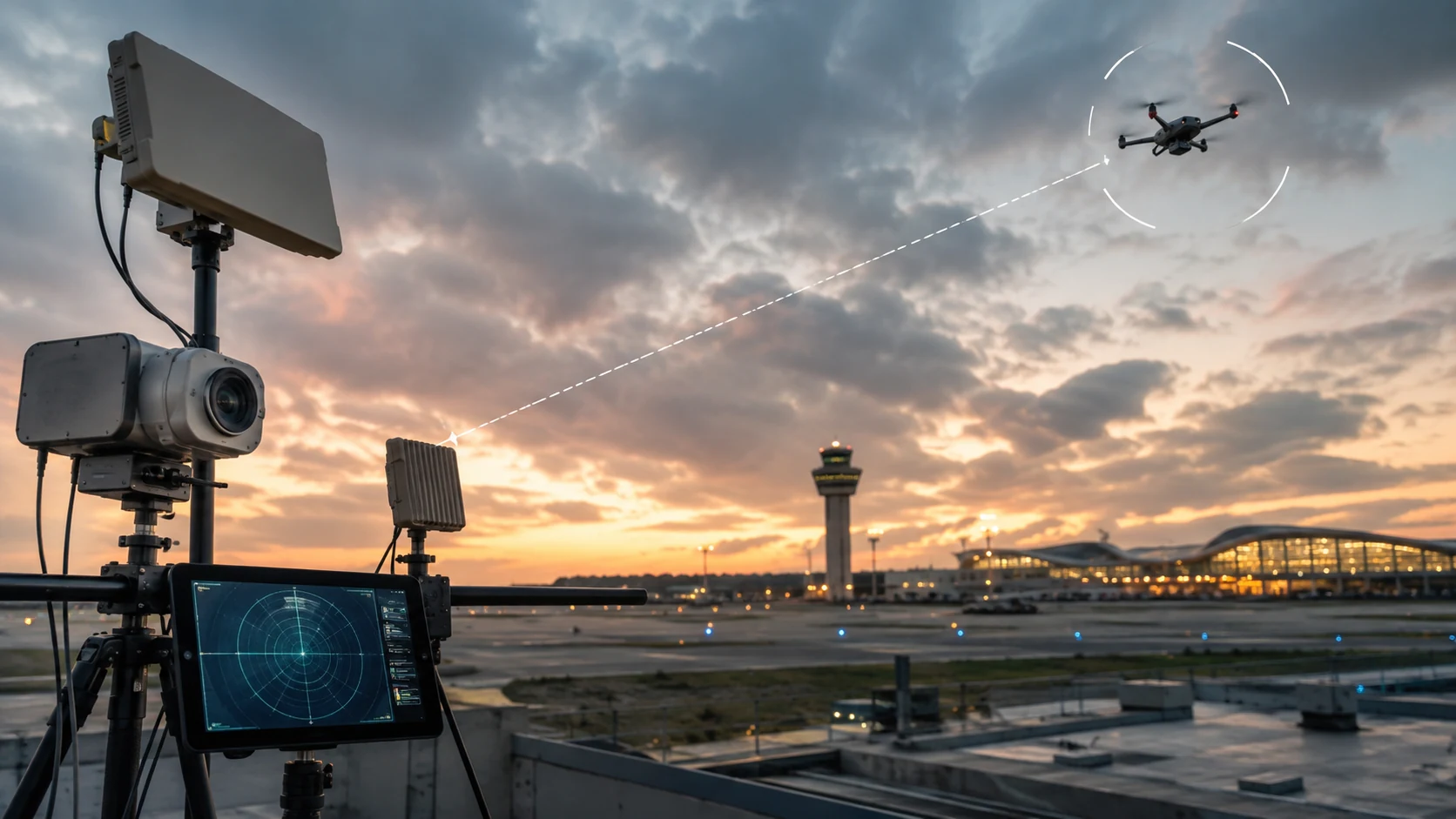
    Why it matters: The incident illustrates how drone incursions linked to the war in Ukraine continue to create direct, unpredictable aviation-safety risk for civilian and diplomatic air traffic well beyond the immediate conflict zone, reinforcing why neighboring states have been rapidly expanding airspace-monitoring and counter-UAS capability at commercial and diplomatic airports.

    Source: Reuters, September 9, 2026, corroborated by BBC and CNN.

  • Security Industry Association Calls for Tighter Oversight of License Plate Readers

    Security Industry Association Calls for Tighter Oversight of License Plate Readers

    The Security Industry Association (SIA) issued a set of policy recommendations calling for stronger privacy safeguards, defined data-retention limits, and clearer misuse-accountability rules for automated license plate reader (ALPR) systems, SecurityInfoWatch reported.

    The recommendations arrive amid reporting, cited by SIW via Ars Technica and Secure Justice data, that 214 cities and counties have dropped Flock Safety contracts since 2021, including 93 in August 2026 alone. Flock has separately cut its default data-retention period from 30 to 7 days and added mandatory multi-factor authentication and misuse-detection auditing.

    Why it matters: ALPR technology has become one of the most contested categories in physical security, sitting at the intersection of law-enforcement utility and civil-liberties concern. SIA’s intervention signals that the industry’s own trade body sees a need for self-regulation ahead of likely state and municipal legislation.

    Source: SecurityInfoWatch.com, September 9, 2026.

  • RAND Europe Warns Security Biometrics and Digital ID Systems Risk Becoming Tools for Targeting Without Governance

    RAND Europe Warns Security Biometrics and Digital ID Systems Risk Becoming Tools for Targeting Without Governance

    A RAND Europe report, produced with the UK Foreign, Commonwealth and Development Office and RUSI, warns that biometrics, digital ID and AI decision-support tools used by police and border agencies risk becoming tools for discriminatory targeting and surveillance in the absence of independent governance, Biometric Update reported.

    The report, titled “Novel Technologies for Security Sector Governance and Management,” cites documented facial-recognition misidentification disparities and points to systems like EURODAC and Clearview AI as cautionary examples. It recommends pre-acquisition risk assessments and audit trails, arguing that relying on “human-in-the-loop” oversight alone is insufficient.

    Why it matters: The report adds to a growing body of institutional, non-vendor research pushing back against the assumption that human review of an AI system’s output is sufficient safeguard on its own — a distinction increasingly relevant as police and border agencies adopt biometric and AI decision-support tools faster than governance frameworks are being built around them.

    Source: Biometric Update, September 9, 2026, citing RAND Europe.

  • Veradigm Discloses Healthcare Data Breach After ‘The Gentlemen’ Ransomware Gang Claims Attack

    Veradigm Discloses Healthcare Data Breach After ‘The Gentlemen’ Ransomware Gang Claims Attack

    Veradigm (formerly Allscripts) disclosed in an SEC filing that an attacker used stolen third-party vendor credentials to access a limited customer-service API and copy patient data, including names and Social Security numbers, BleepingComputer reported. The company said clinical records were not affected.

    The ransomware group calling itself “The Gentlemen” claimed to hold 3.5 million patient records from the breach and threatened to leak the data absent a ransom negotiation.

    Why it matters: The breach follows a familiar pattern for healthcare-sector incidents: the initial compromise came through third-party vendor credentials rather than a direct attack on Veradigm’s own systems, underscoring why vendor and supply-chain credential hygiene remains one of the hardest problems in healthcare data security even at companies with mature internal security programs.

    Source: BleepingComputer, September 9, 2026, citing Veradigm’s SEC filing.

  • Investment Firm Knox Lane Acquires Majority Stake in SAGE Integration

    Investment Firm Knox Lane Acquires Majority Stake in SAGE Integration

    Investment firm Knox Lane has acquired a majority stake in SAGE Integration Holdings, a national enterprise security systems integrator founded in 1988, SecurityInfoWatch reported. Financial terms of the transaction were not disclosed.

    SAGE said it plans to use the new capital to expand its technical workforce, accelerate technology deployment for enterprise clients, and continue an acquisition strategy that already added Vital Installs and sudoVision Consulting to the group in August 2026.

    Why it matters: The deal is the latest in a wave of private-equity-backed consolidation among security systems integrators, following similar recent moves by Convergint and other national players — a trend that is reshaping who designs and maintains access control, video and fire systems for large enterprise and institutional clients.

    Source: SecurityInfoWatch.com, September 9, 2026.

  • Mistral AI Raises €3 Billion in Largest-Ever European Tech Funding Round

    Mistral AI Raises €3 Billion in Largest-Ever European Tech Funding Round

    Paris-based Mistral AI has raised €3 billion (about $3.5 billion) in a Series D funding round led by Samsung Electronics, pushing its post-money valuation above €21 billion in what the company describes as the largest equity fundraising round ever completed by a European technology company.

    Valuation Nearly Doubles in a Year

    Samsung led the round alongside co-leads Scaleup Europe Fund, managed by EQT, and existing investor PSG Equity. New investors including Advent, funds managed by BlackRock, and the Grand Duchy of Luxembourg joined the round, while existing backers a16z, ASML, General Catalyst, Lightspeed, Nvidia and Salesforce Ventures also participated. The step up is steep: Mistral was valued at roughly €11.7 billion in 2025 after a €1.7 billion Series C led by ASML, meaning its valuation has nearly doubled in about a year. Founded three years ago, Mistral says it now operates in twenty countries and counts more than 125 large enterprises among its customers, including Airbus and HSBC.

    Funding a European Compute Buildout

    Mistral said the capital will fund frontier AI research, continued international growth, and an expanding European compute footprint. The company is already spending roughly €4 billion on data centers across France and Europe, including a facility outside Paris built around 13,800 Nvidia GB300 GPUs and a second, €1.2 billion facility under construction in Sweden, with a target of roughly 200 megawatts of combined European capacity by the end of 2027. Both Microsoft and Nvidia, which are investors in Mistral, are also involved in supplying compute capacity to the buildout. The round positions Mistral as Europe’s best-funded answer to US-based AI labs including OpenAI and Anthropic, though its roughly $4 billion in total funding to date remains well behind either rival.

  • Palladyne AI and FANUC America Partner to Bring ‘Physical AI’ to Industrial Robots

    Palladyne AI and FANUC America Partner to Bring ‘Physical AI’ to Industrial Robots

    Palladyne AI and FANUC America have announced a strategic collaboration to combine FANUC’s industrial robot portfolio with Palladyne AI’s physical AI software platform, aiming to make robotic automation easier to deploy and more adaptable across manufacturing, warehousing and logistics operations.

    Pairing Industrial Hardware With Adaptive Software

    The companies plan to integrate Palladyne IQ, Palladyne AI’s software platform, with FANUC’s industrial robots to focus on AI-driven motion planning, adaptive behavior, teleoperation, human-assisted learning, simulation and model training. Palladyne IQ is designed to help industrial robots better perceive and adapt to changing conditions on the floor, moving deployments beyond rigid, single-purpose programming toward systems that can support a broader range of tasks without extensive reprogramming. The collaboration also includes joint customer validation and standardized deployment workflows intended to make it easier for manufacturers, warehouse operators, logistics providers and system integrators to bring robotic systems into production.

    Targeting Labor and Flexibility Pressures

    Both companies frame the effort as a response to persistent labor shortages and pressure for greater operational flexibility across manufacturing and logistics, where reprogramming robots for new tasks has traditionally been slow and costly. The collaboration, announced September 8, 2026, is still in a development phase; no customer deployment results, success rates or production benchmarks have yet been disclosed. The partnership adds to a broader wave of manufacturers pairing established industrial robot hardware with newer physical AI software layers as factories and warehouses expand automated operations.

  • ASUS Patches Critical Flaws Letting Attackers Seize Control Center Enterprise and Nearby Hosts

    ASUS Patches Critical Flaws Letting Attackers Seize Control Center Enterprise and Nearby Hosts

    ASUS has released security updates fixing critical vulnerabilities across two of its device-management products, including a maximum-severity flaw that let an unauthenticated attacker gain root access to the server managing an organization’s fleet of PCs and workstations.

    A Chained Path to Root on Control Center Enterprise

    The more severe issue, CVE-2026-75754, carries a CVSS score of 10.0 and affects ASUS Control Center Enterprise (ACC) version 4.0.0.2 and all earlier releases. It stems from a chain of missing authentication, server-side request forgery and hard-coded credentials: an attacker can send a crafted HTTP request to obtain the system’s encryption key, which causes a local service to open SSH on port 2222, then use hard-coded credentials to obtain a root shell on the ACC server. Successful exploitation gives an attacker full control of the platform, including the ability to read, modify or delete stored data and remotely manage every server, PC and workstation the platform oversees. ASUS published the fix on September 4, 2026.

    A Second, Separate Flaw in Control Center Express

    ASUS separately patched CVE-2026-19397, a missing-authentication vulnerability in the Control Center Express Agent affecting versions before 1.7.24. The flaw, classified as CWE-306, allows an unauthenticated nearby attacker with a direct connection to the agent to take control of a host that has an active login session, potentially executing code or performing any action available to the logged-in user. ASUS published updates for Control Center Express and its Armoury Crate software, which separately addressed a flaw that could expose a user’s NTLM hash, on September 8, 2026. Neither vulnerability has been reported as actively exploited, but organizations running either platform are advised to update immediately given the scope of access each flaw can grant.