Author: Osiris

  • Startup Bluecore Energy Raises $50 Million to Build Floating Nuclear Reactors for Ports and Data Centers

    Startup Bluecore Energy Raises $50 Million to Build Floating Nuclear Reactors for Ports and Data Centers

    California-based startup Bluecore Energy has raised $50 million in seed funding to develop compact nuclear reactors mounted on floating barges, targeting ports, AI data centers and other coastal facilities with rapidly growing power demands that outstrip what local electrical grids can reliably supply.

    A Reactor You Can Tow Rather Than Build

    The round, led by Silverton Partners and announced September 8, 2026, brings in several new investors and builds on $10 million in previously announced pre-seed funding. Bluecore’s approach centers on a compact, water-cooled small modular reactor design mounted on a floating platform, an architecture the company argues can reach a site far faster than permitting and constructing a fixed land-based nuclear plant, which typically takes the better part of a decade. The company plans to use the new capital to engineer and test its reactor system and pursue regulatory approval and maritime classification, working out of the Port of Long Beach, California.

    Targeting Ports, Data Centers and Disconnected Coastal Sites

    Bluecore is positioning its floating reactors to serve ports, AI data centers and coastal infrastructure, with units potentially deployed offshore and connected to onshore customers by subsea cable, and sees a secondary market in remote islands and coastal settlements that lack a practical connection to a wider electricity grid. The pitch follows a broader push by the US Department of Energy and the International Atomic Energy Agency to expand nuclear generating capacity for AI infrastructure and other energy-intensive industries, including the IAEA’s recent launch of an initiative focused on licensing nuclear technology for maritime applications.

    Regulatory Path Remains the Key Unknown

    Whether a mobile, barge-mounted reactor design can move through a meaningfully faster regulatory and licensing pathway than a conventional fixed nuclear plant remains untested, and industry observers have flagged that question, rather than the underlying reactor engineering, as the main risk to Bluecore’s timeline. The company was founded less than a year ago by former Uber Freight executive Kofi Asante, and its rapid progression from founding to a funded, physical hardware program has drawn attention from investors as data centers compete for gigawatt-scale power commitments faster than traditional grid expansion can deliver them.


  • ‘DoppelCart’ Fraud Network Runs 119,000 Fake Online Stores to Steal Payment Card Data

    ‘DoppelCart’ Fraud Network Runs 119,000 Fake Online Stores to Steal Payment Card Data

    German cybersecurity company Nebty has identified a fraud operation dubbed DoppelCart, describing it as the largest publicly documented fake-shop network by domain count, spanning almost 119,000 domains built to mimic real retailers and harvest payment card data from bargain-hunting shoppers.

    A Cluster Built Almost Entirely on One Top-Level Domain

    Nebty’s scans identified 118,787 domains in the cluster, the large majority registered under the .shop top-level domain and accounting for roughly 2.72% of all sites on that TLD. As of the researchers’ latest scans, more than 105,000 of the fake shops remained active. The sites mimic more than 44,000 real brands, with a typical brand cloned around twice, though some brands, including SodaStream, Velasca, CurrentBody, Daniel Wellington and Dreame, were impersonated by more than 30 separate shops each. The fake storefronts typically advertise discounts of up to 65% to lure shoppers searching for deals.

    Shared Infrastructure Behind Thousands of Storefronts

    Despite the scale of the operation, the underlying infrastructure is comparatively narrow: researchers found that 96% of confirmed DoppelCart shops shared identical build files and ran on just 27 distinct e-commerce backends, suggesting a small number of template kits power the vast majority of the cluster. When testing checkout pages across the network, Nebty found code specifically built to collect payment card numbers and cardholder information at the point of sale, rather than simply taking payment through a legitimate processor and never delivering goods.

    The New Largest Fake-Shop Network on Record

    DoppelCart significantly surpasses the previously largest documented fake-shop cluster, “BogusBazaar,” a network of roughly 75,000 sites tied to an estimated 850,000 fraudulent transactions. Researchers advise shoppers to check unfamiliar retail URLs carefully for odd domain extensions, verify a business has visible customer reviews and contact information, and treat unusually steep discounts on well-known brands as a warning sign rather than an opportunity.

  • Extortion Group Claims Breach of Florida DMV Database, Threatens to Leak 200,000 Driver Records

    Extortion Group Claims Breach of Florida DMV Database, Threatens to Leak 200,000 Driver Records

    The extortion group ShinyHunters claims to have breached an online platform used by the Florida Department of Highway Safety and Motor Vehicles, stealing more than 200,000 driver records and threatening to publish the data if the state does not respond by a set deadline.

    A Password-Reset Flaw Allegedly Opened the Door

    The targeted system, known as DAVID (Driver And Vehicle Information Database), is described by the Florida Highway Safety and Motor Vehicles agency as a platform that gives law enforcement and criminal justice officials immediate access to driver and vehicle information, and serves as the state’s primary reporting mechanism for fatalities and serious injuries. ShinyHunters told BleepingComputer the intrusion exploited a password-reset weakness that let the group compromise multiple internal accounts, including ones it claims belonged to DMV employees and an FBI agent. Using that access, the group said it wrote a script to iterate through driver records by ID number, downloading the associated HTML pages and images for each one, collecting over 200,000 records since the breach allegedly began on September 3, 2026.

    Epstein Record Used as Proof, September 11 Deadline Set

    As evidence of the intrusion, the group released a screenshot of a DMV record belonging to Jeffrey Epstein, including his address and registered vehicles. ShinyHunters added the Florida agency to its dark web leak site with a listing giving officials until September 11, 2026, to make contact before the group releases the full dataset, a listing the group has labeled a “final warning.” The claimed 200,000-record figure comes directly from the attackers and has not been independently verified or confirmed by the state as of publication.

    Part of a Broader Pattern of Government Database Targeting

    ShinyHunters has claimed responsibility for a string of high-profile extortion cases against corporate and government targets over the past year, frequently relying on compromised credentials and account takeover rather than novel technical exploits to gain initial access. The alleged Florida incident underscores a recurring weak point in large government record systems: authentication and account-recovery workflows that, once compromised, can expose bulk record access far beyond what a single stolen credential would typically allow.

  • Attackers Used a Three-Year-Old Flaw to Steal Reactor Data From a Philippine Nuclear Agency

    Attackers Used a Three-Year-Old Flaw to Steal Reactor Data From a Philippine Nuclear Agency

    A threat actor exploited a long-patched vulnerability in the file-sharing platform ownCloud to steal reactor data, personnel records and stored credentials from a Philippine nuclear research organization, according to researchers who found the stolen material staged on attacker-controlled infrastructure.

    A Two-Year-Old Bug in a Default Configuration

    Threat-hunting firm Hunt.io published a blog post on August 26, 2026 identifying an ownCloud server hosted in Amsterdam that appeared to function as a staging hub for a suspected Chinese-speaking operator, containing offensive tooling alongside data taken from at least two victims: a Philippine nuclear research agency and a marine engineering and shipbuilding company serving the Philippine Navy. The intrusion exploited CVE-2023-49105, an authentication bypass in ownCloud’s pre-signed URL mechanism disclosed by the vendor in November 2023 and carrying a CVSS score of 9.8. On installations left in ownCloud’s default configuration, with no signing key configured, an attacker who knows a valid username can construct requests the system accepts as authenticated, letting them access, modify or delete files without ever supplying a password.

    Reactor Records, Personnel Files and Stored Credentials

    The material recovered from the nuclear agency’s staging folders, roughly 372 MB across 176 files, included a database of research-reactor core components, historical fuel inventories, radiation-safety documentation, incident records, and a 192 MB database dump from a biometric attendance and personnel system, alongside employee resumes, travel records and financial disclosures. Investigators also found a KeePass password database, AxCrypt-encrypted files and a PDF containing a BitLocker recovery key among the stolen material, credential artifacts that could help an attacker move further into connected systems. A separate recovered inventory suggested roughly 9 GB of data may have been taken from the agency in total, though only a fraction was directly recovered by researchers.

    CISA Adds the Flaw to Its Exploited Catalog

    The US Cybersecurity and Infrastructure Security Agency added CVE-2023-49105 to its Known Exploited Vulnerabilities catalog on August 27, 2026, one day after Hunt.io’s disclosure, formally flagging a nearly three-year-old bug as under active exploitation. The incident illustrates a recurring pattern in intrusions against sensitive government and research infrastructure: the vulnerability exploited was neither novel nor unpatched by the vendor, but a long-available fix that an internet-facing, self-hosted file-sharing system had apparently never received.

  • Nvidia-Backed Zankore Secures $3.1 Billion Loan for Southeast Asia AI/GPU Buildout

    Nvidia-Backed Zankore Secures $3.1 Billion Loan for Southeast Asia AI/GPU Buildout

    Zankore, an AI compute (“neocloud”) platform backed by Indosat Ooredoo Hutchison, Ooredoo Group, Nokia and Nvidia, signed a senior term loan facility of up to $3.1 billion to fund Nvidia GPU and cloud infrastructure deployment across Indonesia and Southeast Asia, Reuters reported. The financing supports an initial 100MW of Nvidia AI infrastructure, with Citi, ING, Natixis, Qatar National Bank and UOB arranging the debt.

    Why it matters: The deal illustrates how AI compute buildout is expanding well beyond the US, Europe and China, with large debt-financed infrastructure projects now targeting Southeast Asia specifically — a region where data center and power infrastructure security is a growing concern for operators and regulators alike.

    Source: Reuters, September 9, 2026.

  • Google to Invest $15.1 Billion in Finland AI Infrastructure, Signs First Nuclear Power Deal Outside the US

    Google to Invest $15.1 Billion in Finland AI Infrastructure, Signs First Nuclear Power Deal Outside the US

    Alphabet’s Google will invest at least €13 billion ($15.1 billion) in AI infrastructure in Finland over 2027–2028, its largest European investment to date, Reuters reported. The funding covers three new data centers plus grid and clean-energy upgrades.

    Google also signed a 22-year power purchase agreement for up to 50% of the output of Fortum’s Loviisa nuclear plant — the company’s first nuclear power deal outside the United States.

    Why it matters: The scale of AI-driven data center buildout is now large enough that hyperscalers are signing multi-decade nuclear power agreements to secure supply, a direct signal of how AI infrastructure growth is reshaping national energy planning and grid investment, including in countries not previously associated with hyperscale data center clusters.

    Source: Reuters, via DW and AFR, September 9, 2026.

  • Caterpillar and FieldAI Partner to Bring Physical AI and Autonomy to Jobsites and Factories

    Caterpillar and FieldAI Partner to Bring Physical AI and Autonomy to Jobsites and Factories

    Caterpillar Inc. has entered a collaboration with robotics startup FieldAI to bring physical AI, autonomy and robotics to construction, mining and manufacturing sites, the companies announced. The partnership pairs Caterpillar’s decades of jobsite and equipment data with FieldAI’s robot-agnostic autonomy platform, aiming to help industrial operators address labor shortages and rising productivity demands.

    Combining Operational Data With Robot-Agnostic Autonomy

    The collaboration, announced September 2, 2026, combines Caterpillar’s engineering expertise and operational data with FieldAI’s AI-enabled robot foundation models, which are designed to process large volumes of jobsite and operational data and turn real-time observations into actionable insight. FieldAI says its foundation models are already deployed across hundreds of sites worldwide and are built to operate in the kind of complex, dynamic industrial environments where conventional automation has historically struggled. The work also incorporates NVIDIA accelerated computing and Omniverse digital-twin technology, allowing the companies to build virtual representations of jobsites and manufacturing facilities for testing and validation before deployment.

    Early Applications Target Inspection and Situational Awareness

    The companies identified autonomous inspections, enhanced situational awareness, operational optimization and digital-twin modeling of jobsites and equipment as initial applications. For heavy-industry operators, autonomous inspection capabilities in particular could extend how facilities monitor equipment condition and site hazards without relying solely on scheduled manual walkthroughs. “This collaboration brings leading physical AI capabilities to a leading manufacturer of construction and mining equipment,” said Ali Agha, founder and CEO of FieldAI, adding that the companies are “shaping the next century of AI-enabled heavy industry.” The initiative builds on Caterpillar’s existing autonomous-mining programs and its broader push to extend autonomy into more complex, less structured industrial settings.

  • Microsoft Ships Record September 2026 Patch Tuesday, Fixing 964 Flaws Including Two Exploited Zero-Days

    Microsoft Ships Record September 2026 Patch Tuesday, Fixing 964 Flaws Including Two Exploited Zero-Days

    Microsoft shipped its largest Patch Tuesday on record this week, fixing 964 vulnerabilities across its product line — more than double August’s release and a new monthly high for the company. The September 2026 update includes patches for two zero-day flaws already being exploited in the wild, along with 113 vulnerabilities rated Critical.

    Two Exploited Zero-Days Among 964 Fixes

    The two actively exploited flaws include CVE-2026-81963, an elevation-of-privilege vulnerability in the Windows Update Stack that stems from improper link resolution before file access, commonly known as link following. Security researchers note the bug is most relevant to post-compromise activity, letting an attacker who already has a foothold on a system escalate to greater control. Cybersecurity companies Volexity and Proofpoint were credited with reporting one of the exploited flaws, while a researcher at Airbus Helicopters and Microsoft’s own threat intelligence team were credited with the second. The U.S. Cybersecurity and Infrastructure Security Agency has added both to its Known Exploited Vulnerabilities catalog, giving federal civilian agencies until September 22, 2026 to apply the fixes.

    A Record Critical Count Across Windows Components

    Among the 113 Critical-rated bugs, several affect core Windows security components, including CVE-2026-83939 in Windows Secure Kernel Mode and CVE-2026-83498 in Virtualization-Based Security enclave privileges. Microsoft also patched a string of remote-code-execution flaws carrying CVSS scores of 9.8, including issues in Skype for Business, the Windows Routing and Remote Access Service, the Windows HTTP Print Provider, Windows Shell and the Windows Imaging Component. None of the RCE flaws are confirmed to require no user interaction, but their severity ratings and broad footprint across widely deployed Windows components make rapid patch validation and deployment a priority for enterprise IT and security teams this month.

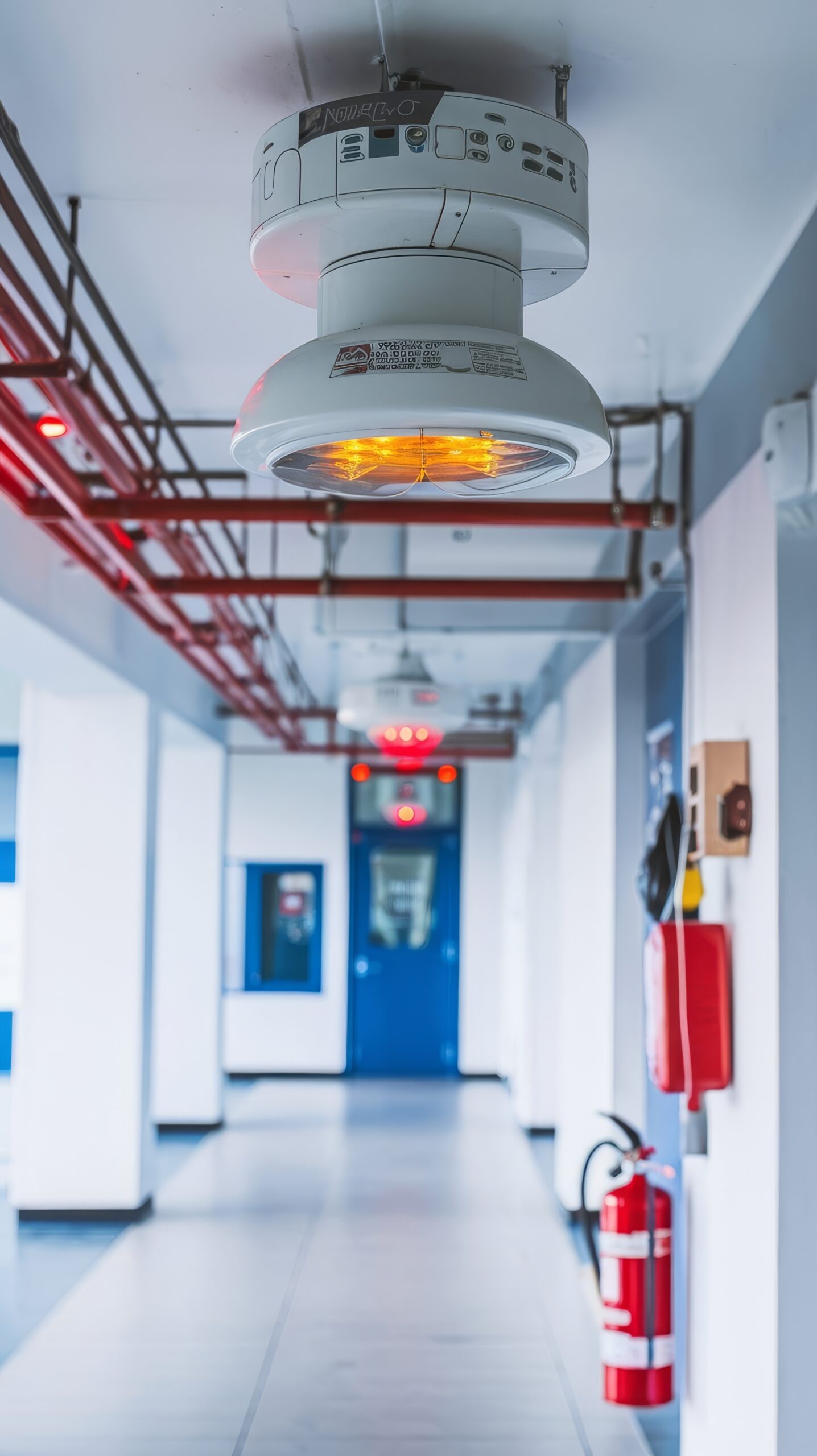
  • Fire Suppression Systems Explained: Wet, Dry, Clean Agent and Water Mist

    Fire Suppression Systems Explained: Wet, Dry, Clean Agent and Water Mist

    Fire suppression systems put out or contain a fire automatically, and the right choice depends heavily on what a space is protecting, since water, chemical and gas-based suppression methods each bring different trade-offs for occupant safety, equipment damage and environmental impact.

    Wet and Dry Pipe Sprinkler Systems

    Wet pipe sprinkler systems, the most common type in commercial and residential buildings, keep water constantly present in the piping so it discharges immediately when a sprinkler head activates from heat. Dry pipe systems instead hold the piping full of pressurized air, releasing water only after a valve opens, which makes them suitable for unheated spaces such as parking structures or freezer warehouses where standing water in pipes would freeze, at the cost of a short delay between activation and water reaching the fire compared with a wet system.

    Clean Agent Systems for Sensitive Equipment

    Data centers, server rooms, museums, archives and other spaces containing valuable or sensitive electronic equipment often use clean agent suppression instead of water, since gaseous agents extinguish a fire without leaving residue or causing water damage to equipment. These systems typically work by displacing oxygen below the level needed to sustain combustion or by chemically interrupting the fire’s combustion reaction, and they are designed to be used in occupied spaces at concentrations considered safe for brief human exposure, though occupants are still expected to evacuate immediately upon activation.

    Water Mist as a Middle Ground

    Water mist systems use much finer water droplets than conventional sprinklers, discharged at higher pressure, which absorb heat more efficiently and displace oxygen locally around the fire while using a fraction of the water volume of a traditional sprinkler system. This makes water mist attractive in spaces where minimizing water damage matters but a fully gaseous clean agent system is not practical or affordable, such as certain industrial machinery enclosures, heritage buildings, or marine engine rooms.

    Matching the System to the Risk

    Fire protection engineers select a suppression approach based on the specific fuel and hazard present, the value and sensitivity of what is being protected, whether the space is normally occupied, and applicable code requirements, rather than defaulting to a single technology across every building type. A single facility often uses several suppression technologies in different areas, pairing conventional sprinklers in general office space with clean agent protection in an adjoining server room, for example.

    FAQ

    Why don’t all buildings use clean agent suppression instead of water sprinklers? Clean agent systems are considerably more expensive to install and maintain than sprinklers and are typically reserved for spaces with high-value or sensitive equipment where water damage would be especially costly.

    Is water mist as effective as traditional sprinklers? Water mist can be highly effective for the specific hazards and enclosure types it is designed and tested for, but it is not a universal substitute for conventional sprinklers across all occupancy types and fire hazards.

    Are dry pipe systems slower to respond than wet pipe systems? Yes, dry pipe systems have an inherent delay because air must be released from the piping before water arrives, which is why they are used primarily where freezing risk rules out a wet pipe system rather than as a general-purpose choice.

  • Fire Alarm Control Panels Explained: Addressable vs. Conventional Systems

    Fire Alarm Control Panels Explained: Addressable vs. Conventional Systems

    The fire alarm control panel is the brain of a building’s fire detection system, and the choice between an addressable and a conventional design affects everything from how precisely a fire can be located to how much wiring an installation requires and how the system can be diagnosed and expanded later.

    Conventional Panels: Zones, Not Individual Devices

    Conventional fire alarm panels wire groups of detectors and pull stations together into zones, with each zone reporting back to the panel as a single circuit. When an alarm triggers, the panel can tell responders which zone is affected, such as a wing or floor of a building, but not which specific detector within that zone activated, meaning staff still have to physically search the zone to find the fire’s exact location. Conventional systems remain common in smaller buildings where the cost of extensive zoning is unnecessary and the building is simple enough to search quickly.

    Addressable Panels: Every Device Has an Identity

    Addressable panels assign a unique digital address to every individual detector, pull station and other device on the system, so the panel’s display can report the precise device that activated rather than just a general zone. This precision becomes increasingly valuable as buildings grow larger or more complex, since it can mean the difference between directing responders to a specific room versus an entire floor. Addressable systems also typically support continuous device-level diagnostics, such as detecting a dirty or failing smoke detector before it causes a false alarm or fails to detect a real fire, and they generally require less wiring than an equivalently sized conventional system because devices can share a single looped circuit rather than needing separate zone wiring.

    Choosing Between Them

    The decision generally comes down to building size, complexity and growth plans: conventional panels remain a cost-effective choice for small, simple buildings, while addressable panels are standard in larger commercial buildings, campuses, hospitals and any facility where precise fire location and easy future expansion justify the higher upfront cost of addressable devices and panel hardware. Many jurisdictions and insurance requirements effectively push larger or higher-occupancy buildings toward addressable systems even where a conventional system would technically satisfy basic code minimums.

    FAQ

    Can a conventional system be upgraded to addressable? Generally not by simply swapping the panel; addressable systems typically require compatible addressable devices and different wiring topology, so upgrading usually means a substantial retrofit rather than a simple panel replacement.

    Are addressable panels always required by code? Not universally. Requirements vary by jurisdiction, occupancy type and building size, though many codes and insurance standards effectively favor addressable systems in larger or higher-occupancy buildings.

    Do addressable systems reduce false alarms? They can help, since device-level diagnostics let facility staff identify and service a specific failing or contaminated detector before it causes a false alarm, something a conventional zone-based system cannot pinpoint as precisely.