
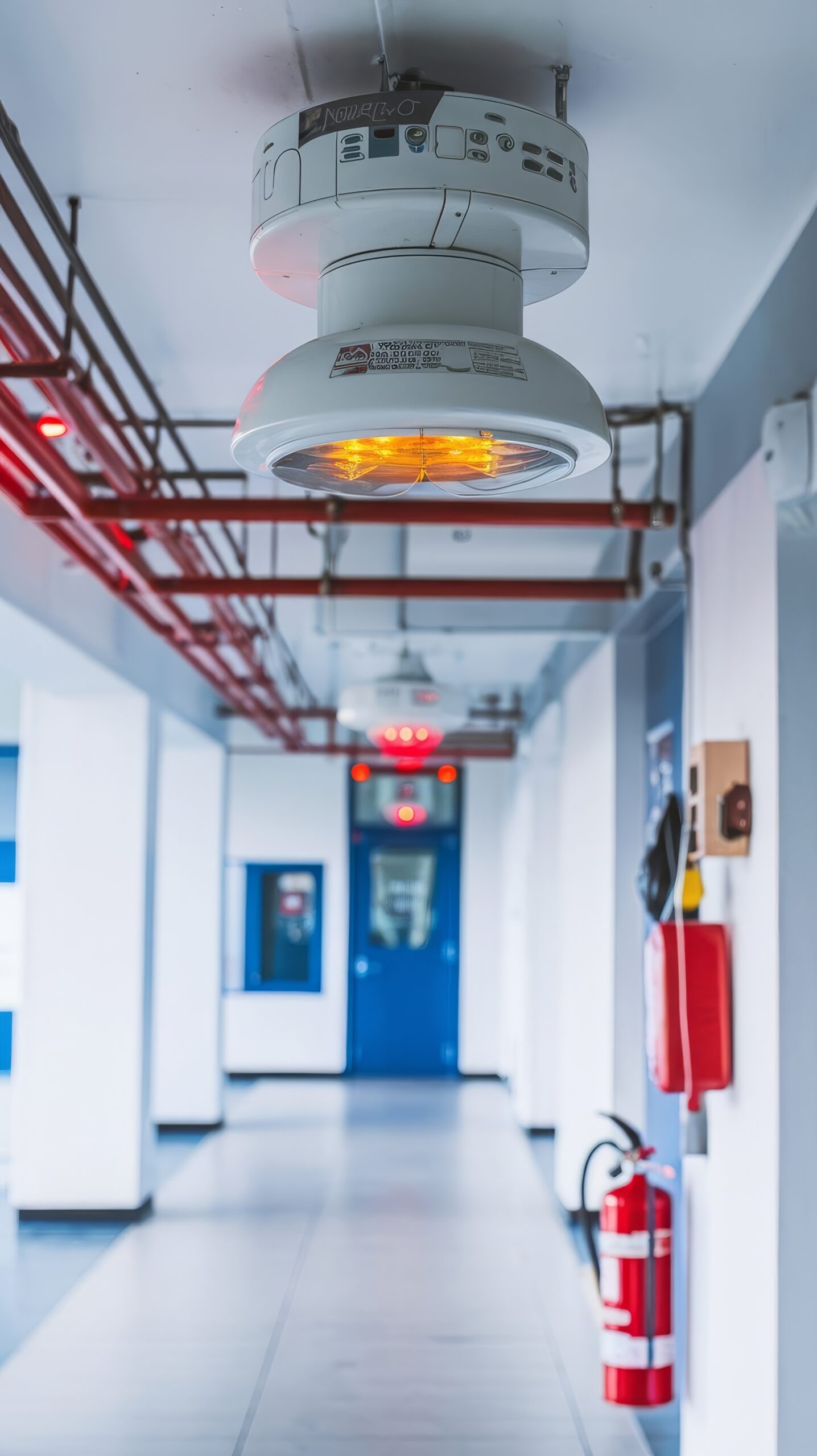
The fire alarm control panel is the brain of a building’s fire detection system, and the choice between an addressable and a conventional design affects everything from how precisely a fire can be located to how much wiring an installation requires and how the system can be diagnosed and expanded later.
Conventional Panels: Zones, Not Individual Devices
Conventional fire alarm panels wire groups of detectors and pull stations together into zones, with each zone reporting back to the panel as a single circuit. When an alarm triggers, the panel can tell responders which zone is affected, such as a wing or floor of a building, but not which specific detector within that zone activated, meaning staff still have to physically search the zone to find the fire’s exact location. Conventional systems remain common in smaller buildings where the cost of extensive zoning is unnecessary and the building is simple enough to search quickly.
Addressable Panels: Every Device Has an Identity
Addressable panels assign a unique digital address to every individual detector, pull station and other device on the system, so the panel’s display can report the precise device that activated rather than just a general zone. This precision becomes increasingly valuable as buildings grow larger or more complex, since it can mean the difference between directing responders to a specific room versus an entire floor. Addressable systems also typically support continuous device-level diagnostics, such as detecting a dirty or failing smoke detector before it causes a false alarm or fails to detect a real fire, and they generally require less wiring than an equivalently sized conventional system because devices can share a single looped circuit rather than needing separate zone wiring.
Choosing Between Them
The decision generally comes down to building size, complexity and growth plans: conventional panels remain a cost-effective choice for small, simple buildings, while addressable panels are standard in larger commercial buildings, campuses, hospitals and any facility where precise fire location and easy future expansion justify the higher upfront cost of addressable devices and panel hardware. Many jurisdictions and insurance requirements effectively push larger or higher-occupancy buildings toward addressable systems even where a conventional system would technically satisfy basic code minimums.
FAQ
Can a conventional system be upgraded to addressable? Generally not by simply swapping the panel; addressable systems typically require compatible addressable devices and different wiring topology, so upgrading usually means a substantial retrofit rather than a simple panel replacement.
Are addressable panels always required by code? Not universally. Requirements vary by jurisdiction, occupancy type and building size, though many codes and insurance standards effectively favor addressable systems in larger or higher-occupancy buildings.
Do addressable systems reduce false alarms? They can help, since device-level diagnostics let facility staff identify and service a specific failing or contaminated detector before it causes a false alarm, something a conventional zone-based system cannot pinpoint as precisely.
Leave a Reply