Category: Defense

  • L3Harris to Ruggedize VAMPIRE Counter-Drone System for US Navy Littoral Forces

    L3Harris to Ruggedize VAMPIRE Counter-Drone System for US Navy Littoral Forces

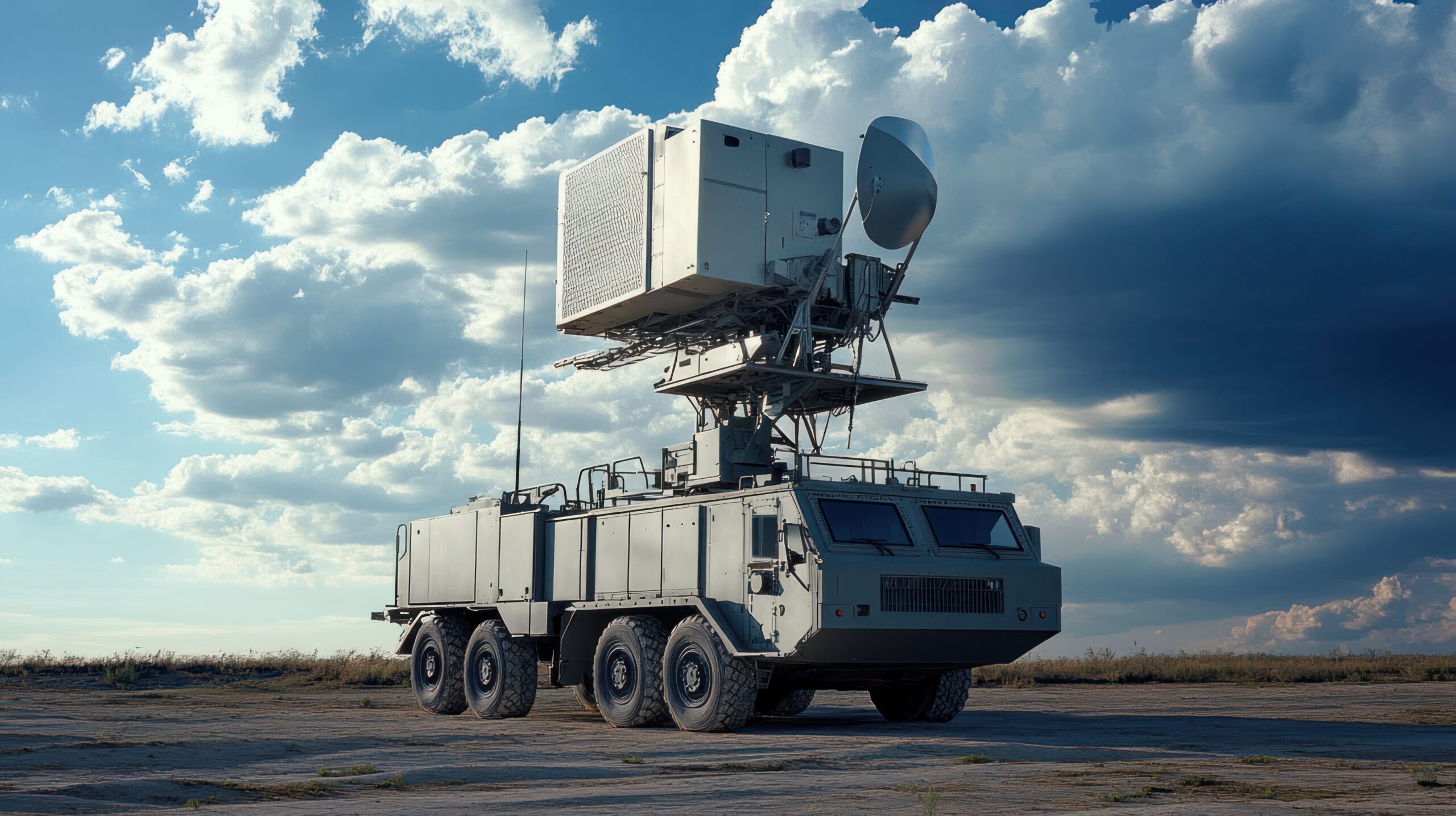
    L3Harris Technologies announced on September 8, 2026 that it has been selected to deliver a maritime-ruggedized configuration of its VAMPIRE counter-drone weapon system to the US Navy, aimed at defending littoral combat forces against small unmanned aircraft and uncrewed surface vessel (USV) threats.

    What Is VAMPIRE

    VAMPIRE — Vehicle-Agnostic Modular Palletized ISR Rocket Equipment — is a self-contained, palletized weapon system originally designed to mount on standard vehicle cargo beds, pairing sensors with laser-guided munitions such as Advanced Precision Kill Weapon System (APKWS) rockets to engage small drones and other aerial threats. For the Navy configuration, L3Harris said it is adapting the system to withstand the environmental stresses of maritime and littoral operating conditions.

    “VAMPIRE is a flexible and effective system that meets the unique requirements of the U.S. Navy for littoral C-UxS defense,” said Tony Calderon, President of Targeting & Sensor Systems at L3Harris.

    Capabilities and Integration

    The system is designed to integrate with L3Harris’s Wraith Shield software for layered counter-unmanned-systems (C-UxS) defense, combining detection, tracking and engagement functions across a broader defense architecture. L3Harris has not disclosed a contract value or specific delivery timeline for the Navy variant.

    Why It Matters

    The Navy’s interest in a ruggedized VAMPIRE follows a broader push across the US military to field mobile, vehicle- and vessel-mounted counter-drone systems rather than relying solely on fixed-site defenses, as cheap commercial and militarized small drones proliferate among state and non-state actors. It also follows related moves by L3Harris to mount counter-drone sensors on an uncrewed ground vehicle alongside ARX Robotics, part of a wider industry trend toward distributing counter-UAS sensors and effectors across multiple platform types rather than concentrating them at fixed perimeters.

  • Leonardo and Marshall Unveil Containerised Falcon Shield Counter-Drone System

    Leonardo and Marshall Unveil Containerised Falcon Shield Counter-Drone System

    Leonardo and Marshall Land Systems unveiled a containerised configuration of Leonardo’s Falcon Shield counter-uncrewed aircraft system (C-UAS) at the Defence Vehicle Dynamics (DVD) show. The new package integrates Leonardo’s HYAS command-and-control system and Nerio ultra-long-range surveillance and target-acquisition sensor inside a standard ISO shipping container, so the whole detect-and-defeat stack can move by air, land or sea and be set up wherever protection is needed.

    The containerised system keeps Falcon Shield’s open architecture, which can integrate radar, electronic-surveillance sensors and electro-optical/infrared cameras alongside kinetic and non-kinetic effectors, and multiple units can be networked for layered coverage. Falcon Shield is already in service with the UK Royal Air Force — where the system is designated Orcus and has protected major international events — and with the Canadian Armed Forces.

    Why it matters

    Packaging a full C-UAS detect-track-identify-defeat chain into a standard shipping container turns counter-drone protection into something that can be trucked or shipped to a temporary site — an airbase, a border crossing, a major event — and stood up quickly rather than requiring a fixed installation.

    Sources

  • DroneShield Fields Vehicle-Mounted Counter-Drone System on US Army Infantry Squad Vehicles

    DroneShield Fields Vehicle-Mounted Counter-Drone System on US Army Infantry Squad Vehicles

    DroneShield said it has completed installation and operational acceptance of its DroneSentry-X Mk2 counter-drone system on US Army Infantry Squad Vehicles, reaching the milestone roughly 80 days after the contract was awarded under Joint Interagency Task Force 401. The installation process included fitting the system to the vehicles, a live-drone acceptance test and operator training, establishing what the company calls initial operational capability.

    Unlike fixed-site counter-drone installations, the vehicle-mounted system is designed to give mobile forces detection and electronic-countermeasure capability against drones while on the move. DroneShield said three additional DroneSentry-X Mk2 units are planned under a recent contract modification.

    Why it matters

    Mobile counter-drone capability addresses a gap that fixed installations can’t: forces operating away from a base still face the same low-cost drone threats that have driven counter-UAS investment at airports, stadiums and critical infrastructure sites.

    Sources

  • NATO Fighter Jets Shoot Down Drone That Crossed Into Lithuanian Airspace From Belarus

    NATO Fighter Jets Shoot Down Drone That Crossed Into Lithuanian Airspace From Belarus

    NATO fighter jets shot down a drone that entered Lithuanian airspace overnight, officials said Tuesday, in the latest of a series of unidentified drone incursions into Baltic airspace since Russia’s full-scale invasion of Ukraine. Lithuania’s National Crisis Management Centre logged the intercept at 01:19 local time near the village of Pratkunai in Kaisiadorys district, roughly 90 kilometers northwest of the capital Vilnius. No injuries or damage were reported.

    Lithuanian authorities said the drone most likely crossed into the country from neighboring Belarus. Italian Air Force Eurofighter Typhoons, which hold NATO’s Baltic Air Policing alert at Siauliai, carried out the intercept. Lithuanian President Gitanas Nauseda thanked NATO for its “swift response,” and Foreign Minister Kestutis Budrys said the intercept sent “a clear message that NATO stands vigilant, committed, and ready,” according to Deutsche Welle.

    Lithuania, which borders both Russia’s Kaliningrad exclave and Belarus, has reported frequent drone incursions since 2022, as have fellow NATO members Latvia and Estonia. The type of drone and its operator had not been established as of Tuesday.

    Why it matters

    Repeated drone incursions along NATO’s eastern flank are accelerating investment in layered counter-UAS detection below the fighter-jet tier, since scrambling manned aircraft for every low-cost drone is not a sustainable long-term response.

    Sources

  • Pentagon Suspends CMMC Phase II Rollout as Reform Task Force Reviews Program

    Pentagon Suspends CMMC Phase II Rollout as Reform Task Force Reviews Program

    The Department of Defense has suspended Cybersecurity Maturity Model Certification (CMMC) Phase II requirements that were scheduled to take effect November 10, 2026, while a reform task force reviews the program, according to an August 31, 2026 report from Security Info Watch. Phase I self-assessments and current NIST SP 800-171 Revision 2 obligations remain in effect for defense contractors.

    What’s Paused, What Isn’t

    Level 1 self-assessments covering 15 safeguarding requirements from FAR clause 52.204-21 continue on their annual cycle, and Level 2 self-assessments against the 110 security requirements in NIST SP 800-171 Rev. 2 continue every three years with annual affirmation, with results still required in the Supplier Performance Risk System (SPRS). For contracts under DFARS clause 252.204-7012, contracting officers must still verify a current SPRS assessment score before certain awards, extensions or option exercises. Only the timing of third-party CMMC Phase II assessments has changed, not the underlying obligation to safeguard Controlled Unclassified Information, Bill Osborne, vice president of Defense Sector Services at Magna5, told the publication.

    Why It Matters

    The pause gives contractors more time to fix gaps in scope, documentation and System Security Plans before a Third-Party Assessment Organization is engaged, rather than a reason to slow readiness work altogether. Compliance requirements of this kind sit alongside physical protections for critical infrastructure and defense-linked targets that state-linked threat actors continue to probe.

  • Lockheed Martin Ventures and Presidio Ventures Back Quantum Camera Startup Diffraqtion

    Lockheed Martin Ventures and Presidio Ventures Back Quantum Camera Startup Diffraqtion

    Diffraqtion, an MIT and University of Maryland spinout building quantum camera platforms for defense and space sensing, announced strategic investments from Lockheed Martin Ventures and Presidio Ventures — the venture arm of Japan’s Sumitomo Corporation — bringing the company’s total pre-seed funding to more than $10 million, according to the company’s announcement and SpaceNews.

    From Laboratory to Flight Demonstration

    The new investment follows roughly seven months of progress since the round’s first close in January 2026, led by Ground State Ventures. In that time, Diffraqtion completed on-sky demonstrations at a partner observatory distinguishing closely spaced objects, advanced its DARPA Direct-to-Phase-II SBIR contract into its second option period, and was selected by NASA for an SBIR Phase I award in orbital debris tracking, alongside winning NASA’s $100,000 Space to Soil Challenge for adaptive imaging. “This team’s rapid progress from laboratory development toward flight demonstration is particularly promising,” said Chris Moran, vice president and general manager of Lockheed Martin Ventures.

    Dual-Use Sensing for Defense and Industry

    Diffraqtion’s quantum imaging technology is designed to apply the same underlying physics advantage whether the camera is observing objects in orbit, tracking targets on Earth, or guiding a physical system in real time. “What drew us to Diffraqtion is that the same physics advantage applies whether the camera is observing the sky or the Earth, or guiding a physical system,” said Ross Leav, senior vice president at Presidio Ventures. “We see significant opportunity to bring this capability to industrial and commercial markets globally.”

    Part of a Broader Defense-Tech Investment Wave

    The round adds Lockheed Martin Ventures and Presidio Ventures to a syndicate that already included QDNL Participations, milemark·capital, Aether VC and ADIN from the January close, alongside new participants SBI US Gateway Fund with Plug and Play, Collaborative Fund and TekVentures. The investment reflects a broader surge of venture capital flowing into defense-adjacent sensing and space technology startups, as established defense primes increasingly use corporate venture arms to gain early access to dual-use technologies developed outside traditional defense contracting channels.

  • Trump Signs Executive Order Establishing US Space Academy to Build Civil and Military Space Workforce

    Trump Signs Executive Order Establishing US Space Academy to Build Civil and Military Space Workforce

    President Trump signed an executive order on August 28, 2026, establishing a Presidential Commission on the United States Space Academy, a proposed institution intended to train a pipeline of engineers, operators, and service members for civil, military, and commercial space work, according to the White House’s own text of the order and reporting from NASA, CBS News, and Space.com.

    Trump announced the order during an event at NASA’s Johnson Space Center in Houston, where he also awarded the Congressional Space Medal of Honor to the four-person crew of Artemis II. The commission will be chaired by the NASA administrator, with the assistants to the president for economic policy and for science and technology serving as vice chairs; other members include the secretaries of defense and of the Air Force.

    120-Day Deadline for Recommendations

    The order gives the commission 120 days to submit a report recommending a governance framework for the academy, service obligations for graduates, a physical location, and any legislative changes needed to establish it. The initiative reflects growing federal attention to workforce gaps in space-related fields as commercial companies take on work that historically sat inside government agencies, and follows a year of expanded national-security focus on space and satellite infrastructure.

    No timeline for the academy’s opening has been set; officials said that will depend on the commission’s recommendations and any subsequent congressional action.

  • Army Laser Weapon Downs Cartel-Linked Drones on Texas Border in System’s First Confirmed Use

    Army Laser Weapon Downs Cartel-Linked Drones on Texas Border in System’s First Confirmed Use

    The US Army’s Multipurpose High Energy Laser destroyed three cartel-linked drones along the Texas border over two nights, August 25 and 26, 2026, in what officials describe as the system’s first confirmed operational engagement, according to reporting from DroneXL, Unmanned Airspace, and NORTHCOM’s own statement, corroborated by AeroVironment, which confirmed one of its AMP-HEL units was involved.

    The engagements took place in airspace over or near the Rio Grande Valley in southern Texas and were carried out by Joint Task Force-Southern Border, a roughly 8,000-strong US Northern Command unit. The drones were assessed as hostile because they were operating in direct support of activity posing a physical threat to US military personnel and Customs and Border Protection partners working the area.

    Vehicle-Mounted System Produces 20 Kilowatts of Laser Power

    AMP-HEL is a vehicle-mounted directed-energy weapon capable of producing 20 kilowatts of laser power, designed for precision engagement of small unmanned aerial threats at a fraction of the cost of a traditional interceptor missile. The military did not specify the exact model variant used in the border engagements.

    The successful engagement marks a turnaround for the program, which drew criticism in February after an AMP-HEL unit mistakenly targeted the wrong drone and briefly froze operations at a commercial airport. Border-area counter-drone activity has intensified this year as cartel organizations increasingly use small unmanned aircraft for smuggling and surveillance, prompting expanded federal investment in counter-UAS testing and detection infrastructure.

  • Virginia Tech Opens Counter-UAS Testing and Research Center Backed by $5 Million Army Futures Command Award

    Virginia Tech Opens Counter-UAS Testing and Research Center Backed by $5 Million Army Futures Command Award

    Virginia Tech held a ribbon-cutting ceremony on August 28, 2026, for a new Counter-UAS Testing and Research Center at its Kentland Farms property in Blacksburg, Virginia, a facility the university’s National Security Institute says will support development of drone-defense technology for both the US Army and civilian critical-infrastructure operators, according to Virginia Tech News and local coverage from WSLS.

    The outdoor site is backed by a $5 million award from the US Army Futures Command’s Combat Capabilities Development Command C5ISR Center and gives researchers a real-world, open-air environment to test detection, tracking, and identification systems against unmanned aircraft — complementing indoor and virtual test environments the university already operates. University President Tim Sands, US Senator Mark Warner, and 9th District Congressman Morgan Griffith attended the opening.

    Officials Cite a Capability Gap

    “This is an area where we have to catch up, where America is behind,” Warner said at the ceremony. Austin Phoenix, director of mission systems at the Virginia Tech National Security Institute, said unmanned aircraft present a distinct detection challenge “because they’re just much smaller” than the aerial threats legacy air-defense systems were designed around.

    The center is intended to provide independent verification and validation testing for both government and private-industry counter-UAS systems, adding to a small number of dedicated outdoor test ranges nationally as drone incursions over military installations, airports, and other sensitive sites continue to draw federal attention. Virginia was one of seven states granted early federal UAS test-site designation roughly twelve years ago, giving the university a long-running base of aviation-research infrastructure to build on. The opening follows a string of counter-drone contract awards this year, including DHS’s department-wide counter-drone contracts.

  • Lockheed Martin Demonstrates AI-Driven Battle Management Prototype for Guam Missile Defense

    Lockheed Martin Demonstrates AI-Driven Battle Management Prototype for Guam Missile Defense

    Lockheed Martin demonstrated a prototype AI-driven battle management system for the Guam Defense System (GDS) on August 26, 2026, showing how artificial intelligence analytics can compress the time it takes to detect, evaluate, and respond to air and missile threats in a simulated Guam operational environment.

    The prototype, called the GDS Battle Manager Suite, networks data from multiple Integrated Air and Missile Defense (IAMD) systems slated for deployment to Guam, including Aegis Guam and the Integrated Battle Command System (IBCS), into a single tactical picture. Powered by Lockheed Martin’s CommandIQ software, the system applies AI analytics to assess incoming tracks and generate fire-direction recommendations for human operators.

    From Request to Demonstration in Under Two Months

    The U.S. Army issued a call for a GDS Battle Manager Suite solution in June 2026. Lockheed Martin was invited to a Phase 2 evaluation at the Army Tactical Systems Integration Laboratory at Fort Bliss, Texas, where the company said its prototype was integrated and met demonstration requirements within 24 hours of arrival on site.

    Traditional IAMD battle management has relied on operators manually correlating information across documents, voice channels, and text messages — a process that is time-consuming and prone to error under the compressed timelines of a missile engagement. By automating that correlation and applying algorithmic shot selection informed by extensive simulation data, Lockheed Martin says the system is designed to give operators machine-speed decision support while helping preserve high-cost interceptor inventories.

    Part of a Broader Command-and-Control Push

    The Guam prototype follows related software-based command-and-control integration work Lockheed Martin performed during the Valiant Shield 2026 exercise, which the company has cited as evidence that capabilities developed across different programs and vendors can be connected rapidly to meet emerging operational requirements — a recurring theme as the Pentagon pushes for faster, more interoperable air and missile defense architectures across the Indo-Pacific.

    Guam’s defense architecture has been a focus of U.S. missile defense investment for several years given the island’s strategic role as a forward operating location. Layering AI-assisted battle management on top of existing sensor and interceptor networks is intended to help defenders manage a more complex and saturated threat picture without proportionally increasing the number of personnel required to operate it.