
Category: Oil & Gas

  • LNG Facility Security Technology

    LNG Facility Security Technology

    LNG facilities — liquefaction plants, import and export terminals, and storage sites — occupy a distinct category in critical-infrastructure security because a successful attack or serious accident carries both catastrophic safety consequences and significant economic and energy-supply impact, placing these sites under some of the most stringent security regulatory regimes in the industrial sector.

    Regulatory Framework and Layered Design

    In the United States, LNG facilities fall under Coast Guard and Federal Energy Regulatory Commission security requirements that mandate layered protection: perimeter security, access control, surveillance, and threat detection are treated as regulatory obligations rather than optional risk-management choices. This regulatory backbone shapes security architecture more directly at LNG sites than at most other industrial facility types.

    Perimeter and Waterside Security

    Because many LNG terminals are sited on waterways to accommodate tanker traffic, security architecture must cover both landside perimeter protection — fencing, intrusion detection, access control — and waterside security, including vessel-tracking integration, waterside barriers, and coordination with port-security and Coast Guard monitoring systems for approaching vessels.

    Hazard Detection Integrated With Security Systems

    LNG-specific hazard detection, including gas detection, cryogenic leak sensors, and flame detection tuned for low-temperature hydrocarbon fires, is typically integrated into the same monitoring and control infrastructure as conventional security systems, since a security breach and a process safety event can present overlapping signatures and both require immediate, coordinated response.

    Access Control for High-Consequence Areas

    Facilities apply tiered access control, with the most stringent credentialing and monitoring reserved for process areas, storage tanks, and loading arms, while lower-risk administrative areas use standard commercial access control. Contractor and vendor access — common at LNG sites due to specialized maintenance needs — is managed through time-limited credentials and escort requirements for unescorted access to restricted process zones.

    Command and Control Integration

    Given the scale of consequence if a security or safety event escalates, LNG facilities typically operate a unified control room where security monitoring, process control, and emergency response coordination share situational awareness, allowing a single operational picture to inform both a security response and a safety shutdown decision when the two are connected.
  • Pipeline Security Architecture: Sensors, Fiber, Cameras and Control Centers

    Pipeline Security Architecture: Sensors, Fiber, Cameras and Control Centers

    Pipelines cross long distances, remote terrain and multiple jurisdictions. Protecting them requires more than cameras at a few stations. Modern pipeline security combines distributed sensing, process data, imaging and centralized command-and-control.

    The Linear Challenge

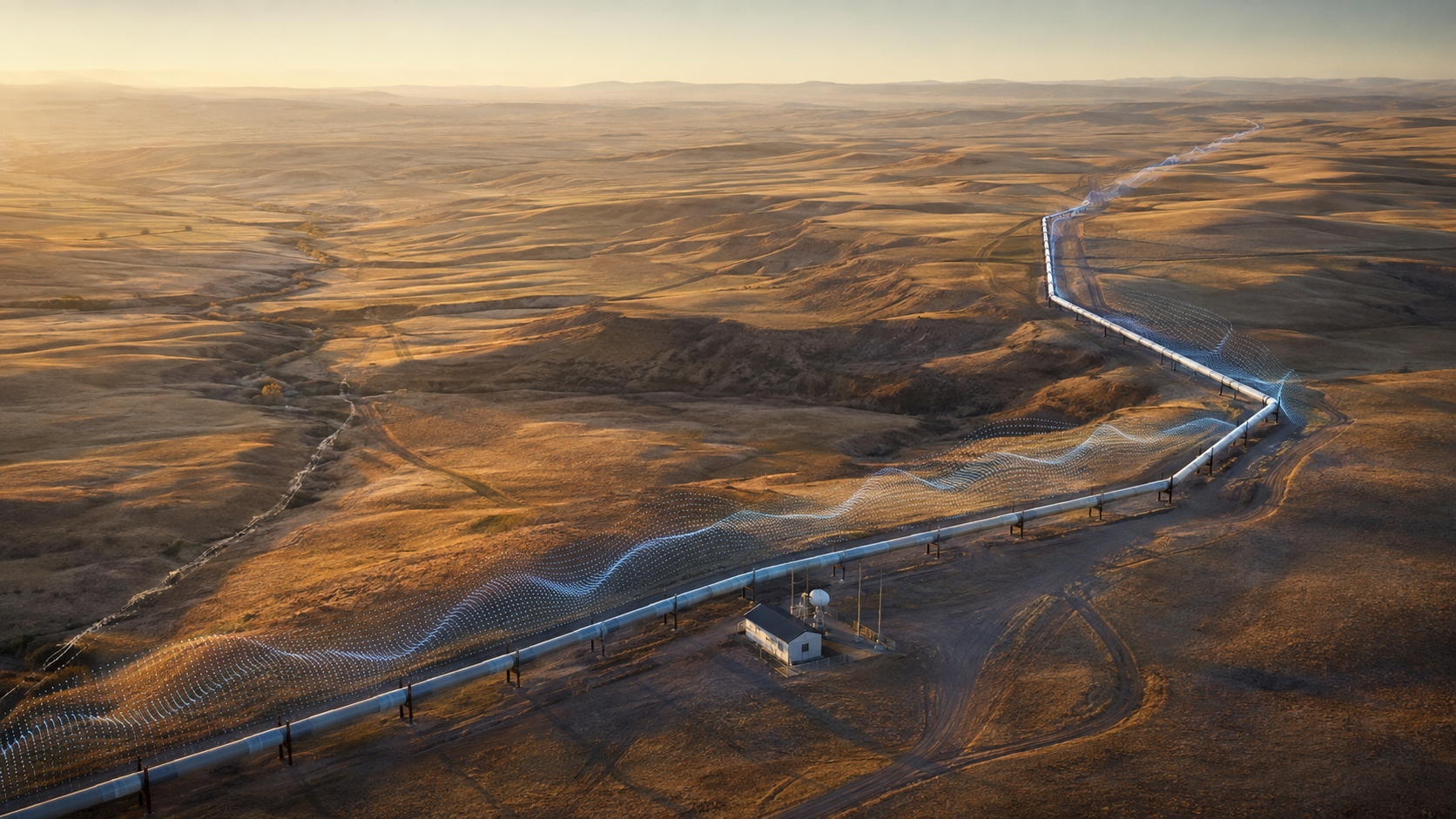
    A pipeline can extend hundreds or thousands of kilometers. Conventional point sensors leave large gaps, while continuous patrol is expensive. Distributed Acoustic Sensing can use fiber installed along the route to identify excavation, digging, vehicle movement and other vibration events. In some applications, acoustic signatures may also contribute to leak-related monitoring.

    Process Monitoring

    Security data should be combined with pressure, flow and valve information. A suspicious vibration event near the route becomes more important if process data simultaneously shows an abnormal change. This correlation reduces the time required to understand what is happening.

    Video Verification

    Cameras and thermal imagers are most useful at high-risk locations such as block-valve stations, terminals, crossings and urban interfaces. On long remote routes, mobile cameras, drones or PTZ systems can be tasked after another sensor identifies a specific location.

    Perimeter Protection at Facilities

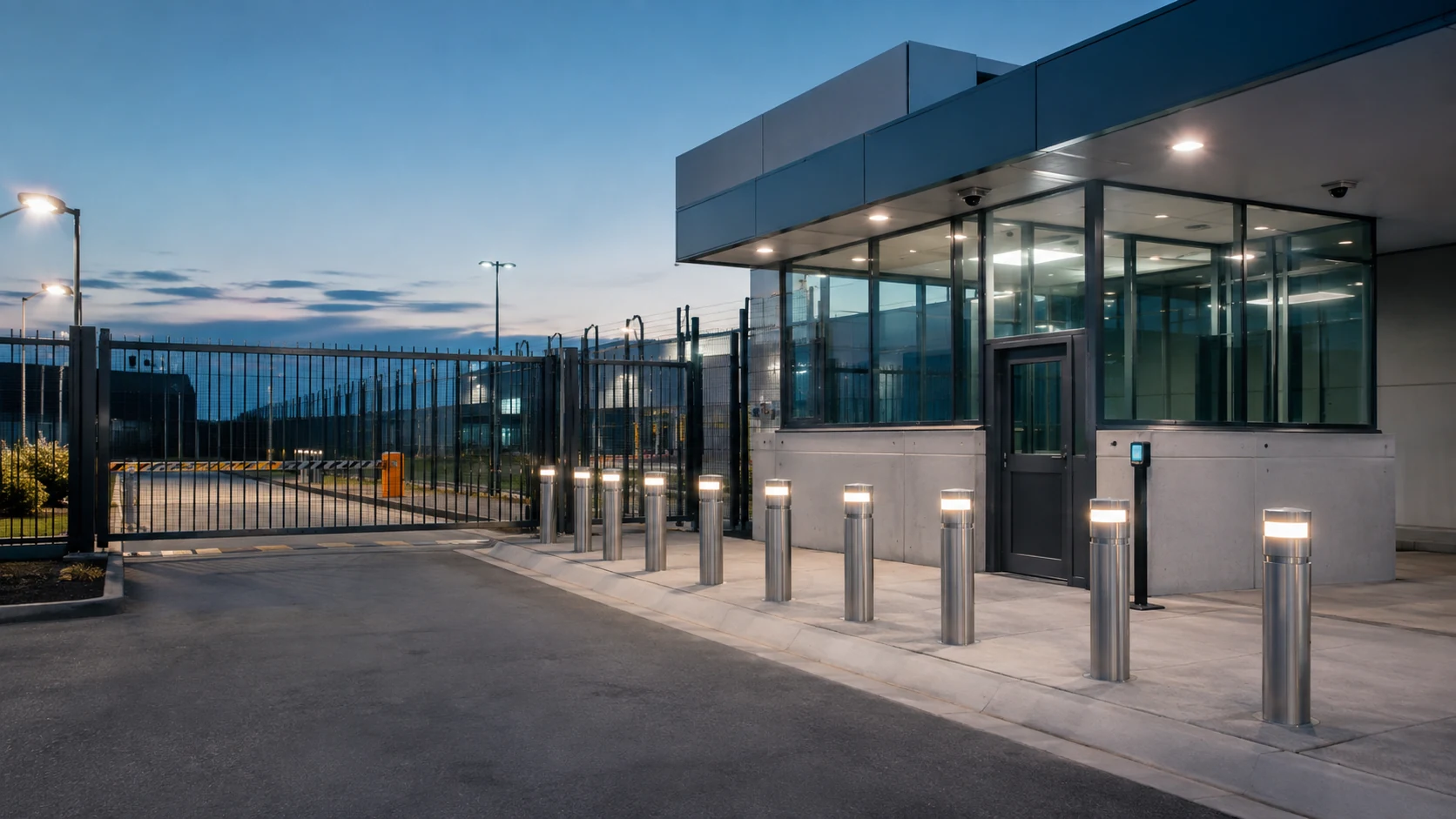
    Compressor stations, pump stations and terminals require conventional layered security: fencing, access control, radar, thermal imaging, intrusion detection and vehicle management. These fixed sites should feed the same operational picture as the linear pipeline sensors.

    Command and Control

    A central platform should correlate fiber alarms, SCADA events, video, GIS coordinates and maintenance information. Operators need a map-based view showing where an event occurred, what nearby assets are present and which verification resources are available.

    Cyber-Physical Risk

    Pipelines are cyber-physical systems. Security architecture must protect both field assets and the networks connecting sensors, cameras and control systems. Segmentation, authentication and secure remote access are essential.

    Conclusion

    The most effective pipeline-security model is layered and data-driven. Distributed fiber sensing provides continuous awareness along the route, while cameras, process systems and control centers add verification and context. The objective is not more alarms; it is faster, more reliable understanding of events affecting the pipeline.

  • DAS for Pipeline Security and Leak Monitoring

    DAS for Pipeline Security and Leak Monitoring

    Pipelines cross long, remote corridors where conventional point sensors and camera systems cannot provide continuous coverage. Distributed Acoustic Sensing offers a different model: a fiber installed along the route becomes a continuous vibration sensor capable of detecting and locating activity over many kilometers.

    Third-party interference Excavation is one of the most important pipeline risks. Digging, drilling, heavy vehicles and machinery create vibration signatures that can be detected before physical contact with the pipe occurs. A DAS system can identify the approximate location and generate an early warning for operators.

    Security applications The same sensing line can detect footsteps, vehicle movement, fence disturbance and other activity near above-ground facilities or rights-of-way. Classification software can distinguish many routine background events from activity that requires attention.

    Leak-related signatures Some leaks create acoustic or mechanical energy that couples into the pipe, surrounding soil or sensing cable. Depending on pipeline type, pressure, product, soil and cable installation, DAS can contribute to leak detection. It should not automatically be assumed to replace pressure, flow, mass-balance or other leak-detection methods; the strongest architecture often combines multiple independent indicators.

    Fiber placement and coupling Performance depends heavily on where and how the fiber is installed. A cable close to the pipeline and well coupled to the surrounding soil will respond differently from a telecom cable located farther away. Existing fibers may still be useful, but site testing is essential.

    Event classification Raw DAS data contains large amounts of vibration information. Analytics convert this data into operational categories such as excavation, vehicle, walking or background noise. Models need representative field data because soil, pipe construction, road traffic and industrial machinery vary from site to site.

    Integration with pipeline operations High-value alerts should be mapped into GIS and SCADA or security platforms so operators can see the event location, nearby assets and other sensor information. Cameras or patrol teams can then verify the alarm.

    DAS is particularly compelling for pipelines because one passive fiber can cover distances that would otherwise require thousands of powered field devices. Its greatest value is early, localized awareness: identifying potentially dangerous activity while there is still time to investigate and intervene safely.

    For further technology context, see FOTAS distributed fiber sensing and SAMM.