
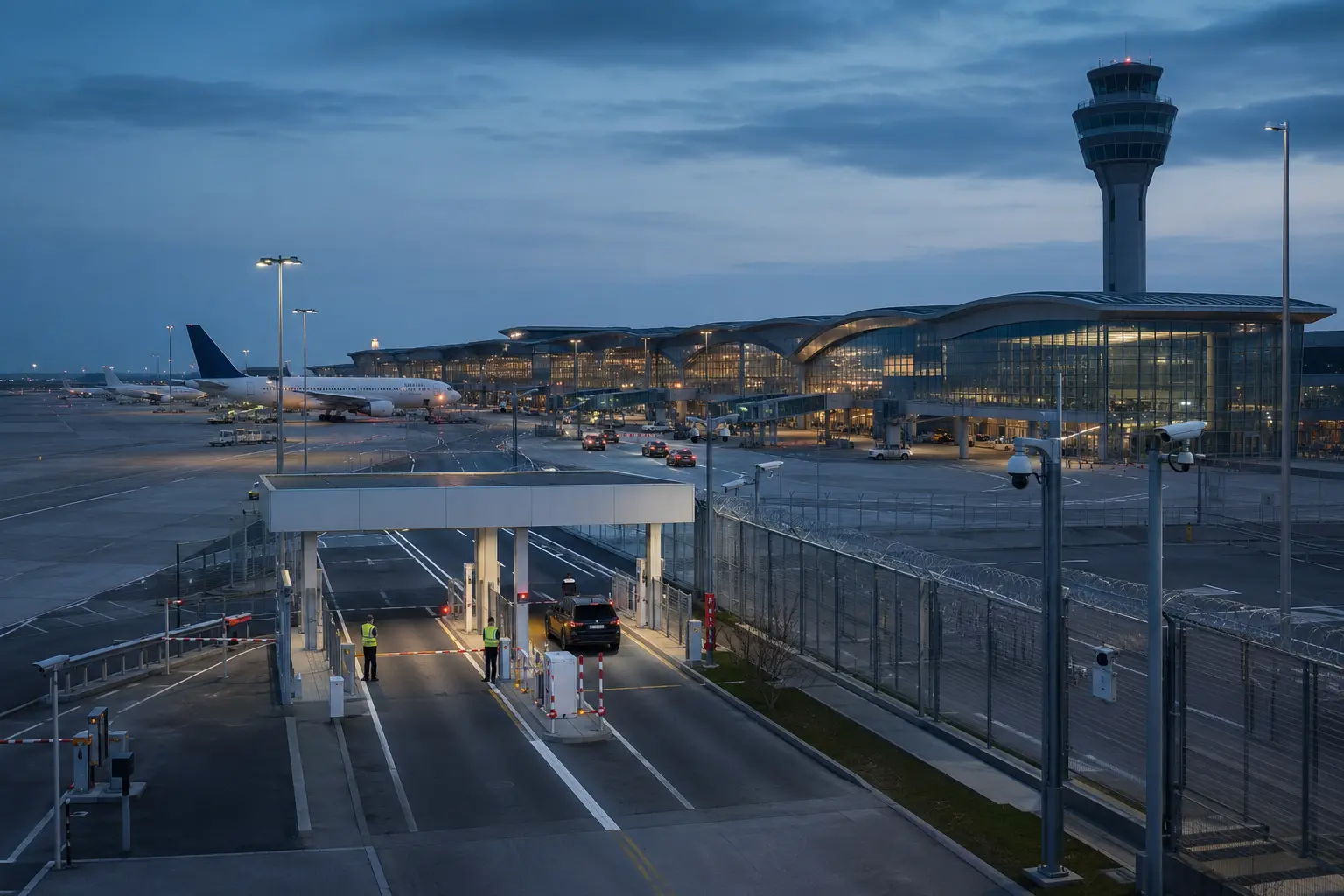
A practical guide to the security, fire, access, screening and command systems typically required in major airport expansion projects.
Airport projects are often described in terms of terminals, runways and passenger capacity. For security professionals, however, the more interesting question is what sits behind those structures: how are restricted zones protected, how is passenger flow screened, how are service tunnels monitored, and how are thousands of alarms unified in one operating picture?
A modern airport project can involve video surveillance, access control, perimeter intrusion detection, explosive and baggage screening, vehicle barriers, fire detection, smoke control, emergency communication and command-and-control platforms. The challenge is not simply selecting devices. Airports are live environments with aviation regulations, multiple tenants, public areas, sterile zones, airside operations and critical utilities. Integration becomes as important as individual product performance.
Project intelligence should therefore track packages, not only the headline project. A terminal expansion may create separate opportunities for CCTV, access, fire alarm, baggage screening, communications, tunnel safety and perimeter upgrades. Transport projects that intersect with an operating airport — such as new transit links built through station boxes and tunnel portals — show how construction and aviation security can become interlinked. That type of interface is exactly where security and life-safety design becomes complex.
Why it matters
Airport projects are long-cycle, multi-package opportunities. For integrators and manufacturers, understanding project stage and package structure can be more useful than knowing the total project value.
Verification note
Project-specific facts (contract values, timelines, named contractors) must be verified against airport authority, transport authority and tender documents before being reported as current news. This overview describes general project structure only.