Category: Access Control & Identity

Credentialing, biometrics, smart locks and identity verification technologies that control who can enter a facility.

  • Zero Trust Meets Physical Access Control

    Zero Trust Meets Physical Access Control

    Contextual access

    Decisions can consider identity, role, employment status, time, location and area sensitivity rather than badge possession alone.

    Continuous lifecycle

    Authoritative identity data should update physical permissions quickly when employment or responsibilities change.

    Least privilege

    Users should receive only the buildings, floors and rooms required for current work.

    Stronger zones

    Higher-risk areas can require biometrics, PINs or dual authorization.

    Monitoring and convergence

    Unusual access patterns can prioritize investigation while cyber and physical identity systems share lifecycle controls.

    Conclusion

    Zero Trust modernizes access governance without requiring every reader to be replaced.

  • Wireless Smart Locks vs Wired Access Control

    Wireless Smart Locks vs Wired Access Control

    Wired access control

    Wired doors provide continuous power, predictable communication and real-time monitoring for critical openings.

    Wireless smart locks

    Battery-powered locks can reduce cabling and extend electronic access to existing buildings and interior doors.

    Operational trade-offs

    Wireless deployments require battery, radio coverage and firmware processes; wired systems require more installation work.

    Security considerations

    Encryption, credential protection, secure firmware and physical resistance matter in both architectures.

    Hybrid designs

    Many sites use wired systems at perimeters and critical rooms while applying wireless locks to lower-risk spaces.

    Conclusion

    The correct design matches each opening’s risk, environment and maintenance capability.

  • Contractor Access: The Hidden Weakness in Corporate Security

    Contractor Access: The Hidden Weakness in Corporate Security

    Why contractors create risk

    Contractors often sit outside normal HR lifecycle controls, so manually issued permissions can remain active after assignments end.

    Time-limited permissions

    Credentials should expire automatically and be restricted to necessary locations and working hours.

    Sponsorship and accountability

    Every contractor needs an accountable sponsor and individual credential; shared badges undermine investigations.

    Work-order integration

    Linking access to maintenance tickets or project schedules can suspend permissions automatically when work closes.

    Monitoring

    Dormant credentials, unusual hours and denied attempts deserve review.

    Conclusion

    Strong contractor identity governance closes a common gap in employee-focused access control.

  • Visitor Management Systems for Enterprise Security

    Visitor Management Systems for Enterprise Security

    Why visitor management matters

    Visitors sit outside the employee identity lifecycle, creating a temporary trust problem that requires a sponsor, purpose and expiration.

    Pre-registration and check-in

    Hosts can invite guests in advance and support proportionate identity verification on arrival.

    Temporary access credentials

    Integration with access control can issue time- and area-limited permissions instead of generic badges.

    Emergency accountability

    Accurate visitor presence records can support evacuation and incident response.

    Privacy and retention

    Visitor data needs defined retention, restricted access and transparent collection practices.

    Conclusion

    Effective visitor management connects reception, identity governance, access control and emergency procedures.

  • Passwordless Physical Access: Wallet Credentials and Digital Identity

    Passwordless Physical Access: Wallet Credentials and Digital Identity

    What passwordless means

    Users prove identity without entering a reusable secret. A device-bound credential protected by secure hardware and local authentication can provide stronger assurance than a badge alone.

    Wallet credentials

    Digital wallets support remote provisioning and central revocation tied to HR or identity lifecycle systems.

    Identity convergence

    A shared authoritative identity can govern application sign-in and physical entry, reducing duplicate records and improving auditability.

    Security and resilience

    Phone possession can be combined with biometric verification, while fallback processes remain necessary for dead batteries, lost devices and visitors.

    Conclusion

    Passwordless physical access is part of a broader shift toward unified cyber-physical identity governance.

  • Biometric Access Control: Fingerprint, Face, Iris and Palm

    Biometric Access Control: Fingerprint, Face, Iris and Palm

    Fingerprint

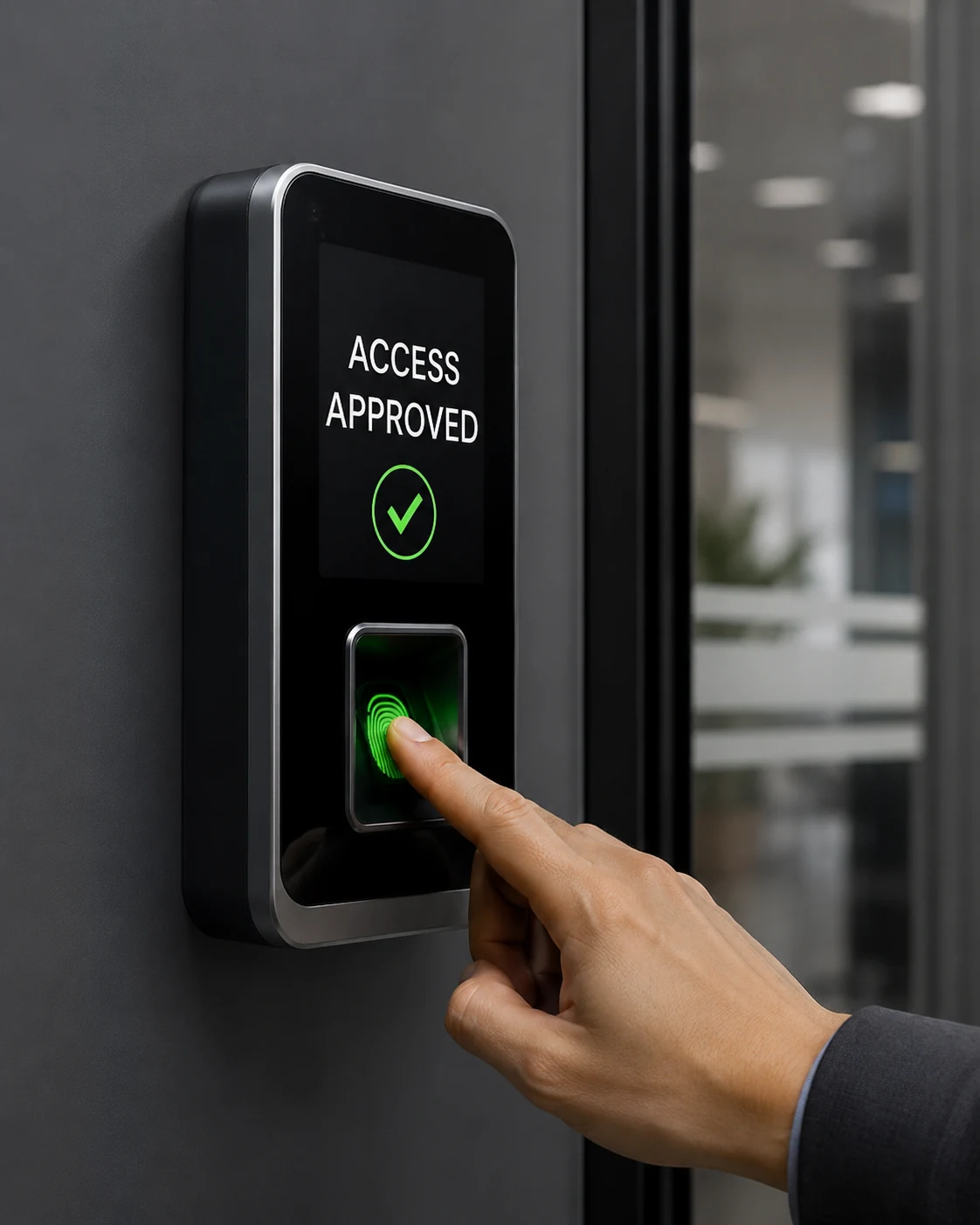
    Fingerprint readers are mature and compact, but dirty, wet or damaged fingers and hygiene concerns can affect performance and acceptance.

    Face recognition

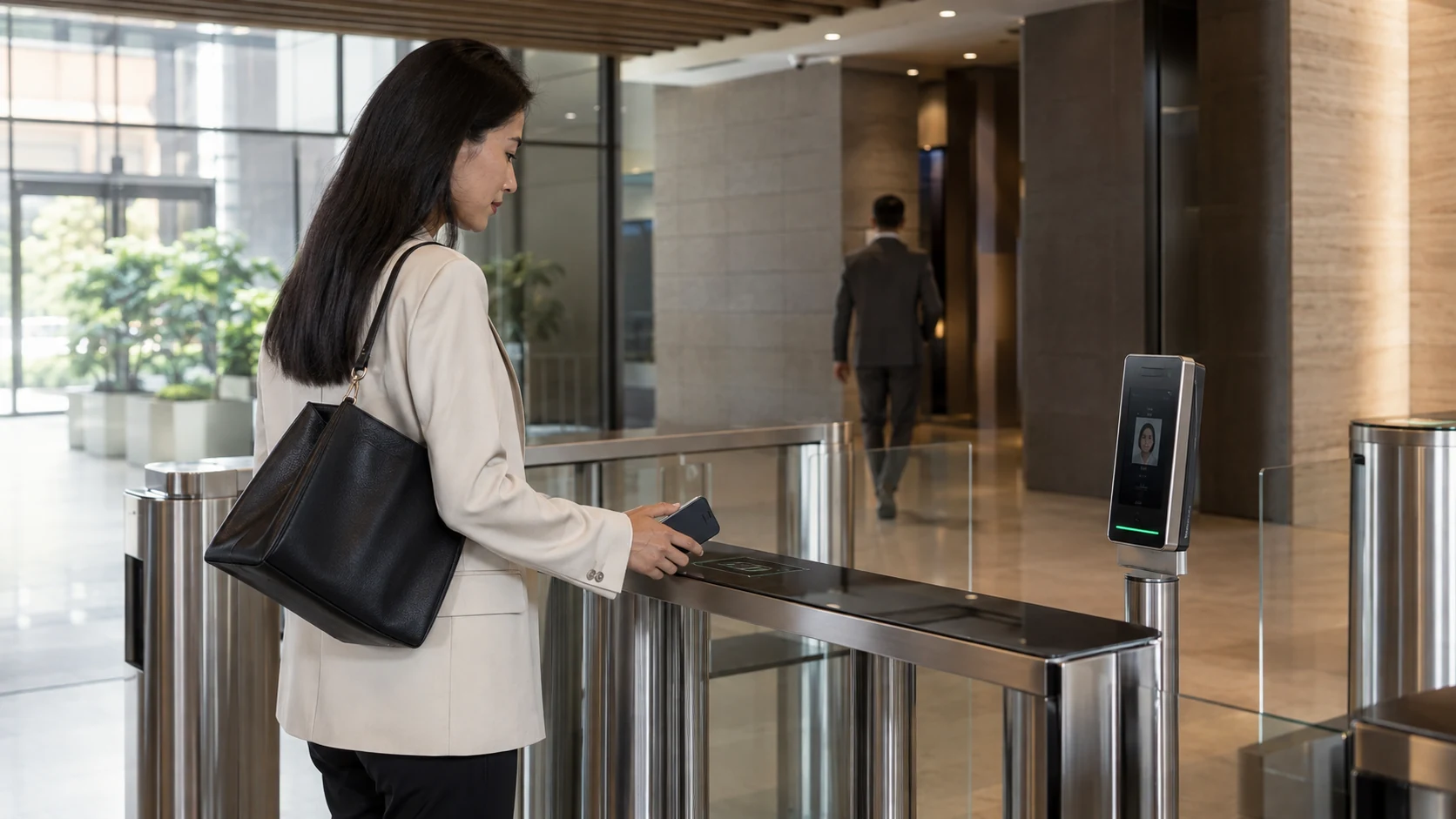
    Contactless facial authentication can be fast, but depends on camera position, lighting, image quality and presentation-attack defenses.

    Iris recognition

    Iris patterns can support high-assurance matching, while specialized hardware and user positioning may increase complexity and cost.

    Palm and palm-vein systems

    Palm systems may use surface geometry or subsurface vein patterns. Contactless options can balance strong authentication with high-throughput operation.

    Use more than one factor

    Combining a biometric with a secure card or mobile credential reduces reliance on a single modality and provides a recovery path when authentication fails.

    Privacy and governance

    Biometric templates require encryption, retention limits, access controls, a lawful processing basis and reliable deletion procedures. Unlike a password, a biometric characteristic cannot simply be replaced.

    Conclusion

    There is no universally best modality. Selection should reflect risk, environment, throughput, privacy obligations and user experience.

  • Mobile Credentials: Smartphones as Security Badges

    Mobile Credentials: Smartphones as Security Badges

    Why adoption is growing

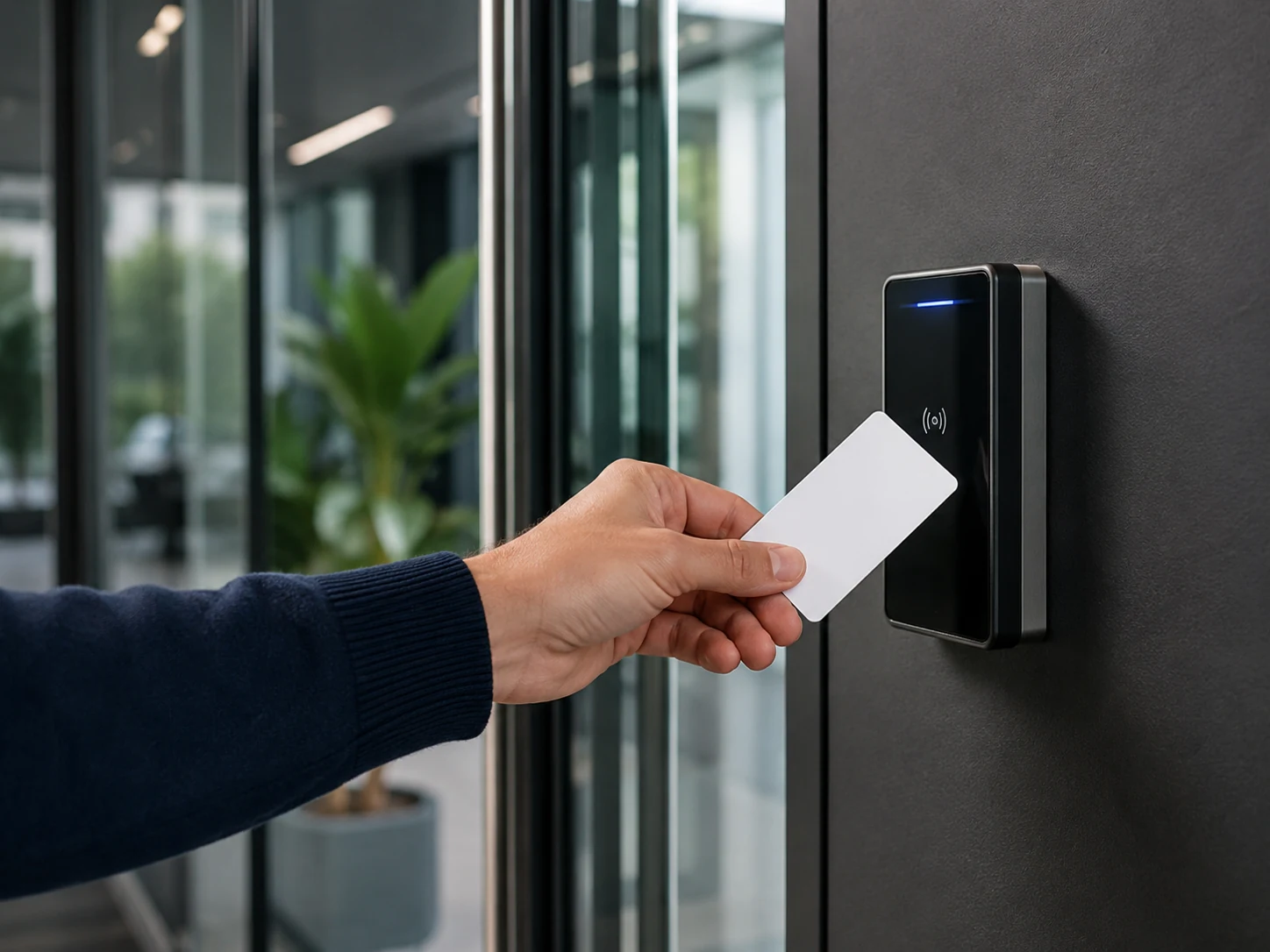
    Digital credentials can be issued remotely, updated without replacing a card and revoked quickly. This is valuable for distributed workforces, temporary personnel and multi-site organizations.

    Security advantages

    Credentials may be protected by device hardware and combined with biometric unlock, PIN protection or mobile-device management, adding controls unavailable to passive cards.

    User experience

    Performance depends on reader placement, phone models, battery state and whether NFC, Bluetooth Low Energy or wallet technology is used. Representative testing is essential.

    Operational considerations

    Organizations need processes for lost phones, replacement devices, offboarding and visitors. Mobile credentials can coexist with cards during a phased transition.

    Privacy and ownership

    Bring-your-own-device deployments need clear boundaries and data minimization so physical access does not become unnecessary tracking.

    Conclusion

    The value of mobile access extends beyond convenience to lifecycle management, flexible identity integration and stronger authentication choices.

  • IP-Based Access Control: Architecture and Advantages

    IP-Based Access Control: Architecture and Advantages

    How the architecture works

    Credential readers, controllers, locks and request-to-exit devices connect with management software through standard networks. Controllers should retain local permissions and decision-making when connectivity is interrupted.

    Why organizations choose IP

    IP architectures can simplify multi-site administration, health monitoring, firmware management and integration. Existing structured cabling may reduce installation complexity in suitable buildings.

    Cybersecurity responsibilities

    Controllers require encrypted communication, unique credentials, secure firmware, segmentation and controlled administrative access. A physically protected but poorly configured device can still create cyber risk.

    PoE and edge intelligence

    Power over Ethernet can deliver power and data over one cable. Edge-capable controllers can preserve permissions and event logs locally to support continuity during network outages.

    Where it fits

    Campuses, data centers, logistics sites and distributed enterprises often benefit, especially when IT and security teams already manage converged infrastructure.

    Conclusion

    IP access control changes deployment and governance, not just connectivity. Sound network design can make physical access more scalable, observable and interoperable.

  • OSDP vs Wiegand: Why the Security Industry Is Moving to OSDP

    OSDP vs Wiegand: Why the Security Industry Is Moving to OSDP

    Why Wiegand is under pressure

    Wiegand became common because it is simple, but it typically provides one-way credential transmission, no native encryption and limited visibility into reader health.

    What OSDP changes

    The Open Supervised Device Protocol supports bidirectional communication, device supervision, remote configuration and Secure Channel encryption between compatible readers and controllers.

    Operational advantages

    Controllers can monitor reader status and manage indicators, displays and configuration. These capabilities can reduce maintenance effort across campuses and large estates.

    Migration considerations

    A migration does not always require full replacement. Many modern readers and controllers support both interfaces, allowing phased upgrades after wiring, compatibility and Secure Channel support are verified.

    Conclusion

    Wiegand remains widespread, but OSDP offers a stronger and more manageable foundation for new access-control projects.

  • Is Traditional Access Control Becoming Obsolete?

    Is Traditional Access Control Becoming Obsolete?

    Why the old model is under pressure

    Legacy systems built around isolated doors, trusted networks and proprietary controllers are increasingly difficult to integrate with identity platforms, mobile credentials and modern cybersecurity controls. The shift is from door-centric security to policies that consider identity, role, device and context.

    Mobile credentials and digital identity

    NFC, Bluetooth Low Energy and wallet credentials can reduce physical card issuance and simplify remote provisioning and revocation. Device authentication can add protection beyond a passive badge.

    OSDP and secure reader communication

    Secure bidirectional reader protocols such as OSDP add encryption, supervision and remote configuration. New projects should treat secure reader-to-controller communication as a baseline requirement.

    Cloud, hybrid and integration

    Cloud management can simplify multi-site administration while resilient controllers continue making local decisions during outages. Access systems increasingly connect with video, visitor management, HR and security operations workflows.

    A practical modernization path

    Organizations should inventory readers, controllers, credentials, software and network dependencies, then address unsupported software, insecure communications and shared credentials before cosmetic upgrades.

    Conclusion

    Traditional access control is not obsolete, but isolated and weakly protected assumptions are. Gradual modernization can improve security and usability without replacing every door at once.