Category: Emerging Technologies

  • Google Announces General Availability of TPU v7 “Ironwood”

    Google Announces General Availability of TPU v7 “Ironwood”

    April 22, 2026 — Google announced general availability of its seventh-generation Tensor Processing Unit, Ironwood, at Google Cloud Next 2026, its first TPU designed specifically for inference workloads.

    What happened

    Google said Ironwood delivers roughly ten times the peak performance of its TPU v5p and about four times the per-chip performance of the prior TPU v6e (Trillium) generation, scaling up to superpods of thousands of chips. Anthropic disclosed a commitment to use up to one million TPU chips, including an initial 400,000 Ironwood units, extending its compute plans into 2027.

    Why it matters

    A major AI lab the size of Anthropic committing to Google’s custom silicon at this scale, alongside its existing Nvidia and Azure relationships, reinforces that frontier AI companies are deliberately spreading compute dependency across multiple hardware ecosystems rather than standardizing on one.

    Security and infrastructure impact

    For enterprise buyers, the diversification of underlying AI hardware across Nvidia, custom hyperscaler silicon like Ironwood, and vendor-specific chips such as OpenAI’s Titan means that performance, cost and security characteristics increasingly vary by which cloud and chip a given AI service actually runs on.


    Sources

    ← Back to Technology News

  • Anthropic Launches Project Glasswing to Share AI Vulnerability-Finding With Industry

    Anthropic Launches Project Glasswing to Share AI Vulnerability-Finding With Industry

    April 9, 2026 — Anthropic announced Project Glasswing, giving a group of major technology and finance companies early access to Claude Mythos Preview, a model it says can find and exploit software vulnerabilities at a level that rivals skilled human researchers.

    What happened

    Partners in the program included Amazon Web Services, Apple, Broadcom, Cisco, CrowdStrike, Google, JPMorganChase, the Linux Foundation, Microsoft, Nvidia and Palo Alto Networks. Anthropic said Mythos Preview had already identified thousands of high-severity vulnerabilities across every major operating system and web browser, and it kept the model unreleased to the public, citing misuse concerns.

    Why it matters

    An AI model capable of automated, human-competitive vulnerability discovery is a double-edged development: it can dramatically accelerate defensive patching, but the same capability could eventually be misused for offensive exploit development if it reaches less careful actors.

    Security and infrastructure impact

    Critical-infrastructure operators and software vendors should watch how programs like Glasswing scale, since AI-assisted vulnerability research at this level will likely change both the speed of patch cycles and the sophistication expected of future exploit attempts.

    Sources

    ← Back to Technology News

  • OpenAI Closes $122 Billion Funding Round at $852 Billion Valuation

    OpenAI Closes $122 Billion Funding Round at $852 Billion Valuation

    March 31, 2026 — OpenAI closed a funding round totaling $122 billion in committed capital at an $852 billion post-money valuation, expanding on the $110 billion round it had announced in February.

    What happened

    The round followed a $110 billion raise closed on February 27, 2026 at an $840 billion valuation, with SoftBank, Nvidia and Amazon among the largest contributors. OpenAI described the additional capital as funding for its next phase of AI infrastructure and research.

    Why it matters

    Funding rounds of this size, arriving within weeks of one another, show how capital-intensive frontier AI development has become and how deeply intertwined AI labs’ finances now are with their chip and cloud suppliers, several of whom are also investors.

    Security and infrastructure impact

    The scale of committed capital gives a sense of the infrastructure build-out still to come, reinforcing the case for security and safety planning to be built into new AI data-center projects from the design stage rather than retrofitted later.

    Sources

    ← Back to Technology News

  • Samsung Reported to Win Exclusive HBM4 Supply Deal for OpenAI’s Titan Chip

    Samsung Reported to Win Exclusive HBM4 Supply Deal for OpenAI’s Titan Chip

    March 2026 — Samsung was reported to have secured an exclusive deal to supply HBM4 memory for OpenAI’s first custom AI chip, internally known as Titan, with shipments planned for the second half of 2026.

    What happened

    Multiple industry outlets reported that Samsung agreed to supply up to roughly 800 million gigabits of 12-layer HBM4 memory for OpenAI’s Titan processor. Samsung separately showcased its next-generation HBM4E memory, aimed at Nvidia’s Vera Rubin platform, at Nvidia’s GTC 2026 conference in March.

    Why it matters

    Because neither company has issued a joint press release confirming exact volumes or terms, the specifics should be treated as reported rather than officially confirmed; the broader trend — OpenAI building its own silicon supply chain alongside its Broadcom and Nvidia partnerships — is well corroborated across sources.

    Security and infrastructure impact

    OpenAI’s parallel hardware partnerships with Broadcom, Samsung and Nvidia show a deliberate strategy of diversifying AI chip supply across multiple vendors, a resilience approach that mirrors what physical-security integrators increasingly recommend for critical camera, sensor and access-control hardware supply chains.

    Sources

    ← Back to Technology News

  • Big Tech AI Infrastructure Spending Is Estimated Near $650 Billion in 2026

    Big Tech AI Infrastructure Spending Is Estimated Near $650 Billion in 2026

    February 23, 2026 — Bridgewater analysis reported by Reuters estimated that Alphabet, Amazon, Meta and Microsoft could invest about $650 billion in AI-related infrastructure during 2026.

    What happened

    Reuters reported a Bridgewater Associates analysis estimating that Alphabet, Amazon, Meta and Microsoft would collectively invest about $650 billion to scale AI-related infrastructure in 2026. The number is an external estimate based on spending plans and should not be presented as a completed expenditure or a single pooled fund.

    Why it matters

    Even as an estimate, the scale shows that AI is driving a major build cycle for servers, networks, data centers and power. It also creates execution risk: capacity can arrive later than expected, demand can shift, and infrastructure decisions may outlast a particular model generation.

    Security and infrastructure impact

    Security planners should be included early in AI-facility programs. Physical protection, supply-chain assurance, identity, OT segmentation, fire protection and incident response need to scale with the compute environment and its concentration of operational value.

    Sources

    ← Back to Technology News

  • NVIDIA Expands AI-Powered Cybersecurity Partnerships for OT and ICS

    NVIDIA Expands AI-Powered Cybersecurity Partnerships for OT and ICS

    February 23, 2026 — NVIDIA detailed integrations with Akamai, Forescout, Palo Alto Networks, Siemens and Xage Security for operational technology and industrial control security.

    What happened

    NVIDIA announced that several security and industrial vendors were integrating its accelerated computing, AI and BlueField technology into OT and ICS security offerings. The company described architectures for visibility, policy enforcement and threat response at the infrastructure edge. Capabilities will vary by partner product and deployment, so the announcement should not be read as a single universally available solution.

    Why it matters

    OT environments often combine long-lived equipment, availability constraints and limited maintenance windows. Moving selected security functions closer to industrial workloads may improve visibility and response, but it also adds components that must be engineered and governed correctly.

    Security and infrastructure impact

    Operators should validate passive discovery, segmentation, fail-safe behavior, update procedures and the effect of automated containment on production. AI-generated detections must feed accountable incident workflows rather than making uncontrolled process decisions.

    Sources

    ← Back to Technology News

  • CLEAR and TSA Expand Biometric eGates to Oakland Airport

    CLEAR and TSA Expand Biometric eGates to Oakland Airport

    January 13, 2026 — CLEAR launched biometric eGates and on-site TSA PreCheck enrollment at Oakland San Francisco Bay Airport, extending a rollout that began at select airports in 2025.

    What happened

    The new eGates and enrollment services opened in Oakland’s Terminal 2, allowing CLEAR+ members to verify identity via facial biometrics and move through security screening faster while TSA continued to run identity vetting digitally in the background.

    Why it matters

    Coupling biometric eGate deployment with on-site PreCheck enrollment reflects a broader industry strategy of bundling convenience features to drive biometric program enrollment, rather than deploying the technology as a standalone security upgrade.

    Security and infrastructure impact

    As more airports combine biometric screening with enrollment services, airport operators and privacy regulators are likely to face continued questions about consent, opt-out options and data retention for travelers who are not CLEAR members but pass through shared checkpoint infrastructure.

    Sources

    ← Back to Technology News

  • Axis Communications Unveils Next-Generation Security Products at Intersec Dubai 2026

    Axis Communications Unveils Next-Generation Security Products at Intersec Dubai 2026

    January 12, 2026 — Axis Communications introduced its next generation of intelligent security products, built around its ARTPEC-9 system-on-chip, at Intersec Dubai 2026.

    What happened

    The ARTPEC-9 chip underpins improved AI-powered analytics, sharper detection of smaller objects, stronger on-device cybersecurity and support for the AV1 video-encoding standard, which reduces bandwidth and storage requirements compared with earlier codecs. Axis said additional ARTPEC-9-based cameras, including bispectral and thermal models, would reach distribution through 2026.

    Why it matters

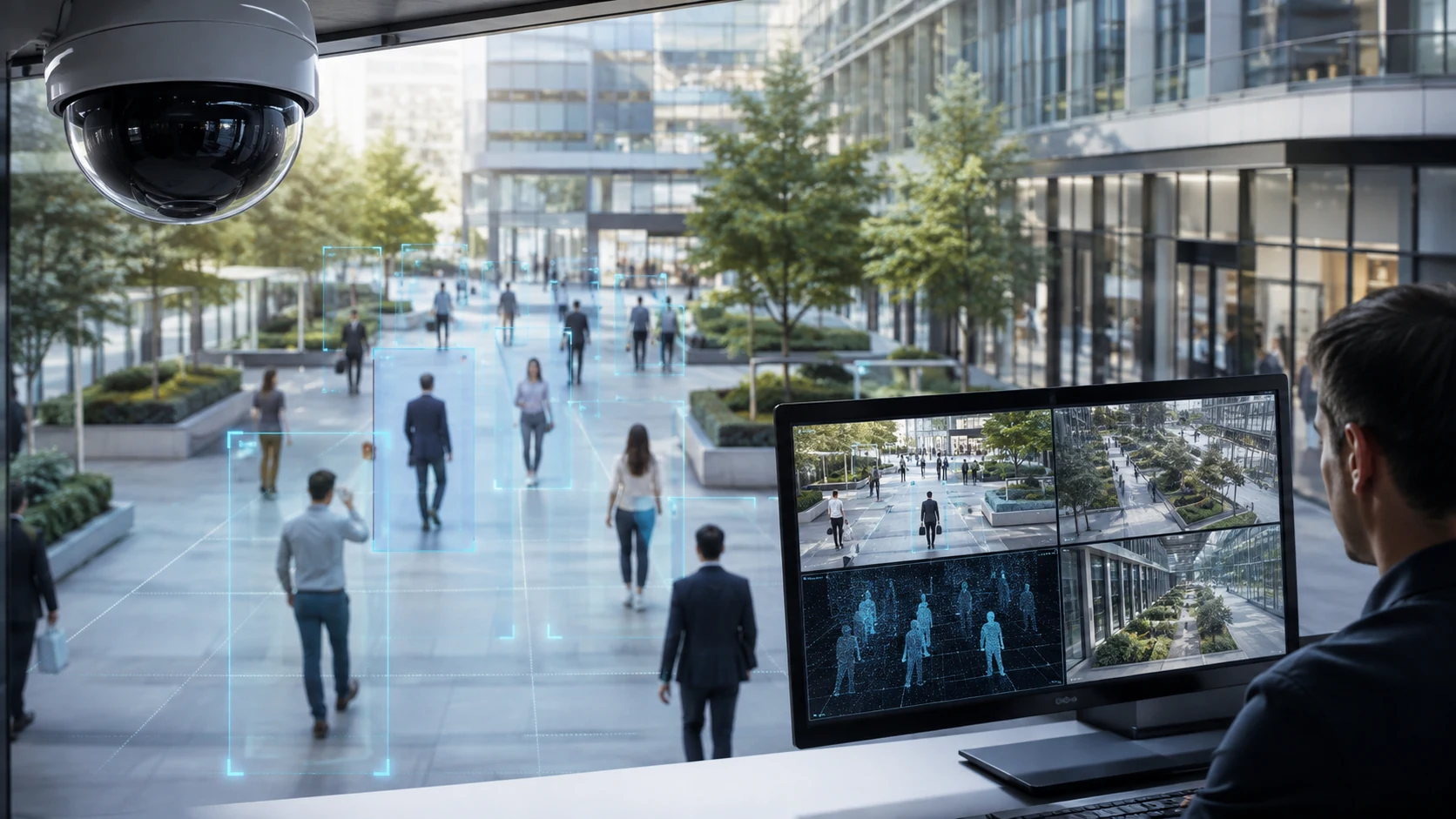
    Moving more AI analytics processing onto the camera chip itself, rather than a central server, reduces bandwidth needs and can improve response latency for detection-based alerts, a design direction most major video-surveillance manufacturers are now pursuing in parallel.

    Security and infrastructure impact

    As edge-AI camera chips become standard across major manufacturers, buyers evaluating video-surveillance systems should weigh on-device analytics accuracy and cybersecurity hardening as core purchasing criteria rather than treating them as premium add-ons.

    Sources

    ← Back to Technology News

  • Apple and Google Agree to Use Gemini for Future Apple Intelligence Features

    Apple and Google Agree to Use Gemini for Future Apple Intelligence Features

    January 12, 2026 — Apple and Google announced a multi-year collaboration under which future Apple Foundation Models will be based on Gemini models and cloud technology.

    What happened

    A joint statement from Apple and Google said the next generation of Apple Foundation Models would be based on Google Gemini models and cloud technology. The companies said the models would support future Apple Intelligence capabilities, including a more personalized Siri. The statement did not disclose commercial terms or detailed technical architecture.

    Why it matters

    The agreement is strategically important because it combines Apple’s device ecosystem and privacy architecture with Google’s frontier-model infrastructure. It also demonstrates that major consumer platforms may combine in-house engineering with external foundation models instead of building every layer independently.

    Security and infrastructure impact

    Security and enterprise teams should focus on the eventual data path, retention rules, regional availability and administrative controls rather than assumptions about branding. Until product documentation is available, claims about exact model size, pricing or deployment design should be treated as unverified.

    Sources

    ← Back to Technology News

  • AI and Video Analytics Move Deeper Into Physical Security Operations

    AI and Video Analytics Move Deeper Into Physical Security Operations

    2025–2026 — Industry research shows strong interest in AI, analytics and actionable insights, while buyers continue to prioritize cybersecurity, risk and privacy.

    What happened

    Axis Communications reported that 62 percent of surveyed partners identified AI and generative AI as a major industry trend, while end customers placed cybersecurity, risk and privacy ahead of AI. The research also points to hybrid edge-and-cloud architectures and the integration of video with other sensor data. These survey findings indicate priorities, not universal deployment or proven accuracy.

    Why it matters

    AI video functions are moving from isolated detection rules toward natural-language search, event triage and multi-sensor workflows. Their value depends on camera placement, training data, thresholds, operator procedures and measured performance in the actual environment.

    Security and infrastructure impact

    Security leaders should require documented use cases, privacy controls, auditability and false-alarm testing. AI should help operators reach better decisions; it should not turn uncertain classifications into automatic high-impact actions without appropriate review.

    Sources

    ← Back to Technology News