Category: Emerging Technologies

  • AI-Assisted Evacuation Planning: Dynamic Routes and Safer Decisions

    AI-Assisted Evacuation Planning: Dynamic Routes and Safer Decisions

    Conventional evacuation plans are usually static. They assume designated exits, predefined routes and a limited number of emergency scenarios. Real incidents are dynamic: a corridor may fill with smoke, an escalator may stop, a crowd may block an exit or a secondary hazard may make the shortest route unsafe.

    What AI can add AI-assisted evacuation systems can combine data from fire alarms, smoke control, cameras, access control, occupancy sensors and building management systems. The objective is to estimate which areas are becoming unsafe and which routes remain available.

    Dynamic routing A digital building model can represent doors, stairs, refuge areas and travel distances. When live sensor data is added, software can recalculate recommended routes. Digital signage, mobile applications or voice systems can then direct different groups toward different exits.

    Crowd awareness Video analytics and occupancy sensors can estimate congestion. A route that is physically open may still be a poor choice if too many people are moving toward it. Dynamic planning can balance flow and reduce bottlenecks.

    Human factors Automation must not create confusing or contradictory instructions. People under stress tend to follow familiar routes and other people. Messages therefore need to be simple, consistent and supported by visible cues.

    Limits of AI Evacuation software cannot know every physical condition with certainty. Sensor failure, network loss or incorrect occupancy data can affect recommendations. For this reason, dynamic routing should supplement—not replace—code-compliant exits, passive fire protection and trained emergency procedures.

    The most promising use of AI is decision support. By combining real-time information with a verified building model, operators can understand changing conditions faster and communicate safer options. The goal is not autonomous evacuation; it is better situational awareness during the minutes when conditions are changing fastest.
  • Predictive Maintenance for Fire Alarm Systems: From Faults to Early Warning

    Predictive Maintenance for Fire Alarm Systems: From Faults to Early Warning

    Fire alarm maintenance has traditionally been calendar-based: inspect devices, test circuits, replace components and respond to faults after they appear. Connected fire systems are changing that model by making condition data available continuously.

    What predictive maintenance means Predictive maintenance uses trends, diagnostics and operating history to estimate when a component may drift out of tolerance or fail. Instead of treating every detector, loop and power supply as identical, the system can highlight devices that show unusual contamination, communication errors, battery degradation or repeated intermittent faults.

    Useful data sources Modern panels and addressable devices can expose sensitivity levels, contamination values, loop quality, voltage conditions, communication statistics and event history. Environmental data can add context. A detector in a dusty production area will age differently from a detector in a clean office.

    AI is not the starting point Good predictive maintenance begins with clean data, accurate asset records and meaningful thresholds. Machine learning may help identify patterns across large estates, but it cannot compensate for poor commissioning or missing maintenance records.

    Benefits for multi-site operators For campuses, hospitals, data centers, retail chains and industrial estates, remote diagnostics can help prioritize technician visits. A maintenance team can arrive with the correct replacement parts and focus on the devices most likely to cause nuisance alarms or service disruption.

    Cybersecurity and governance Connected fire systems should not expose life-safety infrastructure unnecessarily. Remote access, cloud analytics and integration platforms require network segmentation, authentication, logging and clear responsibility between fire, IT and facilities teams.

    Predictive maintenance does not replace statutory inspection and testing. It adds another layer of intelligence. The long-term value is a shift from reacting to faults toward understanding system health continuously, reducing nuisance alarms, improving availability and making maintenance resources more efficient.

  • The Future of Perimeter Security: Sensor Fusion and AI

    The Future of Perimeter Security: Sensor Fusion and AI

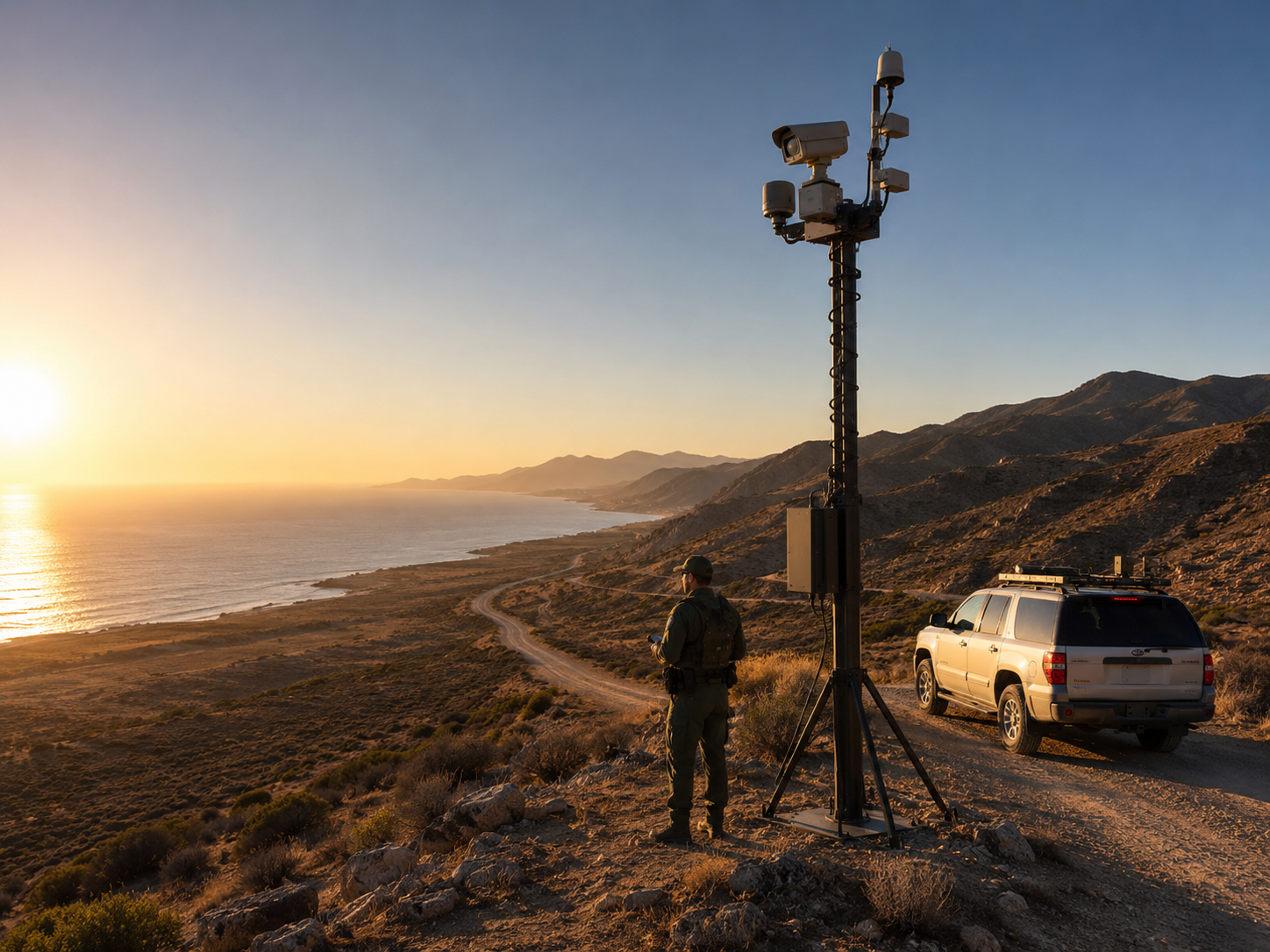
    Perimeter security is moving away from single-sensor thinking. Traditional designs often depended on one primary detection technology, such as fence vibration sensors or video motion detection. Modern systems increasingly combine radar, thermal cameras, visible cameras, fiber-optic sensing, access data and AI analytics to create a richer picture of what is happening around a site.

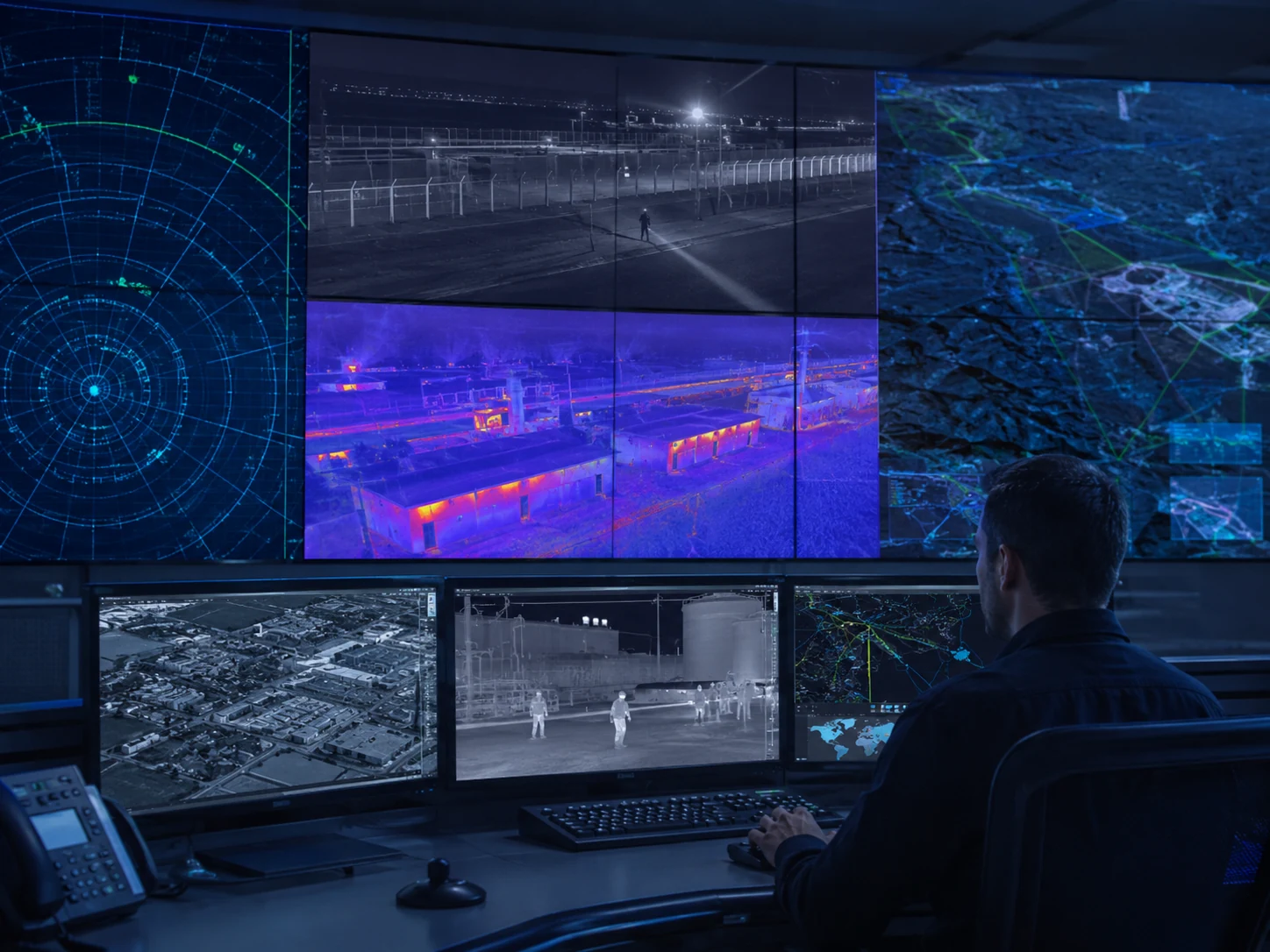
    Sensor fusion is the key change. A fence vibration may indicate an event, but radar can reveal movement beyond the fence, thermal imaging can detect a person at night and a PTZ camera can provide visual confirmation. When these inputs are correlated automatically, the operator receives a higher-confidence incident instead of several unrelated alarms.

    AI is improving classification rather than simply adding more alarms. Models can distinguish people, vehicles and animals, analyze direction and speed, and prioritize activity that violates site rules. The practical benefit is lower operator workload and fewer nuisance events.

    Fiber-optic sensing is also becoming more important, especially across long pipelines, rail corridors, borders and large industrial perimeters. Distributed sensing can turn kilometers of fiber into continuous detection zones and complement point sensors or cameras.

    Edge computing will further change architecture. More classification can occur near the sensor, reducing bandwidth and enabling faster local decisions. Cloud platforms will remain valuable for fleet management, analytics updates and multi-site visibility.

    The future perimeter will therefore behave less like a collection of independent devices and more like a coordinated detection network. The goal is not maximum sensor count. It is confidence: detect early, classify accurately, verify quickly and present operators with the context required to act.

  • Security Robots: Where Autonomous Patrol Actually Makes Sense

    Security Robots: Where Autonomous Patrol Actually Makes Sense

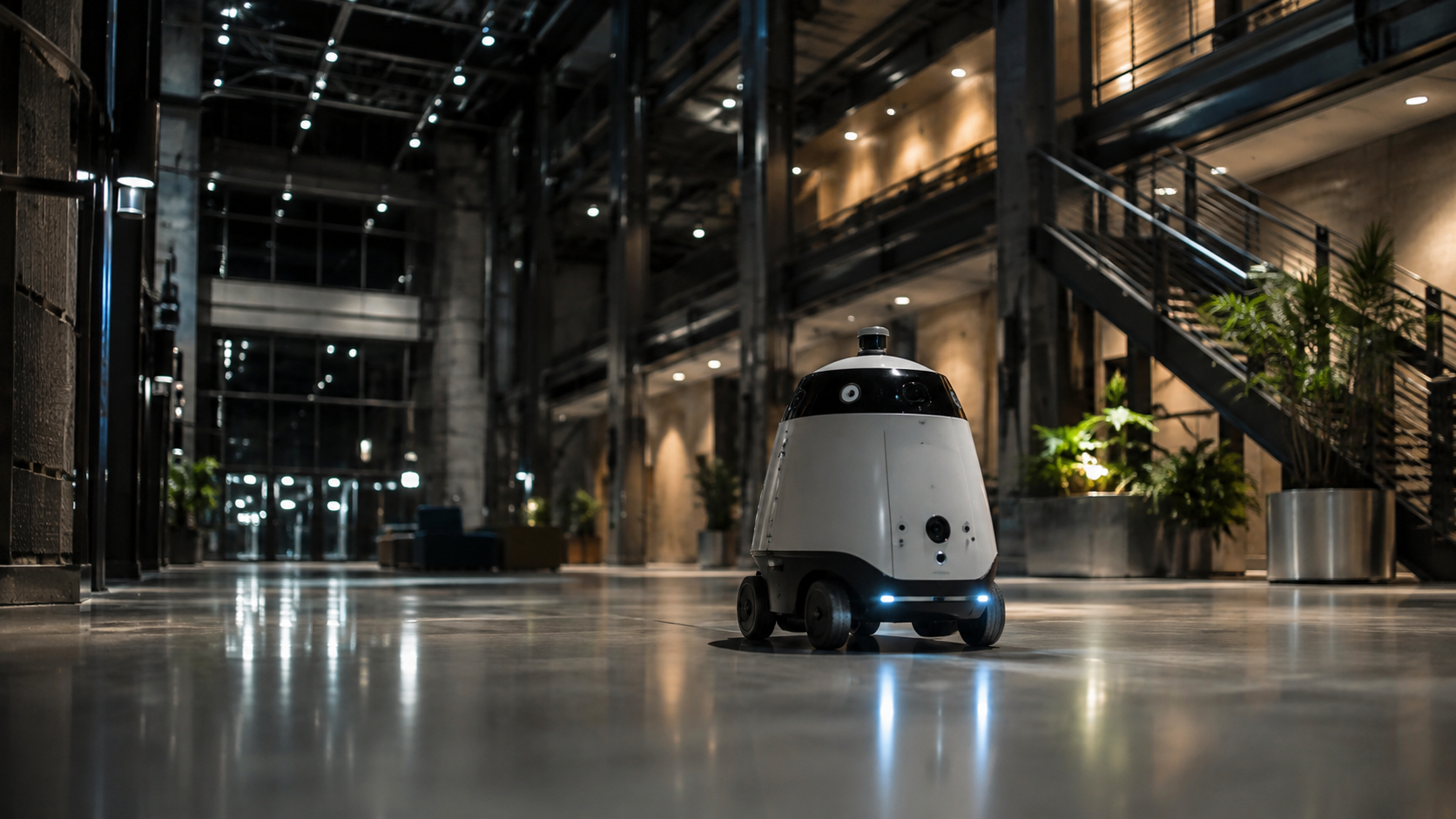
    Autonomous security robots attract attention because they make physical security visible, but their real value depends on operational fit. A robot is not automatically useful simply because it can patrol. The strongest deployments are those in which mobility solves a specific coverage, inspection or staffing problem.

    Robots can carry visible-light cameras, thermal imaging, microphones, environmental sensors, LiDAR and two-way communications. They can follow scheduled patrol routes, stop at checkpoints, record evidence and alert operators when analytics detect an anomaly.

    Large warehouses, data-center campuses, parking facilities, industrial plants and logistics yards are among the environments where robotic patrol can make sense. These sites often have long repetitive routes, predictable surfaces and many assets that benefit from frequent inspection.

    The technology is less convincing in cluttered public environments, complex stairways, heavy pedestrian traffic or areas with constantly changing obstacles. Weather, ramps, curbs, doors and elevators can also limit mobility.

    Robots should not be evaluated primarily by appearance. Buyers should examine uptime, docking reliability, navigation accuracy, battery endurance, sensor quality, cyber security, remote takeover, API integration and how frequently a human must intervene.

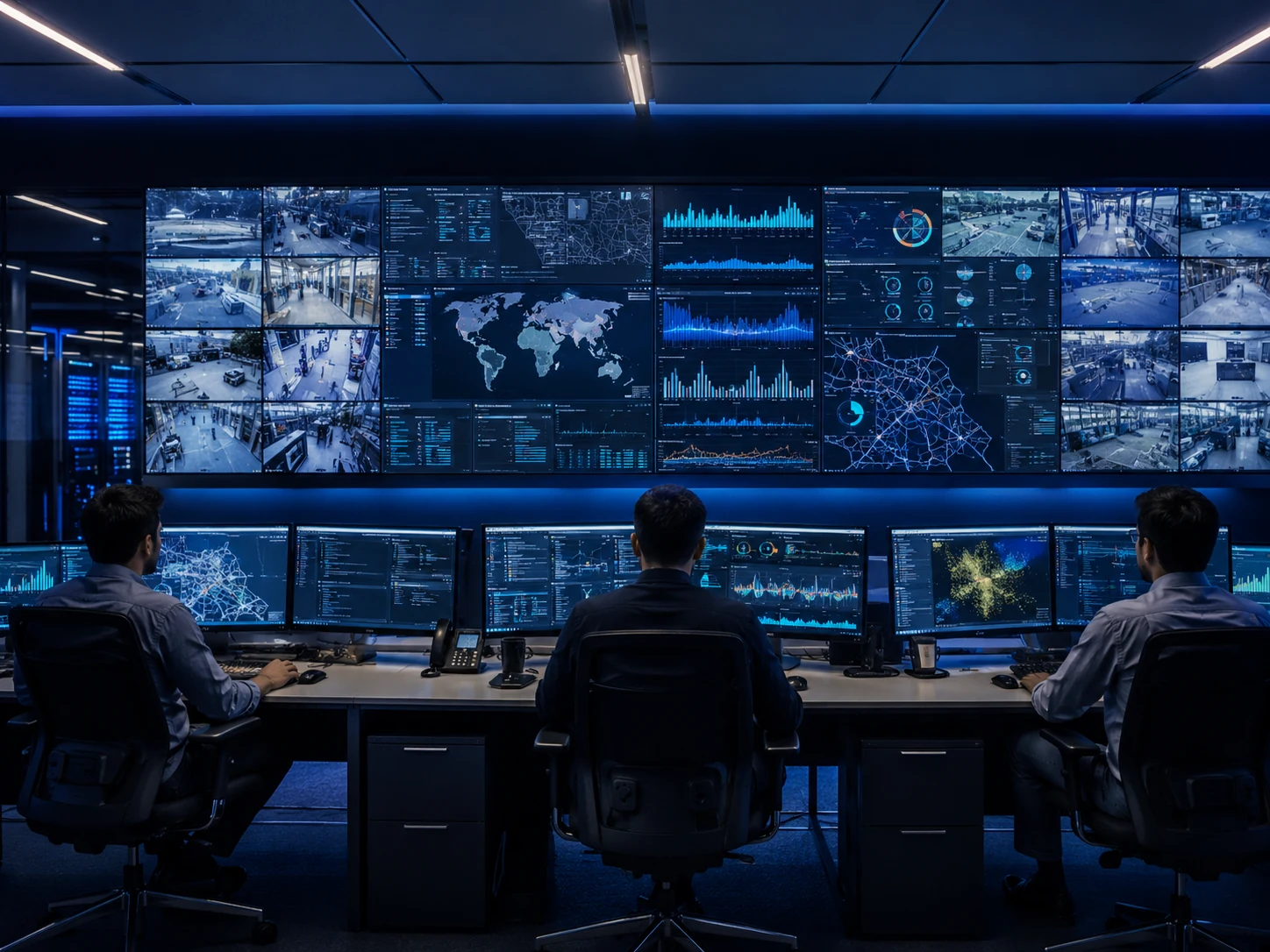
    The best architecture connects robotic patrol with existing security systems. A robot can be dispatched to a door alarm, thermal anomaly or perimeter event, then stream video into the command center. This turns the robot into a mobile verification platform rather than a standalone novelty.

    Autonomous robots are unlikely to replace security personnel broadly. They can, however, take over repetitive observation tasks, extend sensor coverage and give operators a mobile viewpoint when deployed in environments that match their capabilities.

  • Autonomous Drones for Perimeter Patrol

    Autonomous Drones for Perimeter Patrol

    Autonomous drones are moving from experimental security projects toward practical perimeter-monitoring tools. Instead of being manually flown for every mission, an autonomous system can launch from a docking station, follow a predefined route, inspect points of interest and return for charging with limited operator involvement.

    The value is not that drones replace fixed cameras or guards. Their value is mobility. A drone can investigate an alarm, inspect a remote fence section, view the far side of a building or patrol terrain that would require many fixed camera positions.

    Modern systems combine navigation, obstacle avoidance, geofencing, video analytics and fleet-management software. Thermal payloads can improve night operations, while high-resolution visible cameras provide identification and documentation.

    Autonomy introduces new design requirements. The drone must operate safely around structures, power lines, people and changing weather. Communications loss, GPS degradation, emergency landing and cyber security must all be addressed. Docking stations also become critical infrastructure because they provide charging, data transfer and environmental protection.

    Security workflows are most effective when drone missions are triggered by other sensors. A fence alarm, radar track or fiber-optic detection event can automatically create a task for a drone to inspect the location. The resulting video can then be displayed in the same command platform used for fixed cameras.

    Regulation remains a major factor. Beyond-visual-line-of-sight operations, autonomous missions and flights near populated or restricted areas may require specific approvals. Organizations should treat aviation compliance as part of system design from the beginning.

    Autonomous drones are best understood as mobile sensors within a layered perimeter system. Their strongest role is verification, inspection and rapid situational awareness across large or difficult sites.

  • Tethered Drones for Industrial Site Monitoring

    Tethered Drones for Industrial Site Monitoring

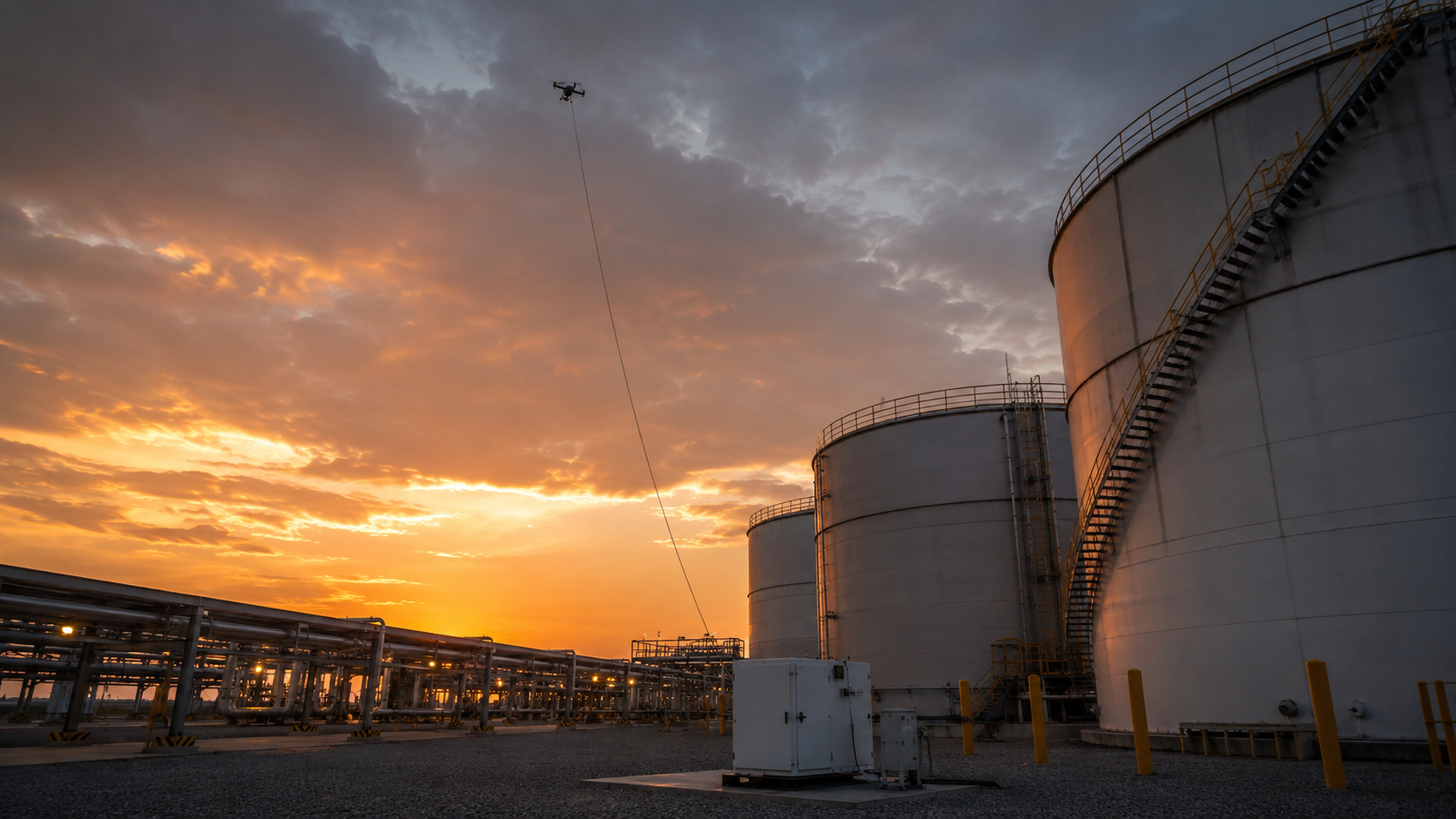
    Tethered drones occupy an unusual position between fixed surveillance towers and free-flying unmanned aircraft. Connected to the ground by a cable that can provide power and communications, a tethered drone can remain airborne for extended periods while carrying cameras, thermal sensors, communications equipment or other payloads.

    For industrial security, the main advantage is persistent elevated observation. A drone positioned tens of meters above a refinery, port, mine, pipeline construction zone or temporary event can see over fences, buildings and terrain that would block ground cameras. Because power is supplied from the ground, endurance can be measured in hours or days rather than the battery life of a conventional drone.

    The tether can also provide a secure high-bandwidth data path, reducing dependence on wireless links. This is useful where video quality, cyber security or RF congestion is a concern.

    Tethered systems still have operational limits. Wind, lightning, aviation restrictions, tether management and safe operating areas must be considered. They are not suitable everywhere, and the aircraft remains a visible physical asset that requires maintenance and procedures.

    Their strongest use case is usually temporary or semi-permanent overwatch: construction projects, incident response, large industrial shutdowns, border posts, temporary perimeter expansion or remote facilities where installing a tower would take longer.

    Tethered drones should be integrated with the wider security system rather than treated as standalone cameras in the sky. Video can feed the VMS, analytics can monitor defined zones and command-center operators can correlate aerial views with ground sensors.

    As industrial sites seek flexible surveillance coverage, tethered drones provide a middle ground between permanent infrastructure and mobile airborne patrol.

  • Digital Twins for Physical Security Operations

    Digital Twins for Physical Security Operations

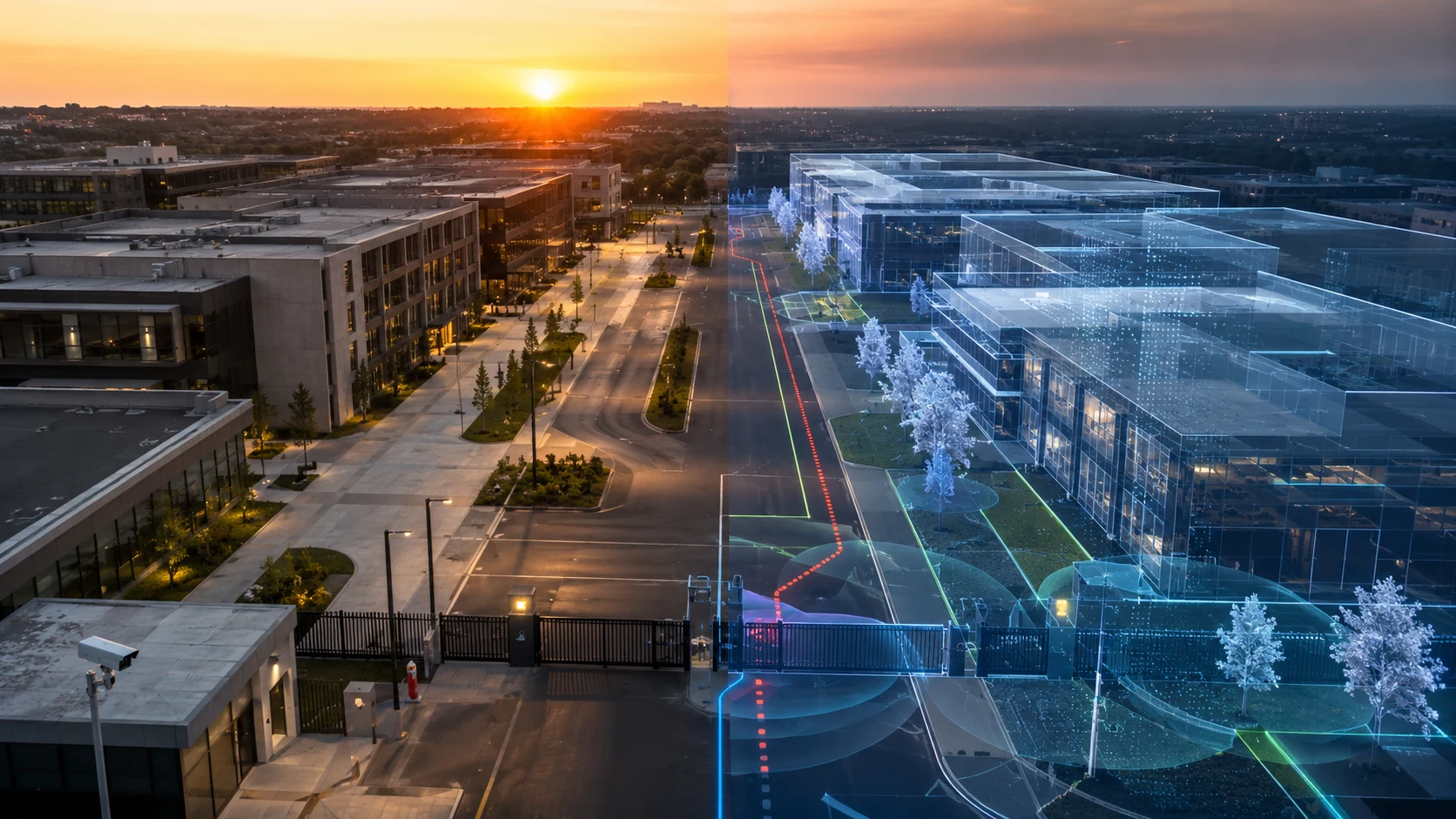
    Digital twins are increasingly being used to create a live virtual representation of buildings, campuses and critical infrastructure. In physical security, the value of a digital twin is not the 3D model itself. It is the ability to connect that model to real devices, alarms, identities and operational data.

    How the Technology Works

    A security digital twin can display cameras, doors, intrusion zones, fire devices, intercoms, sensors and critical assets in their actual spatial context. When an alarm occurs, the operator sees where it is happening and what systems are nearby instead of interpreting a device name from a list.

    The concept becomes more powerful when live data is added. Door status, camera health, occupancy, environmental conditions and maintenance state can all be visualized on the same model. This turns a static design file into an operational interface.

    Operational Considerations

    Incident response is an obvious use case. A perimeter alarm can highlight the affected zone, show the nearest cameras, display access routes and identify nearby personnel. During an evacuation, the model can combine fire information, occupancy data and route status to support command decisions.

    Digital twins can also help before an incident. Security planners can simulate camera coverage, evaluate blind spots, review guard routes and test the effect of new barriers or access points. The model becomes a shared environment for design, operations and training.

    Integration is the difficult part. Buildings often contain systems from many vendors using different protocols and naming conventions. A digital twin is only as useful as the data connected to it. Device identifiers, floor plans and asset records must be maintained as the facility changes.

    Deployment and Risk

    Performance and cybersecurity must also be considered. A detailed 3D environment can require significant computing resources, and connections to operational systems create a sensitive integration layer. Access to the twin should be role-based and audited.

    For large infrastructure, geographic information systems and digital twins are beginning to overlap. A single operational model may include buildings, perimeter sensors, pipelines, fiber sensing, rail corridors and remote substations.

    Conclusion

    Digital twins will not replace VMS, access control or command-and-control software. They are more likely to become a spatial interface above those systems. When designed well, they reduce cognitive load by showing operators not just what alarmed, but where it is, what surrounds it and what actions are available.

  • Object Detection vs Object Classification vs Tracking

    Object Detection vs Object Classification vs Tracking

    Object detection, classification and tracking are often grouped together under the label “AI video analytics,” but they solve different problems. Understanding the distinction helps security teams specify systems and interpret performance correctly.

    How the Technology Works

    Object detection answers a basic question: where is an object in the image? A model identifies regions that are likely to contain a person, vehicle, bag or other trained object. The output is commonly represented as a bounding box with a confidence score.

    Classification answers another question: what is the object? Classification may distinguish a person from a car, or a truck from a motorcycle. In some systems, classification is performed on the entire frame; in surveillance, it is more often applied to objects that have already been detected.

    Operational Considerations

    Tracking connects detections across time. The software estimates that the person detected in one frame is the same person appearing in the next. Tracking is essential for functions such as direction analysis, loitering, dwell time, virtual tripwires and movement paths.

    A fourth concept, re-identification, attempts to determine whether an object seen by one camera is the same object seen by another. This is more difficult because viewpoint, lighting, clothing visibility and image quality can change significantly between cameras.

    Each stage introduces errors. If detection misses an object, classification and tracking cannot recover it. If tracking loses a target during occlusion, the system may create a new track ID when the target reappears. Security applications therefore need end-to-end testing rather than relying on a single advertised accuracy figure.

    Deployment and Risk

    Scene design matters as much as model quality. A distant person occupying only a few pixels cannot be classified reliably. Fast-moving vehicles may blur. Crowds create occlusion. Integrators should define minimum target sizes, lighting requirements and camera angles for the intended analytics.

    Metadata generated by these processes has become extremely valuable. A VMS can search by object class, color, direction or time without replaying every video stream. The result is faster investigation and more efficient event management.

    Conclusion

    For buyers, the key is to specify the outcome rather than a fashionable AI term. If the goal is to alert when vehicles stop in a restricted lane, detection and tracking may be enough. If the goal is to distinguish delivery trucks from passenger cars, classification becomes important. Matching the analytics pipeline to the operational question produces more reliable systems.

  • Predictive Security Analytics: Can Systems Detect Risk Before an Incident?

    Predictive Security Analytics: Can Systems Detect Risk Before an Incident?

    Predictive security analytics aims to identify elevated risk before a conventional alarm occurs. The idea is attractive: instead of reacting to an intrusion, theft or safety event, a system would detect patterns that suggest conditions are becoming abnormal.

    How the Technology Works

    In practice, predictive analytics is most credible when it focuses on systems and environments rather than human intent. A rise in repeated access denials, a failing perimeter sensor, unusual vehicle dwell times, degraded camera health or increasing temperature around critical equipment can all be early indicators of operational risk.

    The technology works by establishing baselines. A platform learns or is configured to understand normal activity by time, location, device and user group. It then highlights deviations. The value comes from combining many weak signals that would not be meaningful on their own.

    Operational Considerations

    For example, a warehouse may normally receive vehicles at specific gates during defined hours. A vehicle arriving at an unusual time, remaining near a restricted loading zone and coinciding with repeated access failures could justify operator attention even if no single event is severe.

    The danger is overclaiming. Predicting criminal behavior from appearance, emotion or loosely defined “suspicious” activity is scientifically and ethically problematic. Organizations should avoid systems that claim certainty about human intent without strong evidence and transparent validation.

    Good predictive security analytics is therefore closer to anomaly detection and risk scoring. It helps prioritize attention. A score should lead to review, not automatically label a person or event as malicious.

    Deployment and Risk

    Data integration is a major requirement. Video metadata, access events, intrusion alarms, maintenance data, environmental sensors and operational schedules become more useful when they share timestamps and location identifiers. Without normalized data, predictive models may generate noise rather than insight.

    Measurement is also essential. A deployment should define what constitutes a useful prediction, how early the warning must occur and how many false positives operators can tolerate. Success should be measured against real operational outcomes, not only model accuracy in a laboratory dataset.

    Conclusion

    Predictive analytics will become an important layer in enterprise security, but its strongest role is decision support. The most valuable systems will identify meaningful deviations early, explain the evidence behind the alert and allow experienced operators to decide what action is appropriate.

  • AI Video Analytics in 2026: What Actually Works

    AI Video Analytics in 2026: What Actually Works

    AI video analytics has moved from a specialist add-on to a core layer of modern physical security. The useful question is where it performs reliably enough to improve operations and reduce investigation time.

    Mature use cases

    Person and vehicle detection, line crossing, loitering, occupancy, queue analysis and basic object classification can be effective when scenes and objectives are clearly defined.

    Claims that require caution

    Vague predictions of suspicious intent or complex behavior are context dependent. These systems should support operators rather than act as unquestionable decision makers.

    Architecture choices

    Edge analytics can reduce bandwidth, server analytics can use larger models, and cloud analytics can simplify scaling. Enterprises often combine all three.

    How to evaluate performance

    Accuracy is not one universal number. Testing should examine precision, recall, nuisance alarms and performance across day, night, rain, glare, occlusion and seasonal change.

    Workflow, privacy and governance

    Detection is most useful when connected to maps, cameras, access status and response procedures. Organizations should also document data processing, retention and whether biometric identification is involved.

    Conclusion

    AI delivers the most value when it solves a narrow, measurable operational problem and is verified under representative site conditions.