
Tag: AI Video Analytics

  • AI-Based Perimeter Analytics: How to Reduce False Alarms

    AI-Based Perimeter Analytics: How to Reduce False Alarms

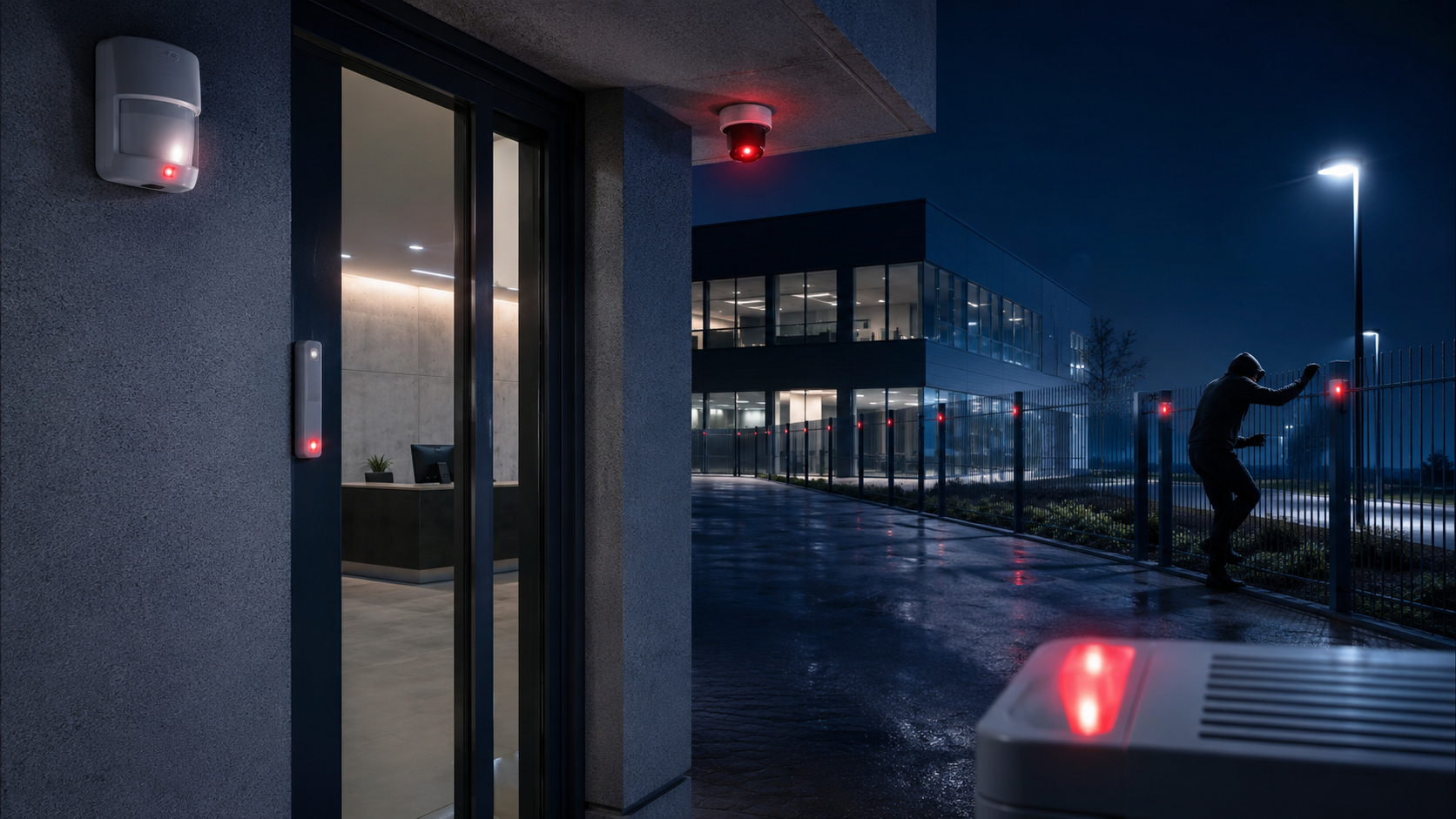
    Perimeter systems are often judged by detection range, but alarm quality is just as important. A sensor that detects everything can overwhelm operators with animals, vegetation, weather effects and routine activity. AI-based analytics are increasingly used to separate relevant events from background noise.

    Why false alarms happen

    Outdoor environments change constantly. Shadows move, rain crosses the scene, trees sway, insects pass near cameras and wildlife enters protected zones. Traditional motion detection can interpret many of these changes as security events.

    Object classification

    Modern analytics can distinguish people, vehicles and other object classes. Instead of alarming whenever pixels change, the system can apply rules only when a relevant object enters a defined zone, crosses a virtual line or remains in an area for a specified time.

    Context matters

    Classification alone is not enough. A person walking on a public path may be normal while the same person inside a restricted substation is significant. Good perimeter analytics combine object type with location, direction, speed, dwell time and schedule.

    Sensor fusion

    AI becomes more useful when it receives data from several sensors. Radar may establish that a target is moving toward the perimeter, a thermal camera may detect a warm object and video analytics may classify it as a person. Combining these signals can increase confidence and reduce single-sensor nuisance alarms.

    Training and tuning

    Analytics should be commissioned for the actual site. Camera angle, target size, vegetation, weather and seasonal changes affect performance. Thresholds that work during installation may need refinement after weeks of real operation.

    Human verification remains important

    AI should prioritize and enrich alarms rather than automatically treating every classification as fact. Operators need access to live and recorded video, sensor history and clear alarm context.

    Conclusion

    The goal of AI perimeter analytics is not to eliminate every false alarm. It is to improve the signal-to-noise ratio so that operators can focus on events that deserve attention. Strong results come from good sensor placement, site-specific tuning, multiple sources of evidence and disciplined alarm workflows.

  • Object Detection vs Object Classification vs Tracking

    Object Detection vs Object Classification vs Tracking

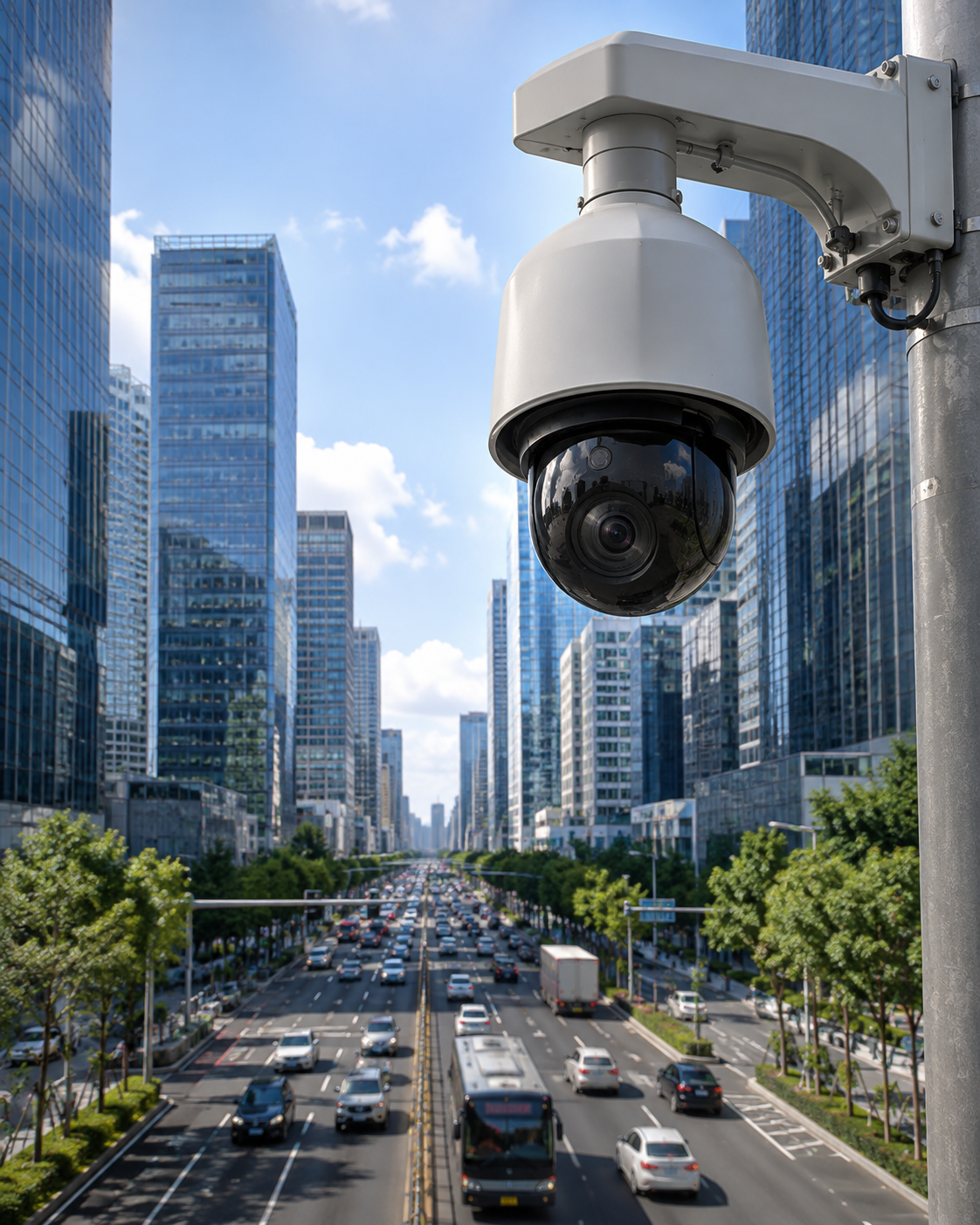
    Object detection, classification and tracking are often grouped together under the label “AI video analytics,” but they solve different problems. Understanding the distinction helps security teams specify systems and interpret performance correctly.

    How the Technology Works

    Object detection answers a basic question: where is an object in the image? A model identifies regions that are likely to contain a person, vehicle, bag or other trained object. The output is commonly represented as a bounding box with a confidence score.

    Classification answers another question: what is the object? Classification may distinguish a person from a car, or a truck from a motorcycle. In some systems, classification is performed on the entire frame; in surveillance, it is more often applied to objects that have already been detected.

    Operational Considerations

    Tracking connects detections across time. The software estimates that the person detected in one frame is the same person appearing in the next. Tracking is essential for functions such as direction analysis, loitering, dwell time, virtual tripwires and movement paths.

    A fourth concept, re-identification, attempts to determine whether an object seen by one camera is the same object seen by another. This is more difficult because viewpoint, lighting, clothing visibility and image quality can change significantly between cameras.

    Each stage introduces errors. If detection misses an object, classification and tracking cannot recover it. If tracking loses a target during occlusion, the system may create a new track ID when the target reappears. Security applications therefore need end-to-end testing rather than relying on a single advertised accuracy figure.

    Deployment and Risk

    Scene design matters as much as model quality. A distant person occupying only a few pixels cannot be classified reliably. Fast-moving vehicles may blur. Crowds create occlusion. Integrators should define minimum target sizes, lighting requirements and camera angles for the intended analytics.

    Metadata generated by these processes has become extremely valuable. A VMS can search by object class, color, direction or time without replaying every video stream. The result is faster investigation and more efficient event management.

    Conclusion

    For buyers, the key is to specify the outcome rather than a fashionable AI term. If the goal is to alert when vehicles stop in a restricted lane, detection and tracking may be enough. If the goal is to distinguish delivery trucks from passenger cars, classification becomes important. Matching the analytics pipeline to the operational question produces more reliable systems.

  • AI Video Analytics in 2026: What Actually Works

    AI Video Analytics in 2026: What Actually Works

    AI video analytics has moved from a specialist add-on to a core layer of modern physical security. The useful question is where it performs reliably enough to improve operations and reduce investigation time.

    Mature use cases

    Person and vehicle detection, line crossing, loitering, occupancy, queue analysis and basic object classification can be effective when scenes and objectives are clearly defined.

    Claims that require caution

    Vague predictions of suspicious intent or complex behavior are context dependent. These systems should support operators rather than act as unquestionable decision makers.

    Architecture choices

    Edge analytics can reduce bandwidth, server analytics can use larger models, and cloud analytics can simplify scaling. Enterprises often combine all three.

    How to evaluate performance

    Accuracy is not one universal number. Testing should examine precision, recall, nuisance alarms and performance across day, night, rain, glare, occlusion and seasonal change.

    Workflow, privacy and governance

    Detection is most useful when connected to maps, cameras, access status and response procedures. Organizations should also document data processing, retention and whether biometric identification is involved.

    Conclusion

    AI delivers the most value when it solves a narrow, measurable operational problem and is verified under representative site conditions.