Tag: airport security

  • Third Drone and Suspected Explosives Found in Widening Leipzig Airport Sabotage Probe

    Third Drone and Suspected Explosives Found in Widening Leipzig Airport Sabotage Probe

    German investigators have found a third drone and a substance suspected to be military-grade explosive near Leipzig/Halle Airport, widening the investigation into an attempted attack earlier this month, German broadcasters NDR and WDR and the newspaper Sueddeutsche Zeitung reported on August 25, 2026.

    What was found

    According to the reports, the drone was recovered on August 14, ten days after the original incident, in an area west of the airport. Investigators also found roughly 50 grams (1.8 ounces) of a substance they suspect is hexogen, a military explosive, along with drone-control equipment reportedly taped to a tree in Kursdorf near the airport and a suspected blast site nearby.

    The original incident

    The case began on August 4, 2026, when an airport employee found a drone carrying an explosive device with a faulty detonator near a Ukrainian Antonov cargo aircraft in the airport’s secure cargo operations area. The discovery forced a temporary shutdown of the airport’s southern runway. German Interior Minister Alexander Dobrindt described the incident as representing a “new quality of danger” and a hybrid-style attack.

    Why it matters for aviation security

    Leipzig/Halle is a major European cargo hub used by Ukrainian Antonov aircraft, NATO and German military logistics, and DHL. The fact that an armed drone reached a secure airside cargo area — and that investigators are still recovering additional devices and evidence weeks later — underscores the difficulty of defending sensitive perimeter and airside zones against small, low-cost unmanned aircraft. Chancellor Friedrich Merz has said the government intends to formally attribute the attack; German security sources have pointed to possible Russian intelligence involvement, which Moscow denies.

    Sources

    More coverage like this is available on Technology News.
  • Airport Security Architecture: From Perimeter to Terminal

    Airport Security Architecture: From Perimeter to Terminal

    Airports combine public spaces, restricted operational zones, aircraft movement areas, baggage systems, cargo facilities and critical communications infrastructure. Effective airport security therefore depends on layered architecture rather than a single technology.

    The Outer Perimeter

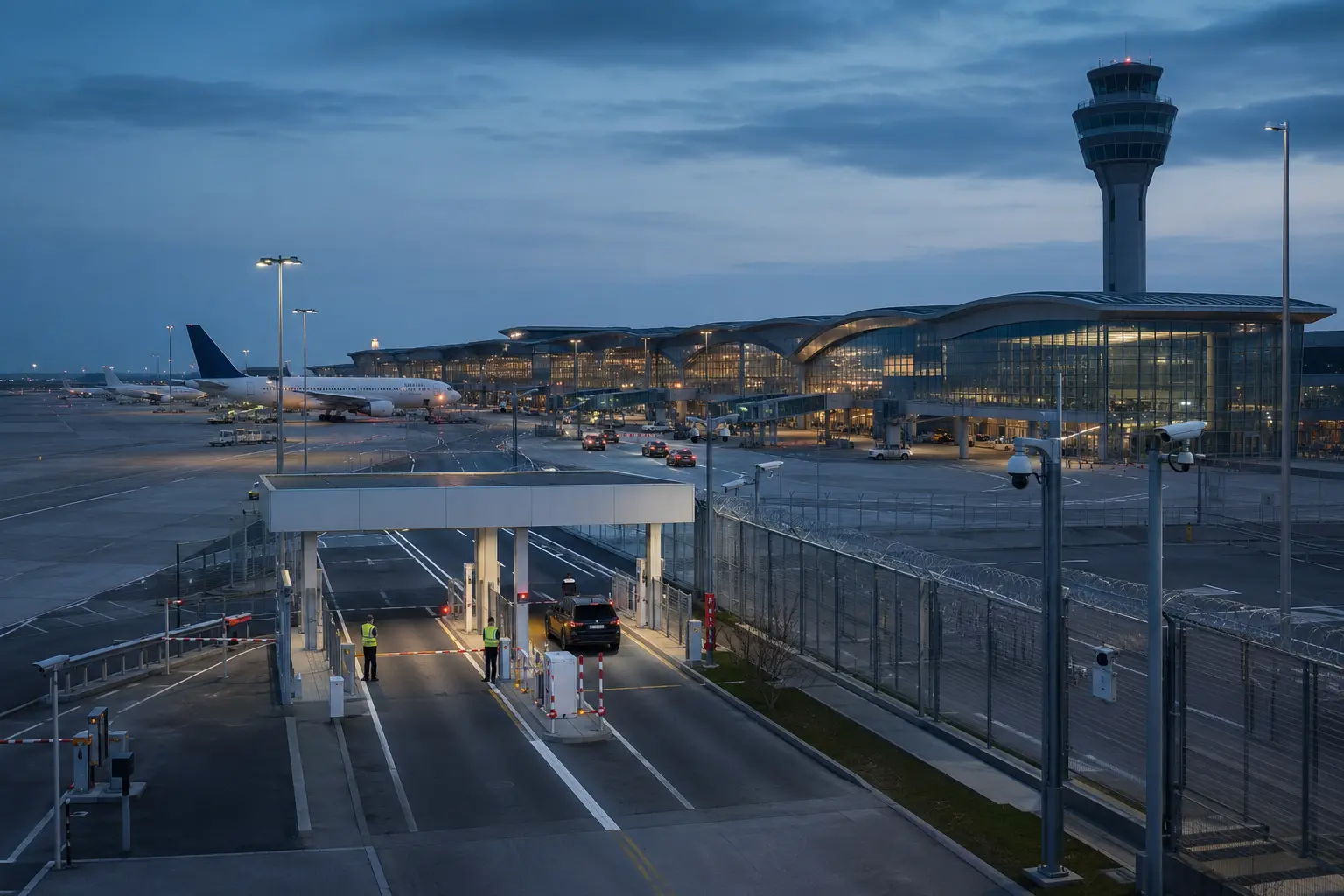
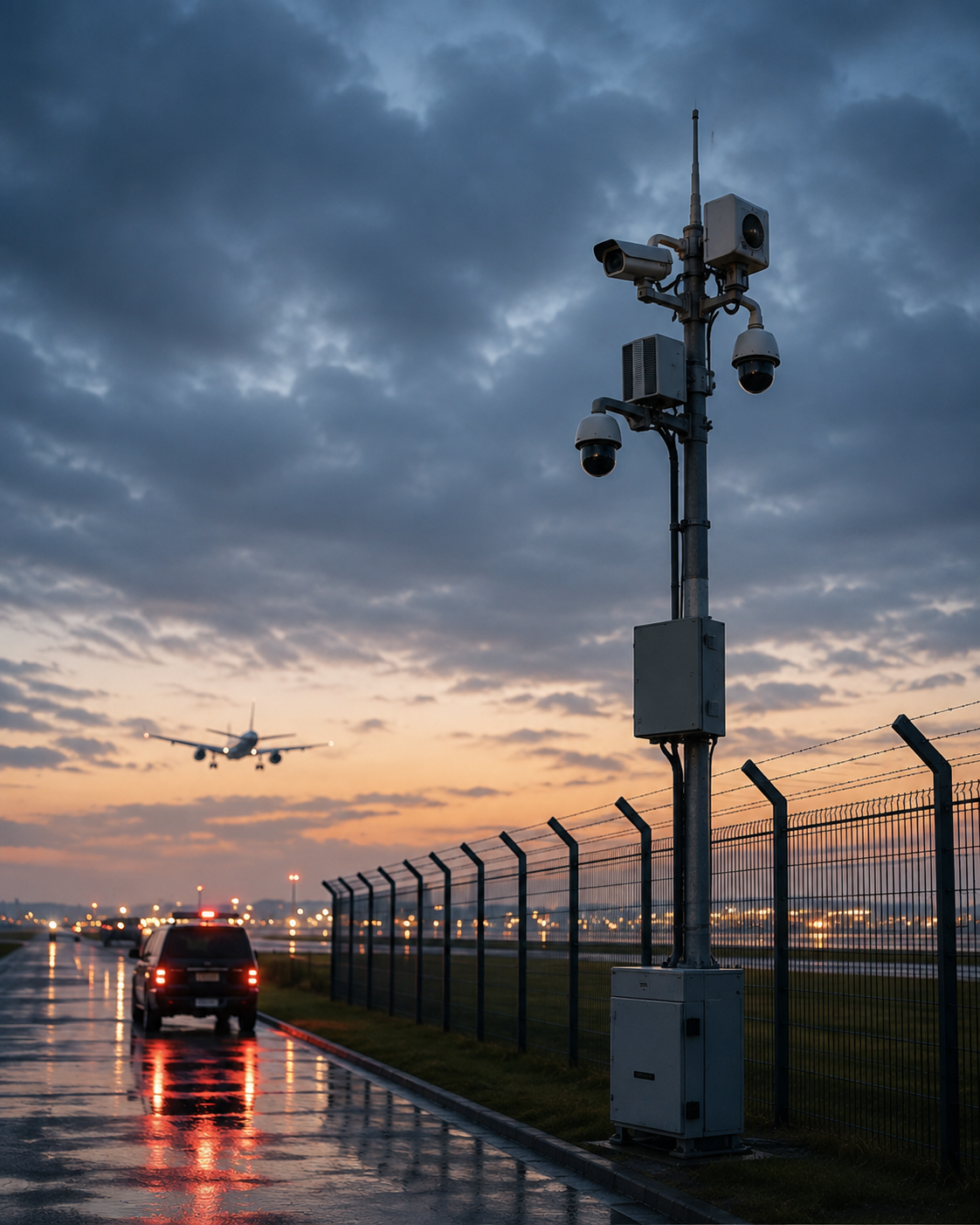
    The first layer protects the airfield boundary. Typical technologies include intelligent fencing, fiber-optic intrusion detection, radar, thermal cameras, fixed video surveillance and controlled vehicle gates. The objective is early detection and rapid verification, not simply creating a physical barrier.

    Airside Access

    Access points between landside and airside areas require strong identity controls. Staff credentials, biometric verification, vehicle authorization and anti-passback rules can reduce unauthorized movement. Temporary contractors and service vehicles deserve particular attention because their access requirements change frequently.

    Terminal Security

    Inside terminals, video surveillance, analytics, access control, screening systems and public-address platforms operate together. The challenge is scale: thousands of cameras and alarms can overwhelm operators unless information is prioritized through a unified command-and-control platform.

    Baggage and Cargo

    Baggage handling and cargo areas have different risk profiles from passenger spaces. Screening equipment, restricted access, chain-of-custody controls and video evidence must be integrated with operational workflows.

    Airspace Awareness

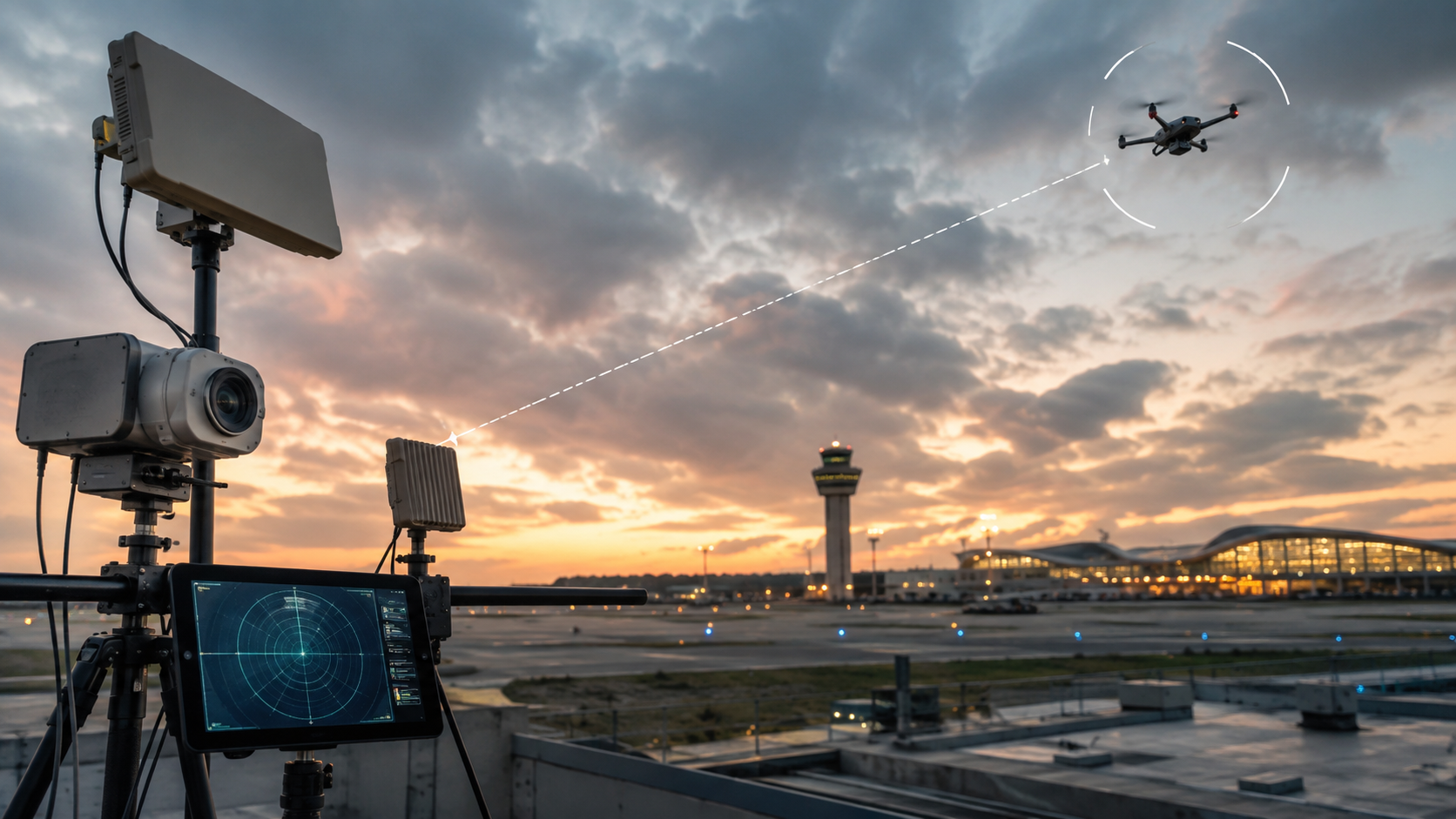
    Small unmanned aircraft have added another security layer. Airports increasingly evaluate radar, RF, optical and acoustic technologies for drone detection. Detection architecture must minimize interference with aviation systems and comply with national regulations.

    Cyber-Physical Integration

    Modern airport security is deeply networked. Cameras, access controllers, screening devices and building systems must therefore be treated as cyber-physical assets. Network segmentation, device hardening, credential management and monitoring are part of physical-security design.

    Conclusion

    A secure airport is not built by purchasing isolated systems. The strongest architecture connects perimeter detection, identity, screening, video, airspace awareness and command-and-control into a layered operational model. The design goal is to detect early, verify quickly and give operators enough context to respond appropriately.

  • Airport Drone Detection Systems

    Airport Drone Detection Systems

    Airports face one of the most demanding drone-detection environments. A small unmanned aircraft can create operational disruption around runways, approach paths and terminal areas even when there is no malicious intent. The challenge is not simply to detect an object in the sky, but to determine whether it represents a credible risk quickly enough for airport operators to act.

    Modern airport systems normally combine short- and medium-range radar, radio-frequency monitoring, electro-optical cameras and thermal imaging. Radar provides persistent coverage and track information. RF sensors can identify known command links or protocols. Cameras then provide visual confirmation and evidence. Because airports already contain extensive radar, radio and navigation infrastructure, careful frequency planning and site engineering are essential.

    Coverage design matters as much as sensor selection. A system should consider runway approaches, terminal airspace, parking aprons, perimeter zones and nearby public areas. Terrain, hangars, control towers and other structures can create blind spots. Multiple sensors positioned around the airport are often required to achieve useful low-altitude coverage.

    False alarms are another major concern. Birds, ground vehicles, construction equipment and conventional aircraft can all produce confusing signatures. Good systems use track behavior, micro-Doppler analysis and sensor fusion to improve classification. The objective is not to eliminate every false positive, but to reduce them to a level at which operators continue to trust the system.

    Drone detection must also integrate with airport operations. A verified track may need to be shared with the airport operations center, air traffic stakeholders, police or other authorized responders. Automated camera cueing and geofenced alert zones can help prioritize drones that are moving toward a runway or other sensitive area.

    Detection should be separated from mitigation. Active countermeasures may be restricted by aviation and communications law, and authority varies by country. For many airports, the most important capabilities are early detection, reliable tracking, evidence preservation and a clear operational response plan.

    The best airport drone-detection architecture is therefore layered, site-specific and tightly integrated with existing safety and security procedures. The goal is not simply to see drones. It is to create a dependable low-altitude airspace picture that supports fast, proportionate decisions.