
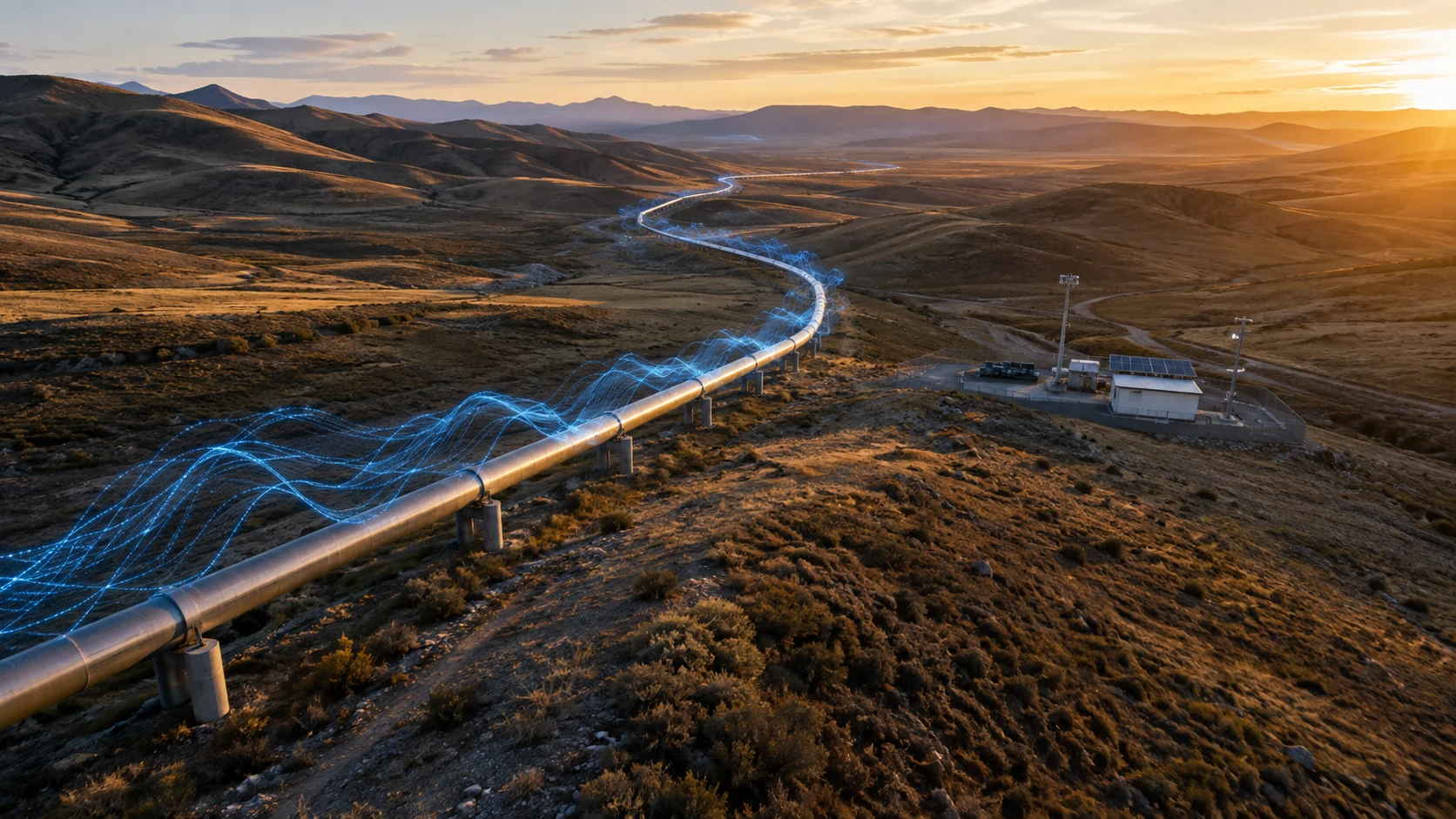
Distributed Acoustic Sensing produces enormous amounts of vibration data. The central operational challenge is not detecting that something happened, but deciding what happened. Was the signal caused by a person, vehicle, excavation machine, train, leak-related noise, environmental activity or harmless background vibration?
This is where machine learning becomes important. Instead of relying only on fixed amplitude thresholds, modern DAS platforms can analyze temporal patterns, frequency content, event duration, spatial movement and correlations across neighboring sensing channels.
Training Data Determines Performance
A classification model is only as useful as the data used to train and validate it. Pipeline, railway, perimeter and subsea environments produce very different signal signatures. Models therefore need representative data from the real installation environment rather than generic laboratory recordings.
False alarms are a major reason to use AI, but aggressive filtering creates another risk: missing weak or unusual events. Good systems balance sensitivity and confidence rather than treating classification as a simple yes-or-no decision.
Edge and Centralized Analytics
Some classification can run close to the interrogator for low-latency alarms, while more computationally intensive analytics can run on centralized servers or cloud infrastructure. Hybrid architectures are increasingly attractive because they combine fast local response with fleet-wide model improvement.
Human operators remain important. AI should prioritize events, attach confidence scores and provide context, while critical decisions remain auditable.
Conclusion
Machine learning is turning DAS from a high-volume signal generator into an operational intelligence platform. The competitive advantage will increasingly come not only from interrogator hardware, but from high-quality training data, reliable classification models and integration with real security and infrastructure workflows.