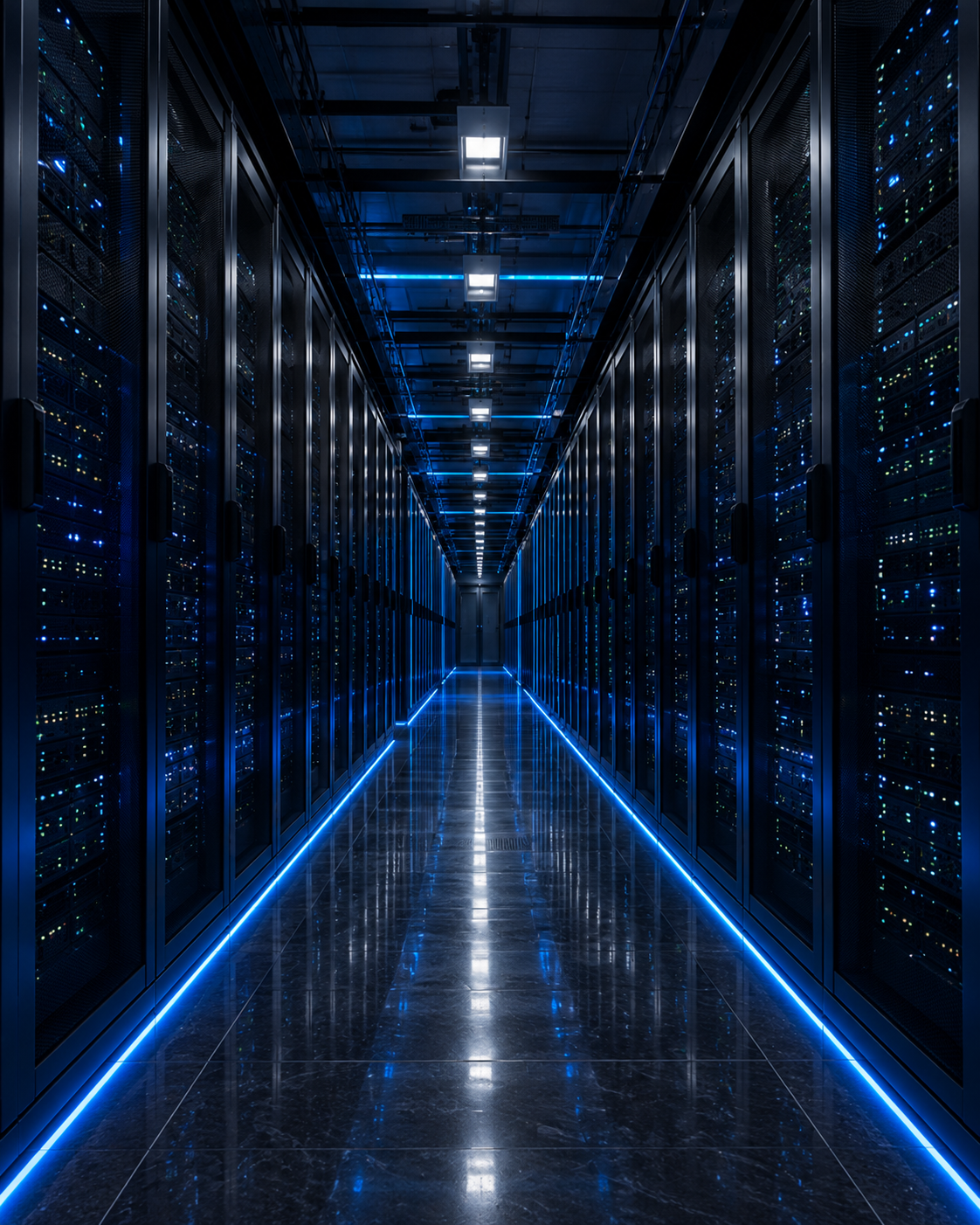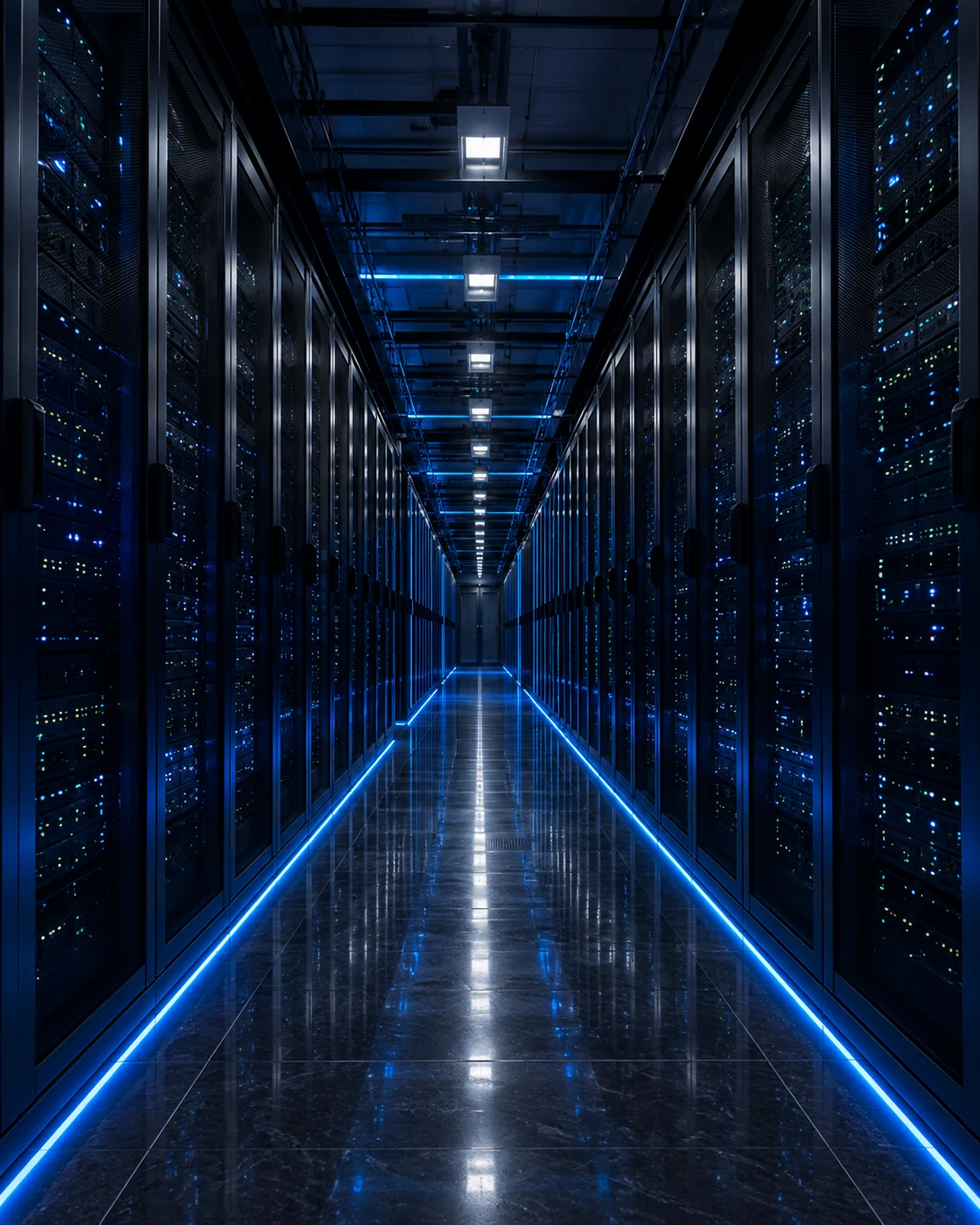
Data centers concentrate electrical equipment, energy, cooling infrastructure and business-critical services into spaces where even a small fire can create disproportionate operational loss. Clean-agent suppression is designed for environments where rapid extinguishment and minimal residue are priorities.
What is a clean agent? Clean agents are gaseous fire-suppression media that leave little or no residue after discharge. Depending on the technology, suppression may be achieved through heat absorption, chemical interaction with the flame process, or reduction of oxygen concentration within safe design limits.
Why data centers use them Water remains an essential fire-protection tool, but uncontrolled water exposure can damage servers, storage and electrical distribution. Clean-agent systems can suppress a developing fire without coating equipment in powder or liquid residue. They are therefore commonly considered for server rooms, network rooms, control rooms and other high-value electronic spaces.
Detection matters as much as suppression The most effective design starts with early detection. Aspirating smoke detection can identify incipient smoke before conditions become severe. A staged alarm sequence can verify the event, alert operators, stop selected ventilation systems and initiate the discharge logic.
Room integrity and pressure relief A gaseous system only performs as intended if the protected enclosure can retain the required concentration for the specified period. Door gaps, cable penetrations and ventilation openings can reduce performance. Enclosure integrity testing and pressure-relief design are therefore critical parts of commissioning.
Not a substitute for an overall fire strategy Clean-agent systems should sit inside a broader architecture that includes detection, compartmentation, emergency power procedures, portable extinguishers, possible sprinkler protection and documented recovery plans.
For data-center owners, the engineering objective is not simply to extinguish fire. It is to limit downtime, protect people, preserve critical infrastructure and make recovery predictable. The best clean-agent design is therefore one that integrates suppression with detection, HVAC control, electrical isolation and business-continuity planning.