
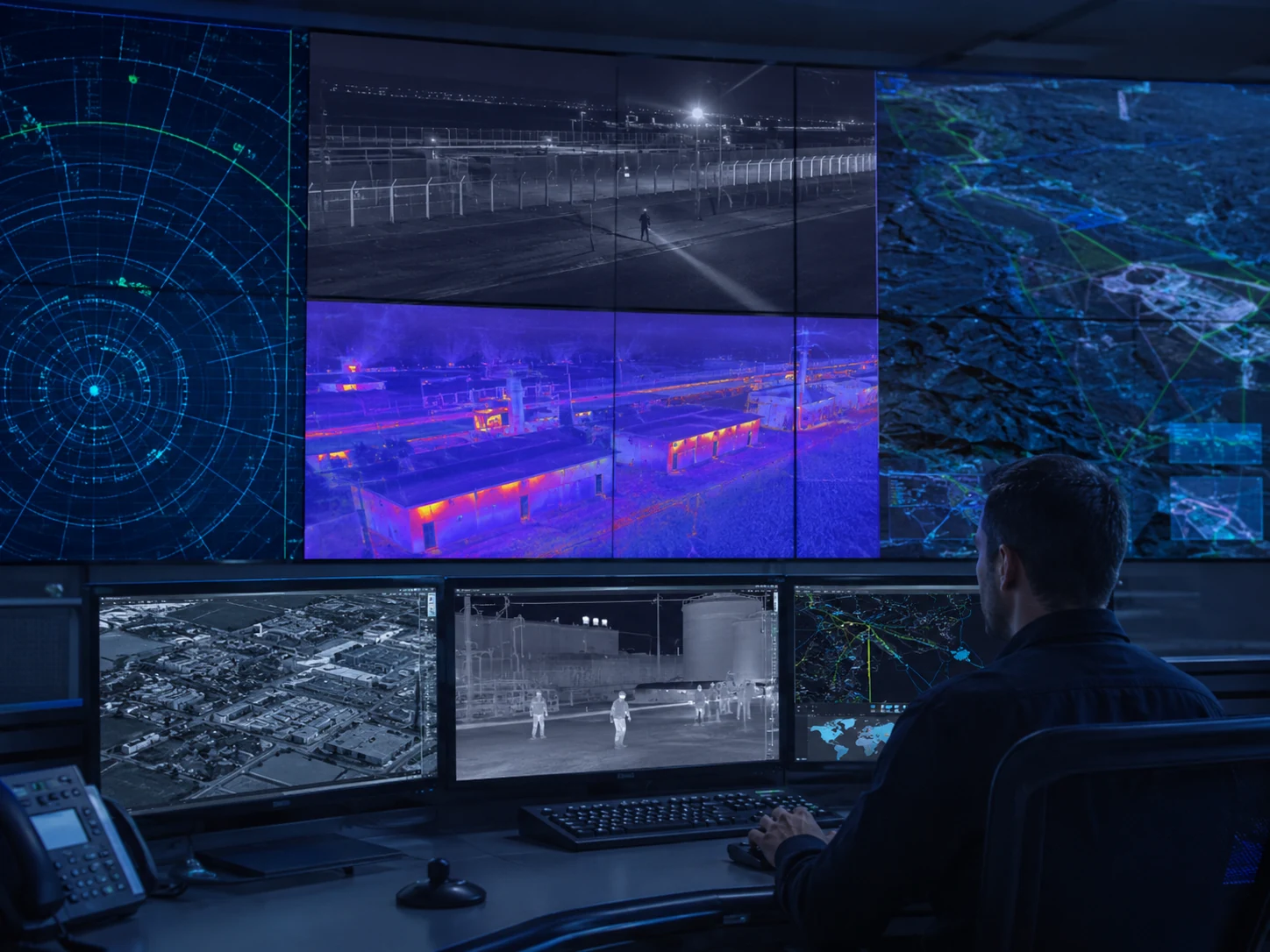
Digital twins are increasingly being used to create a live virtual representation of buildings, campuses and critical infrastructure. In physical security, the value of a digital twin is not the 3D model itself. It is the ability to connect that model to real devices, alarms, identities and operational data.
How the Technology Works
A security digital twin can display cameras, doors, intrusion zones, fire devices, intercoms, sensors and critical assets in their actual spatial context. When an alarm occurs, the operator sees where it is happening and what systems are nearby instead of interpreting a device name from a list.
The concept becomes more powerful when live data is added. Door status, camera health, occupancy, environmental conditions and maintenance state can all be visualized on the same model. This turns a static design file into an operational interface.
Operational Considerations
Incident response is an obvious use case. A perimeter alarm can highlight the affected zone, show the nearest cameras, display access routes and identify nearby personnel. During an evacuation, the model can combine fire information, occupancy data and route status to support command decisions.
Digital twins can also help before an incident. Security planners can simulate camera coverage, evaluate blind spots, review guard routes and test the effect of new barriers or access points. The model becomes a shared environment for design, operations and training.
Integration is the difficult part. Buildings often contain systems from many vendors using different protocols and naming conventions. A digital twin is only as useful as the data connected to it. Device identifiers, floor plans and asset records must be maintained as the facility changes.
Deployment and Risk
Performance and cybersecurity must also be considered. A detailed 3D environment can require significant computing resources, and connections to operational systems create a sensitive integration layer. Access to the twin should be role-based and audited.
For large infrastructure, geographic information systems and digital twins are beginning to overlap. A single operational model may include buildings, perimeter sensors, pipelines, fiber sensing, rail corridors and remote substations.
Conclusion
Digital twins will not replace VMS, access control or command-and-control software. They are more likely to become a spatial interface above those systems. When designed well, they reduce cognitive load by showing operators not just what alarmed, but where it is, what surrounds it and what actions are available.