
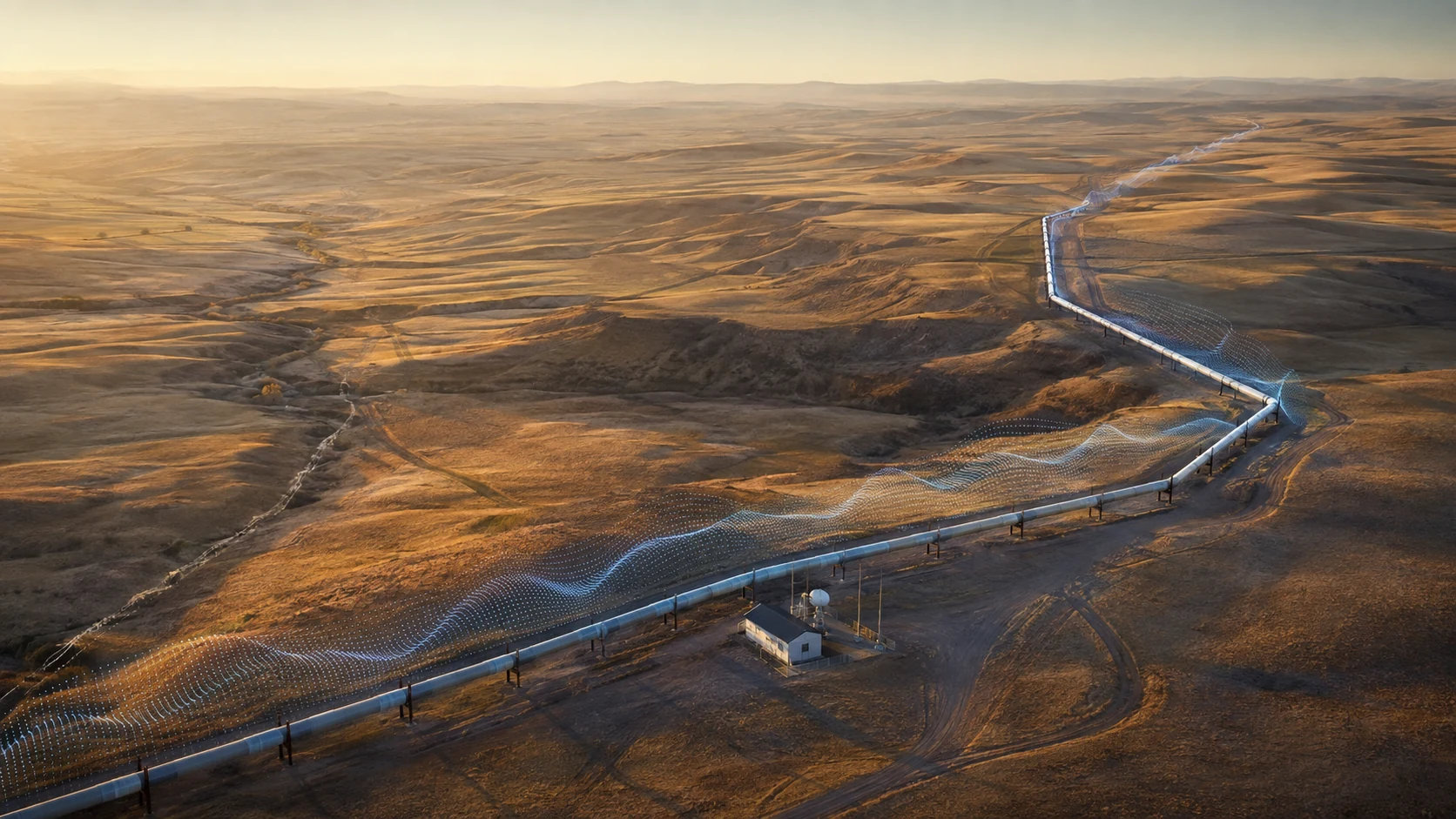
Distributed fiber-optic sensing is not one technology. Several sensing methods use optical fiber to measure different physical effects along long distances. The most common terms are DAS, DTS, DSS and DTSS.
DAS: Distributed Acoustic Sensing DAS measures dynamic strain and vibration. It is used to detect acoustic and mechanical events such as footsteps, digging, vehicles, trains, fence disturbance, machinery vibration and seismic activity. Many systems analyze coherent Rayleigh backscatter and can sample events at high frequency.
DTS: Distributed Temperature Sensing DTS measures temperature continuously along a fiber. Raman-based systems are widely used for power cables, tunnels, pipelines, fire detection and industrial temperature monitoring. The output is a temperature profile rather than an acoustic waveform.
DSS: Distributed Strain Sensing DSS measures static or slowly changing strain. Applications include structural monitoring, geotechnical movement, pipelines, bridges, dams and other assets where deformation develops over minutes, hours or longer periods. Brillouin scattering is commonly associated with this type of measurement, although architectures vary.
DTSS: Distributed Temperature and Strain Sensing DTSS combines temperature and strain information, often through Brillouin-based measurements or hybrid configurations. Because temperature and strain can both influence the optical signal, system design and compensation methods are important.
Different physics, different questions DAS asks: where is vibration occurring and what kind of event is it? DTS asks: where is the temperature changing? DSS asks: where is the fiber being stretched or compressed? DTSS seeks to characterize both temperature and strain.
Can one fiber support several measurements? In some architectures, the same cable can support multiple interrogators or hybrid sensing systems. This allows an infrastructure owner to combine acoustic, temperature and strain information along the same route. Integration can create a richer condition-monitoring picture, but optical budgets, fiber allocation and system compatibility must be engineered carefully.
The correct technology depends on the physical phenomenon that matters. A pipeline intrusion problem is usually acoustic; a power cable thermal-capacity problem is temperature-based; a slope movement problem may require strain. Understanding that distinction is the first step toward specifying the right distributed sensing system.