
Tag: emergency communication

  • Tunnel Safety and Security Technology: Detection, Evacuation and Integrated Control

    Tunnel Safety and Security Technology: Detection, Evacuation and Integrated Control

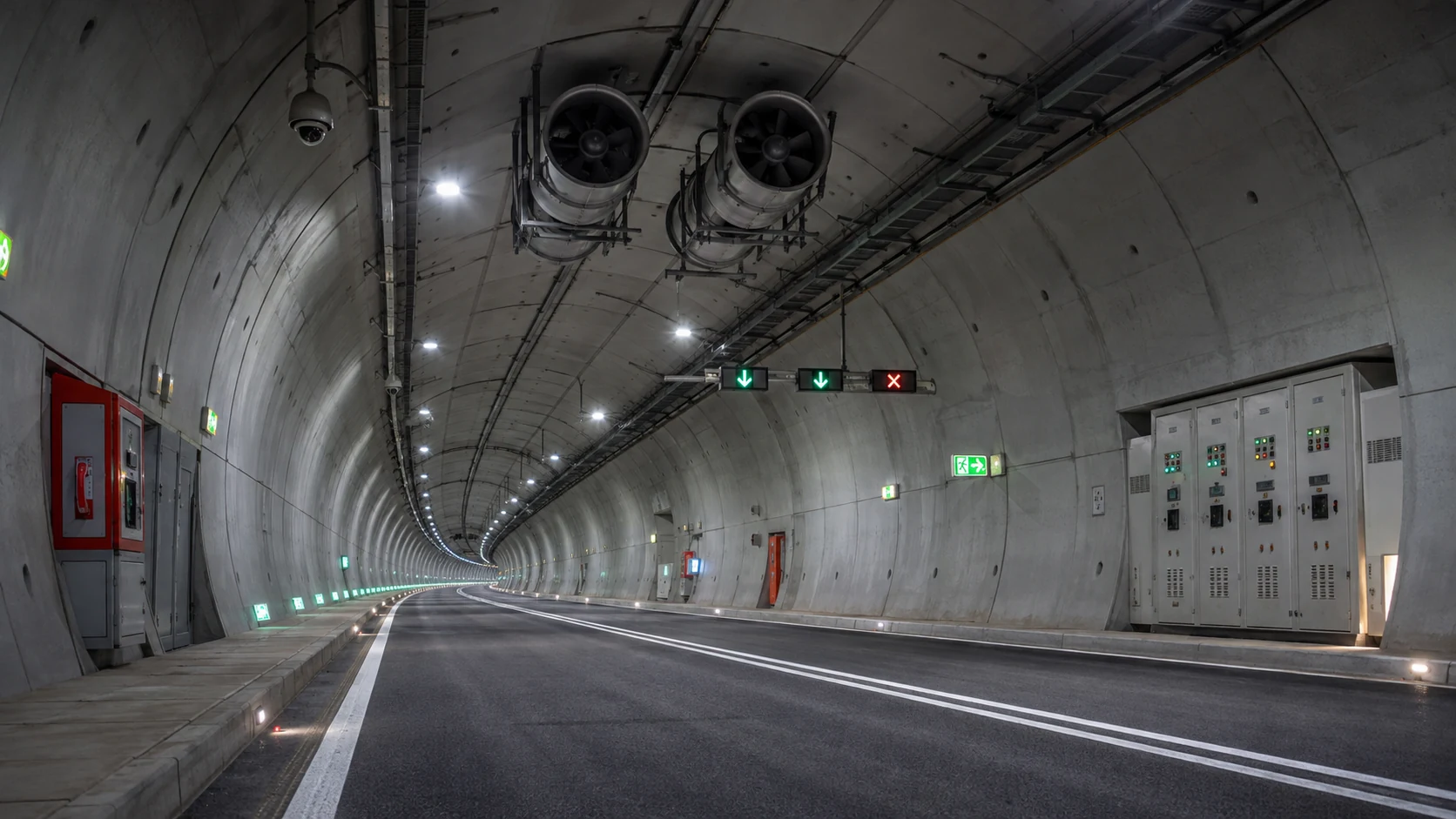
    Modern tunnels combine fire detection, video analytics, access control, ventilation, emergency communications and increasingly distributed fiber sensing. Because incidents develop quickly and escape routes are constrained, tunnel protection depends on coordinated systems rather than isolated devices.

    Why tunnels require a different security model

    Road and rail tunnels create long enclosed spaces with limited visibility, difficult radio propagation and restricted evacuation options. A useful design therefore starts with incident detection, localization and coordinated response rather than simply adding more cameras.

    Core detection layers

    Video surveillance provides situational awareness while thermal cameras can identify overheated equipment or abnormal temperature patterns. Linear heat detection, point detectors, flame detection and air-quality sensors add dedicated life-safety coverage. In long tunnels, DAS can provide continuous acoustic and vibration awareness along many kilometres of fiber.

    Ventilation and evacuation

    Smoke control is often as important as the initial alarm. Variable-message signs, public-address systems, emergency telephones, lighting and cross-passage control must work with ventilation logic so operators can direct people away from the hazard.

    The role of the control room

    A tunnel operations center should correlate alarms, location, video and infrastructure status on one interface. Automation can suggest response actions, but operators still need clear authority and verified procedures.

    Design priorities

    Resilience, redundant communications, maintainability, false-alarm control and realistic drills matter as much as sensor selection. The strongest architecture is layered, testable and designed around credible incident scenarios.

    Conclusion

    Tunnel Safety and Security Technology should be evaluated as part of a broader operational architecture. The strongest deployments combine suitable sensing technology, resilient communications, clear procedures and measurable performance rather than relying on a single device or headline specification.

  • Mass Notification Systems: Emergency Communication for Complex Sites

    Mass Notification Systems: Emergency Communication for Complex Sites

    Emergency communication is no longer limited to bells, sirens or a single public-address message. Modern mass-notification systems are designed to deliver clear, coordinated instructions across multiple channels and to reach people wherever they are.

    Why communication fails during emergencies In a crisis, occupants may not know what has happened, where the hazard is or whether they should evacuate, shelter in place or avoid a specific route. A simple alarm tone communicates urgency but not context. Voice messages, visual displays, mobile alerts and desktop notifications can provide more actionable information.

    Multiple channels, one message A modern platform may integrate voice alarm, public address, SMS, mobile applications, email, digital signage, desktop pop-ups and radio interfaces. The goal is not to send as many messages as possible; it is to ensure that the same verified instruction reaches the right audience quickly.

    Integration with detection systems Emergency communication becomes more powerful when linked with fire alarms, gas detection, security systems, weather alerts and building management platforms. A confirmed incident can trigger pre-approved message templates while operators retain control over escalation.

    Message intelligibility A loud announcement is not necessarily an understandable announcement. Reverberation, machinery noise, language differences and hearing impairment can all reduce comprehension. Acoustic design, speaker placement and message testing are therefore essential.

    Cybersecurity and resilience Because many notification platforms use IP networks and cloud services, they require strong authentication, role-based permissions and fallback communication paths. Emergency communication must continue even when part of the IT infrastructure is unavailable.

    The best systems combine automation with human judgment. Predefined workflows reduce delay, while trained operators validate the situation and adapt instructions as conditions change. The real performance measure is not how many channels a platform supports, but whether people receive a clear, trusted instruction when seconds matter.