

Tag: fence sensors

  • Fiber Optic Perimeter Intrusion Detection: How It Works

    Fiber Optic Perimeter Intrusion Detection: How It Works

    Perimeter protection traditionally relies on cameras, microwave barriers, buried sensors and fence-mounted detectors. Fiber-optic sensing adds a different capability: a single passive cable can monitor long boundaries continuously and locate disturbances along the route.

    How It Works

    A sensing unit launches optical signals into fiber installed on a fence, buried near a boundary or integrated into other infrastructure. Vibrations created by climbing, cutting, digging, walking or vehicle movement alter the backscattered optical signal. Software analyzes these changes and estimates the event location.

    The fiber itself requires no electrical power along the protected route, which is valuable for remote sites, substations, pipelines, solar farms, airports and critical infrastructure. Long distances can be monitored from a protected interrogation point.

    Detection Is Only Half the Problem

    The central engineering challenge is classification. Wind, rain, animals, maintenance work and nearby traffic can create vibration. Modern systems therefore use signal processing and machine-learning models to distinguish meaningful events from environmental noise.

    Good performance depends heavily on installation. Fence type, cable attachment method, soil conditions, route geometry, calibration and zone configuration all influence detection quality. A high-end interrogator cannot compensate for a poorly designed sensing route.

    Integration with Cameras and Radar

    Fiber sensing is strongest when used as part of a layered system. A detected event can automatically cue a PTZ camera, thermal imager or radar track. The fiber provides the alarm and location; imaging systems provide visual verification.

    For very large sites, this approach can reduce the need for continuously staffed camera monitoring. Operators focus attention on locations where another sensor has already detected activity.

    Where It Fits Best

    Fiber-optic perimeter detection is especially attractive for long linear boundaries, remote facilities and locations where field power is difficult. It can also share infrastructure with communications fiber in some architectures, although dedicated sensing fiber often provides more predictable performance.

    Its limitations should be understood. Classification accuracy varies by environment, and commissioning requires realistic site testing. A system should be evaluated against the actual fence, soil, weather and threat profile rather than laboratory specifications alone.

    Conclusion

    Fiber-optic perimeter sensing transforms a passive cable into a distributed detection line. Its real advantage is not simply long range; it is the ability to combine location, continuous coverage and low field-power requirements. When integrated with cameras, thermal imaging and command-and-control software, it becomes a powerful component of modern perimeter security.

  • Fiber Optic Perimeter Detection vs Traditional Fence Sensors

    Fiber Optic Perimeter Detection vs Traditional Fence Sensors

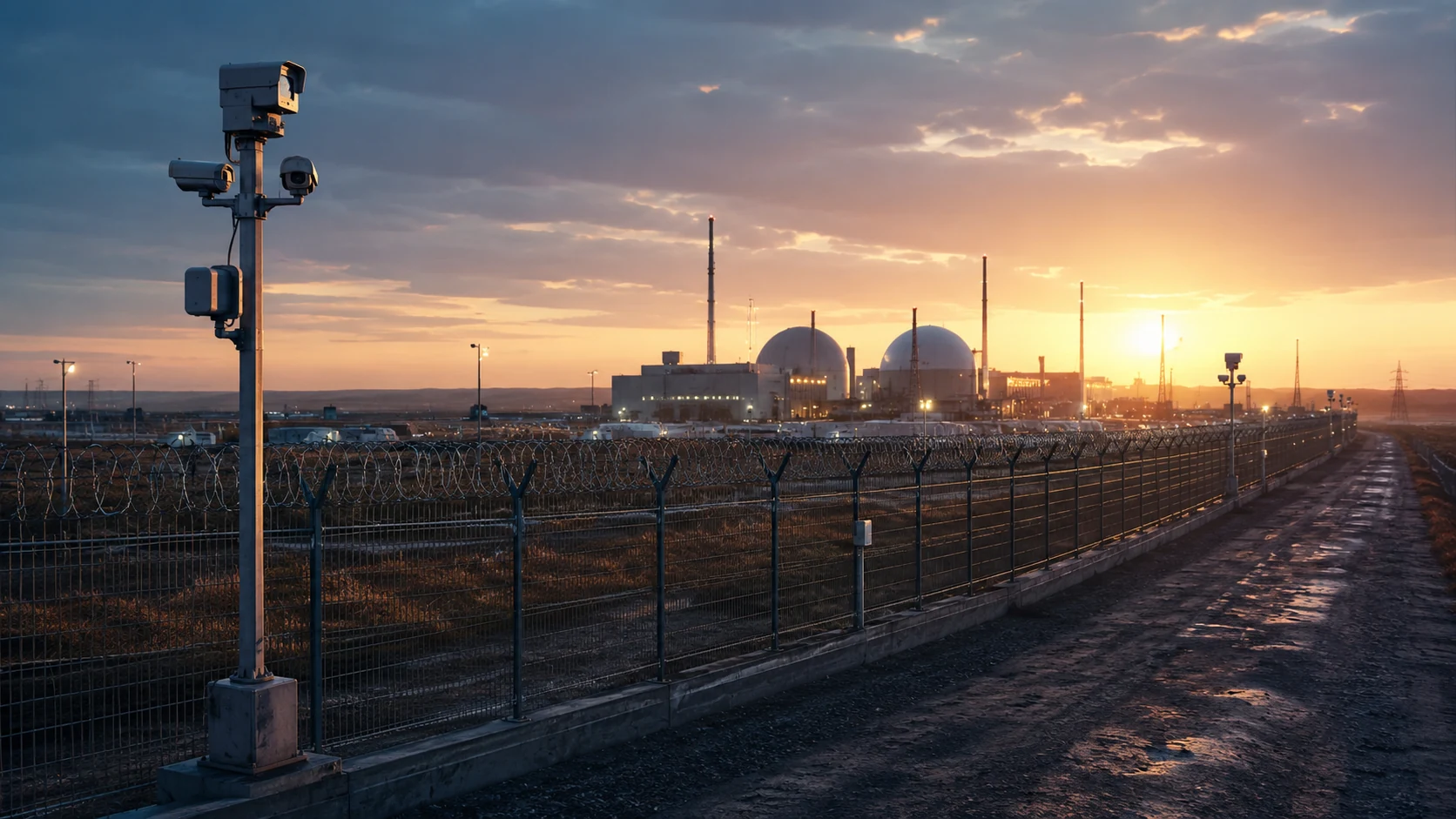
    Fiber-optic sensing is increasingly used to protect long fences, pipelines, borders and critical infrastructure. Traditional fence sensors remain effective in many environments, but fiber introduces a different architecture: the sensing cable itself becomes part of the detection system.

    Traditional fence sensors

    Conventional systems may use accelerometers, vibration detectors, microphonic cable or point sensors mounted at intervals. They can identify climbing, cutting and strong mechanical disturbance. Their strengths include mature technology, straightforward zoning and relatively simple maintenance on short or medium perimeters.

    Fiber-optic detection

    Fiber systems monitor changes in light traveling through an optical cable. Depending on the design, the system may use discrete zones or distributed sensing that analyzes activity continuously along many kilometers of fiber. The field cable is passive, which means powered electronics can remain in protected equipment locations.

    Advantages of fiber

    Fiber is immune to electromagnetic interference, does not conduct electricity and can cover long distances. Distributed sensing can provide detailed location information and, with suitable signal processing, classify patterns associated with climbing, cutting, digging, footsteps or vehicle activity.

    Where traditional sensors still make sense

    For a small compound with a few hundred meters of good-quality fence, a conventional sensor system may be simpler and more economical. Existing infrastructure, technician familiarity and integration requirements can make traditional systems the practical choice.

    Where fiber becomes attractive

    Large industrial sites, solar farms, railways, pipelines, borders, airports and remote critical infrastructure benefit from long sensing distance and reduced field electronics. Fiber can also support architectures in which one cable protects multiple zones or extends beyond the physical fence.

    False alarms and classification

    Neither technology is automatically immune to nuisance alarms. Wind, vegetation, loose fence material and maintenance activity can affect any vibration-based system. Fiber platforms increasingly use advanced signal processing and machine learning to distinguish event patterns, but commissioning and site-specific tuning remain essential.

    Lifecycle considerations

    Designers should compare not only equipment price but also power distribution, communications, spare parts, repair procedures, expansion capability and maintenance over the life of the system. A higher initial cost may be justified when a technology reduces remote electronics or simplifies very long-distance coverage.

    Conclusion

    Fiber-optic perimeter detection is not universally better than traditional fence sensing, but it changes the economics and capabilities of large perimeters. Conventional sensors remain strong for many compact sites; fiber becomes especially compelling when distance, electromagnetic immunity, passive field infrastructure and precise event localization are priorities.

  • Fence-Mounted vs Buried Perimeter Sensors: Which Is Better?

    Fence-Mounted vs Buried Perimeter Sensors: Which Is Better?

    Fence-mounted and buried sensors solve the same basic problem in different ways: detecting unauthorized movement before a person reaches a protected asset. The right choice depends on site geometry, terrain, aesthetics, maintenance and the type of intrusion that must be detected.

    Fence-mounted sensors

    Fence systems detect vibration, movement or strain caused by climbing, cutting or lifting. Technologies include accelerometers, microphonic cable and fiber-optic sensing. They can provide precise zone information along long boundaries and are relatively easy to inspect because the detection medium follows the visible fence line.

    Their performance, however, is closely tied to fence condition. Loose mesh, vegetation, wind-driven objects or poorly tensioned panels can create nuisance alarms. Good mechanical installation and site-specific tuning are essential.

    Buried sensors

    Buried systems create an invisible detection zone using seismic, pressure, electromagnetic or other sensing methods. They are useful around executive facilities, heritage sites, landscaped areas or locations where a visible sensor system would be undesirable.

    Because the sensing medium is underground, soil type, moisture, drainage, frost, nearby roads and heavy machinery can influence performance. Installation can also be more disruptive, and later maintenance may require excavation.

    Detection behavior

    Fence sensors are naturally associated with a physical barrier and are well suited to detecting climbing or cutting. Buried sensors may detect a person before they reach the fence, providing earlier warning. On the other hand, they can be more sensitive to environmental vibration or non-threatening movement depending on the technology.

    Lifecycle cost

    The cheapest installation is not always the lowest-cost system over ten years. Fence repairs, vegetation management, battery replacement, excavation and calibration should all be considered in lifecycle planning.

    When to combine them

    High-security sites sometimes use buried sensors outside the fence for early detection and fence-mounted sensors as a second layer. Cameras, radar or thermal imaging can then verify the alarm.

    Conclusion

    Fence-mounted sensors are often simpler where a strong fence already exists. Buried sensors are valuable when covert or pre-fence detection is required. The decision should be based on the physical site and operating environment rather than on technology preference alone.