Tag: fiber optic sensing

  • DAS and Passive Optical Networks: Broadband Fiber as Security Infrastructure

    DAS and Passive Optical Networks: Broadband Fiber as Security Infrastructure

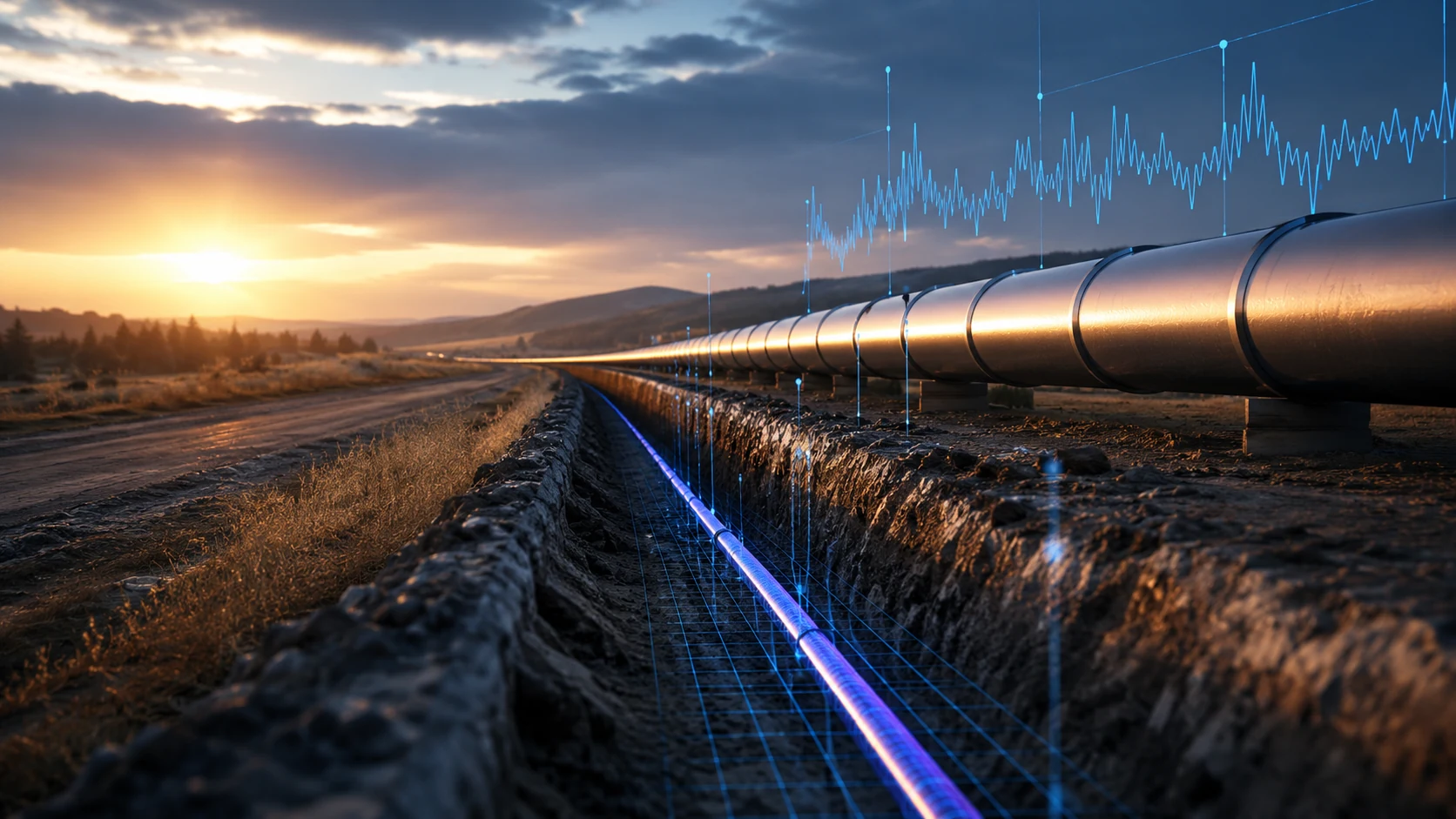
    Passive Optical Networks are designed to deliver broadband efficiently to large numbers of users. Distributed Acoustic Sensing introduces another possibility: parts of the same fiber infrastructure may also provide information about vibration and activity along the route.

    Why PON Is Interesting for Sensing

    PON networks already extend deep into cities, campuses and residential areas. If sensing can coexist with communications traffic, broadband infrastructure could potentially support applications such as construction monitoring, intrusion awareness, transport analytics or infrastructure condition monitoring without installing a separate sensor cable everywhere.

    The technical challenge is that PON is not a simple point-to-point fiber. Optical splitters divide signals across branches, and the network is optimized for communications rather than sensing. Interpreting backscatter in this environment requires careful optical design, signal processing and route knowledge.

    Security and Infrastructure Applications

    Potential uses include monitoring access to telecom infrastructure, detecting excavation activity near buried routes, identifying unusual vibration around manholes and supporting broader urban sensing. In controlled industrial or campus environments, PON-based sensing could become one input to a physical-security platform.

    The key word is coexistence. Sensing should not compromise communications performance, service availability or network maintenance. Wavelength planning, optical budgets, splitter architecture and interrogator design all influence feasibility.

    Operational Questions

    Who owns the sensing data? How is privacy handled? How are alarms mapped from optical distance to geographic location? What happens when fiber routes are changed during maintenance? These questions are as important as raw detection performance.

    Conclusion

    PON sensing is an emerging area rather than a universal replacement for dedicated DAS installations. But the strategic idea is important: communications fiber may become dual-purpose infrastructure. If sensing can be added safely and economically, broadband networks could evolve from passive transport systems into distributed sources of infrastructure intelligence.

  • DAS for Railway Monitoring: Train Tracking, Intrusion and Asset Awareness

    DAS for Railway Monitoring: Train Tracking, Intrusion and Asset Awareness

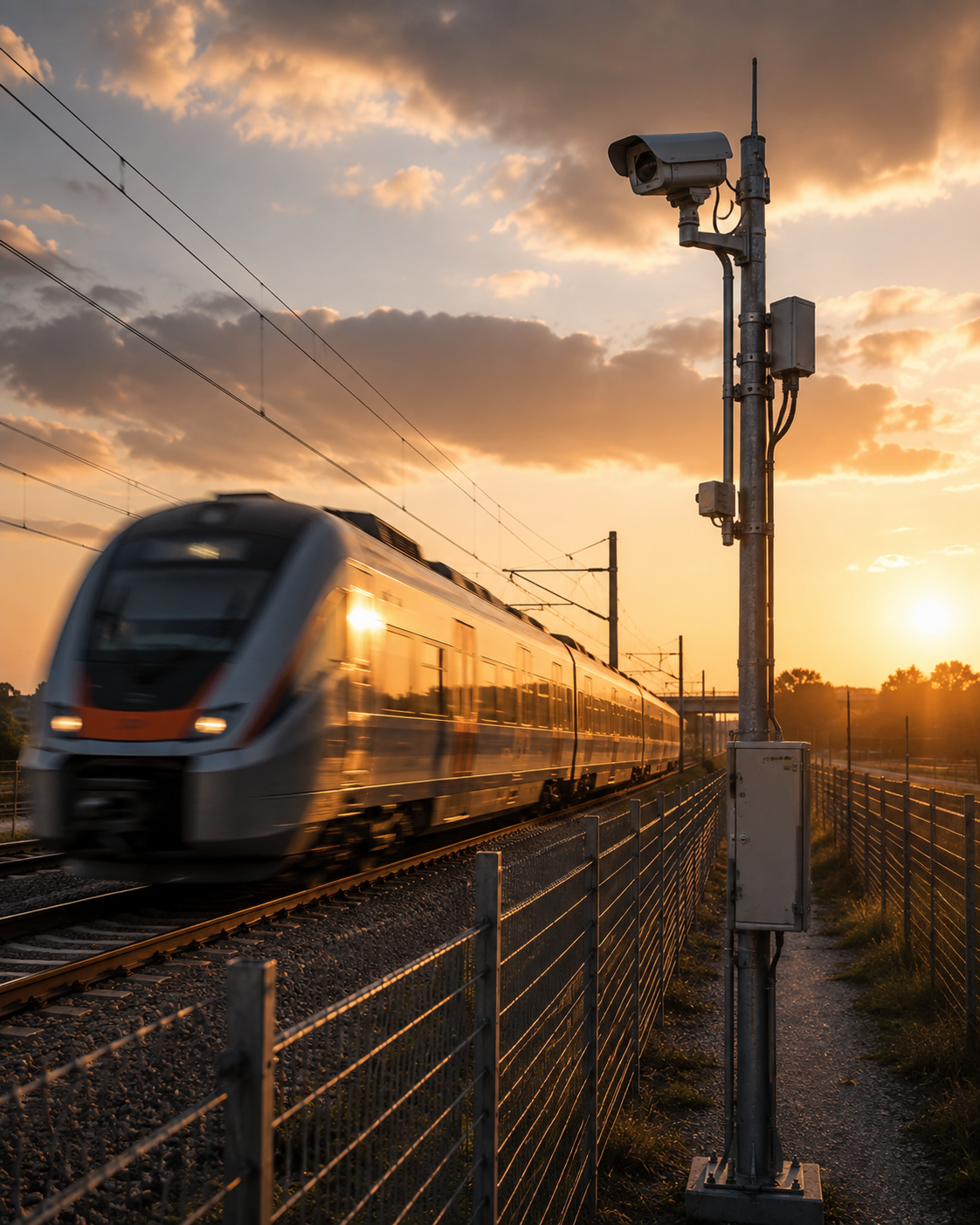
    Rail networks extend across long corridors that are difficult to monitor continuously with cameras and point sensors. Distributed Acoustic Sensing can use a fiber running beside the track to observe vibration along many kilometers from a single interrogator.

    Train detection and tracking A moving train generates a strong and characteristic vibration signature. DAS analytics can estimate its position, direction and speed as the signal moves along the fiber. This creates a distributed view of traffic even where no conventional trackside detector is installed.

    Trackside intrusion Footsteps, vehicles and activity near the railway can produce distinct patterns. A DAS system may help identify trespass, unauthorized maintenance activity or movement in protected areas. The exact detection performance depends on fiber placement, ground coupling and background vibration.

    Infrastructure condition awareness Changes in vibration patterns can also provide clues about track, wheel or infrastructure condition. Repeated measurements can be compared over time to identify unusual behavior. DAS should not be treated as a replacement for certified railway condition-monitoring systems, but it can add a valuable continuous data layer.

    Rockfall and environmental events In suitable installations, distributed sensing can identify ground vibration associated with rockfall, landslides or other events near the track. Combining DAS with weather, geotechnical and camera data can improve situational awareness on vulnerable routes.

    Existing telecom fiber Railways often already have optical fiber installed for signaling and communications. In some cases, spare fibers—or even fibers in existing cable routes—can be used for sensing. This can make large-scale pilots practical without building a new powered sensor network along the entire line.

    Analytics are essential Rail environments contain complex vibration from trains, road crossings, machinery and nearby communities. Event classification must be trained and validated against real local conditions. Alarm thresholds that work on one section of track may not be appropriate elsewhere.

    The broader opportunity is to transform railway fiber from a communications asset into a sensing infrastructure. With the right analytics and integration, the same corridor can support train awareness, intrusion detection, environmental monitoring and condition intelligence over distances that are difficult to cover with conventional sensors alone.

  • Rayleigh vs Raman vs Brillouin Scattering in Fiber Optic Sensing

    Rayleigh vs Raman vs Brillouin Scattering in Fiber Optic Sensing

    Distributed fiber-optic sensing works because a tiny fraction of light traveling through glass is scattered. Three names appear repeatedly in the field: Rayleigh, Raman and Brillouin scattering. Each mechanism carries different information and is therefore associated with different sensing applications.

    Rayleigh scattering Rayleigh backscatter is caused by microscopic variations in the refractive index of the glass. In coherent distributed sensing, changes in phase or interference patterns can reveal dynamic strain and vibration. This is why Rayleigh-based architectures are strongly associated with Distributed Acoustic Sensing.

    Raman scattering Raman scattering involves interaction between light and molecular vibrations. It creates Stokes and anti-Stokes components. The anti-Stokes response is strongly temperature dependent, allowing an interrogator to estimate temperature along the fiber. This principle is widely used in Distributed Temperature Sensing.

    Brillouin scattering Brillouin scattering results from interaction between light and acoustic waves inside the fiber. The frequency shift varies with temperature and strain. This makes Brillouin techniques useful for distributed strain sensing and combined temperature-and-strain monitoring.

    Why they should not be confused The three effects are all forms of optical scattering, but they produce different measurable signatures. Rayleigh is particularly useful for fast dynamic events. Raman is a mature basis for temperature measurement. Brillouin is valuable when absolute or slowly varying strain and temperature are important.

    Time-domain and frequency-domain methods Interrogators may use time-domain, frequency-domain or correlation-based processing. The scattering mechanism alone does not define the complete system. Pulse width, coherence, receiver design, signal processing and calibration all affect range and resolution.

    Hybrid sensing Some infrastructure projects combine multiple optical techniques. A power corridor might use DTS for cable temperature and DAS for intrusion or mechanical activity. A structural project may combine acoustic monitoring with strain sensing. The same route can therefore support several physical measurements.

    Understanding Rayleigh, Raman and Brillouin scattering helps explain why distributed fiber sensing is not a single product category. Different optical effects answer different engineering questions, and choosing the correct one begins with defining the physical quantity that must be measured.

  • How Optical Fiber Becomes Thousands of Distributed Sensors

    How Optical Fiber Becomes Thousands of Distributed Sensors

    An optical fiber is usually thought of as a communications medium. In distributed sensing, the same glass becomes a long chain of virtual measurement points. The key is that light traveling through a fiber is never perfectly isolated from the material around it: tiny amounts are scattered back toward the source.

    Time becomes distance A sensing interrogator launches short laser pulses into the fiber. Because the speed of light in glass is known, the system can estimate the location of a returned signal from the time it takes to come back. A reflection arriving later corresponds to a point farther along the fiber.

    Backscatter contains information Different scattering mechanisms respond to different physical effects. Rayleigh backscatter is widely used for acoustic and vibration sensing. Raman components are temperature sensitive. Brillouin scattering can be used to measure temperature and strain.

    Virtual channels Software divides the fiber into spatial sections. Each section behaves like a virtual sensor channel even though no electronic device has been installed at that position. A 20-kilometer fiber with meter-scale sampling can therefore represent thousands of measurement locations.

    Why this architecture is powerful The sensing element contains no distributed electrical power, processors or radio links. The complex electronics remain at the interrogator. This makes fiber attractive for tunnels, pipelines, railways, high-voltage corridors and remote infrastructure.

    Spatial resolution versus range Distributed sensing involves trade-offs. Higher spatial resolution, longer range, faster sampling and better signal-to-noise performance cannot always be maximized simultaneously. The correct configuration depends on whether the application needs fast vibration detection, accurate temperature measurement or slow structural strain monitoring.

    The cable installation also matters The fiber only measures what is mechanically or thermally coupled into it. A loosely installed cable may respond differently from one bonded to a pipe or buried in compacted soil. Cable construction, routing and installation are therefore part of the sensor design.

    This is the central idea behind distributed fiber-optic sensing: the fiber itself is not populated with thousands of conventional sensors. Instead, optical physics and time-of-flight processing make thousands of locations along one continuous fiber observable from a single interrogator.

  • DAS vs DTS vs DSS vs DTSS: Fiber Optic Sensing Explained

    DAS vs DTS vs DSS vs DTSS: Fiber Optic Sensing Explained

    Distributed fiber-optic sensing is not one technology. Several sensing methods use optical fiber to measure different physical effects along long distances. The most common terms are DAS, DTS, DSS and DTSS.

    DAS: Distributed Acoustic Sensing DAS measures dynamic strain and vibration. It is used to detect acoustic and mechanical events such as footsteps, digging, vehicles, trains, fence disturbance, machinery vibration and seismic activity. Many systems analyze coherent Rayleigh backscatter and can sample events at high frequency.

    DTS: Distributed Temperature Sensing DTS measures temperature continuously along a fiber. Raman-based systems are widely used for power cables, tunnels, pipelines, fire detection and industrial temperature monitoring. The output is a temperature profile rather than an acoustic waveform.

    DSS: Distributed Strain Sensing DSS measures static or slowly changing strain. Applications include structural monitoring, geotechnical movement, pipelines, bridges, dams and other assets where deformation develops over minutes, hours or longer periods. Brillouin scattering is commonly associated with this type of measurement, although architectures vary.

    DTSS: Distributed Temperature and Strain Sensing DTSS combines temperature and strain information, often through Brillouin-based measurements or hybrid configurations. Because temperature and strain can both influence the optical signal, system design and compensation methods are important.

    Different physics, different questions DAS asks: where is vibration occurring and what kind of event is it? DTS asks: where is the temperature changing? DSS asks: where is the fiber being stretched or compressed? DTSS seeks to characterize both temperature and strain.

    Can one fiber support several measurements? In some architectures, the same cable can support multiple interrogators or hybrid sensing systems. This allows an infrastructure owner to combine acoustic, temperature and strain information along the same route. Integration can create a richer condition-monitoring picture, but optical budgets, fiber allocation and system compatibility must be engineered carefully.

    The correct technology depends on the physical phenomenon that matters. A pipeline intrusion problem is usually acoustic; a power cable thermal-capacity problem is temperature-based; a slope movement problem may require strain. Understanding that distinction is the first step toward specifying the right distributed sensing system.

  • Distributed Temperature Sensing (DTS): Complete Technology Guide

    Distributed Temperature Sensing (DTS): Complete Technology Guide

    Distributed Temperature Sensing, or DTS, uses optical fiber as a continuous temperature sensor over long distances. Instead of installing individual electronic temperature probes every few meters, a single fiber can provide a temperature profile across cables, tunnels, pipelines, conveyors, storage areas and other extended assets.

    How DTS works Many DTS systems use Raman backscatter. A laser pulse travels through the fiber and a very small amount of light is scattered back toward the interrogator. The relative intensity of temperature-sensitive Raman components changes with the local fiber temperature. By measuring the return time, the system determines where along the fiber each temperature reading originated.

    Continuous temperature profiles The key advantage of DTS is not simply measuring temperature. It is seeing temperature as a continuous spatial profile. Operators can identify hot spots, compare zones, detect rate-of-rise conditions and follow thermal behavior over time.

    Power cable monitoring High-voltage cables are a major application. Cable loading capacity is influenced by conductor temperature, soil conditions, duct arrangement and surrounding thermal resistance. DTS can monitor the cable route and support dynamic cable rating, hotspot detection and asset-management decisions.

    Fire detection Linear heat detection with fiber is useful in tunnels, cable trays, conveyor galleries, warehouses and industrial facilities. Because the sensing fiber is passive and immune to electromagnetic interference, it can operate in environments where conventional electronics are difficult to deploy.

    Pipelines and industrial assets DTS can help identify temperature anomalies associated with leaks, process changes or insulation problems. In wells and pipelines, distributed temperature profiles provide information that would be impractical to obtain with sparse point sensors.

    Performance considerations Important parameters include sensing range, spatial resolution, temperature accuracy, measurement time and fiber configuration. Installation geometry and thermal coupling strongly influence how quickly the fiber reflects the temperature of the surrounding asset.

    DTS is most valuable when temperature is not a single point measurement but a distributed condition. By converting kilometers of passive optical fiber into a thermal map, it gives operators a continuous view of infrastructure that conventional sensors can only sample at selected locations.

  • Distributed Acoustic Sensing (DAS): Complete Technology Guide

    Distributed Acoustic Sensing (DAS): Complete Technology Guide

    Distributed Acoustic Sensing, or DAS, turns an ordinary optical fiber into a continuous line of virtual vibration sensors. Instead of placing thousands of electronic detectors along a pipeline, railway, fence or cable route, a DAS interrogator sends coherent laser pulses into the fiber and analyzes tiny changes in the backscattered light.

    How DAS works Most DAS systems rely on Rayleigh backscatter. Imperfections that naturally exist inside the glass return a very small portion of the launched optical energy. When vibration or strain changes the local optical path, the phase or intensity of the returned signal changes. By measuring the return time, the interrogator can estimate where along the fiber the disturbance occurred.

    One fiber, thousands of sensing points A major advantage of DAS is spatial coverage. A single interrogator can monitor many kilometers of fiber with virtual sensing channels distributed along the route. Spatial resolution, gauge length, sampling rate and total sensing range depend on system architecture and application requirements.

    What DAS can detect Typical event classes include footsteps, fence climbing, digging, vehicle movement, pipeline excavation, train movement, rockfall, cable activity, mechanical vibration and some leak-related signatures. The fiber does not directly identify an event; classification software interprets the vibration pattern.

    The role of AI Machine-learning models can separate relevant events from wind, traffic, machinery and other background vibration. Good performance still depends on installation quality, ground coupling, fiber position and representative training data.

    Applications DAS is increasingly used for pipeline security, railway monitoring, perimeter protection, power and telecom cable monitoring, seismic observation, subsea infrastructure and critical-infrastructure surveillance. Existing telecom fibers can sometimes be reused, reducing the need to install a separate sensor network.

    Limitations DAS performance is highly site dependent. Poor coupling can reduce sensitivity, while nearby machinery can create complex noise. Long sensing range may also require compromises in resolution or bandwidth. System evaluation should therefore be based on field trials and measurable detection requirements rather than headline range alone.

    Why DAS matters The strategic value of DAS is that the sensing element is passive fiber. It requires no electrical power along the monitored route and can provide dense, continuous awareness across distances that would be expensive to cover with conventional point sensors. As analytics improve, fiber networks are increasingly becoming infrastructure-intelligence networks rather than simple communication links.

  • Fiber Optic Perimeter Detection vs Traditional Fence Sensors

    Fiber Optic Perimeter Detection vs Traditional Fence Sensors

    Fiber-optic sensing is increasingly used to protect long fences, pipelines, borders and critical infrastructure. Traditional fence sensors remain effective in many environments, but fiber introduces a different architecture: the sensing cable itself becomes part of the detection system.

    Traditional fence sensors

    Conventional systems may use accelerometers, vibration detectors, microphonic cable or point sensors mounted at intervals. They can identify climbing, cutting and strong mechanical disturbance. Their strengths include mature technology, straightforward zoning and relatively simple maintenance on short or medium perimeters.

    Fiber-optic detection

    Fiber systems monitor changes in light traveling through an optical cable. Depending on the design, the system may use discrete zones or distributed sensing that analyzes activity continuously along many kilometers of fiber. The field cable is passive, which means powered electronics can remain in protected equipment locations.

    Advantages of fiber

    Fiber is immune to electromagnetic interference, does not conduct electricity and can cover long distances. Distributed sensing can provide detailed location information and, with suitable signal processing, classify patterns associated with climbing, cutting, digging, footsteps or vehicle activity.

    Where traditional sensors still make sense

    For a small compound with a few hundred meters of good-quality fence, a conventional sensor system may be simpler and more economical. Existing infrastructure, technician familiarity and integration requirements can make traditional systems the practical choice.

    Where fiber becomes attractive

    Large industrial sites, solar farms, railways, pipelines, borders, airports and remote critical infrastructure benefit from long sensing distance and reduced field electronics. Fiber can also support architectures in which one cable protects multiple zones or extends beyond the physical fence.

    False alarms and classification

    Neither technology is automatically immune to nuisance alarms. Wind, vegetation, loose fence material and maintenance activity can affect any vibration-based system. Fiber platforms increasingly use advanced signal processing and machine learning to distinguish event patterns, but commissioning and site-specific tuning remain essential.

    Lifecycle considerations

    Designers should compare not only equipment price but also power distribution, communications, spare parts, repair procedures, expansion capability and maintenance over the life of the system. A higher initial cost may be justified when a technology reduces remote electronics or simplifies very long-distance coverage.

    Conclusion

    Fiber-optic perimeter detection is not universally better than traditional fence sensing, but it changes the economics and capabilities of large perimeters. Conventional sensors remain strong for many compact sites; fiber becomes especially compelling when distance, electromagnetic immunity, passive field infrastructure and precise event localization are priorities.