
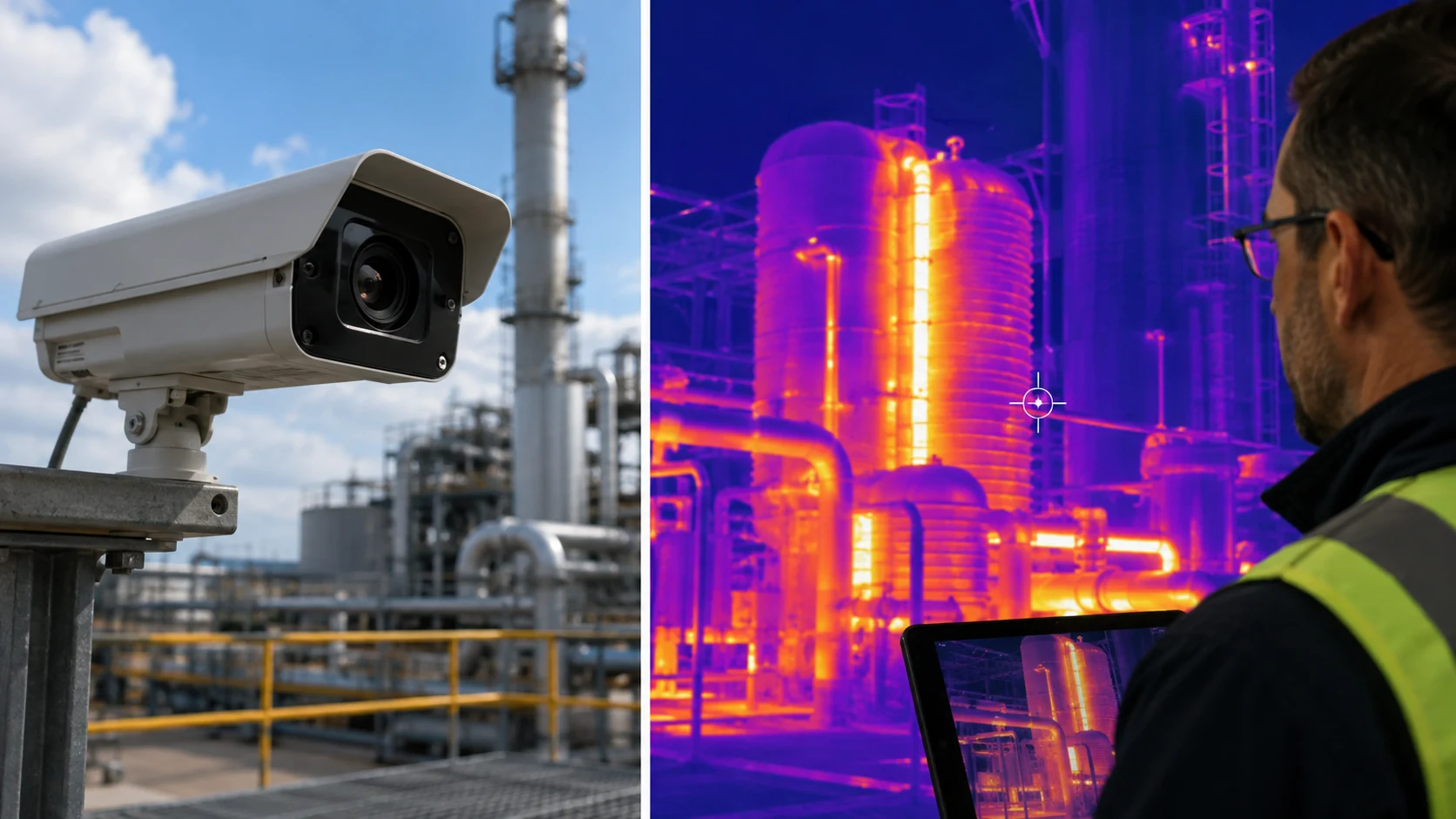
Fire detection is a layered engineering discipline. No single detector is ideal for every environment because fires develop differently depending on fuel, ventilation, ceiling height, temperature and process conditions. Modern systems therefore use combinations of smoke, heat, flame and gas detection selected around the risk.
Smoke detectors are common in buildings because many fires produce aerosols before dangerous heat develops. Optical detectors are widely used, while aspirating smoke detection can provide very early warning in data centers, clean rooms and high-value facilities.
Heat detectors respond to fixed temperature thresholds or rapid temperature rise. They are useful where smoke detection would create nuisance alarms, such as dusty or steamy environments, but generally respond later than sensitive smoke systems.
Flame detectors identify optical signatures from combustion. Ultraviolet, infrared and multispectrum designs can react rapidly to open flames and are common in refineries, fuel storage, aircraft hangars and process facilities.
Gas detection addresses combustible, toxic or fire-related gases. In some industrial risks, gas monitoring can identify a dangerous release before ignition occurs. Carbon monoxide sensing may also provide useful fire information in selected applications.
Detector selection must consider false-alarm sources, coverage geometry, maintenance and the consequences of delayed detection. Integration with alarms, suppression, smoke control, shutdown systems and emergency communications is equally important.
The best fire-detection design is therefore hazard-based. Engineers should ask what is likely to happen first in a credible fire scenario—smoke, heat, flame or gas—and choose technologies that detect that stage reliably while remaining practical to maintain.