
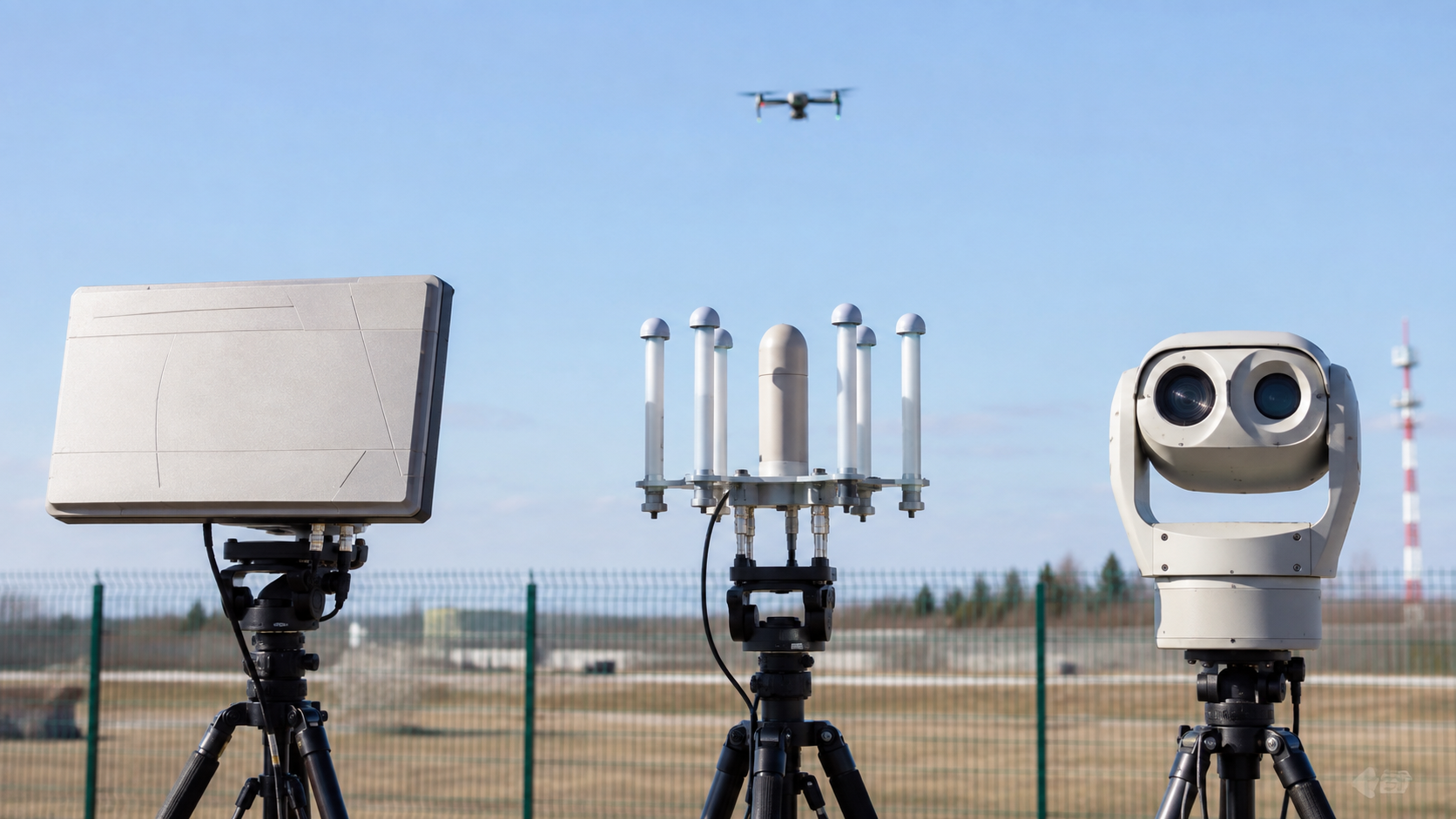
Acoustic drone detection uses microphones or microphone arrays to listen for characteristic sound signatures produced by propellers and electric motors. Unlike radar or active radio systems, acoustic sensors are passive. They do not transmit energy and can sometimes detect drones that are flying autonomously without an obvious RF control link.
The technology is attractive because it can be compact, relatively easy to deploy and useful as a supplementary sensor. Algorithms compare incoming audio with trained signature libraries and may estimate direction of arrival when multiple microphones are used together.
Its main limitation is range. Sound attenuates quickly, especially in wind, rain or complex terrain. Urban areas, highways, factories, airports and ports generate substantial background noise that can mask drone signatures or create false detections. The same drone may also sound different depending on payload, propeller type, speed and distance.
Acoustic detection therefore works best in quieter environments or as part of a multi-sensor architecture. A radar track can be strengthened by an acoustic confirmation, while an acoustic cue can direct a camera toward a suspected target. It is generally less suitable as the sole primary detector for large critical sites.
System evaluation should focus on measured performance in the actual environment rather than laboratory range claims. Buyers should test wind conditions, machinery noise, vehicle traffic and different drone types. They should also examine how the acoustic layer integrates with radar, RF and video systems.
Acoustic sensing has a legitimate role in drone awareness, but its strength comes from complementing other technologies. Used correctly, it adds another independent source of evidence; used alone, it can be vulnerable to environmental conditions that are difficult to control.