
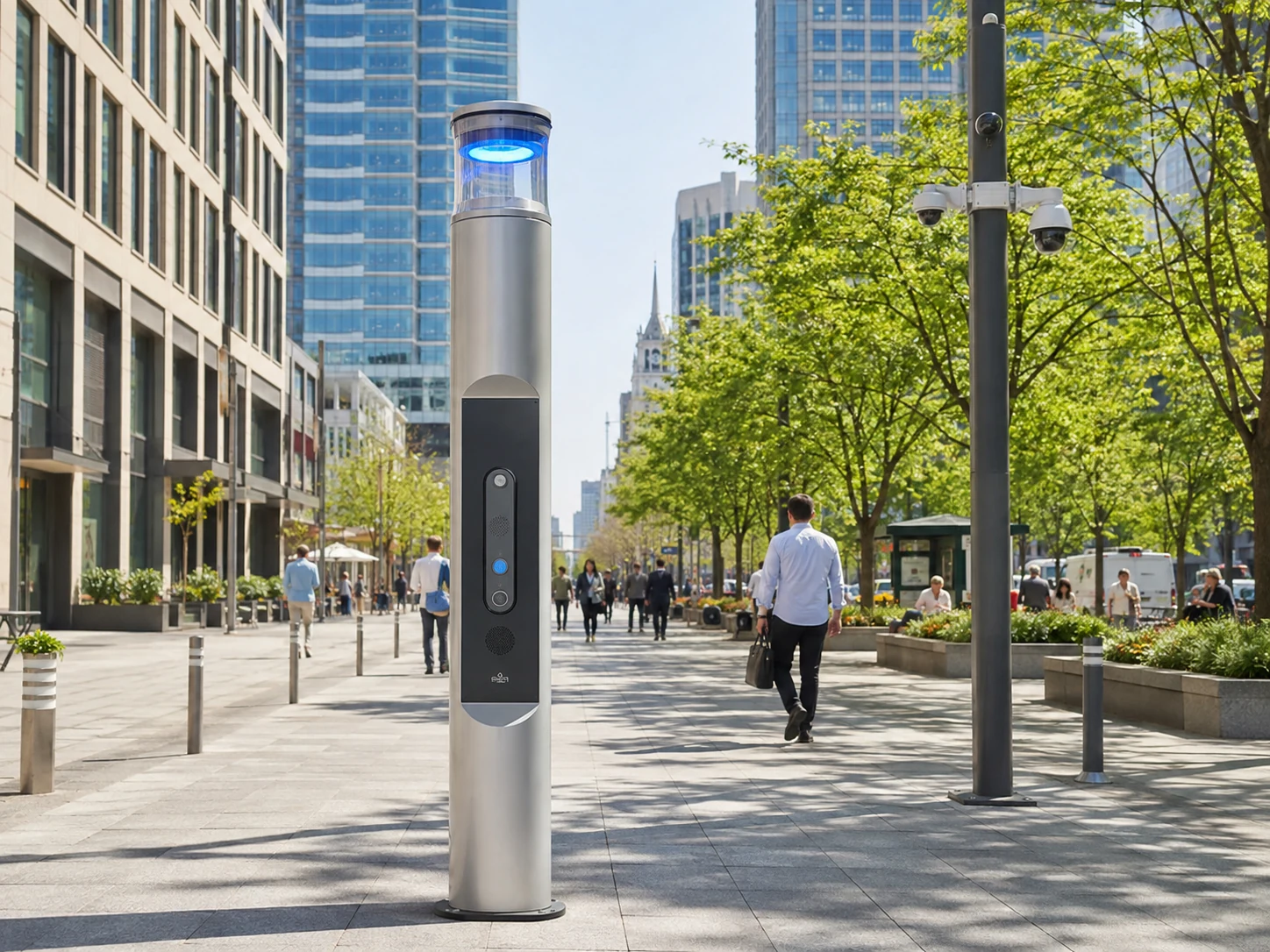
Visible-light cameras are excellent when there is enough illumination and contrast, but security environments are rarely ideal. Multispectral systems combine information from different parts of the electromagnetic spectrum to improve detection, classification and situational awareness.
How the Technology Works
The most common security combination is visible and thermal imaging. A visible sensor provides detail, color and identification information, while a thermal sensor detects heat differences that remain useful in darkness and many low-contrast conditions. When the two views are calibrated, operators can switch between them or display fused imagery.
Near-infrared imaging is another tool. Many conventional surveillance cameras already use near-IR sensitivity for night mode. More specialized systems may combine visible, near-IR and short-wave infrared to reveal materials or conditions that are difficult to distinguish with ordinary color video.
Operational Considerations
Thermal imaging is particularly valuable for perimeter security because it does not depend on reflected visible light. A person can often be detected against a background at night without floodlights. Thermal cameras can also support temperature-based monitoring in industrial environments when radiometric measurement is available.
No spectrum is perfect. Thermal cameras can lose contrast when the target and background reach similar temperatures. Heavy rain, certain atmospheric conditions and glass can affect performance. Visible cameras can provide details that thermal sensors cannot, such as clothing color or readable signage.
Sensor fusion addresses these weaknesses. Radar can provide range and speed, thermal can provide robust detection, and visible video can provide verification. Multispectral cameras fit naturally into this layered architecture.
Deployment and Risk
Optics and alignment are important. Different wavelengths require different lens materials and focus characteristics. A dual-sensor device must be designed so that both views correspond accurately enough for operators and analytics.
Multispectral systems are increasingly relevant in airports, energy facilities, borders, ports, data centers, industrial plants and remote infrastructure. They are especially useful where lighting cannot be guaranteed or where detection must continue through day-night transitions.
Conclusion
The right question is not whether multispectral is “better” than visible imaging. It is whether the additional spectrum solves a specific weakness in the target environment. When it does, multispectral sensing can dramatically improve resilience and reduce dependence on perfect lighting.