

Tag: public safety

  • Columbia Borough Expands Wireless Video Network for Police and Public Safety

    Columbia Borough Expands Wireless Video Network for Police and Public Safety

    Columbia Borough in Pennsylvania is operating a wireless municipal video network based on Milestone Systems’ XProtect video management software. The system gives dispatchers and police officers access to approximately 83 camera feeds covering downtown areas, public buildings, parks and other facilities, according to a deployment account published by Security Today.

    Wireless links extend municipal coverage

    The borough’s terrain made conventional wired connections impractical at some locations. Integrator App-Techs used wireless links and dedicated servers at the municipal building and a remote park office to connect the distributed cameras. Dispatchers are the primary daily users, while officers can view live video from vehicle laptops and authorized personnel can use mobile access during community events.

    The system also covers holding cells and interview rooms at the police station, where camera and microphone feeds are integrated. Borough personnel have used the network for event monitoring and for directing officers after dispatchers observed incidents on camera.

    Expansion requires operational controls

    Columbia is considering additional analytics and gunshot-detection capabilities. Any expansion should define retention, user permissions, evidentiary export procedures and verification steps before alerts influence an operational response. Wireless availability and cybersecurity monitoring are also central to service continuity.

    SectechMedia’s Video Surveillance & Imaging coverage examines similar VMS, camera and analytics design questions. A platform can centralize feeds, but local policy and testing determine whether the resulting information is reliable and appropriately governed.
    Sources

  • Rutherford Police Unifies Video and Access Control Across Public-Safety Network

    Rutherford Police Unifies Video and Access Control Across Public-Safety Network

    The Rutherford Police Department in New Jersey has consolidated video surveillance, access control and intercom functions within a single Axis Communications environment. The deployment began at the department’s new headquarters and has expanded to public spaces and the Route 3 corridor near New York City and MetLife Stadium.

    From headquarters security to borough coverage

    Axis says partner GTBM designed the headquarters system around AXIS Camera Station Pro, approximately 70 network cameras, door controllers, key-fob readers and network video intercoms. Dispatch personnel can visually verify visitors and release doors remotely, while investigators can review video and access events in the same management environment.

    The department later extended the camera network into parks and other public areas. A pan-tilt-zoom camera on Route 3 uses an ARTPEC-9 processor and AV1 compression. Axis attributes an approximately 20 percent reduction in bandwidth and storage consumption to that deployment; the figure is a manufacturer-reported result for this project, not a universal performance value.

    Operational value depends on workflow

    A unified platform can reduce time spent moving between disconnected systems, but integration alone does not guarantee effective response. Agencies still need role-based permissions, retention rules, audit logging, operator training and procedures for evidentiary export. Public-space deployments also require clear governance and oversight. SectechMedia tracks similar architectures in its video surveillance and imaging coverage.

    Sources

  • Smart City Security: Cameras, Sensors and Public-Safety Platforms

    Smart City Security: Cameras, Sensors and Public-Safety Platforms

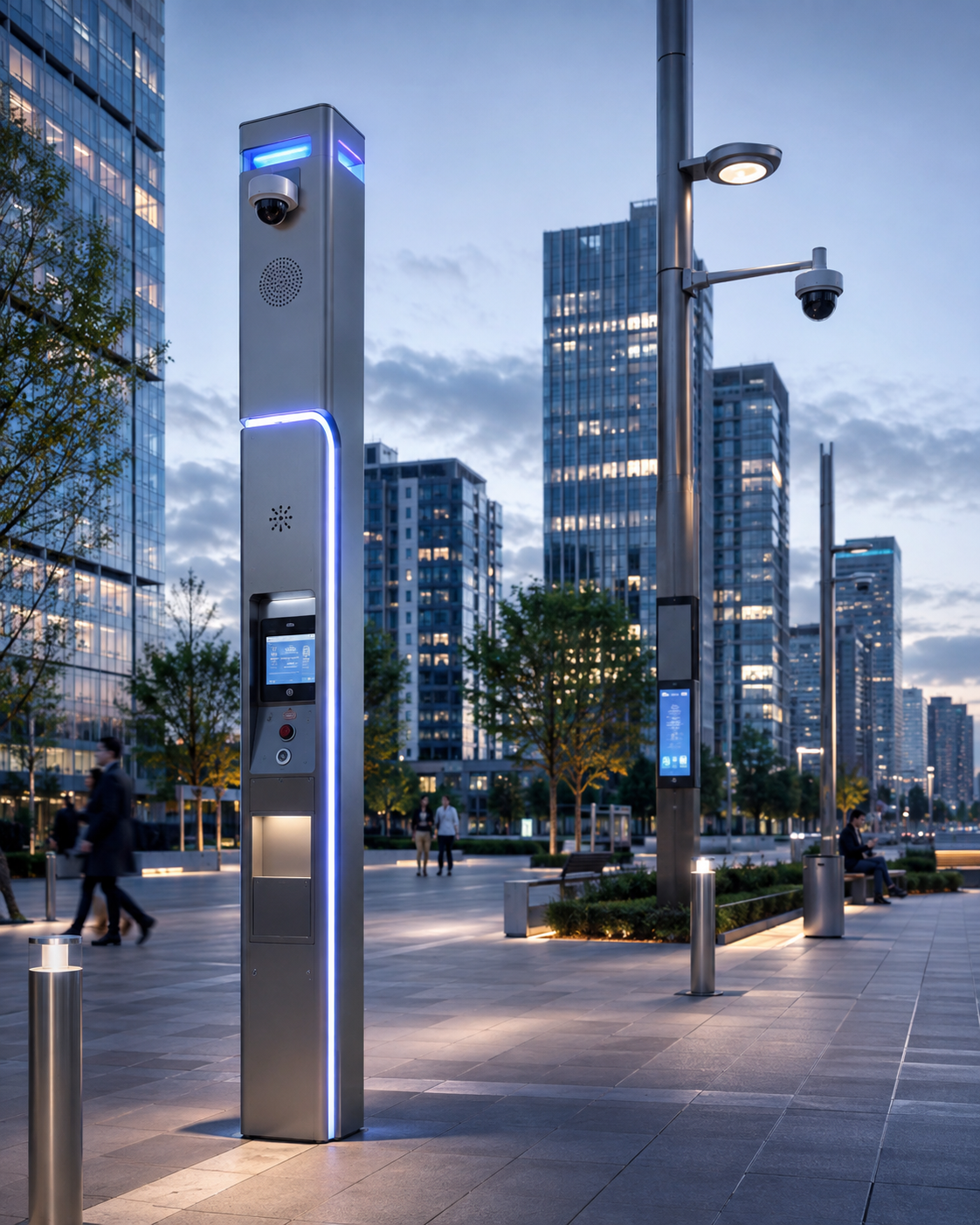
    Smart-city security is moving beyond large camera networks toward integrated situational awareness that combines video, environmental sensors, transport data, emergency communications and analytics.

    From surveillance to situational awareness

    A camera-only model produces large volumes of video but limited context. Modern platforms correlate video with traffic, access, environmental, acoustic and emergency-service information.

    Edge intelligence

    Running analytics at the edge can reduce bandwidth and provide faster alerts. Typical functions include object detection, crowd density, traffic incidents and unusual behavior, but deployment must be guided by clear public policy.

    Privacy and governance

    Smart-city security can affect millions of people. Data minimization, retention limits, auditability, transparency and role-based access are essential for maintaining public trust.

    Resilient communications

    City platforms depend on fiber, wireless and cloud connectivity. Architecture should assume outages and include local recording, redundant paths and graceful degradation.

    A platform, not a single product

    Successful smart-city deployments are built around interoperability. Open interfaces allow agencies to combine sensors from different vendors while preserving cybersecurity and operational control.

    Conclusion

    Smart City Security: Cameras, Sensors and Public-Safety Platforms should be evaluated as part of a broader operational architecture. The strongest deployments combine suitable sensing technology, resilient communications, clear procedures and measurable performance rather than relying on a single device or headline specification.