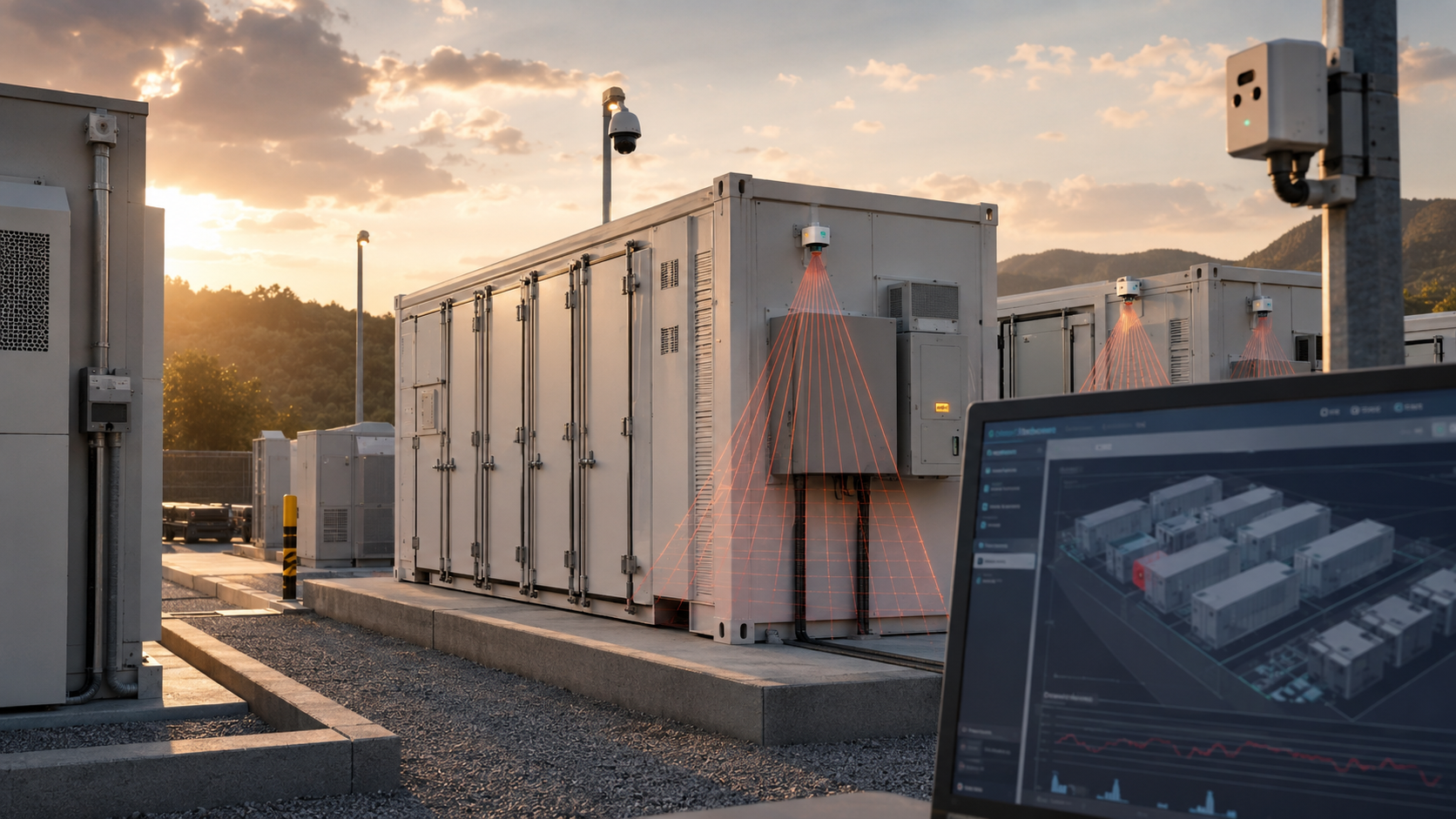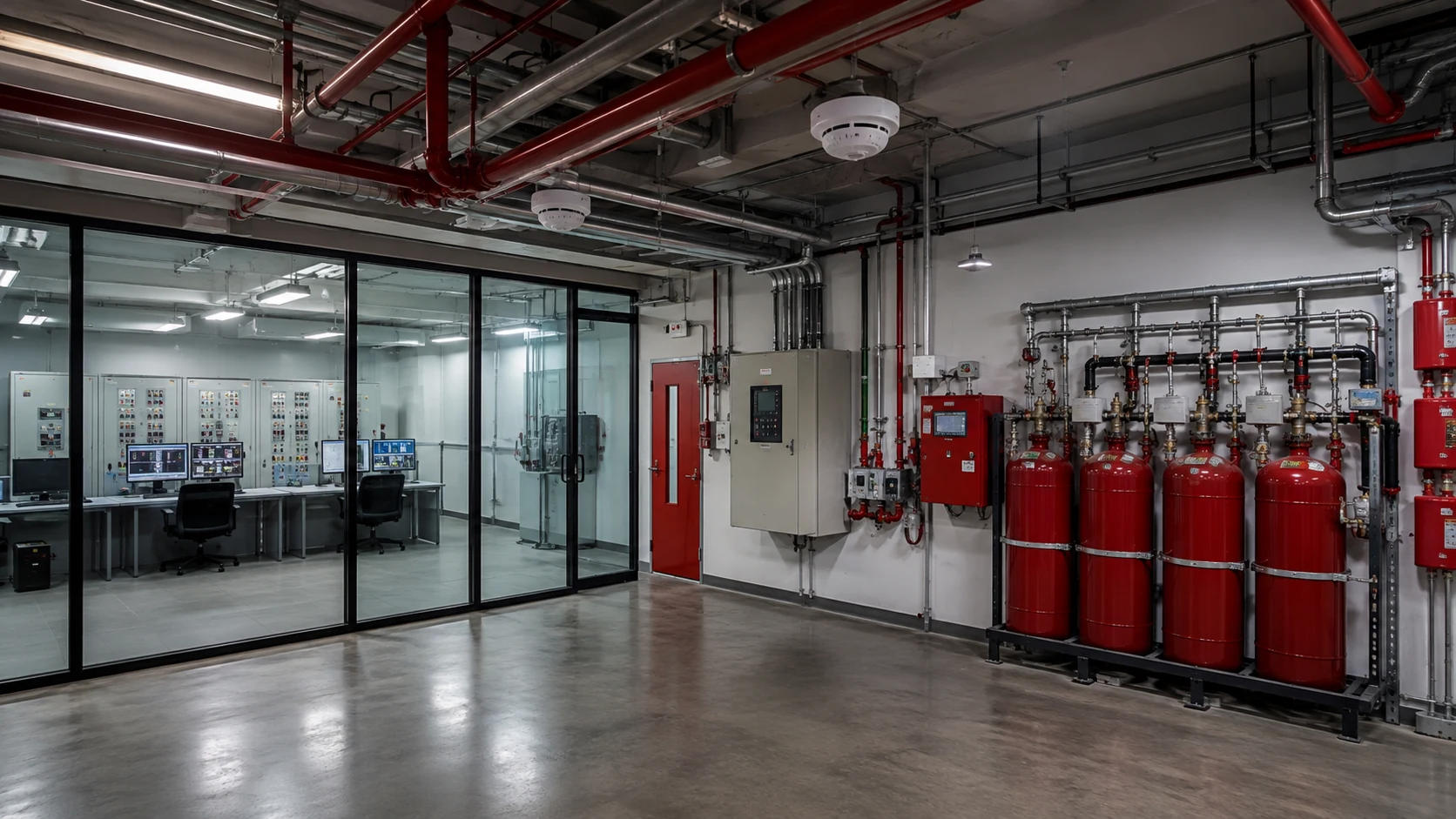
Lithium-ion battery facilities require a fire-safety strategy built around the chemistry of the cells themselves. One of the most important hazards is thermal runaway: a self-accelerating process in which internal heat generation drives further chemical reactions and can eventually produce venting, fire or propagation to neighboring cells.
What can be detected before flames appear? Early indicators may include abnormal cell voltage, temperature rise, pressure changes and the release of volatile gases. Battery management systems provide valuable electrical and temperature data, but they should not be the only source of warning. Independent gas, smoke and thermal sensing can create a second layer of protection.
Gas detection During cell decomposition, gases can be released before visible smoke or flame. Properly selected gas sensors can therefore provide valuable pre-fire warning. Their performance depends on airflow, sensor location, battery chemistry and alarm thresholds.
Thermal monitoring Point temperature sensors, distributed temperature sensing and infrared thermal imaging can identify unusual heating. In large installations, the advantage of distributed monitoring is the ability to observe temperature trends across many racks, cables or zones rather than relying on a few isolated measurement points.
Smoke and aspirating detection Very early warning smoke detection can identify small concentrations of aerosols. Aspirating systems are particularly useful where air movement is controlled and where conventional point detectors might not sample the most relevant airflow path quickly enough.
From alarm to action Detection is only useful if it drives a defined response. A facility should specify what happens when a battery warning, off-gas alarm, elevated temperature or confirmed fire condition occurs. Possible responses include isolating a rack, stopping charge or discharge, controlling ventilation, initiating suppression, notifying emergency teams and increasing separation from adjacent equipment.
The most resilient approach is multi-layered. Electrical telemetry sees one part of the problem, gas sensing another, thermal monitoring another and fire detection another. Correlating those signals can provide earlier and more reliable warning than relying on a single technology.