
Tag: tunnel safety

  • Tunnel Safety and Security Technology: Detection, Evacuation and Integrated Control

    Tunnel Safety and Security Technology: Detection, Evacuation and Integrated Control

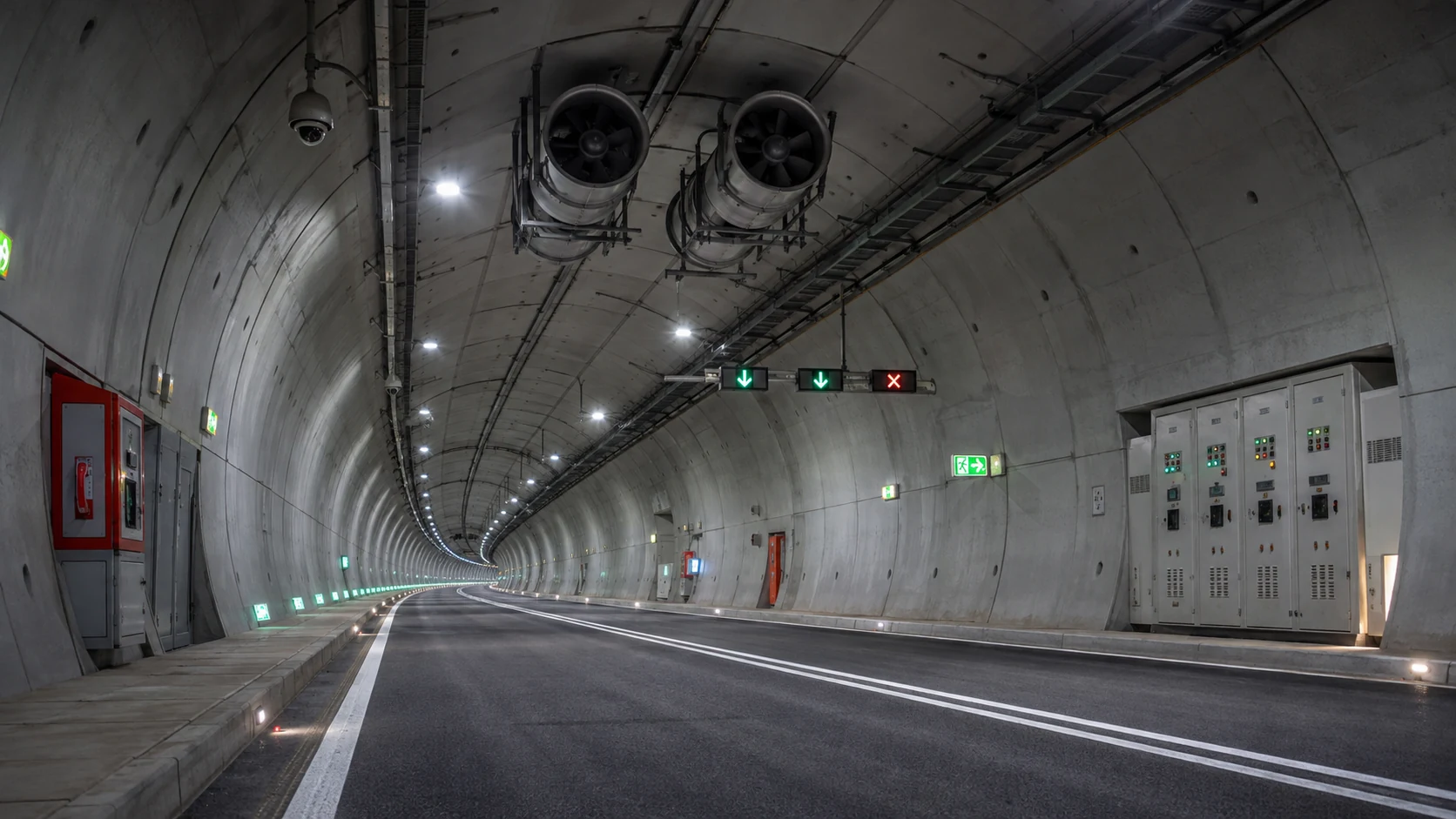
    Modern tunnels combine fire detection, video analytics, access control, ventilation, emergency communications and increasingly distributed fiber sensing. Because incidents develop quickly and escape routes are constrained, tunnel protection depends on coordinated systems rather than isolated devices.

    Why tunnels require a different security model

    Road and rail tunnels create long enclosed spaces with limited visibility, difficult radio propagation and restricted evacuation options. A useful design therefore starts with incident detection, localization and coordinated response rather than simply adding more cameras.

    Core detection layers

    Video surveillance provides situational awareness while thermal cameras can identify overheated equipment or abnormal temperature patterns. Linear heat detection, point detectors, flame detection and air-quality sensors add dedicated life-safety coverage. In long tunnels, DAS can provide continuous acoustic and vibration awareness along many kilometres of fiber.

    Ventilation and evacuation

    Smoke control is often as important as the initial alarm. Variable-message signs, public-address systems, emergency telephones, lighting and cross-passage control must work with ventilation logic so operators can direct people away from the hazard.

    The role of the control room

    A tunnel operations center should correlate alarms, location, video and infrastructure status on one interface. Automation can suggest response actions, but operators still need clear authority and verified procedures.

    Design priorities

    Resilience, redundant communications, maintainability, false-alarm control and realistic drills matter as much as sensor selection. The strongest architecture is layered, testable and designed around credible incident scenarios.

    Conclusion

    Tunnel Safety and Security Technology should be evaluated as part of a broader operational architecture. The strongest deployments combine suitable sensing technology, resilient communications, clear procedures and measurable performance rather than relying on a single device or headline specification.
  • Smoke Control Engineering for Large Buildings and Tunnels

    Smoke Control Engineering for Large Buildings and Tunnels

    In many fires, smoke creates the greatest immediate threat to occupants. It reduces visibility, carries toxic products of combustion and can make escape routes unusable long before flames reach them. Smoke-control engineering is therefore a central part of fire strategy in atriums, high-rise buildings, shopping centers, transit facilities and tunnels.

    The objective Smoke control is not simply about removing smoke as fast as possible. The engineering objective is to manage smoke movement so evacuation routes remain tenable, firefighting access is supported and smoke does not spread unnecessarily into protected areas.

    Pressure differential systems Stairwells, refuge spaces and selected corridors may be protected by maintaining positive pressure relative to the fire zone. The pressure must be high enough to resist smoke leakage but not so high that occupants cannot open doors.

    Mechanical smoke extraction Large spaces and tunnels often use dedicated exhaust fans, shafts and dampers to remove smoke from a defined zone. Replacement air must be carefully managed; poorly positioned make-up air can disturb the smoke layer and reduce system effectiveness.

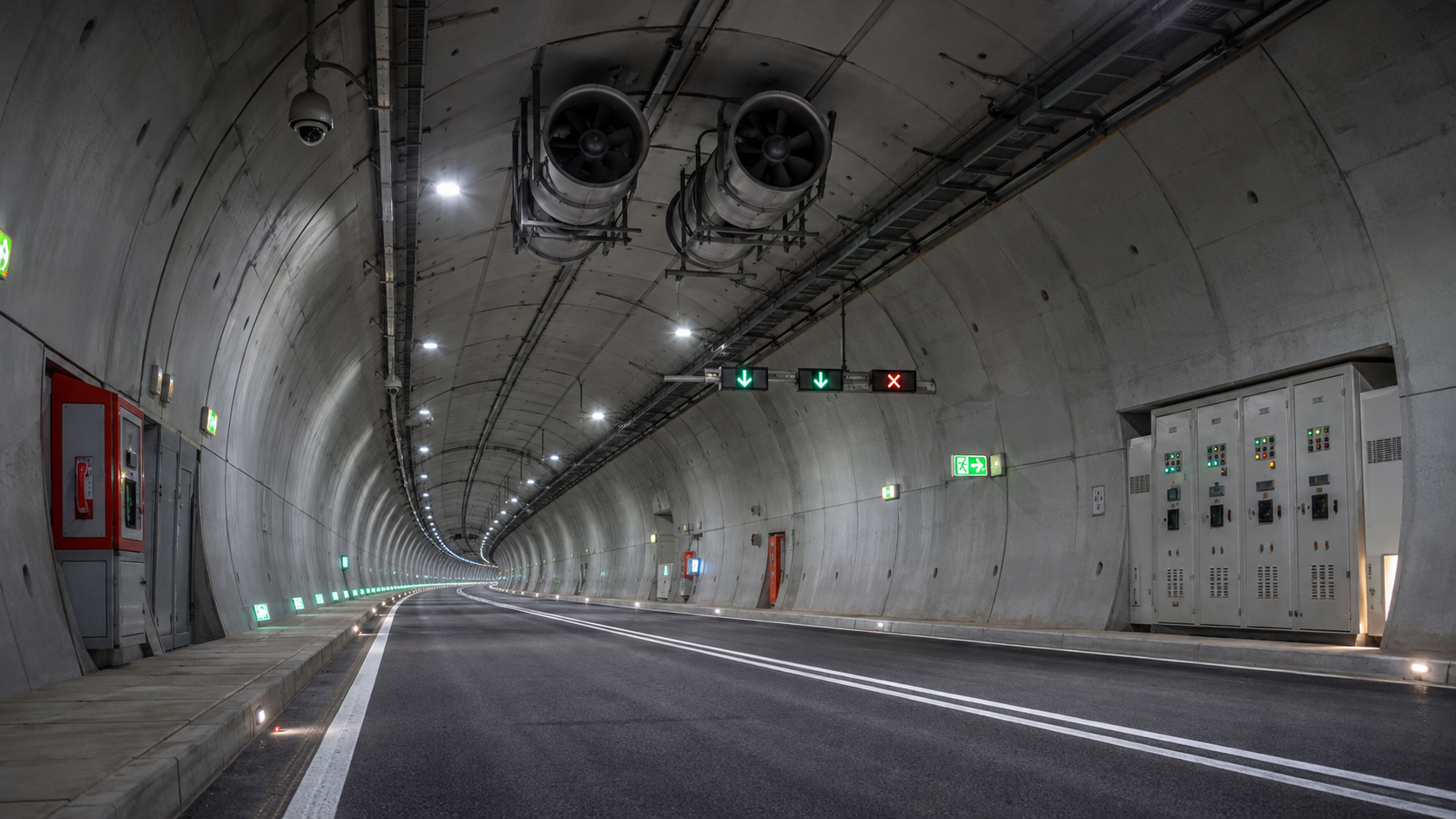
    Tunnels require a different approach In road and rail tunnels, longitudinal ventilation may be used to influence the direction of smoke movement. Jet fans, extraction points, fire location and traffic conditions all affect the strategy. The design must consider evacuation paths, cross passages and access for emergency services.

    Detection and controls A smoke-control system depends on reliable fire detection and correctly sequenced controls. Fans, dampers, doors, lifts and building management functions may all need to change state after a confirmed alarm. Cause-and-effect logic must be tested as a complete system, not as isolated components.

    Modelling and commissioning Computational fluid dynamics can help engineers study smoke movement in complex geometries, but modelling assumptions must be validated. On site, functional testing should verify airflow, pressure relationships, equipment response and emergency operating modes.

    A successful smoke-control design is therefore a combination of fire science, mechanical engineering, detection, controls and operational planning. Its real purpose is simple: preserve usable space and time for people to escape safely.