Tag: Video Surveillance

  • Low-Light Cameras: Sensor Size, Aperture and AI Enhancement

    Low-Light Cameras: Sensor Size, Aperture and AI Enhancement

    Low-light surveillance is often marketed with impressive nighttime images, but camera performance is governed by basic optics and sensor physics. Understanding sensor size, aperture, shutter speed, noise and illumination helps buyers distinguish real performance from aggressive image processing.

    How the Technology Works

    A larger image sensor can collect more light, especially when resolution is not increased excessively. Pixel size also matters. Two cameras with the same megapixel count may perform very differently if one uses a substantially larger sensor.

    Lens aperture controls how much light reaches the sensor. A lower f-number generally allows more light, but aperture, depth of field and lens quality must be balanced. A bright lens cannot compensate for poor focus or incorrect field of view.

    Operational Considerations

    Shutter speed is another trade-off. Slower exposure can make a static scene appear bright but creates motion blur. A camera that produces a beautiful nighttime still image may fail to capture a recognizable moving person or vehicle. Security testing should therefore include moving targets.

    Noise reduction can improve appearance but may remove detail. Heavy temporal noise reduction can produce ghosting around moving objects. AI enhancement can reconstruct edges and suppress noise more intelligently, but it still cannot recover information that the sensor never captured.

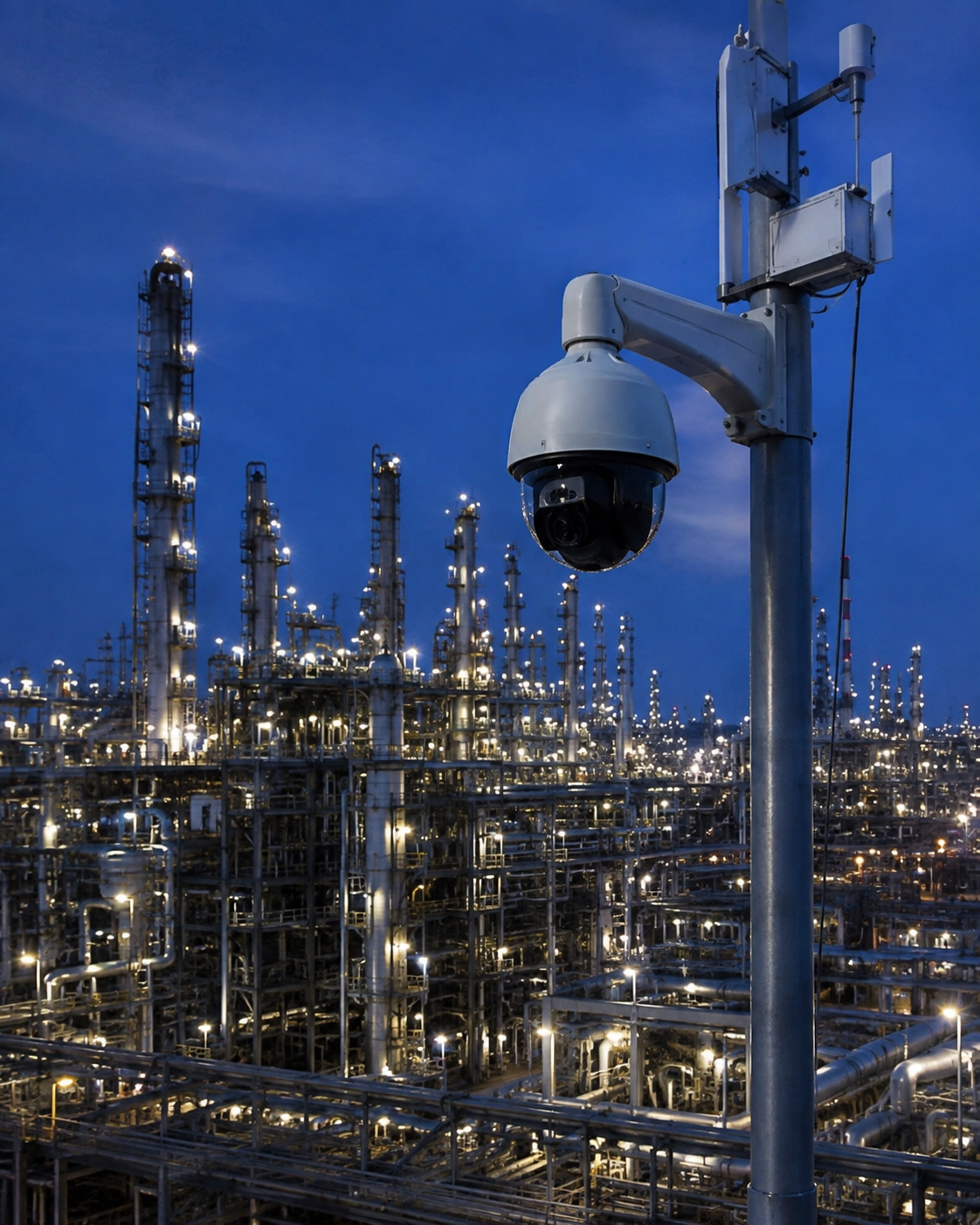
    Infrared illumination remains a practical solution. Integrated IR LEDs or separate illuminators can provide consistent nighttime performance without visible light. However, reflective surfaces, insects, fog and nearby objects can cause overexposure or backscatter.

    Deployment and Risk

    Visible white light can provide color information that infrared cannot. Some modern cameras combine large sensors, bright lenses and controlled supplemental lighting to maintain color at very low illumination. This can be useful when clothing or vehicle color is important to an investigation.

    Low-light specifications should be treated cautiously because manufacturers may measure minimum illumination under different conditions. The best comparison is a controlled field test using the intended lens, scene and target speed.

    Conclusion

    For security designers, the lesson is simple: lighting is part of the surveillance system. Camera selection, scene illumination, target movement and analytics requirements should be engineered together. AI can improve a good image, but it does not eliminate the need for enough photons at the sensor.
  • Privacy-Preserving Video Surveillance

    Privacy-Preserving Video Surveillance

    Video surveillance creates a persistent tension between security objectives and personal privacy. Privacy-preserving surveillance seeks to reduce that tension by designing systems that collect, display and retain only the information necessary for a defined security purpose.

    How the Technology Works

    One approach is masking. Faces, bodies, license plates or private areas can be blurred for routine monitoring while authorized investigators retain controlled access to the original recording. Dynamic privacy masking can follow moving people instead of applying a fixed block to part of the image.

    Another approach is metadata-first analytics. A system can count people, detect occupancy or identify movement without storing identifiable imagery for every event. In some applications, anonymous object metadata provides enough information for operations while reducing exposure of personal data.

    Operational Considerations

    Edge processing can also improve privacy. If analytics run inside the camera, only event metadata or selected clips may leave the device. This is useful in environments where sending continuous video to a cloud service is undesirable.

    Retention is one of the simplest but most important controls. Organizations often keep video longer than operationally necessary because storage is available. A better policy defines retention by risk, legal requirement and business purpose. Routine video can expire automatically while incident footage is preserved under a separate evidence process.

    Access control within the VMS matters as much as camera placement. Operators should only see cameras and functions relevant to their role. Export rights, unmasking privileges and audit-log access should be restricted. Strong authentication and logging help deter misuse.

    Deployment and Risk

    Privacy by design also affects where cameras are installed. A camera intended to monitor a doorway should not capture neighboring private property if the scene can be adjusted. High-resolution cameras should not be used to collect more detail than the operational requirement justifies.

    Modern AI introduces new questions. Object detection is different from biometric identification. A system that recognizes “person” or “vehicle” may present a lower privacy risk than one that creates persistent identity profiles. Buyers should understand exactly what data a model creates and whether it can be linked to individuals.

    Conclusion

    Privacy-preserving surveillance is not weaker surveillance. Properly designed systems can still support incident response, investigations and safety while reducing unnecessary exposure. The goal is proportionality: collect the minimum information required, protect it carefully and make every use accountable.

  • Behavior Analytics in Video Surveillance

    Behavior Analytics in Video Surveillance

    Behavior analytics attempts to move video surveillance beyond detecting objects toward understanding activity. The term is used broadly, from simple loitering and direction-of-travel rules to complex claims about aggression, intent or abnormal behavior.

    How the Technology Works

    The reliable end of the spectrum is based on measurable motion. A system can identify that a person has remained inside a defined zone for a certain time, crossed a virtual line in the wrong direction, moved against a crowd flow or entered an area during a restricted period. These are essentially spatial and temporal rules enhanced by object tracking.

    More advanced analytics may model patterns rather than fixed rules. In a station, the system might learn typical movement through a concourse and flag unusual clustering. In an industrial plant, it could highlight a person remaining near equipment where workers normally pass through quickly.

    Operational Considerations

    Context is the challenge. Running in an airport may be ordinary for a late passenger but unusual in a museum. A group gathering may indicate a queue, a tour or a security concern depending on the location and time. Systems that ignore context can overwhelm operators with false alarms.

    Camera design directly affects performance. Overhead views are useful for occupancy and flow. Frontal views may be better for direction and object classification. Occlusion, shadows, reflections and perspective can make behavioral interpretation unreliable. Analytics should therefore be considered during camera placement, not added after installation without site testing.

    Behavior analytics also raises privacy questions because it can create detailed information about movement patterns. Organizations should define a legitimate operational purpose and collect only the data needed for that purpose. Anonymous tracking may be sufficient for crowd-flow analysis.

    Deployment and Risk

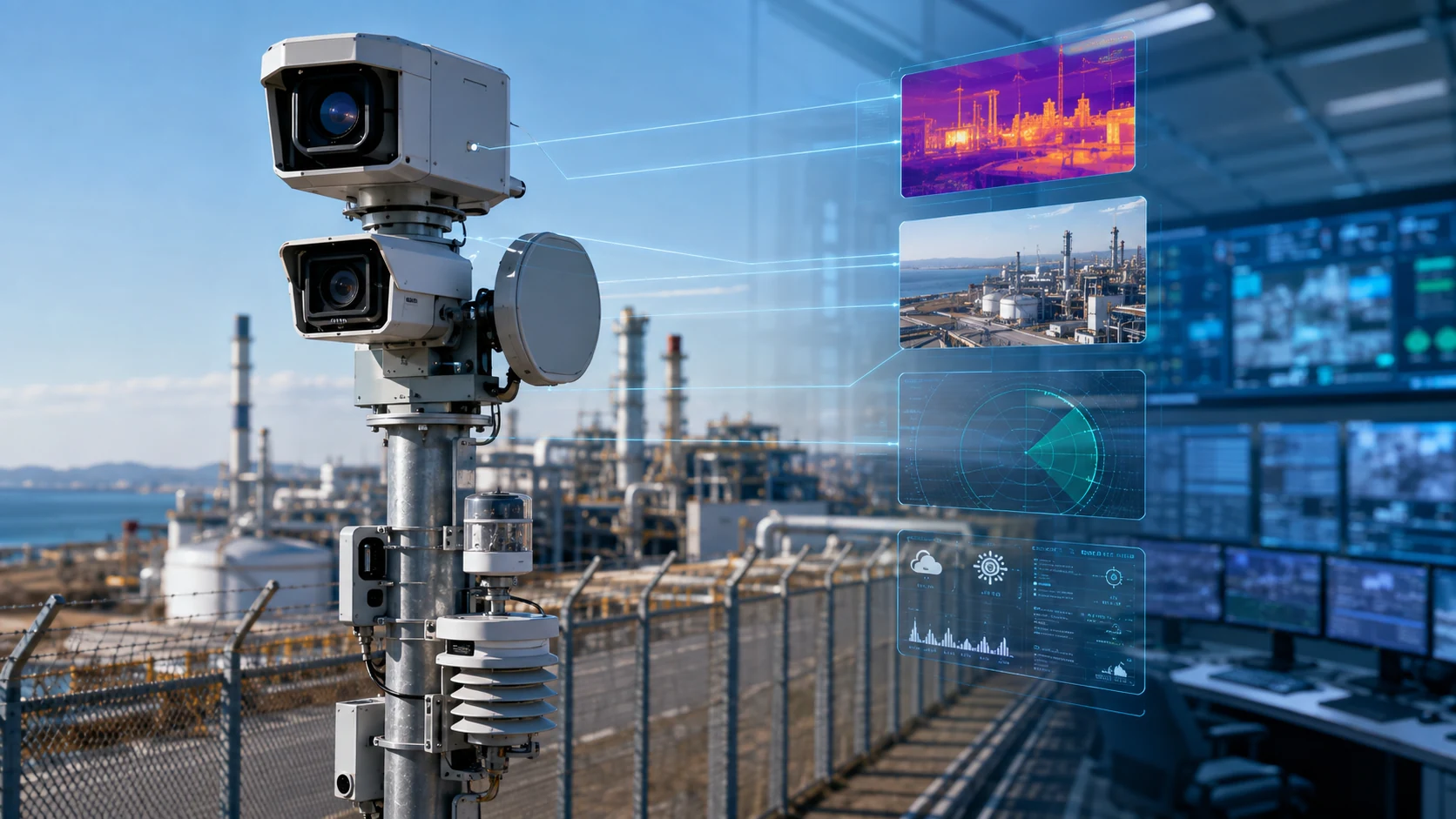
    The best deployments combine behavior analytics with other systems. An unusual movement pattern becomes more meaningful when paired with an access-control event, perimeter alarm or building schedule. Sensor fusion can reduce false positives by confirming that several independent signals point to the same situation.

    Conclusion

    Behavior analytics is useful, but buyers should separate practical functions from marketing language. Ask what behavior is actually measured, how it is defined, how the model was validated and how performance changes in the target environment. Clear operational rules remain more dependable than vague promises of automated human understanding.

  • AI Video Analytics in 2026: What Actually Works

    AI Video Analytics in 2026: What Actually Works

    AI video analytics has moved from a specialist add-on to a core layer of modern physical security. The useful question is where it performs reliably enough to improve operations and reduce investigation time.

    Mature use cases

    Person and vehicle detection, line crossing, loitering, occupancy, queue analysis and basic object classification can be effective when scenes and objectives are clearly defined.

    Claims that require caution

    Vague predictions of suspicious intent or complex behavior are context dependent. These systems should support operators rather than act as unquestionable decision makers.

    Architecture choices

    Edge analytics can reduce bandwidth, server analytics can use larger models, and cloud analytics can simplify scaling. Enterprises often combine all three.

    How to evaluate performance

    Accuracy is not one universal number. Testing should examine precision, recall, nuisance alarms and performance across day, night, rain, glare, occlusion and seasonal change.

    Workflow, privacy and governance

    Detection is most useful when connected to maps, cameras, access status and response procedures. Organizations should also document data processing, retention and whether biometric identification is involved.

    Conclusion

    AI delivers the most value when it solves a narrow, measurable operational problem and is verified under representative site conditions.