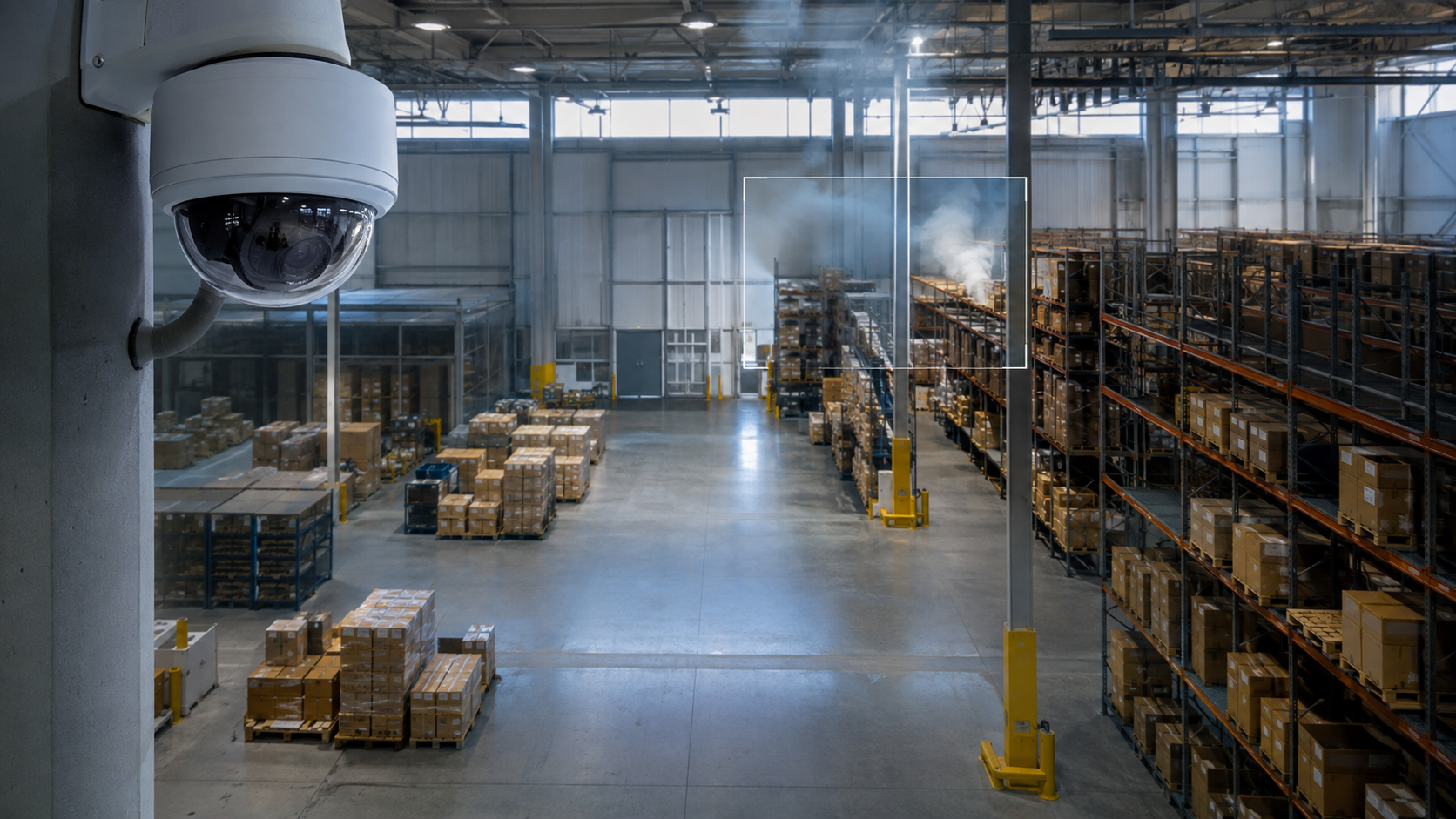
Modern video systems can run analytics inside cameras, on local servers, in data centers or in the cloud. Processing location affects bandwidth, latency, scalability, maintenance and model lifecycle.
Edge AI cameras
Inference near the sensor can classify objects before video reaches the VMS, reduce central processing and allow immediate local actions or event transmission.
Server-based analytics
Central GPU resources can run more demanding models, share compute across cameras and support upgrades without replacing the camera fleet.
Operational trade-offs
Edge processing suits distributed sites with limited connectivity. Central systems simplify model deployment and support correlation across cameras or enterprise data.
Cybersecurity and resilience
Intelligent endpoints increase patching and monitoring requirements. Central servers reduce endpoint complexity but become high-value infrastructure requiring segmentation and redundancy.
Lifecycle cost and hybrid systems
Buyers should compare cameras, GPUs, rack space, power, licensing and support over the system life. Hybrid designs commonly combine edge detection with centralized search and correlation.
Conclusion
The correct architecture matches the operational problem. Most enterprises will use a mixture of edge and central analytics.