
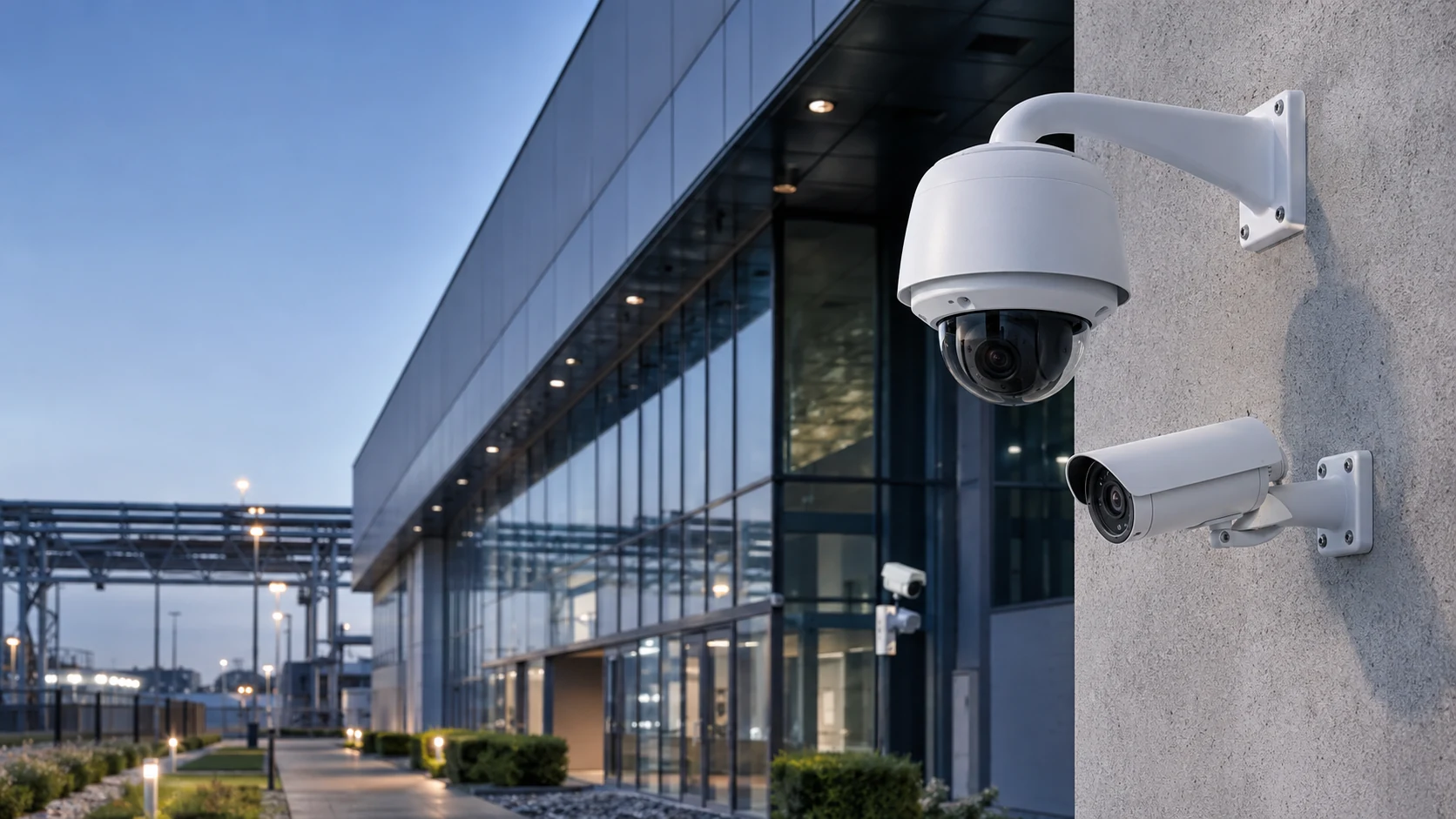
A practical guide to modern video surveillance systems, covering IP cameras, PTZ, thermal imaging, VMS, storage, analytics, interoperability and system design.
What is a video surveillance system?
A video surveillance system captures visual information from a protected environment and makes that information available for live monitoring, recording, search, investigation and increasingly automated analysis. Traditional analog CCTV systems carried video over dedicated coaxial infrastructure. IP-based systems encode video digitally and transmit it across networks, which makes integration, remote access and distributed architectures much easier.
The main components are cameras, network infrastructure, recording or cloud storage, a video management system, operator interfaces and optional analytics. In larger installations, identity systems, intercoms, intrusion sensors and command-and-control platforms may also exchange events with the video system.
Camera types and where they fit
Fixed network cameras are suited to entrances, corridors and areas where the required field of view is known. PTZ cameras can pan, tilt and zoom, making them useful for active tracking and wide-area verification. Multi-sensor and panoramic cameras reduce blind spots by covering several directions from one mounting point. Thermal cameras detect infrared radiation rather than visible light, so they can be useful for detection in darkness, haze or visually complex perimeter environments. They are not a universal replacement for visible cameras because identification and forensic detail may still require conventional imaging.
Resolution is only one part of image quality. Lens selection, field of view, lighting, shutter settings, dynamic range, compression and mounting position can matter as much as pixel count.
VMS: the operating layer
Video Management Software, or VMS, is the layer that brings camera streams, recordings, alarms, maps, user permissions and investigations together. It controls who can see what, how video is recorded and retained, how operators receive alarms and how recorded material is searched or exported.
Interoperability is important in multi-vendor systems. ONVIF describes itself as an open industry forum for standardized interfaces for IP-based physical security, covering advanced video streaming, edge storage and metadata/events for analytics applications. Conformance should be checked against the official ONVIF conformant-products database rather than assumed from a marketing claim.
Storage and bandwidth
Storage requirements depend on resolution, frame rate, compression, scene complexity, recording mode and retention period. H.265 can reduce bandwidth and storage compared with older encoding approaches under suitable conditions, but real-world savings vary. Motion-based recording can reduce storage in low-activity scenes, while high-activity environments may record almost continuously.
For critical systems, storage design should also consider redundancy, evidence integrity, cybersecurity and what happens when network connectivity is lost.
Where AI analytics fit
Video analytics can detect or classify events such as people, vehicles, line crossing, loitering or objects entering a restricted area. The useful question is not whether a camera has “AI,” but how accurately the analytic performs in the actual scene and how false alarms are handled. Analytics should be treated as decision support, since lighting, weather, camera angle and occlusion can all affect performance.
How to specify a system
Start with threats and operational goals. Define what must be detected, what level of identification is needed, how quickly an alarm must be verified, which areas are most critical and how long video must be retained. Then design fields of view, pixel density, lighting, network capacity, storage, resilience and operator workflow around those requirements.
FAQ
Is IP video always better than analog CCTV? IP architectures offer major advantages in integration, scalability and analytics, but migration decisions should consider existing infrastructure, cybersecurity, cost and operational need.
What does ONVIF compliance mean? It means a product conforms to a defined ONVIF profile. Compatibility should be verified for the specific profiles and functions required by the project.
Do AI cameras eliminate human monitoring? No. They can reduce search and alarm workload, but human verification remains important, especially in high-consequence environments.
Verification note: Avoid presenting a vendor’s claimed AI accuracy as a universal performance figure. Test results are scene- and configuration-dependent.
Leave a Reply